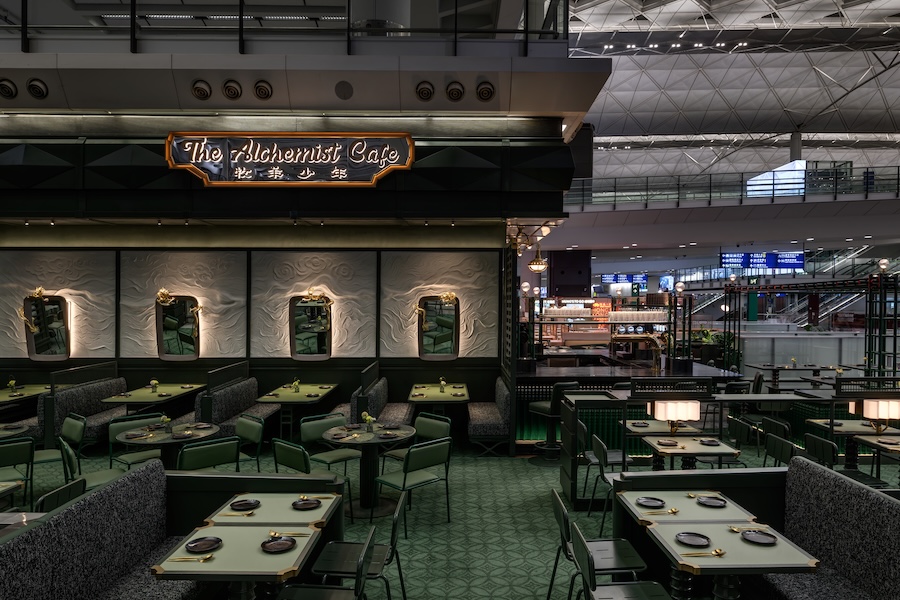
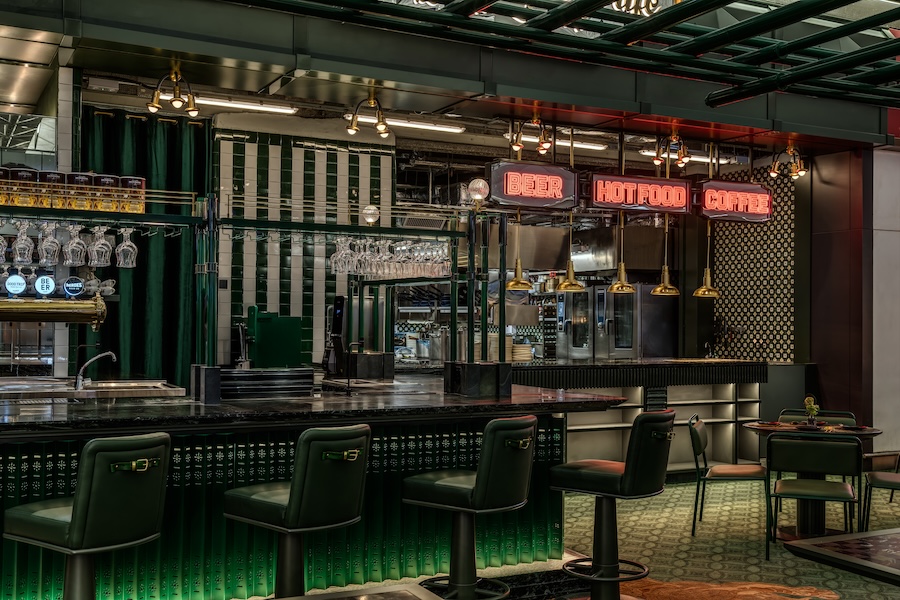
Hong Kong International Airport’s new dining destination, the Alchemist Café, transforms 3,358 square feet of terminal space into an immersive tribute to the city’s cultural heritage.
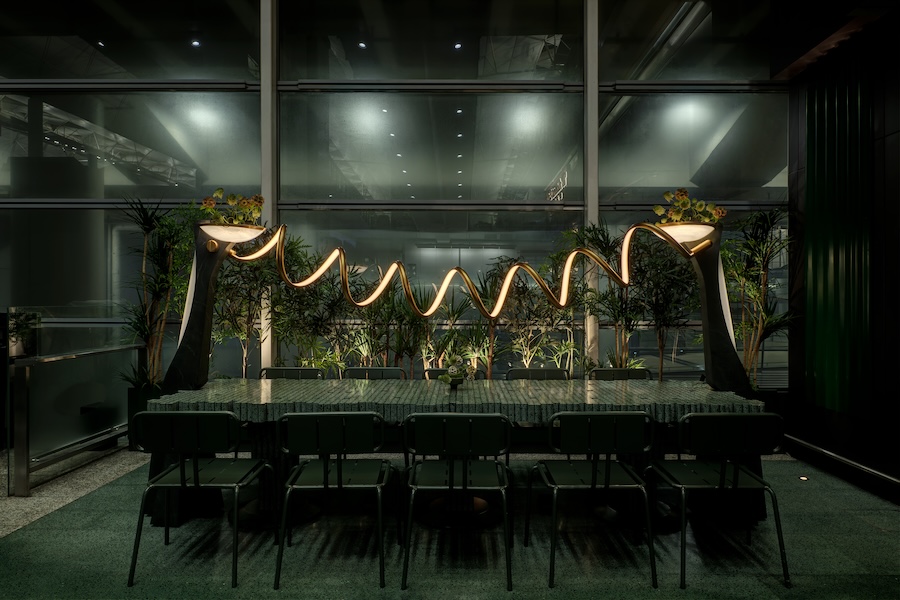
The design, by local firm Minus Workshop, stands out for its comprehensive use of HK Tram Green (Pantone 3415 C)—a color with roots in 1940s resourcefulness, when Hong Kong’s iconic trams were painted with surplus military paint.
Thoughtful circulation made for travelers
The café operates within the airport’s open-ceiling architecture and strict regulatory framework, turning spatial constraints into design opportunities.
At the entrance, a bamboo scaffold-inspired pavilion creates intimate micro-zones beneath the expansive ceiling while functioning as a practical postcard rack. This structural element grounds the space with references to Hong Kong’s construction vernacular.
The layout responds to airport circulation patterns with open sightlines designed to attract passing travelers. Seating configurations range from quick-service counters to more leisurely alcove arrangements, accommodating a range of passenger needs.
A Hong Kong-rooted design for the Alchemist Café
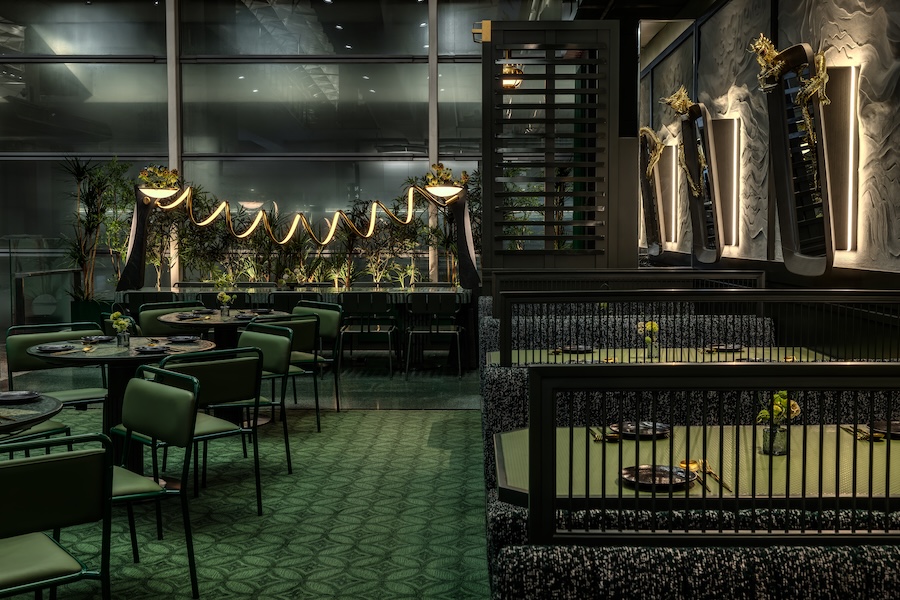
The design incorporates several notable local collaborations. Working with craft store Hop Keung, the team developed golden dragon mirror frame motifs positioned against an abstract cloud mural by Hong Kong artist Eunis Cheong. This layered composition creates a cinematic effect of dragons soaring through the sky.
Traditional household elements appear throughout in contemporary applications: patterned tiles, metal grilles, and terrazzo counters are reimagined within the unified green palette.
Lighting installations throughout the space draw inspiration from unexpected sources: wet market fixtures and vintage telephone cords create visual interest against the monochromatic green backdrop. Old television-inspired signage, integrated with the host counter, adds a retro warmth to the arrival experience.
Flooring details continue the storytelling approach, combining traditional “money flower” patterns with Hong Kong-style tiger tattoo motifs—visual references to the city’s street commerce culture and urban identity.
More from HD:
The 50 Most-Anticipated Hotel Openings of 2026
Helle Mardahl’s Delightful Take on Everyday Objects
Trendspotting: Alcohol-Free Bars