The growing union wave at architecture firms, Japan charts a sustainable afterlife for Osaka’s Grand Ring, and a rare chance to own Carolyn Bessette-Kennedy’s signature style. All that and more in this week’s Five on Friday.
Carolyn Bessette-Kennedy’s famous camel coats can be yours!
View this post on Instagram
As we sink our teeth into the first season of “Love Story: John F. Kennedy Jr. & Carolyn Bessette,” the legacy of Carolyn Bessette-Kennedy is on display in Chelsea. Vogue reports that 25 pieces from her closet have been acquired for auction by Lucy Bishop, who’s better known on social media as “The Fashion Auctioneer.” Following the success of a smaller auction of Bessette-Kennedy’s iconic threads in 2024, the latest show touts an expanded sample of her collection, with highlights including a Yohji Yamamoto evening ensemble and an array of her signature Prada coats. Four of the pieces up for sale are sourced from JFK Jr.’s longtime assistant Rosemarie Terenzio, while 21 pieces have been donated by an anonymous collector. The pieces will be exhibited for auction this weekend—and this weekend only—at 149 West 27th Street in Manhattan. C’mon, who among us hasn’t dipped into their savings for some vintage Prada?
What’s next for the Osaka Grand Ring?
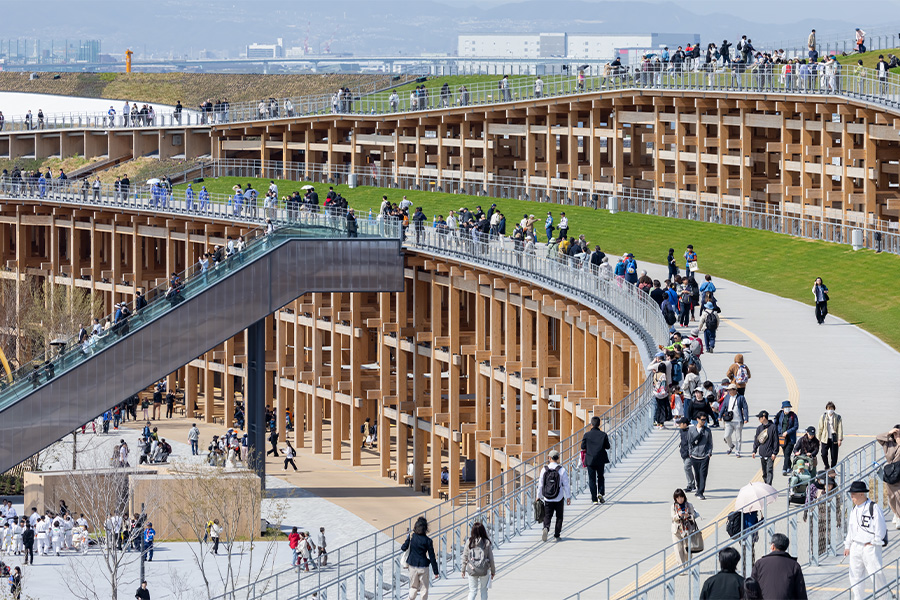
Photo by Iwan Baan
Following the Expo 2025 in Osaka, Japan is now pursuing the reuse of materials from one of the world’s largest wooden constructions: the Grand Ring. Designed by Sou Fujimoto Architects with circular economy in mind, the project’s second life will be finalized next week by the Japan Association. According to ArchDaily, dismantling has been underway since December. Per the preservation plans for the project, which spans more than 645,000 square feet, only a portion of the 1.2-mile loop will be left onsite. Luckily, the Grand Ring’s material efficiency lends itself to easy disassembly, transportation and reassembly, comprising a timber construction of regionally sourced Japanese cedar and cypress.
Consider the agrihood
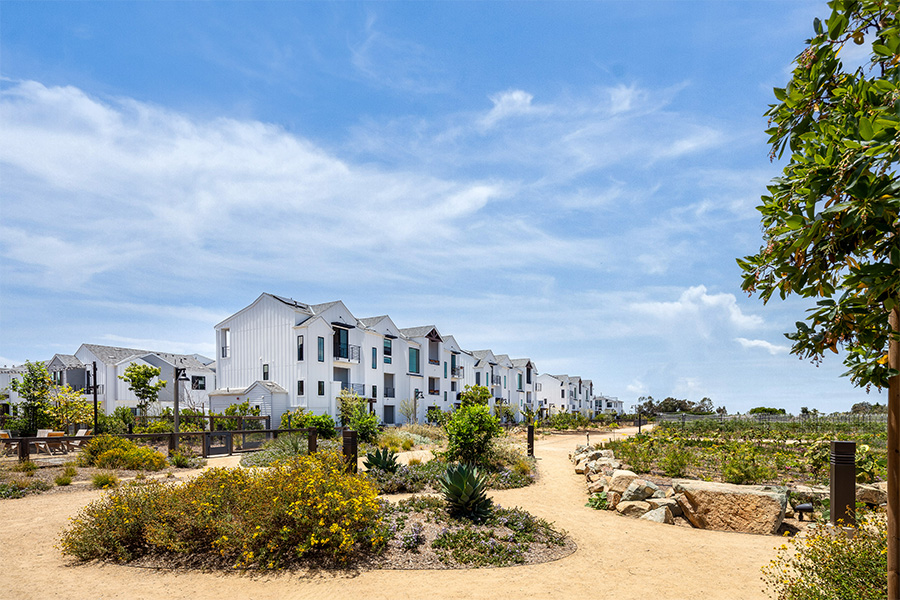
The 21.5-acre Fox Point Farms agrihood community features 250 homes in Encinitas, California; photo by Kyle Jeffers
Among its recent projects, global architecture firm Steinberg Hart counts a pair of California “agrihoods” in its portfolio. The term refers to an emerging typology of working farms accessible to single- or multifamily housing in urban pockets. A feature in Grist explores the trend and all of its potentials, which despite possible zoning hurdles, ultimately yield more resilient—and more idyllic—urban living. Introducing these agricultural lots can reduce temperatures, capture rainwater, and support food security as well as local biodiversity through native planting. And for our more entrepreneurial neighbors, the activation of these open spaces also creates platforms to generate commerce. Sign me up!
Architecture unions continue to meet resistance

The BIG-designed Makers’ KUbe, a mass timber building planned for the University of Kansas School of Architecture & Design; rendering courtesy of Bjarke Ingels Group + Kilograph
Just weeks after news broke that Snøhetta was under investigation by the National Labor Relations Board for discriminating against workers attempting to unionize, Bjarke Ingels Group (BIG) became the latest international firm to face scrutiny for its treatment of workers. Earlier this month, a number of BIG employees in London engaged in a protest organized by Unite the Union’s Section of Architectural Workers (SAW-Unite). The demonstration took place in response to the firm’s decision to lay off more than 70 employees originally hired for a now-cancelled project. Protesters banded together to demand an additional six months of pay for those terminated and call for recognition of their union. In a write-up for Dwell, Anjulie Rao goes deeper into the state of the industry and why, now more than ever, architects and designers are fighting for their dignity at work.
HD names Design Firm and Hotelier of the Year
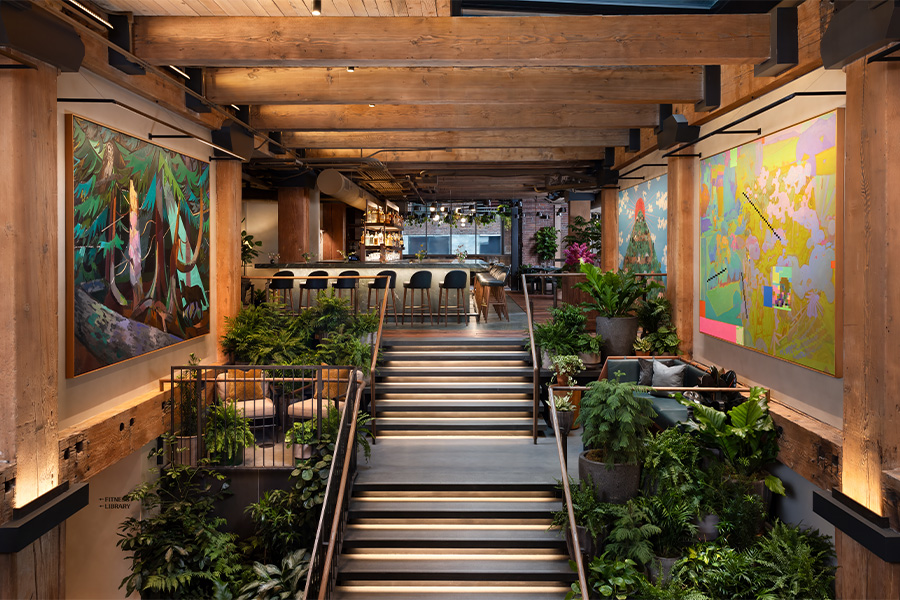
Populus Seattle features interiors by Curioso; photo by Ric Stovall
Hospitality Design has named Curioso and Grupo Habita the 2026 Design Firm and Hotelier of the Year, respectively.
Led by Nina Grondin and Daniel Pierce, Curioso is a collective of 45 designers, architects, and brand strategists operating from Chicago and Mérida, Mexico. The studio’s portfolio of visually compelling and enduring interiors ranges from intimate cocktail lounges to luxury resorts, with Fidelity Hotel in Cleveland and Populus Seattle among its recent standouts.
Carlos Couturier alongside brothers Jaime, Moises, and Rafael Micha celebrate their 25th anniversary this year at the helm of Grupo Habita. The Mexico-based hospitality brand touts 17 hotels in its lineup, each distinguished and bonded by a design-driven ethos rooted in culture, craftsmanship, and community. Recent projects like Condesa DF and Hotel Humano reflect the authenticity and versatility that sets the brand apart.
Curioso and Grupo Habita will be honored during the 22nd annual HD Awards on May 5th in Las Vegas during HD Expo + Conference. Register now!