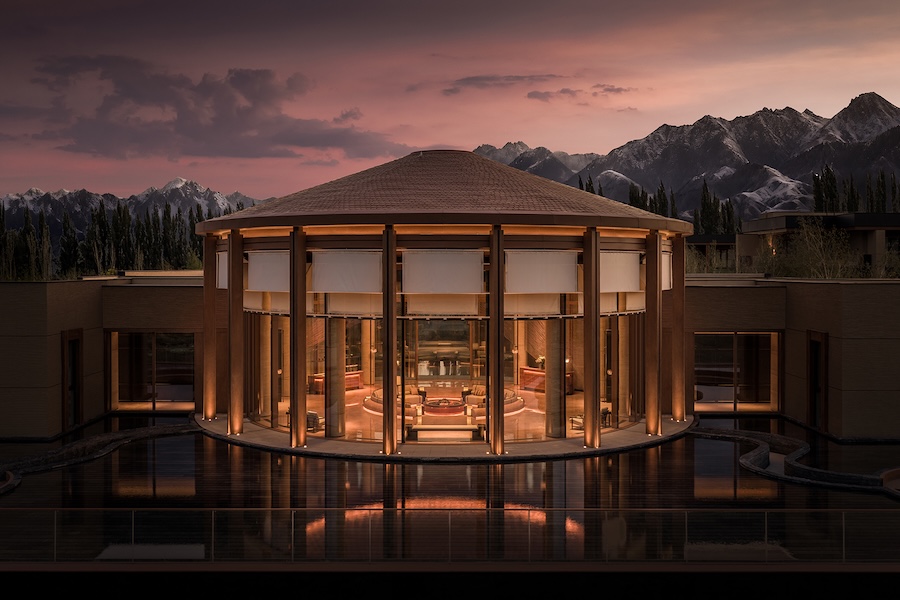
Located at the intersection of the Duku Highway and the Ili “Figure-8” Scenic Loop, Hotel Indigo Nalati sits in Nalati town within the Ili Kazakh Autonomous Prefecture, framed by expansive grasslands and the Tian Shan mountains.
The hotel, designed by CCD/Cheng Chung Design, draws directly from its geographic and cultural context, translating Kazakh nomadic traditions into a luxury hotel atmosphere.
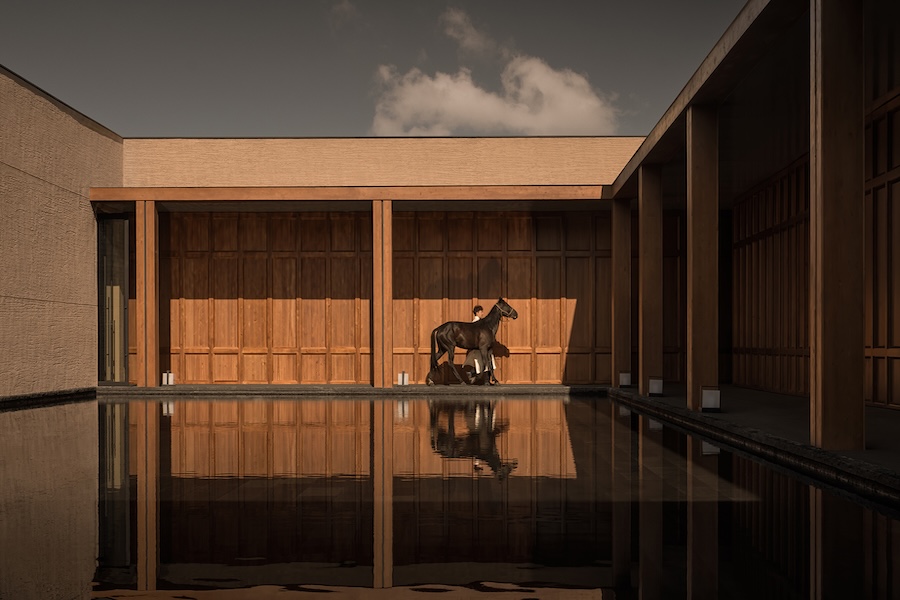
 Architecture rooted in the Nalati grasslands
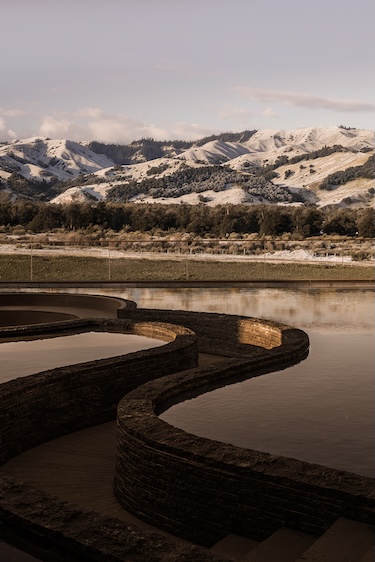
The design concept uses mausym, the Kazakh word for “season,” as a framework to reflect the region’s cyclical climate and patterns of daily life. Architectural and interior elements reference traditional yurts and winter settlements, reinterpreted through modern materials and construction methods rather than literal replicas.
The hotel’s massing adopts a dispersed layout, with multiple low-rise structures arranged across the site and connected by meandering paths. From a distance, the complex reads as a series of volumes embedded within the landscape, reinforcing a low-impact approach that aligns with steppe culture. Surrounding forest plantings are integrated into the site’s ecological strategy, diffusing the threshold between built and natural environments.
Arriving at Hotel Indigo Nalati
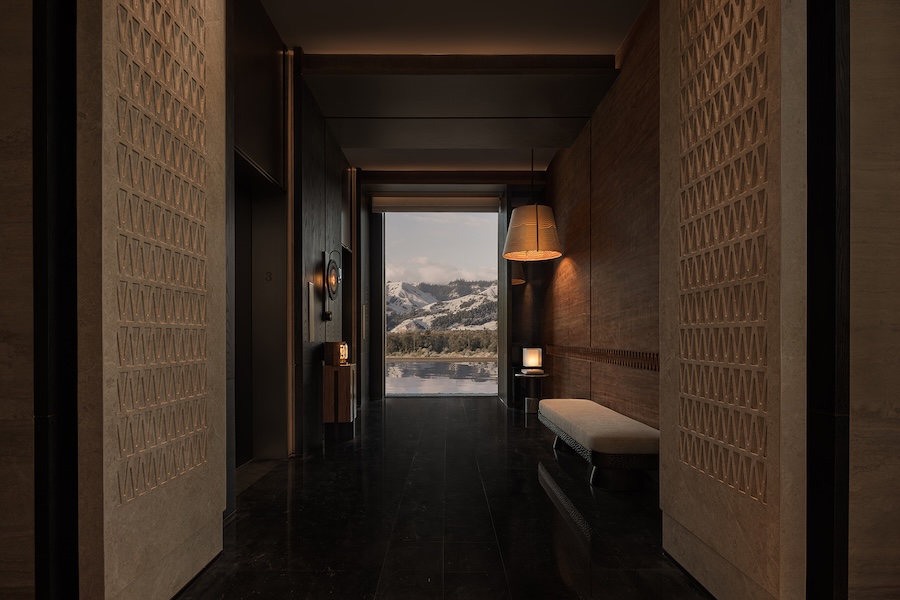
Arrival is defined by a curved canopy inspired by the Nalati sunrise, forming a sheltered drop-off courtyard. The entry sequence introduces local references drawn from the Tian Shan mountains, the Gongnaisi River, and regional totem forms.
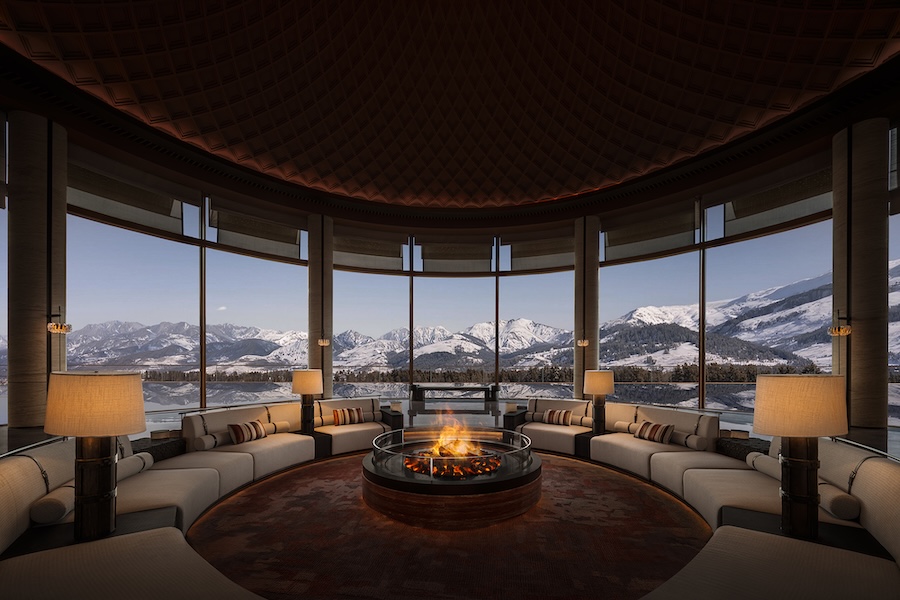
Inside, the lobby is organized beneath a large domed ceiling that references the structure of a traditional yurt. Brick surfaces, warm-toned finishes, and a central fireplace establish the space as a social anchor, complete with communal seating and large curved windows that frame views of the surrounding grasslands and mountains. Reception areas are accented by felt-thread artworks and carpets adorned with regional motifs.
Yurt-inspired dining and accommodations
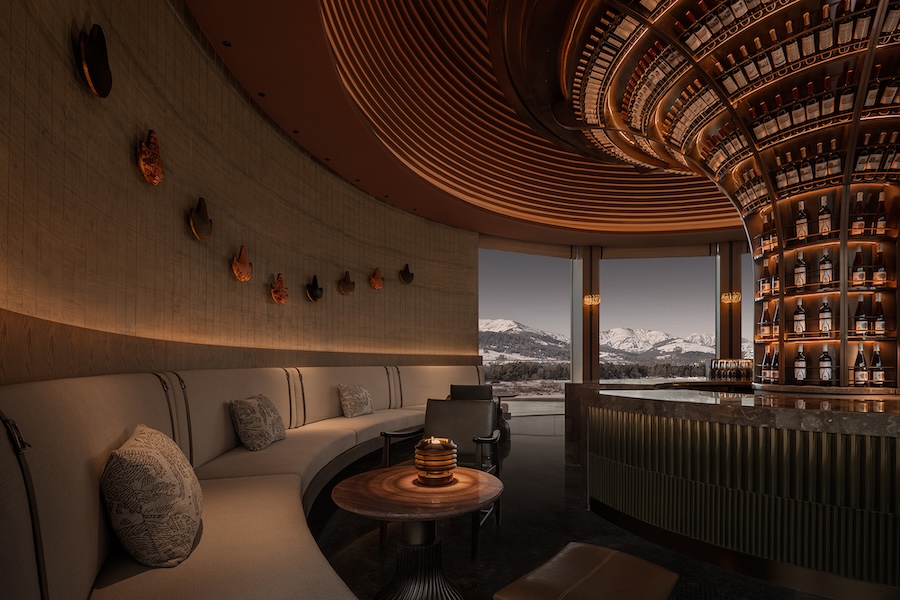
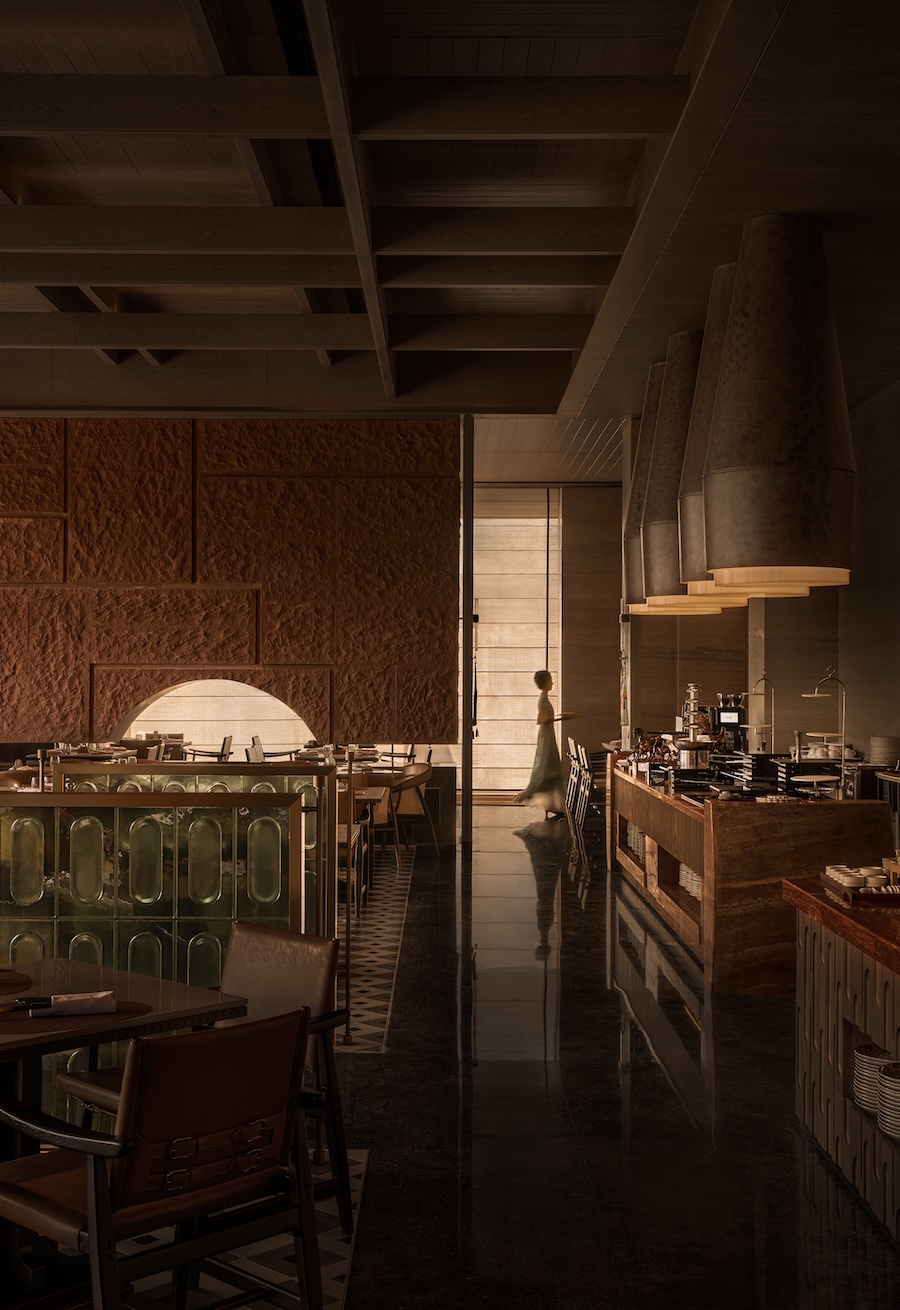
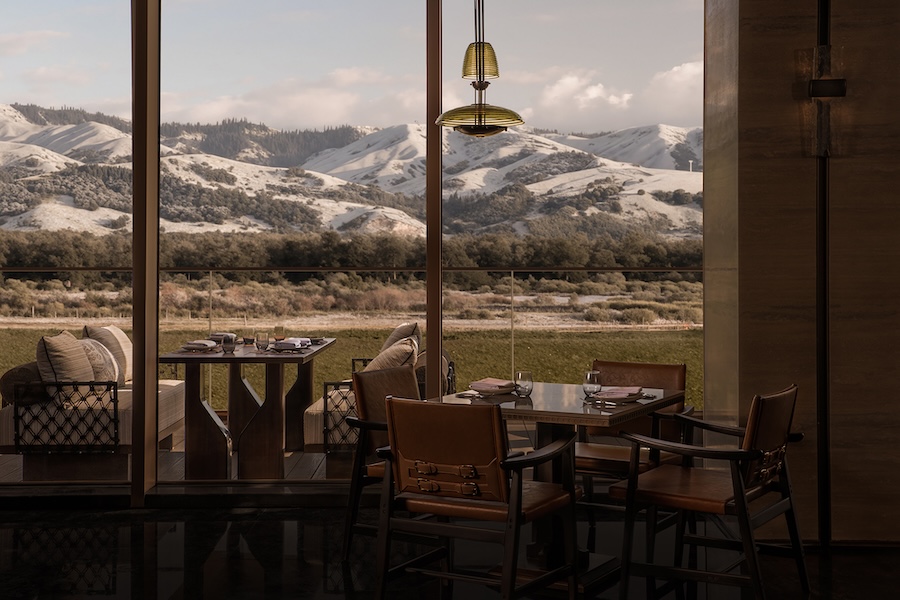
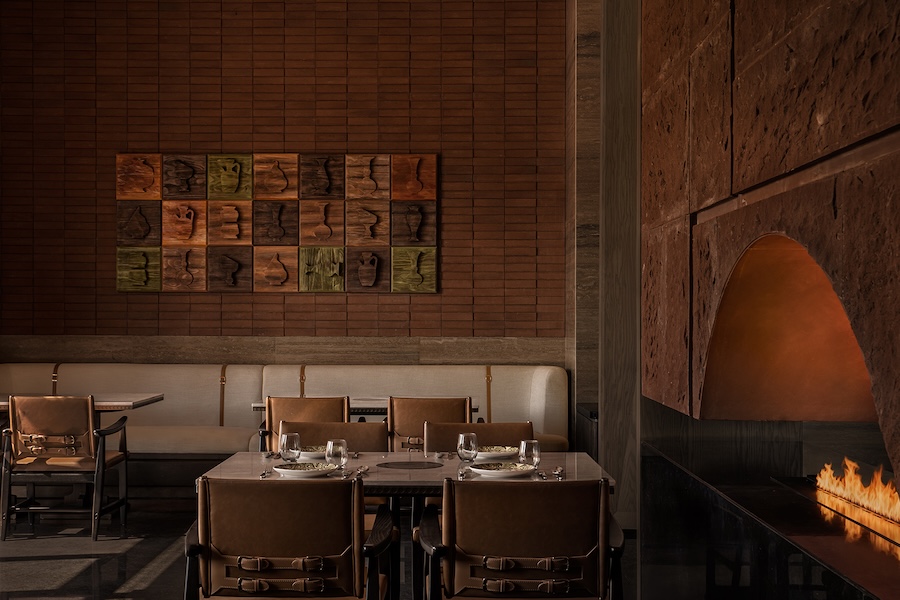
The all-day dining venue, SHOW · A Neighborhood Café, takes cues from Kazakh hospitality rituals. A circular bar serves as the visual centerpiece, with curved circulation paths and layered sightlines connecting indoor and outdoor dining areas. Material choices—including brick, stone, wood, and metal—reinforce a cohesive palette rooted in the local environment.
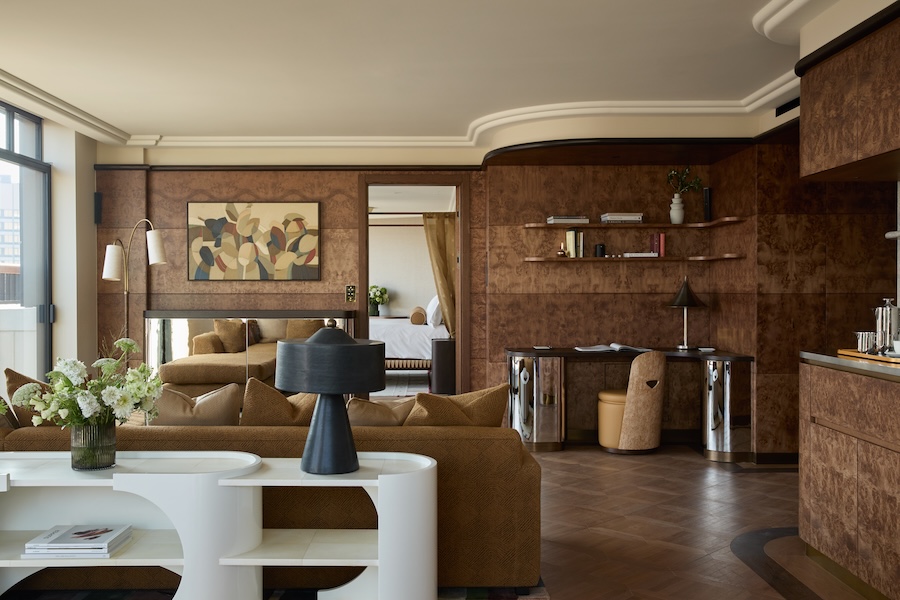
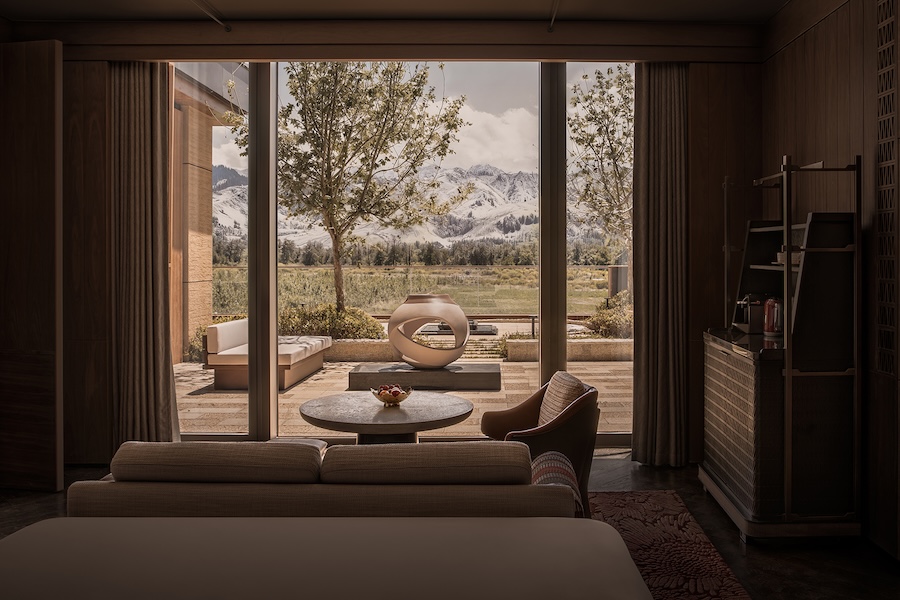
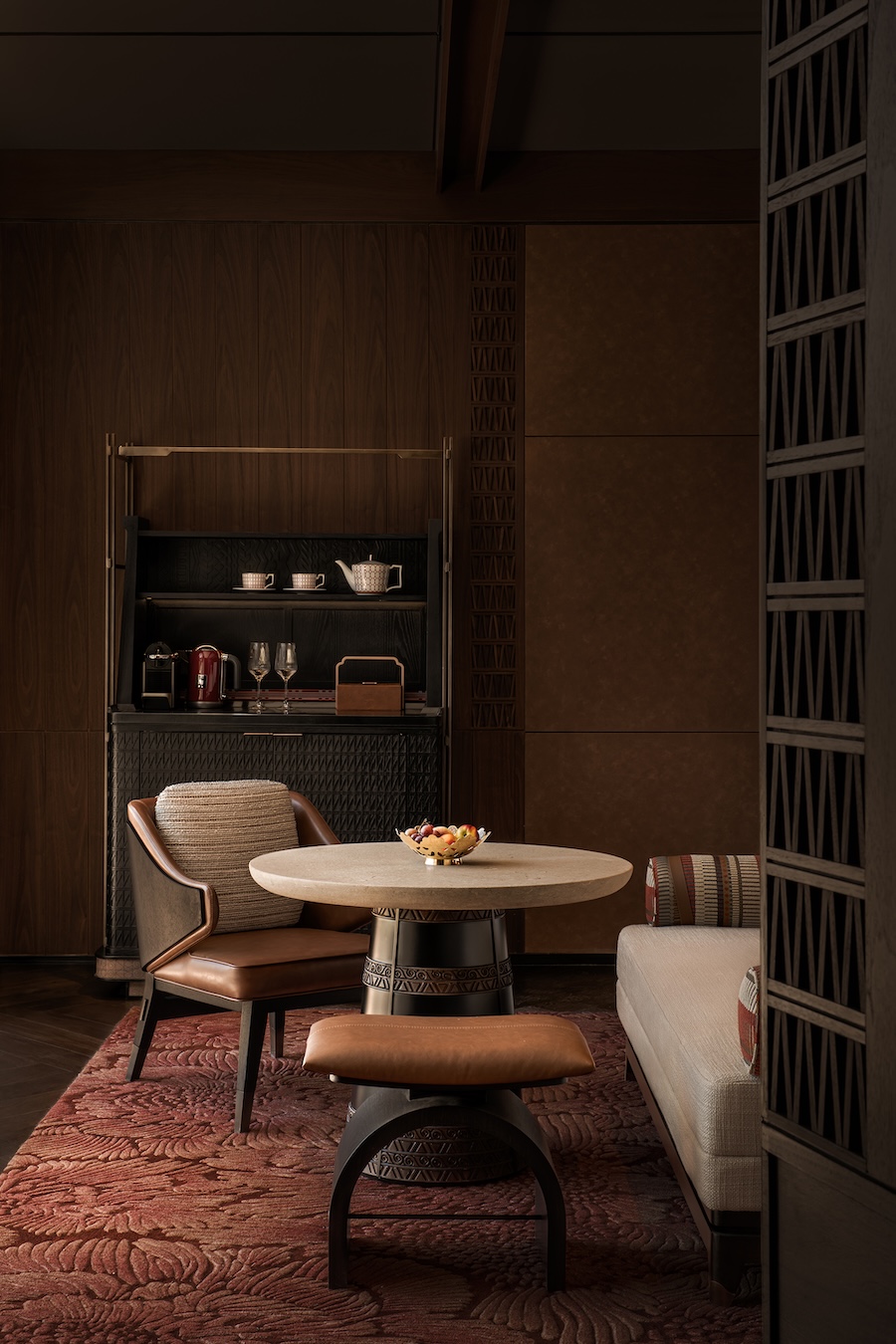
Guestrooms continue the narrative with carved wooden doors, skylights inspired by yurt construction, and partitions that reinterpret traditional lattice frameworks. Walls and carpets reference felt craftsmanship, complementing custom details like botanical artwork and locally inspired decorative objects. Bathrooms echo the same lattice language with warm wood finishes.
More from HD:
The 50 Best Hotel Openings of 2025
The Top Trends in Luxury Travel, According to Olivia Ferney
Trendspotting: Museum-Style Retail Stores