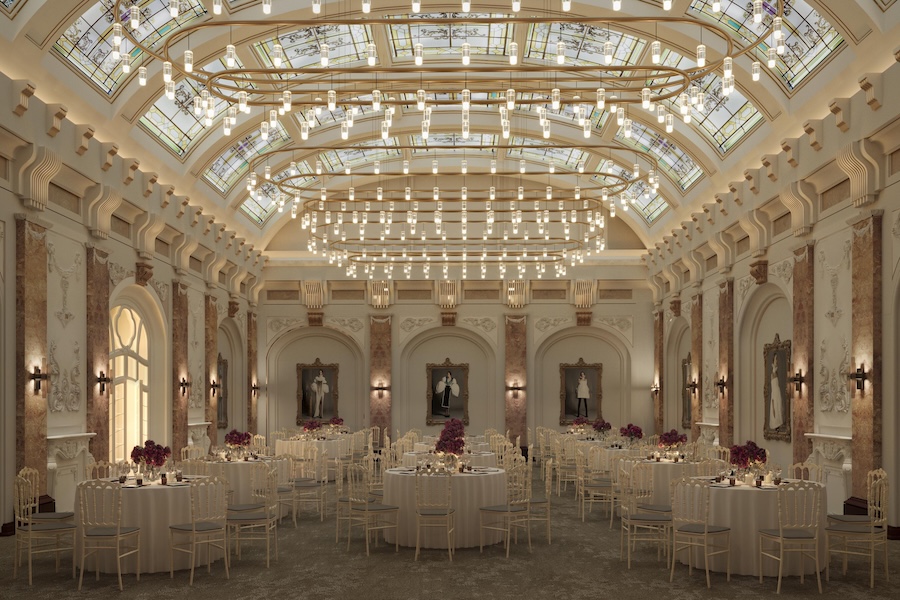
Ran & Morris Creative Partnership has completed the transformation of the historic Oscar Maugsch Palace in Bucharest’s University Square. Now the Sofitel Bucharest, the hotel comprises 157 guestrooms, two restaurants, a spa, an expansive lobby, and a multipurpose event hall.
The project resulted from a sensitive restoration and architectural joining of two adjacent buildings—one dating to the late 19th century and the other to the early 20th—carried out in collaboration with Romanian architecture firm Cumulus.
Rooted in Sofitel’s ethos of l’Art de Vivre, the design frames contemporary French luxury through the lens of Bucharest’s layered cultural identity, drawing inspiration from the Romanian city’s past as Mical Paris (or Little Paris). “Design has a relationship with the path of history, and it is from a convergence of historical elements that we built the narrative for this prominent Bucharest building,” says Ran Yanuv, cofounder of Ran & Morris.
 A lobby shaped by Parisian street life
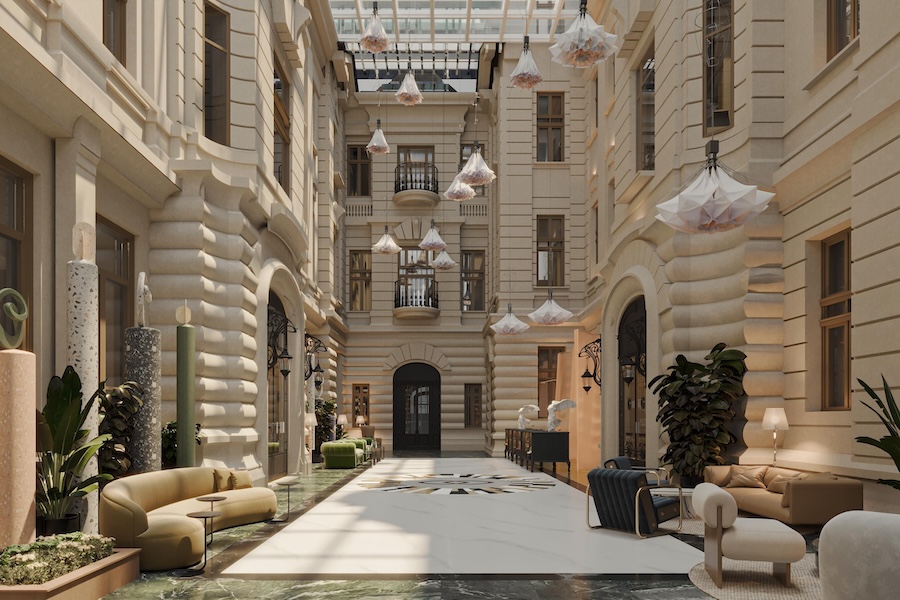
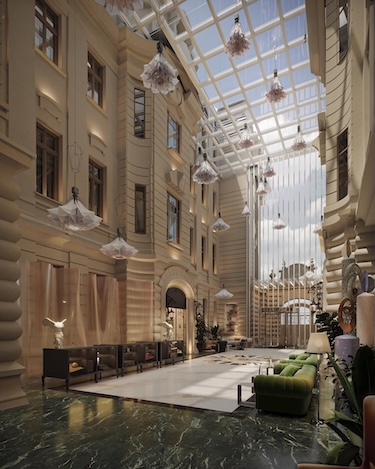
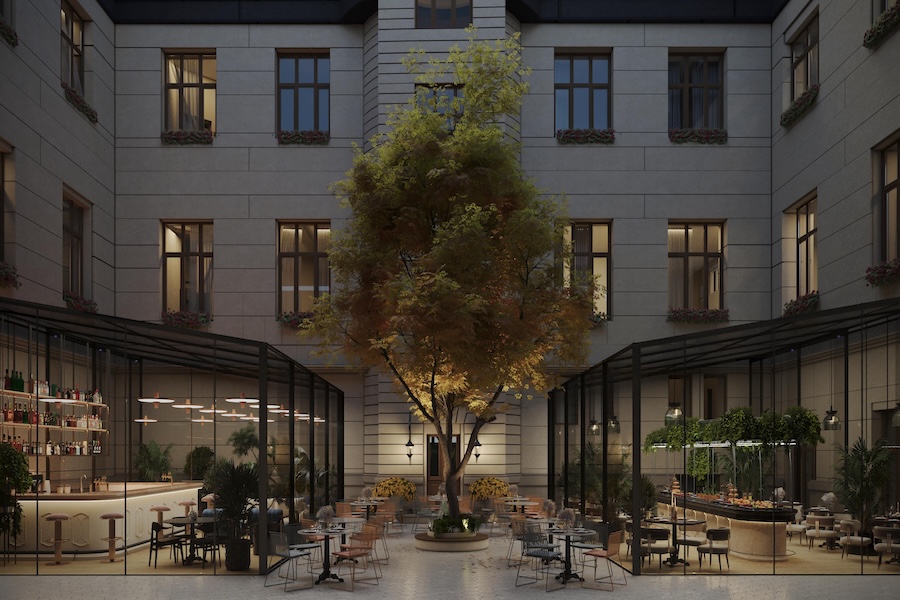
A former exterior servicing courtyard now houses the hotel’s entry sequence, leading into a dramatic lobby carved beneath a 46-feet‑high skylight that emphasizes the verticality of the space.
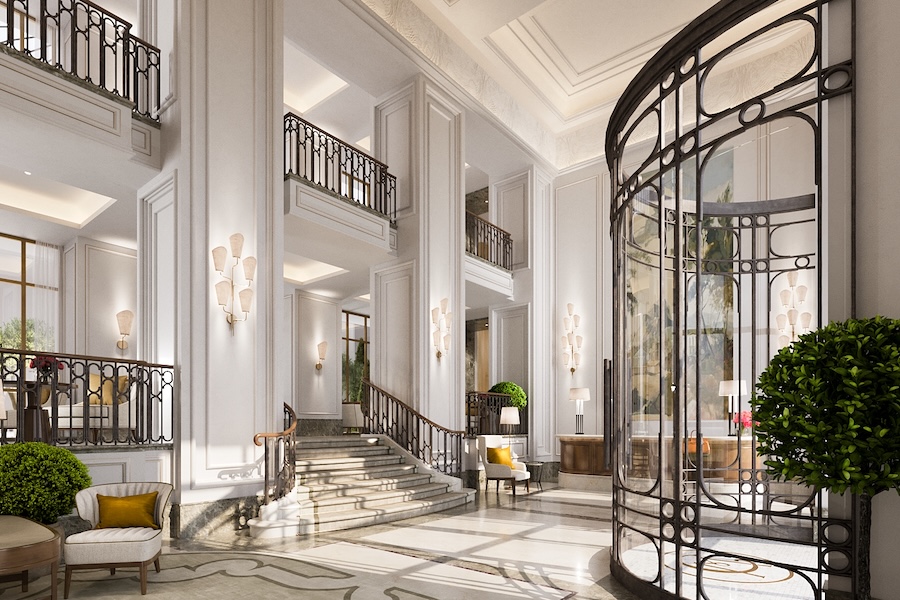
Here, many of the building’s architectural features were preserved, accentuated through soft curves, sculptural silhouettes, and warm classical tones. The design introduces a Paris‑inspired street feel, complete with a traditional French‑style café, layered seating, and kinetic lighting fixtures integrated across the expansive ceiling.
“Lobbies have traditionally been spaces where people typically sit and wait, but we proposed something far more dynamic that would attract people through its core functions,” says Morris Algazi, cofounder of Ran & Morris.
Materiality throughout Sofitel Bucharest
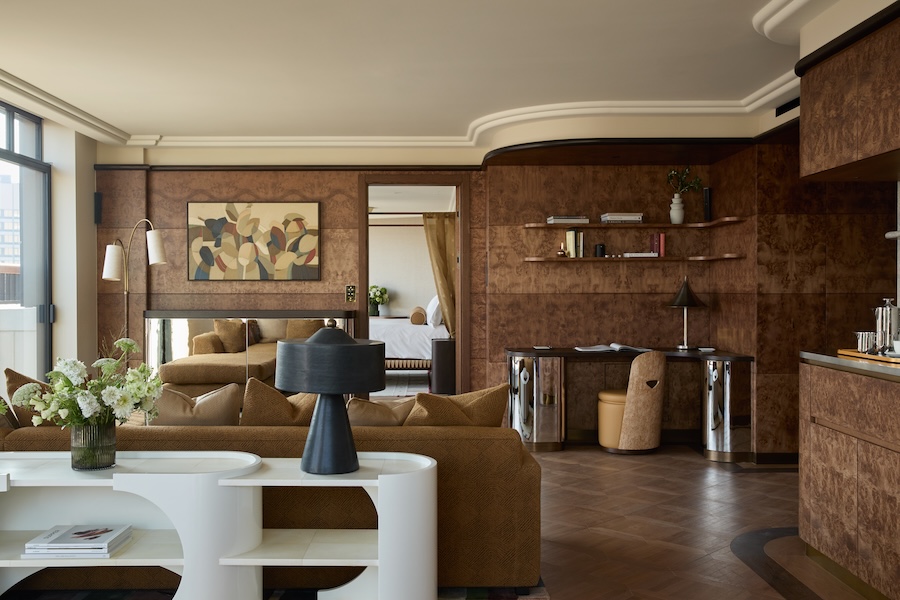
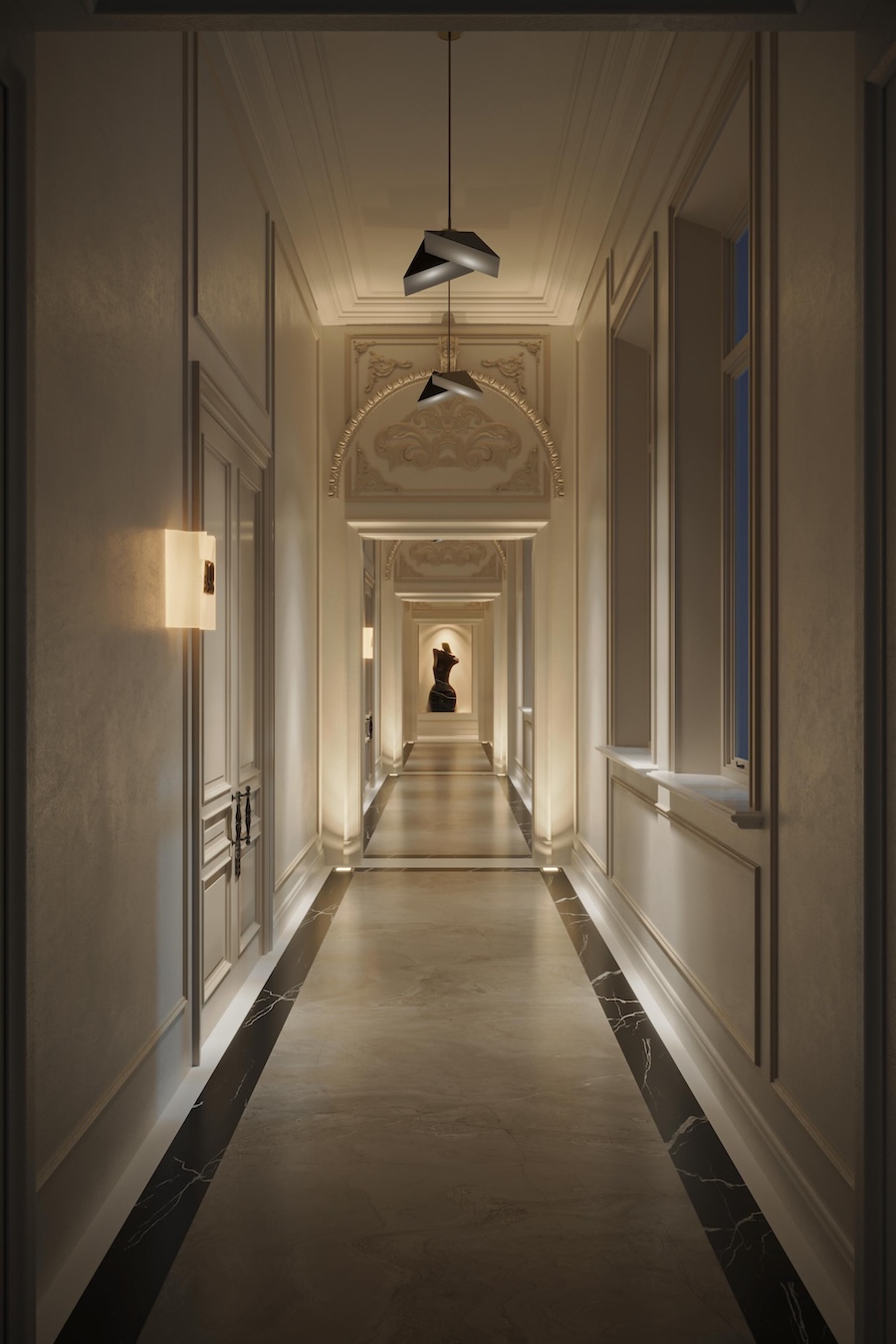
Throughout the hotel, tactile materials and delicate lighting bring modern polish to restored façades and ornamental stonework. A palette referencing limestone, brushed brass, and muted urban shadows threads through the interiors, while reinterpretations of neo‑classical motifs wrap bespoke Parisian furnishings dressed in textiles influenced by Romanian culture.
Original layouts in the guestrooms
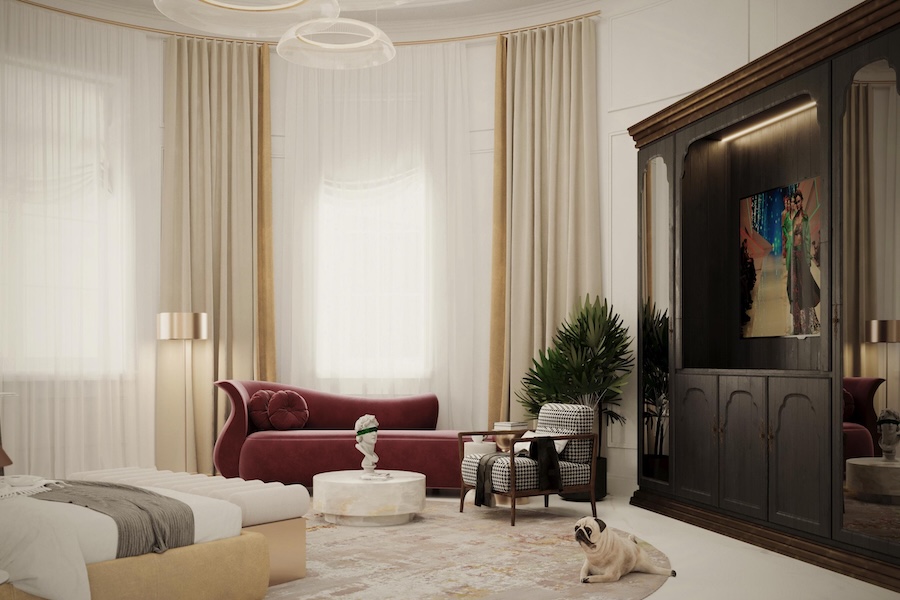
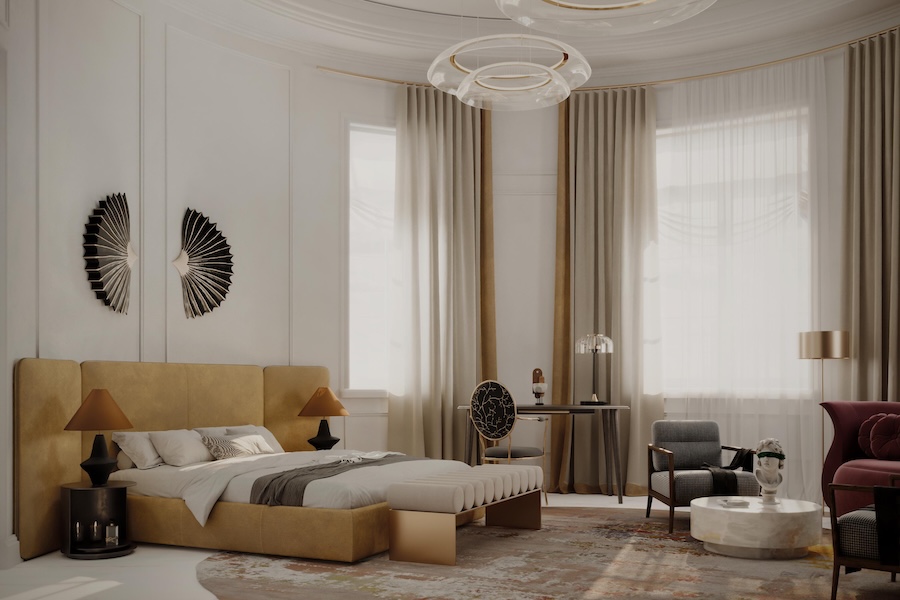
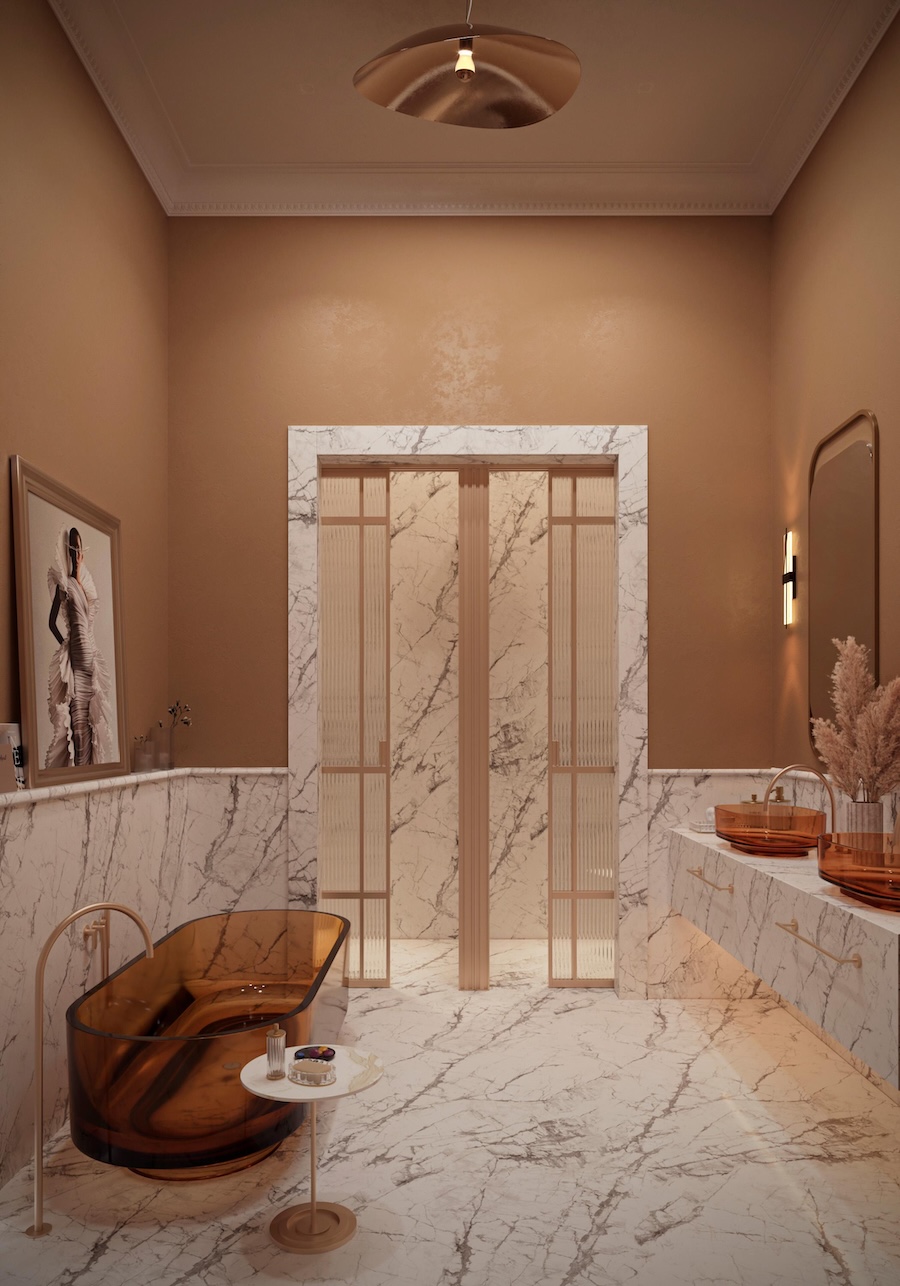
Given the buildings’ earlier residential and commercial uses, many original layouts were retained, resulting in guestrooms with varied footprints and distinctive proportions. Vaulted ceilings reaching nearly 13 feet create an airy feel, while marble or parquet flooring differentiates room types.
Custom headboards crafted by local carpenters introduce Romanian artistry alongside French furniture selected in collaboration with Sofitel’s supplier network.
“The idea of Bucharest once being known as ‘Little Paris’ was a central theme that guided all aspects of this project,” adds Yanuv. “It became our core vision, and the story that we focused on telling from the very beginning.”
More from HD:
The 50 Most-Anticipated Hotel Openings of 2026
Helle Mardahl’s Delightful Take on Everyday Objects
Trendspotting: Alcohol-Free Bars