Zaha Hadid Architects (ZHA) has been tapped to design the inaugural property for Vertex by NOT A HOTEL, a newly launched brand that explores the intersection of architecture and technology.
Set to rise on Japan’s Okinawa island, the project marks the first physical hotel under the NOT A HOTEL umbrella, which also includes the heritage-driven brand Heritage by NOT A HOTEL.
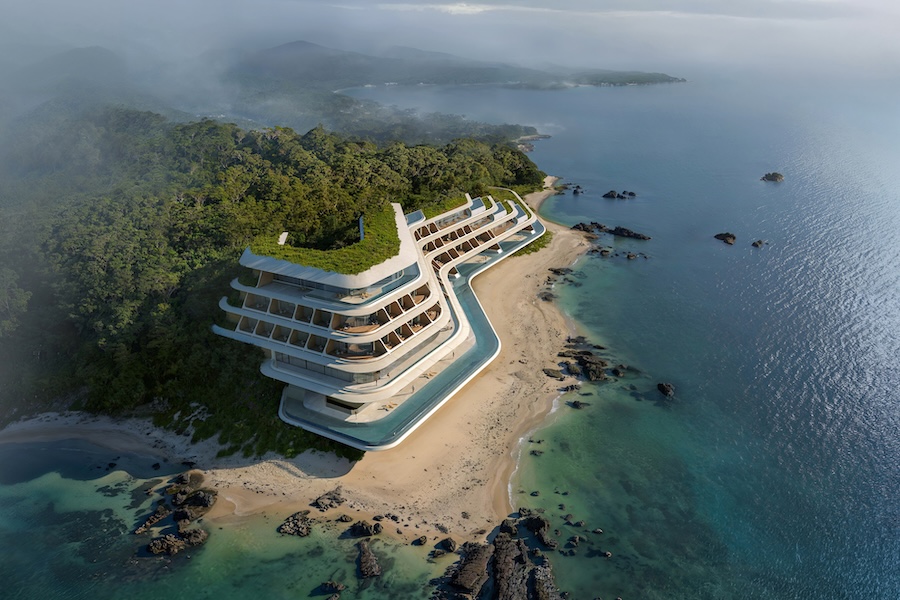
Located on a half-acre oceanfront site, the hotel is positioned between turquoise waters, white-sand beaches, and a dense subtropical forest shaped by ancient Ryukyu limestone formations.
A floating structure by Zaha Hadid Architects
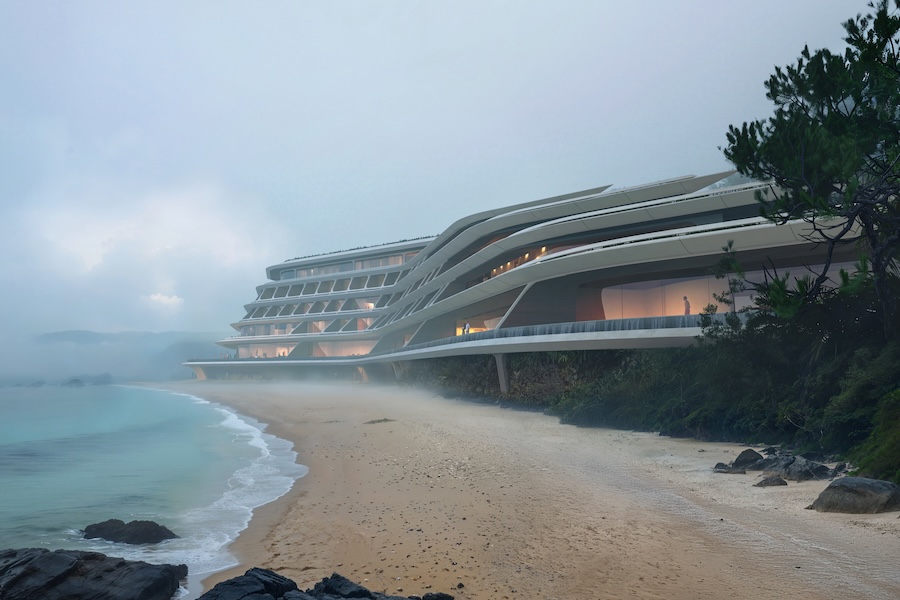
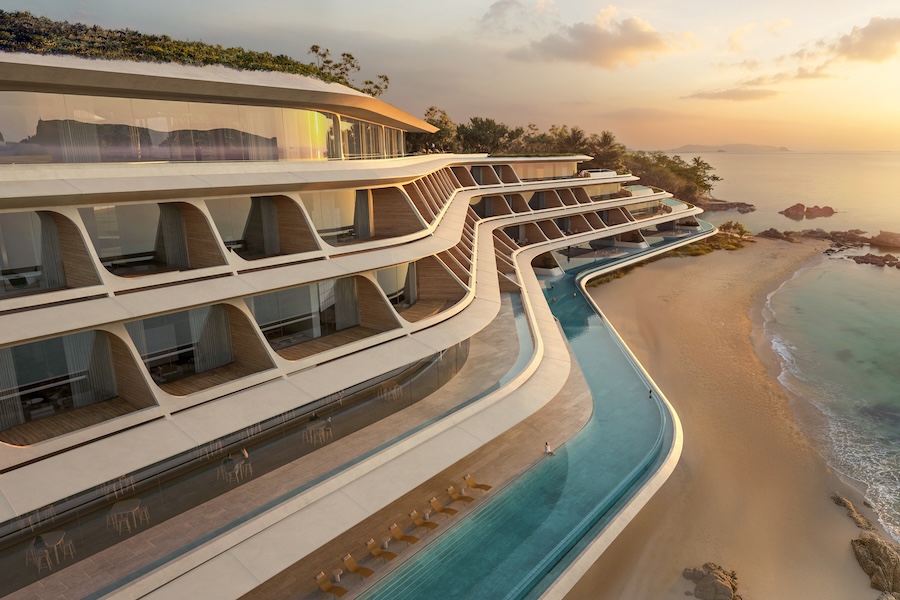
Rather than imposing on the landscape, ZHA’s design “floats” above the narrow boundary between forest and shore, minimizing disturbance to both ecosystems. Elevated 21-feet above the high-water line, the structure is engineered to withstand typhoons, storm surges, and seismic activity, ensuring resilience in Okinawa’s demanding coastal climate.
The architecture also follows the contours of the coastline, unfolding as a series of stepped terraces, courtyards, and gardens that echo the site’s natural topography. This approach preserves biodiversity while allowing uninterrupted ocean views.
Ensuring performance for Vertex by NOT A HOTEL
ZHA conducted a yearlong digital modeling of temperature, humidity, wind patterns, solar exposure, and rainfall to refine the building’s form and orientation. Distinctive canopies—developed through a solar study—extend from the structure to create shaded outdoor terraces and circulation paths. These deep overhangs reinterpret Okinawa’s vernacular architecture, offering passive cooling while framing views toward the sea.
Locally sourced limestone, intricately carved Okinawa pine, and regionally produced ceramics connect the project to the island’s material heritage, while modular prefabricated systems reduce construction impact. The concrete façade elements will incorporate recycled aggregates from decommissioned island structures, reinforcing a circular approach to building.
Also designed to harness the island’s prevailing Kāchibē winds, the hotel promotes natural ventilation throughout guestrooms and communal areas.
“Informed by the site’s remarkable topography, the design is a continuation of ZHA’s ongoing research of composition and materiality that is driven by explorations of landscape formations evident in nature,” says Ludovico Lombardi, project director at ZHA. “The stepped canopies of the hotel gently transition from the unique geology of the shoreline to the dense vegetation of the rain forest—giving uninterrupted views of the ocean and a deep connection to the surrounding environment, while providing a sense of privacy that enriches user experience and charts a journey through the varied natural ecosystems of the region.”
More from HD:
The 50 Best Hotel Openings of 2025
The Top Trends in Luxury Travel, According to Olivia Ferney
The Dominican Republic Undergoes a Renaissance