Architecture and design firm Baranowitz + Kronenberg has translated UK television game show “The Cube” into an immersive environment at Canary Wharf in London.
Originally broadcast in 2009, “The Cube” is defined by its 13-foot-by-13-foot glass cube in which contestants partake in physical and mental challenges. Bringing this experience off screen required more than replication. Instead, Baranowitz + Kronenberg applied a people-first design methodology, creating an environment that allows for fluid transitions between player and spectator, blurring boundaries between gameplay, observation, and leisure.
Inside the vibrant world of the Cube Canary Wharf
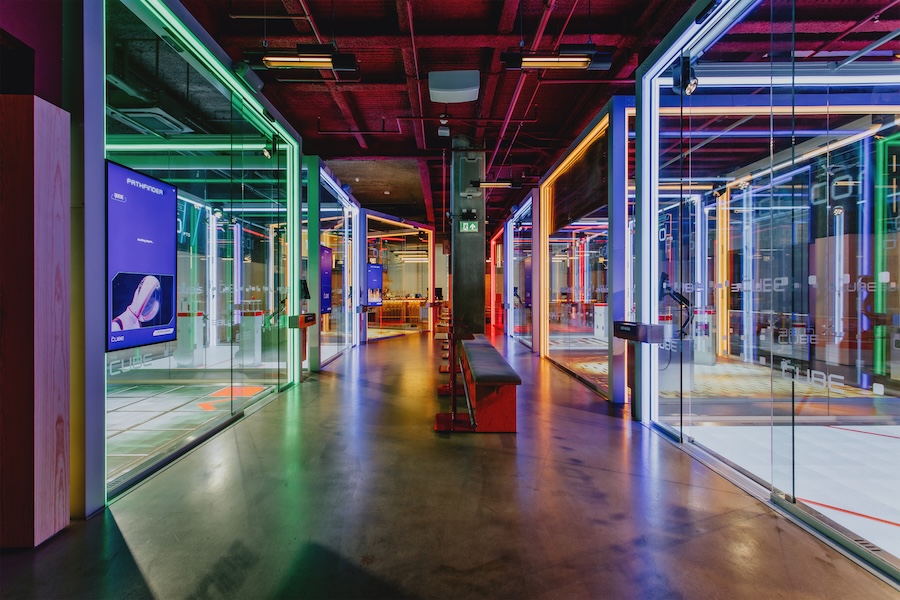
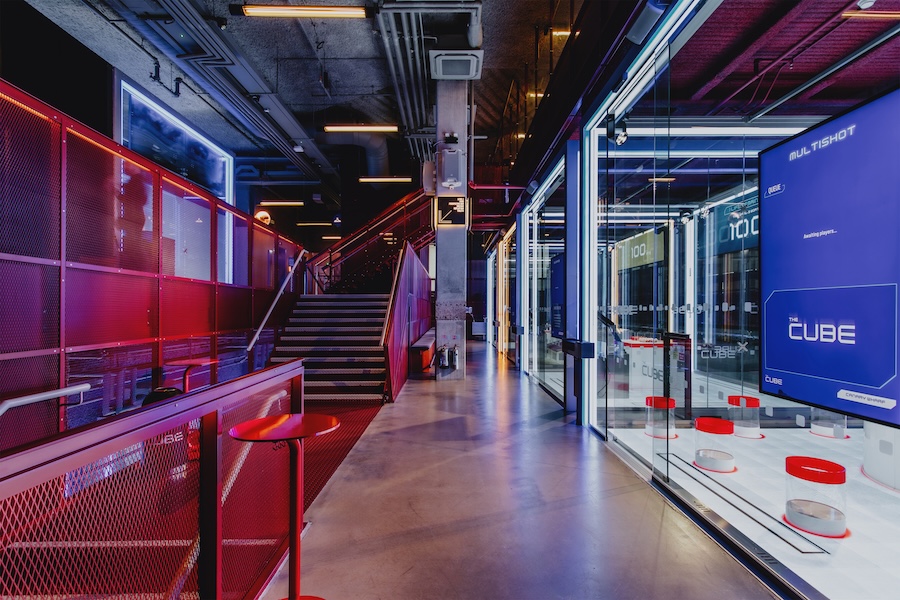
The 27,000-square-foot venue occupies two floors of a newly constructed mixed-use building and is conceived as a single, continuous interior landscape. About 1,500 square feet of reinforced concrete slab was removed, creating a dramatic vertical opening that visually and physically connects levels while enhancing circulation.
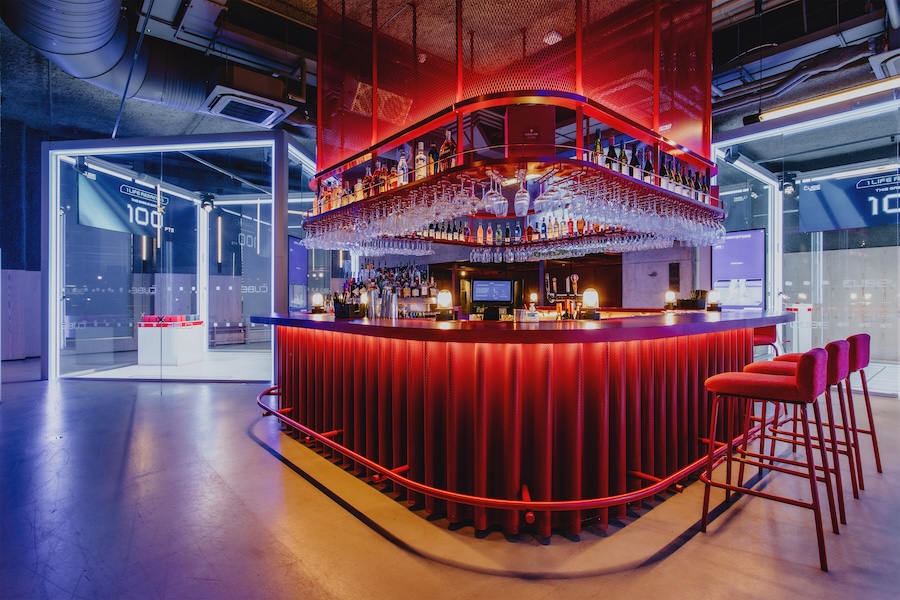
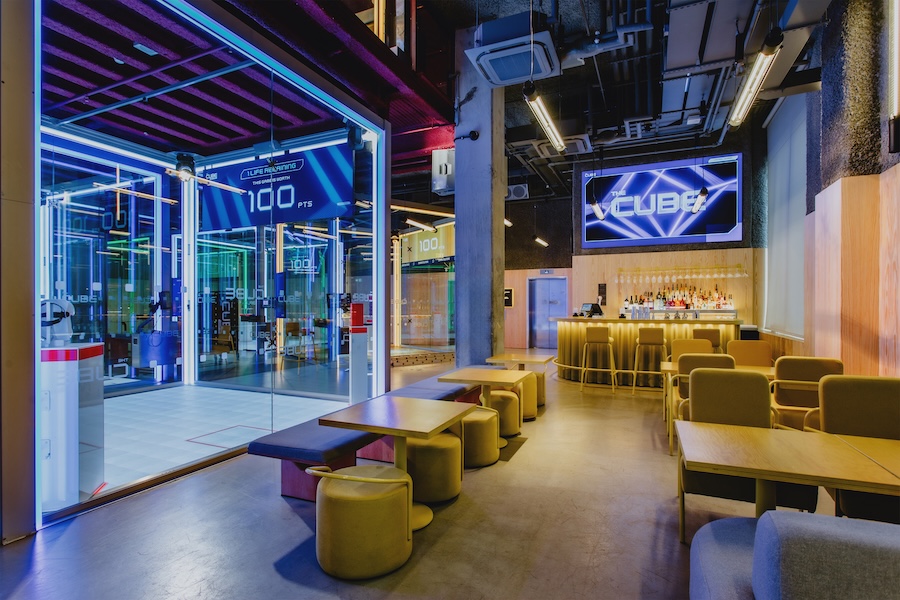
At the heart of the plan is a constellation of 21 cubes, interspersed with seven bars, lounges, and a restaurant. The cubes are stacked, layered, and distributed throughout the venue, allowing views across multiple games and encouraging movement rather than fixed seating.
Balancing contrasts
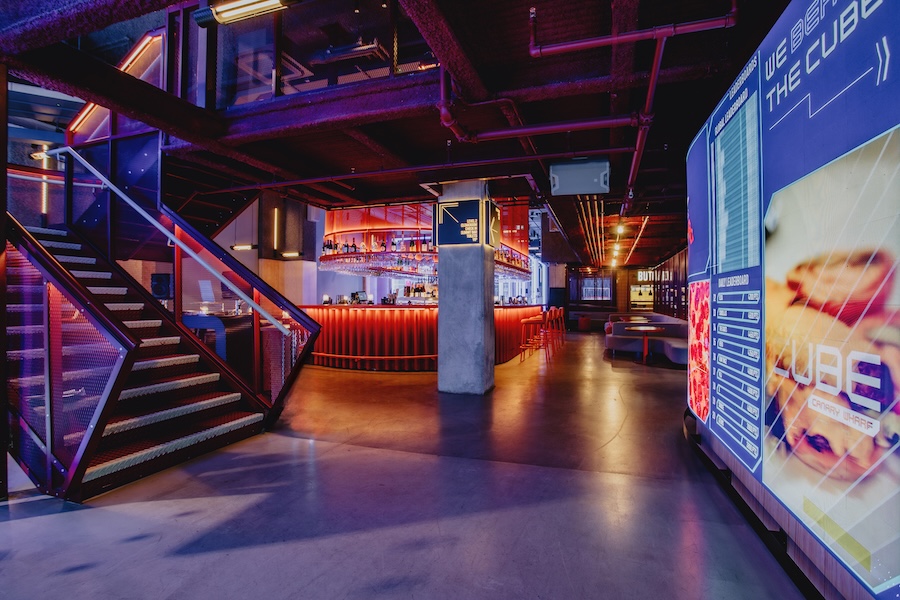
Drawing from Canary Wharf’s evolution from industrial docklands to a global center of finance and digital commerce, the design balances raw and refined elements. Concrete, exposed steel and Douglas fir plywood reference the site’s industrial past, while aluminum detailing, glass enclosures, and high-tech LCD floors and walls introduce a distinctly modern layer.
“The challenge with the Cube was never about replicating what audiences already know from television, but about translating an emotional experience into physical space,” says Alon Baranowitz, cofounder of Baranowitz + Kronenberg. “We were fascinated by the idea of taking something virtual and making it tangible—a place where tension, anticipation, and human reaction could be felt, shared, and amplified through architecture.”
More from HD:
The 50 Most-Anticipated Hotel Openings of 2026
Helle Mardahl’s Delightful Take on Everyday Objects
Trendspotting: Alcohol-Free Bars