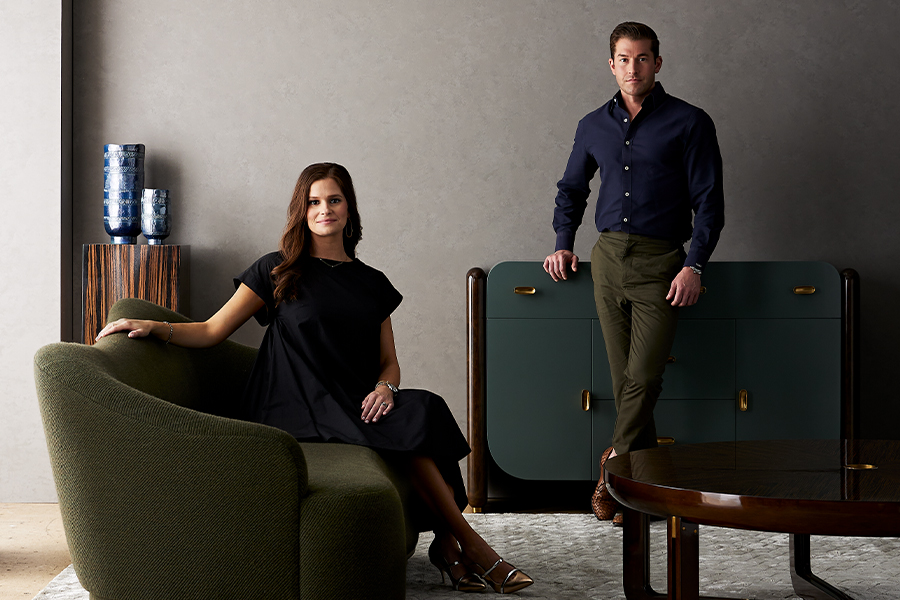
Bertha González Nieves was relishing an exhibition on the history of Mexican glassmaking at the Museo de Arte Popular in Mexico City when she was moved by a display of old-school decanters. González Nieves and Robert Pittman, cofounder of American television channel MTV, were planning to introduce Casa Dragones, a small-batch sipping tequila to the market, and “I thought what if we made a modern version of the bottle in crystal, something that pointed to the tequila’s production process.”
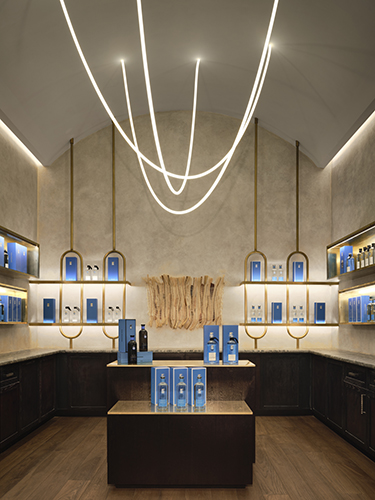
Shelving in La Casa Dragones mimics the tequila bottle’s silhouette
In 2009, Casa Dragones launched with Joven, a blend of 100 percent blue agave silver and extra-aged tequila housed in those chic crystal vessels González Nieves imagined. Engraved by hand, employing the pepita technique by Mexican artisans, the bottles feature a splash of blue that nods to the Dragones cavalry of San Miguel de Allende, masterminds of the Mexican War of Independence in 1810.
For four months, González Nieves learned from a historian, unearthing details that were woven into the packaging. “In Mexico, we’re not afraid to use color,” she says. “We wanted a color that was Mexican, elegant, and could identify us.” So, drawing from the cavalry’s flag and uniforms, she opted for a bright blue and incorporated the number 16, a reference to both September 16th, the date the war started, and the address of the cavalry’s stables.
The Casa Dragones aesthetic is key to the brand’s narrative of craftsmanship. “When I was younger, I didn’t articulate it, but I was always interested in design and admired design. It’s another source of inspiration,” adds González Nieves.
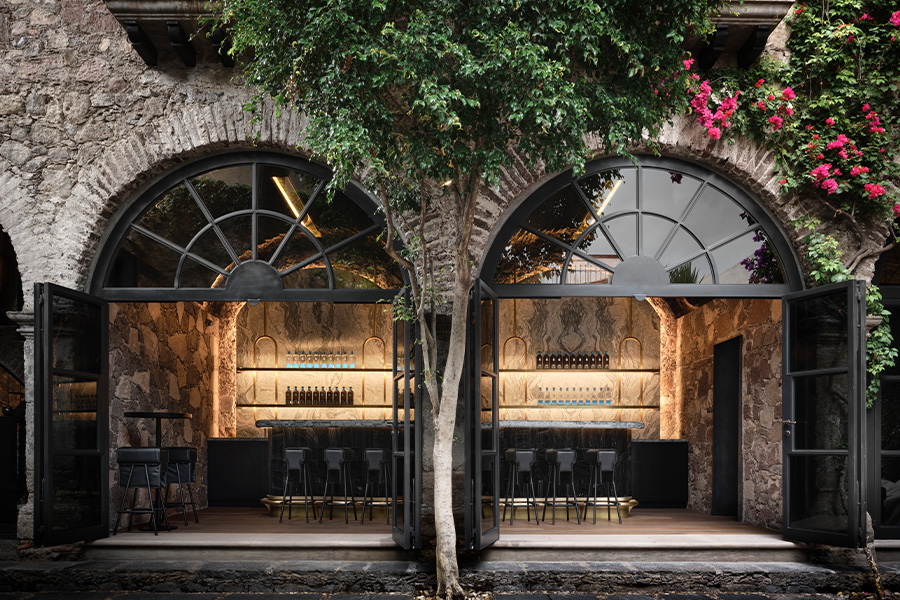
At the obsidian-graced bar in La Casa Dragones, patrons can sit in stools as if they are riding a horse
Raised by an entrepreneurial family in Mexico City, where she studied business administration at Universidad Anáhuac, González Nieves first pursued a career in marketing, consulting at Booz Allen Hamilton and receiving a master’s degree in integrated marketing communications from Northwestern University in Chicago.
But it was the tequila industry that captivated her. In her early 20s, González Nieves was selected by the Japanese government to represent Mexico in a global program. On a visit to Jalisco—Mexico’s hub of tequila production—she was seduced by the process, and later spent a decade working for Grupo Cuervo, the country’s oldest tequila producer. Developing high-end Casa Dragones marked an evolution of her career, an opportunity to fuse an elevated Mexican drinking ritual with the country’s culture and heritage.
She has a passion for storytelling, and beyond the product’s eye-catching appeal, embraces architecture and interiors to forge a connection with the liquid. “Luxury is about collecting experiences. We set on a quest to delivering true sipping tequilas that invite people to see the spirit in another light,” says González Nieves. “We’re bringing attention to taste in a different way. We’re convincing people that tequila can be savored like a cognac or whiskey, and we believe the environment plays a role in that,” she says.
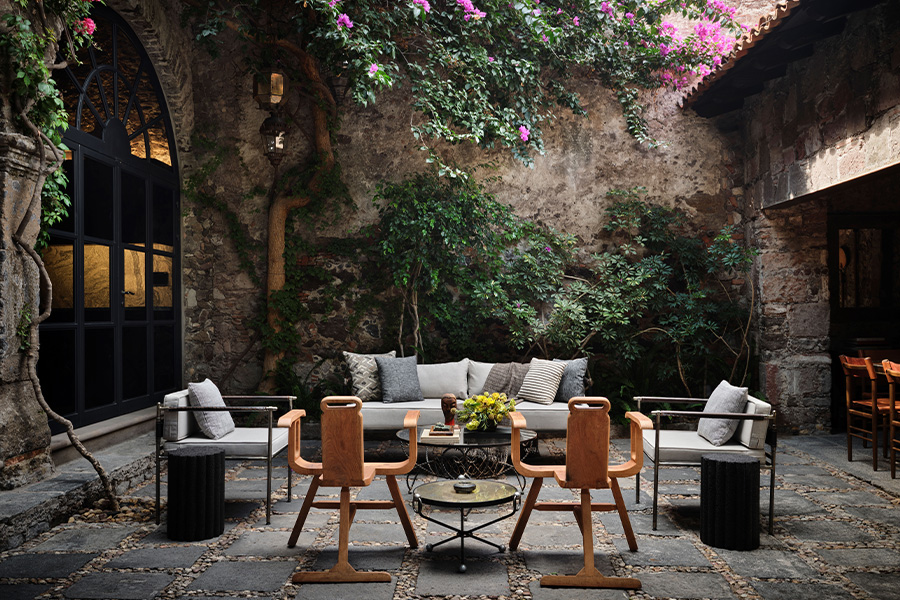
A duo of updated Partera chairs crafted from mesquite stand out in the courtyard at La Casa Dragones
While Casa Dragones is produced in Jalisco, its headquarters are in San Miguel de Allende, a UNESCO World Heritage Site. To deepen the tequila’s relationship with this well-preserved city in Guanajuato, Casa Dragones debuted its six-seat tasting room—dubbed the smallest tequila bar in the world—at Dôce 18 Concept House in 2016, boasting a design from local architect Marco Martinez Valle and New York-based firm Meyer Davis.
Done up in some 4,000 obsidian tiles, “it brings the terroir in and captures the agave fields. We ask visitors to close their eyes and listen to the sound of what’s around them, so they are transported from a visual, audio, aroma, and taste perspective. Design is the first interaction before tasting the tequila and going on a sipping journey,” González Nieves says.
The success of the tasting room paved the way to the restoration of La Casa Dragones, the 17th-century stables alluded to on the bottle, that González Nieves had previously used as a residence. Once again, she turned to Martinez Valle and Meyer Davis, as well as curator Ana Elena Mallet and designer Raul Cabra, to revive the four-bedroom La Casa Dragones and bring out the home’s original shine.
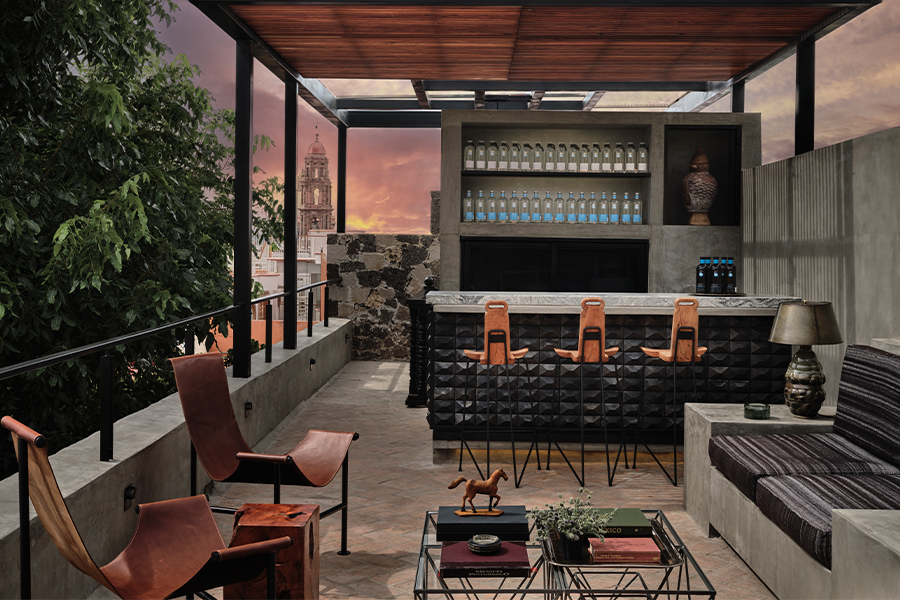
The rooftop deck provides another al fresco perch for gathering at La Casa Dragones
Upstairs is the Casa Dragones showroom, with shelving that mimics the bottles’ curves. Downstairs is the beveled bar and stools that playfully call to mind the cavalry because patrons can sit in them as if they are riding a horse. Above, the ceiling is swathed in obsidian. “We brought in these huge volcanic rock boulders from Jalisco. Obsidian is dense but fragile,” González Nieves points out.
Indeed, La Casa Dragones is a destination for design as much as it is tequila. San Miguel de Allende is part of the Bajío region, “a favorite for midcentury artists from all over the world who made that area their home because of the quality of the raw materials and the ability of the local craftspeople to work with the materials,” says González Nieves.
Throughout Casa Dragones, vintage items sourced from auctions and flea markets are married with pieces by contemporary designers influenced by that heady era. A timeworn saddle, for example, is paired with a 1930s William Spratling Butaque armchair and Rachel Horn’s dining table mixes with a neo-Aztec lamp and tools from the agave fields. Fernando Laposse’s Pup bench, made with agave fibers, reinforces the mesmerizing setting, while La Embajada Original’s solid mesquite Partera chair reimagines a 16th-century birthing seat. “There are layers of design history in the house,” says González Nieves. “The textures are all about awakening the visual senses before tasting.”
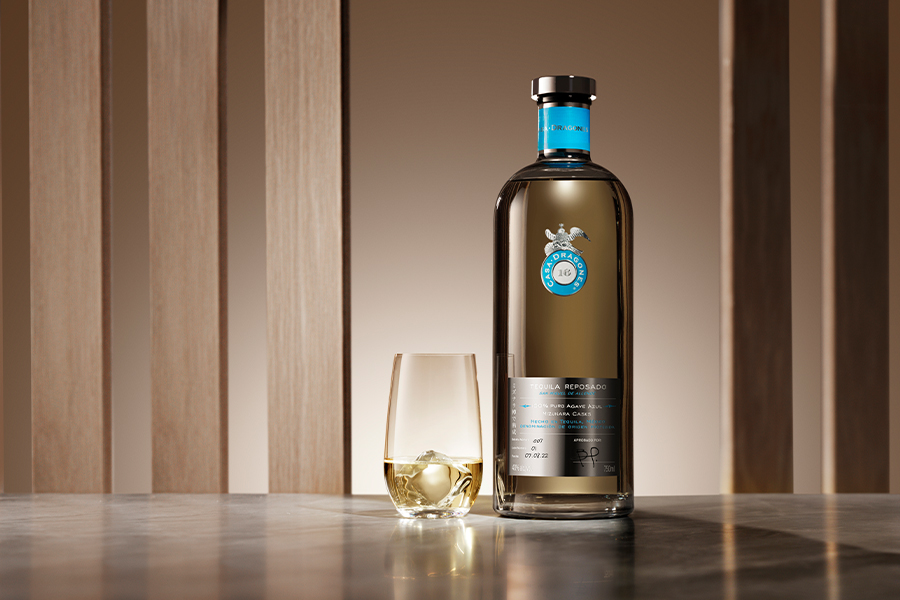
A bottle of Casa Dragones reposado tequila, flaunting the brand’s signature splash of bright blue
This article originally appeared in HD’s November 2025 issue.