Across Europe and beyond, independent hoteliers are redefining what it means to create a destination—one that resonates as much with locals as it does with travelers.
From the urban reinvention of Vienna’s Westbahnhof district by Companion Hospitality Group to Jonas Stenberg’s ever-evolving, experience-driven resorts at ESS Group in Scandinavia, and Susana Ospina’s deeply immersive, wellness-led vision for Nômade Temple, each approach is distinct in form yet aligned in spirit.
Together, they reveal a shared ambition: to move beyond traditional hospitality models and, instead, craft layered environments where design, community, and emotion converge to shape how—and why—people gather.
Florian Kollenz, Michael Todt, Kai Hollmann and Christian Lainer
Companion Hospitality Group
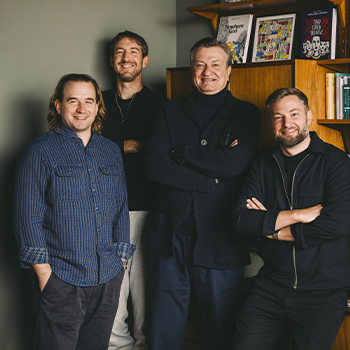 The area surrounding Vienna’s Westbahnhof railway station is a gritty departure from the tourist-packed idyll of the Innere Stadt. But it’s that energetic backdrop that fuels the Companion Vienna. Conceived by Kai Hollmann—cofounder of 25hours Hotels—Florian Kollenz, Christian Lainer, and Michael Todt (the team behind the playful 178-room Superbude Vienna Prater designed by local studios Atelier Karasinski and Archiguards), the 138-key hotel brings a much-needed dose of sophistication to the neighborhood.
“When we were presented with the late-19th-century building, we knew it was an interesting site and had potential, but it didn’t feel like another Superbude to us,” says Kollenz. “With the room sizes, it was asking for something different, so we created something new from scratch.” The Companion Vienna is the first in what the partners envision as a collection of hotels, that, like Superbude, champion a convivial lobby culture. “We want a place for travelers and locals to come together,” says Kollenz.
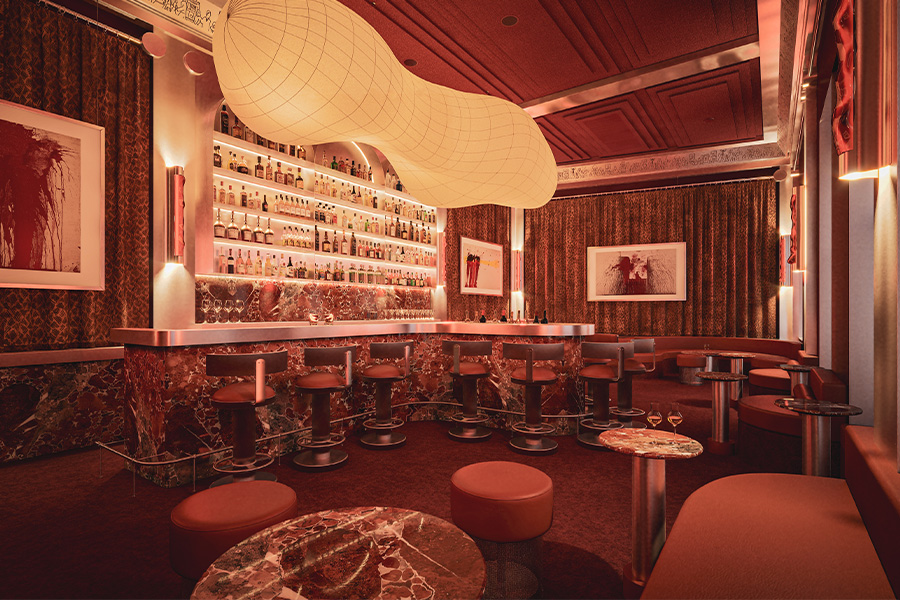
Calypso, the cinematic bar at the Companion Vienna, shown in a rendering
Indeed, there are plenty of opportunities that encourage serendipitous social encounters. Enthralled by weStudio’s design of the cōmodo hotel in Austrian ski and spa town Bad Gastein, the founders tasked the Berlin design practice with the moody interiors.
Striking features from the existing structure were preserved like the central spiral staircase, and damaged plaster ceilings on the ground level. “Instead of hiding it, we thought, let’s combine it with something intentional like the terrazzo flooring,” Kollenz explains. Throughout, lighting flaunting grid details that nod to Josef Hoffmann and the Wiener Werkstätte mesh with a vivid palette of green, red, and blue.
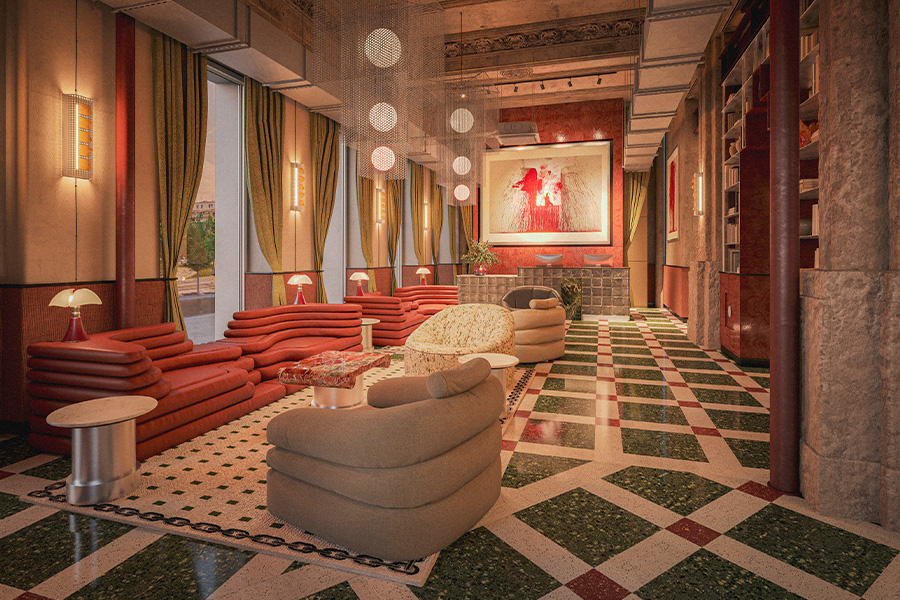
A rendering of the Companion Vienna’s glamorous lobby
Beyond the guestrooms, which include the skylit-capped Nest and the bi-level Velvet suite heightened by panoramic views, there is the sprawling lobby. Here, guests dine at Boca, then chat by the wood-burning fireplace. They might also head to Calypso. The bar, which takes cues from the nearby Loos American Bar and Standard Hotels hangouts, beckons with a curving stone counter and intimate banquettes.
Another reprieve is the landscaped courtyard. Reached directly from Boca and Calypso, it revolves around an old, hardy tree that feels miles away from rumbling trains. “You can’t hear the street,” says Kollenz. “Suddenly, you’re in an oasis.”
Jonas Stenberg
ESS Group
 Ystad Saltsjöbad, just under an hour from Malmö, Sweden, is the 139-room pool-laden resort that launched ESS Group onto the Scandinavian hospitality scene in 2007. Dating from 1897, the historic property had declined over the years but buoyed by the vision of reimagining it as a shiny, new coastal playground, Jonas Stenberg acquired it.
“I managed to scrape together the investment, but it came with a personal guarantee of over a half million dollars, so the motivation was at its peak,” recalls Stenberg, founder and CEO of ESS Group. “I didn’t have a clear strategy; it has evolved over the years. Everything has been about maintaining a sharp focus on creating reasons to travel and exceeding our guests’ expectations. We see ourselves more as a Disneyland for adults, where we keep adding new attractions all the time. A home away from home.”
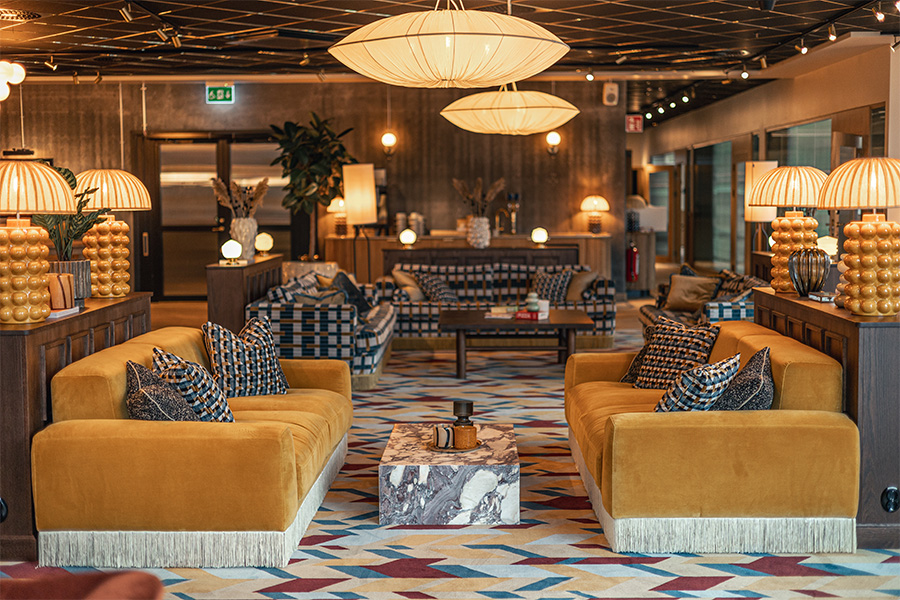
One of the lively perches at Jacy’z mixes contrasting patterns with fringe details
Since the revival of Ystad Saltsjöbad, ESS Group has expanded its footprint across the Nordic region with a collection of chic, one-of-a-kind hotels. In Sweden, for instance, there’s the Art Deco Hotel Pigalle in Gothenburg and the Steam Hotel in Västerås. Fýri Resort seduces with its mountain views in Hemsedal, Norway, and most recently, Rox Resort in Køge, Denmark, not far from Copenhagen, comes to the rescue of urban fatigue. The Bergendal Hotel north of Stockholm in Sollentuna is slated for a spiffed-up debut in 2028.
Gothenburg-based Spik Studios serves as the in-house design team for ESS Group and thoughtfully layers in bespoke elements with “warm, cozy environments that feel alive and full of guests,” he says.
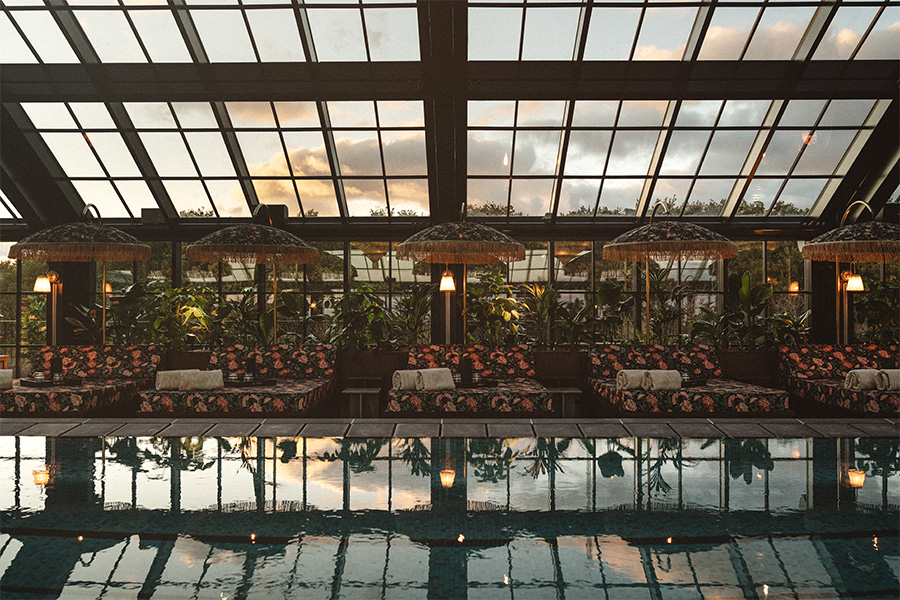
The centerpiece pool at Rox Resort in Køge, Denmark
Rox, the most ambitious property in the portfolio, reflects ESS Group’s dedication to unpredictable wellness spaces, ones “where food, drinks, music, and service take centerstage and there are no cucumbers on the eyes and no whale sounds,” as Stenberg describes it. This ethos is exemplified in the capacious rooftop pool club emanating Miami vibes.
Restaurants and bars buzzy enough to attract locals add another dimension to ESS Group’s identity. Take Rox, where guests meander between R.H Smith steakhouse and hidden cocktail hangout Birdcage. “Food and drink in the company of good friends is the most important thing to us personally,” says Stenberg. “It’s such a crucial piece in everything we do.”
Susana Ospina
Nomade People
 Propelled by the notion of celebratory healing, Nômade Temple invites guests to dive deep into the realm of self-awareness through music, art, food, and ritual. Just as important is wellness, and at Nômade’s two Mexican properties, community gatherings and visits to the GÖN House of Healing spa are balanced with expertise from breathwork and Chinese medicine specialists.
“Nômade was born out of the need to find an alternative way of dealing with emotions in the times we live in,” says Susana Ospina, vice president of brands at hospitality company Nomade People. “In a world that moves at an ever-faster pace and feels increasingly disconnected, just as we learn to read, dance, or drive, today we also need spaces where we can learn to reconnect with our emotions.”
The first Nômade in Tulum opened in 2015 and has grown to include 58 guestrooms and suites, five treehouses, and 35 tents. Nômade Temple Holbox, a new-build on the northern coast of the Yucatán Peninsula, followed in 2022, with 30 treehouses, oceanfront, and canvas-walled Moon Temple offerings. Shady beachfront accommodations are “designed like oversized palm leaves, opening toward the horizon,” says Ospina. “If Tulum carries the energy of sunrise, powerful and activating, Holbox represents sunset, softer, slower, more contemplative.”
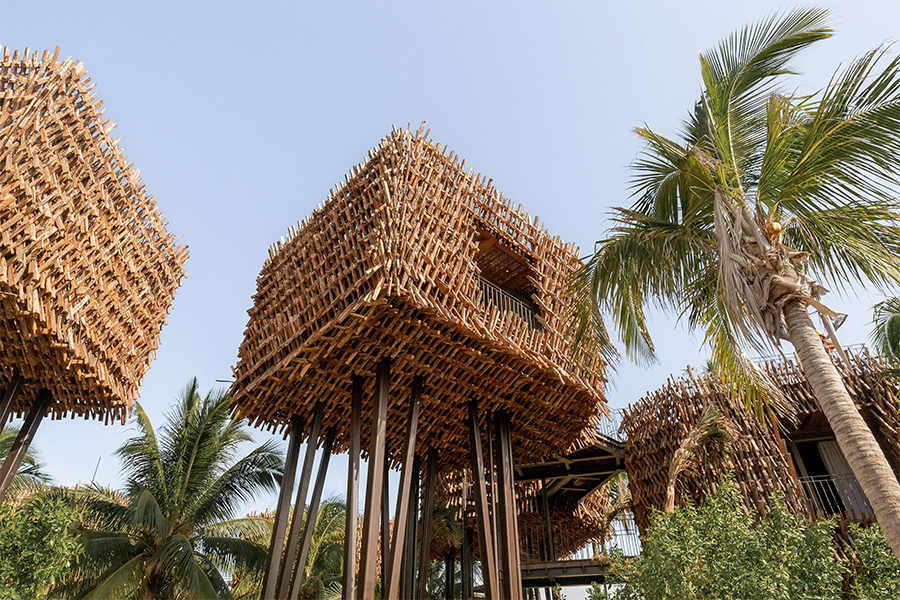
The Jungle Treehouse at Nômade Temple Holbox offers 360-degree views of the landscape
What unifies both properties is not the aesthetic, she explains—although both designs come courtesy of Argentinian architect and Nômade cofounder Sebastian Sas—but a philosophy of “architecture that follows nature, regional materials, and spaces designed to support transformation and rest.” Consider the elevated treehouses reminiscent of birds’ nests and the embrace of bajareque, interwoven wooden sticks that “filter light and air, casting moving shadows throughout the day and allowing the buildings to breathe,” she adds.
Although Nômade is poised to expand further across Mexico—with outposts planned for Florida, New York, and California—its next chapter unfolds in Spain, where new locations are set to debut in Madrid’s Barrio de las Letras and on the shores of Ibiza.
The latter aims to exude the “bohemian spirit of the 1960s and ’70s, when Ibiza became a haven for musicians and artists,” explains Ospina. “With a cala offering access to the sea and dramatic cliffs surrounding it, it is the perfect place for guests to integrate harmoniously, in symbiosis with the ecosystem.
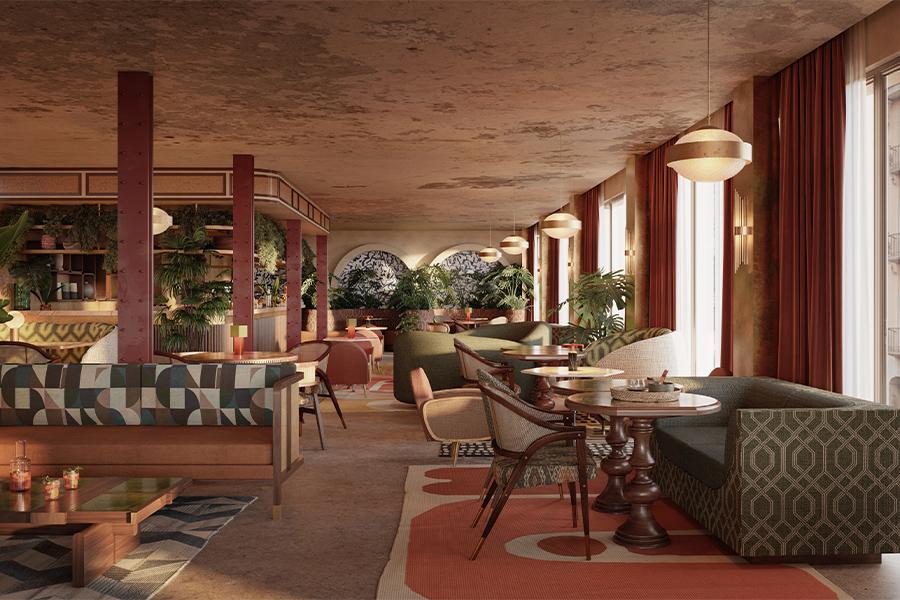
A rendering of the coworking space at Nômade Temple Madrid
Photos by Julio Chang, Juan Manuel Pastorino, Caroline Sternsdorf, and courtesy of Companion Hospitality Group, Ess Group, and Nomade People
This article originally appeared in HD’s February/March 2026 issue.