Functionality fueled the multifamily housing units of yore, but today’s homeowners and renters crave more than comfort. Proximity to nature, access to wellness facilities, and dedicated spaces for working and socializing are all coveted as much as square footage.
Consider the Huron in Brooklyn, New York. Completed by local firm Morris Adjmi Architects in 2024, its two waterfront towers of 171 condominiums are heightened by a mosaic-tiled pool, roof terraces, coworking spaces, cozy lounge spaces, and more. Here are four other projects—recently unveiled or underway— that take cues from lifestyle-driven hotels.
Jean-Georges Miami Tropic Residences
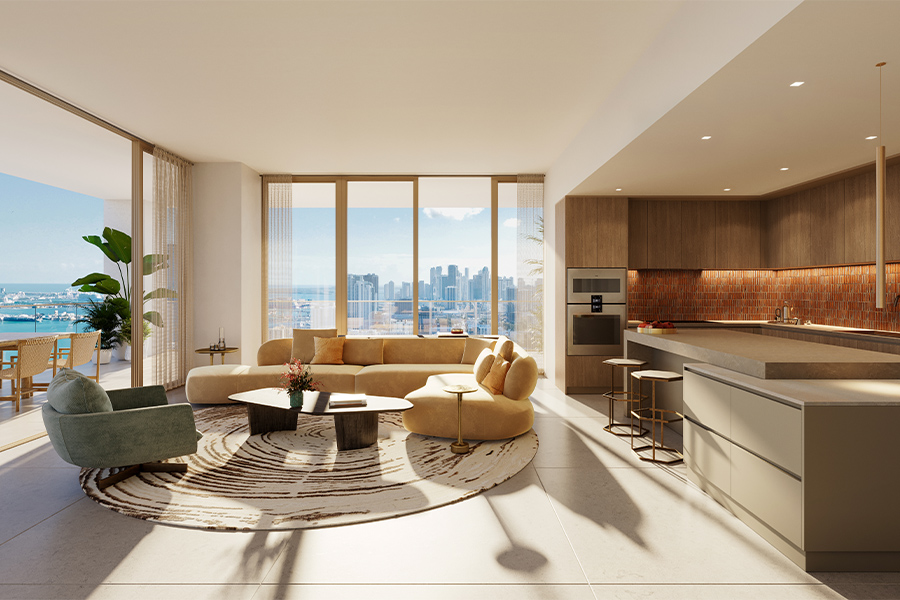
A chef-style kitchen will adorn living spaces at the Jean-Georges Miami Tropic Residences
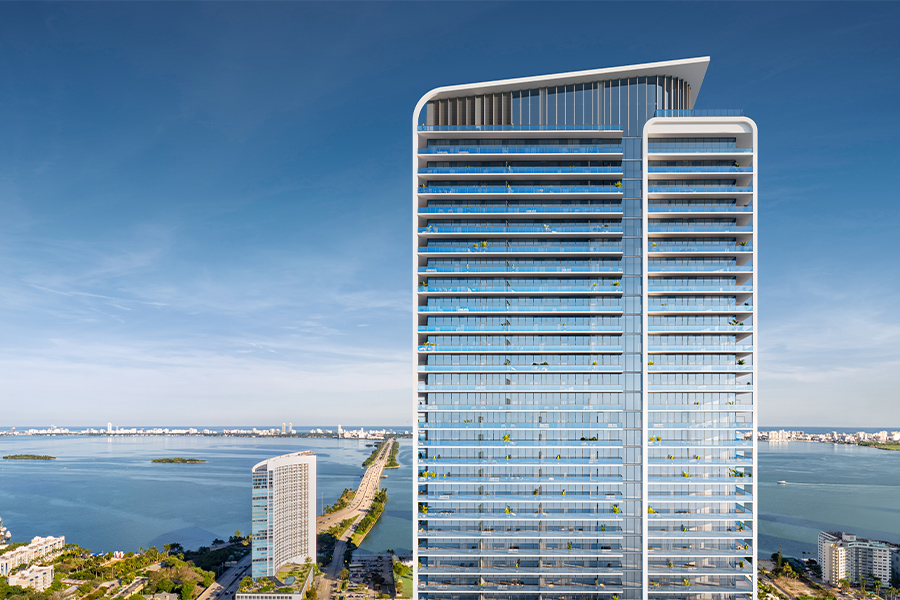
Straddling the Miami Design District and Midtown, the 49-story Jean-Georges Miami Tropic Residences, slated to debut in 2028, will mark chef Jean-Georges Vongerichten’s inaugural foray into the residential sector. Comprising 338 condominiums and more than 41,000 square feet of indoor and outdoor amenities (think treatment rooms, yoga studios, in-house dining services, and more), it will naturally star a Vongerichten restaurant on the ground floor. The tower, brought to life by Terra and Lion Development Group and local studio Arquitectonica, features interiors courtesy of Toronto- and New York-based Yabu Pushelberg.
Glenn Pushelberg and George Yabu had previously had a home in Miami and whenever they opened the doors onto their lush backyard garden, “there was an immediate sense of calm,” recalls Pushelberg. “Over time, that feeling had started to get lost in the concrete, and we wanted to bring it back.” This determination translated to a plethora of plants in the building, strengthening the notion that it is a “place where the outdoors and indoors are constantly in dialogue,” he says.
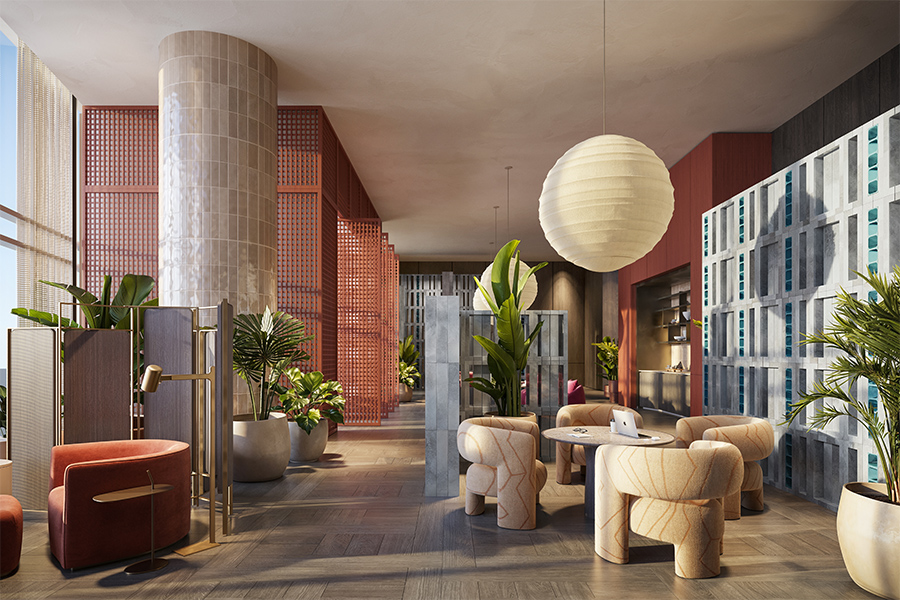
A rendering of a coworking space at the Jean-Georges Miami Tropic Residences, awash with natural light and greenery
Materials like red-tinted wood “create a sense of continuity, so that as you move through the space everything feels related but never repetitive,” adds Yabu. “Glazed ceramic tiles in a range of colors echo the way the city shifts from soft and sunlit to saturated and vivid.”
Working closely with Vongerichten, Yabu Pushelberg designed centerpiece residential kitchens with islands “conceived as a culinary stage,” adds Yabu. But the standout is the interior courtyard. “Designed to build a connection to earth and sky,” says Pushelberg, it “anchors the project, visually and emotionally.”
The Wendy
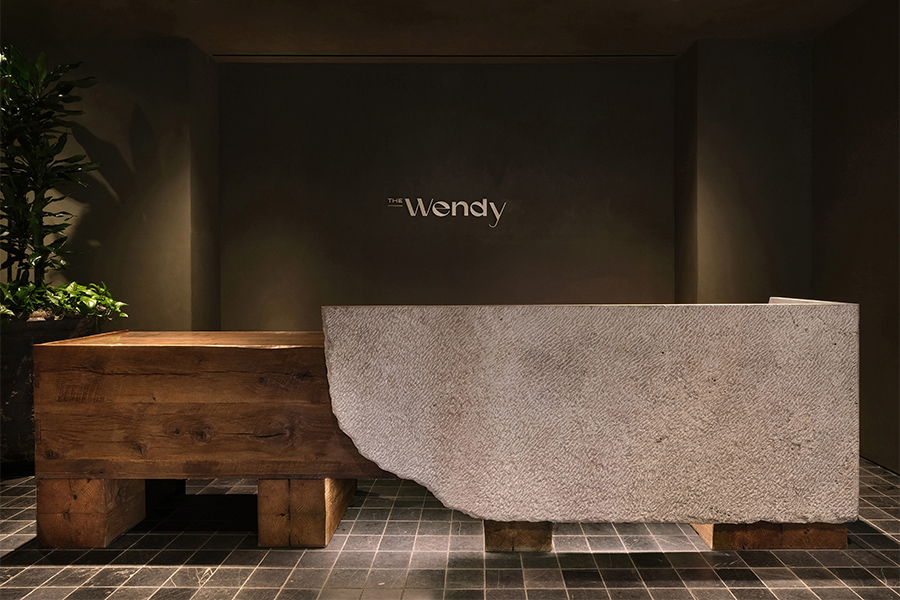
An alluring juxtaposition of light and dark greets residents at the Wendy in Arlington, Virginia
Over the last decade, Washington, DC-based interior architecture practice Edit at Streetsense has largely tackled multifamily housing developments like the new Novel 14th Street by Crescent Communities, north of DC’s U Street Corridor. “Ten years ago, a distinctive design would set a building apart in a market. Now, it feels expected and necessary,” says firm principal Brian Miller. “Today, we see more buildings designed for residents, with features intended to drive renewals and form longer-standing bonds. As unit size trends smaller, amenity spaces become a critical extension of home.”
The Commodore, a striking high-rise in Arlington, Virginia’s Courthouse neighborhood, was designed by Edit by Streetsense in 2023. Two years later, the firm helmed the design of neighboring sister building the Wendy, with 231 units, an infinity-edge rooftop pool, and pet spa.
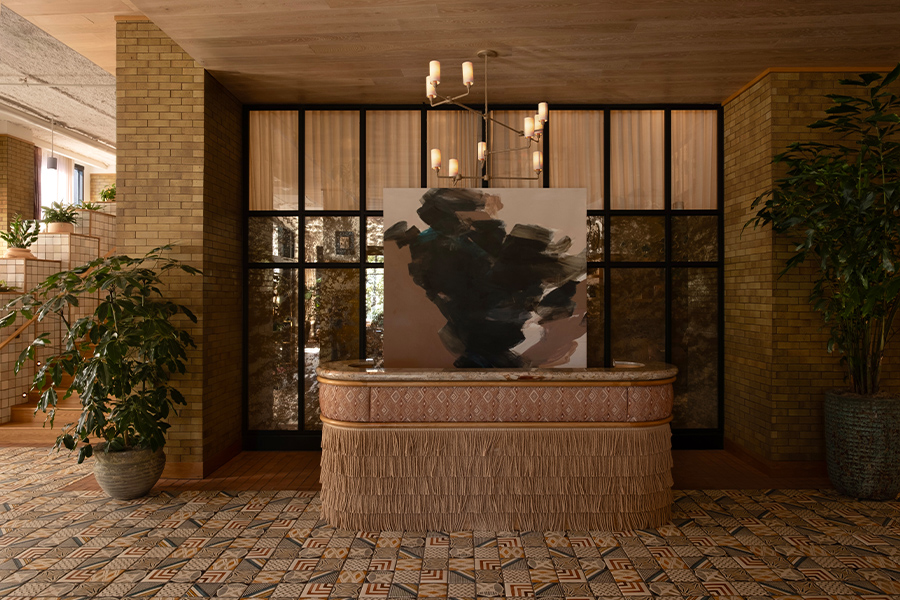
Patchwork tiles add warmth to the lobby of Novel 14th Street by Crescent Communities in Washington, DC
“With a colorful palette and traditional details at the Commodore, we leaned into an equally rich but more restrained and elemental look at the Wendy,” explains Miller. Hammered limestone and chunky endgrain hickory, for example, meld with bluestone and oak, while plaster and natural light add layers of softness.
Residents also hole up in the penthouse-level club, where sunsets are magnified. “There are certainly similarities to hotel design, but in a multifamily building, spaces have to feel compelling enough for someone to book a 365-night stay,” Miller adds.
Teatro Luxury Apartments
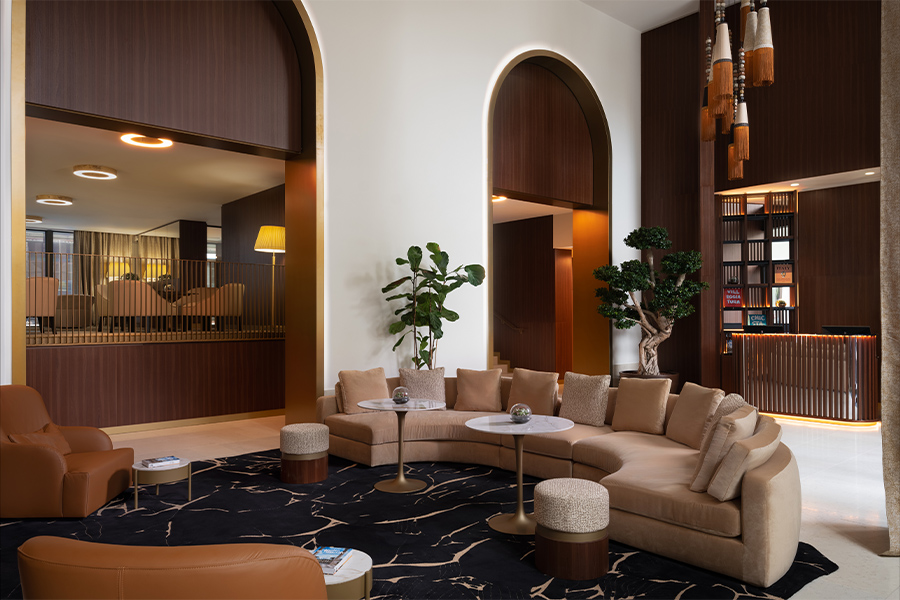
The elegant lobby at Teatro Luxury Apartments in Florence, part of the Starhotels Collezione
At the former Teatro Comunale in Florence, music legends like Maria Callas regularly took the stage. Now Starhotels Collezione has reimagined the site as the Teatro Luxury Apartments, expanding its residential footprint beyond the Duomo Luxury Apartments in Milan.
Only the theater’s original arched façade from 1862 has been preserved, “as it was one of the most important cultural landmarks for Florence,” points out Starhotels Collezione designer Barbara Bini. It’s now joined by a series of newly constructed and seamlessly integrated volumes.
Throughout the forthcoming spa, restaurant, and 156 Art Deco-influenced residences for rent, the Florentine spirit is evident. Running the gamut from studios to four-bedroom apartments, the units are spread across the Verdi, Rossini, and Puccini buildings, flaunting materials such as light oak, Canaletto walnut, and gold-veined Saint Laurent black marble.
“Every piece of furniture is custom designed to create perfect harmony within both the apartments and the common areas,” Bini says. “Consumers want living spaces that feel as thoughtful as their favorite boutique hotels.”
Yerba Buena Island Residences
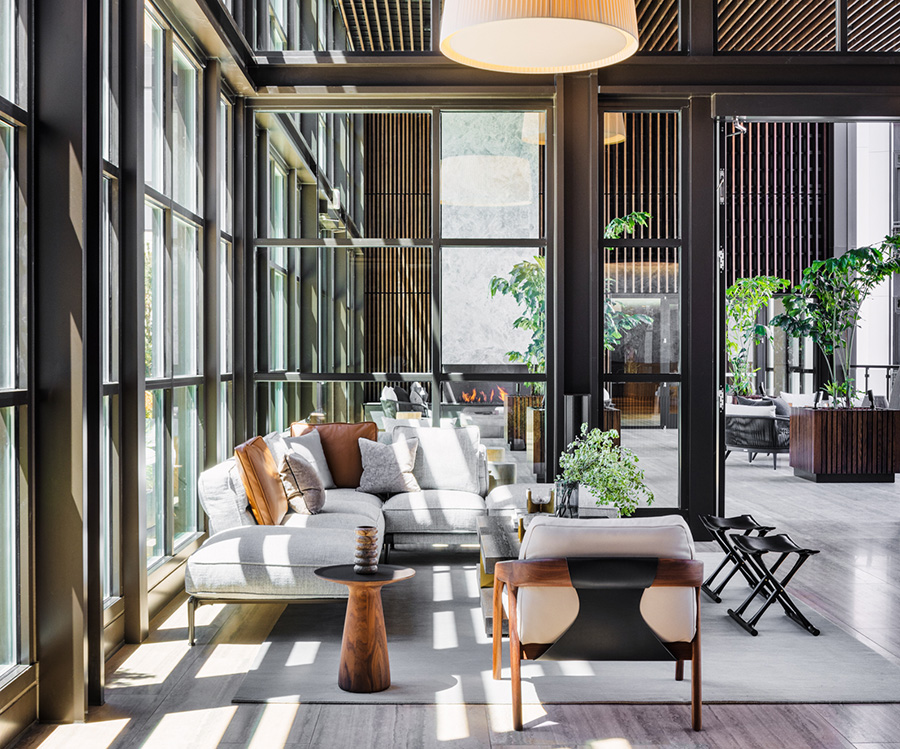
In the Bristol condominiums on Yerba Buena Island, the lobby’s interiors come courtesy of Edmonds + Lee Architects
An eight-minute ferry ride away from San Francisco’s Embarcadero, Yerba Buena Island is a soothing escape teeming with 72 acres of green space. It’s not surprising, then, that more than 65 percent of its residential offerings have been sold.
“There is a growing desire for cities that combine multifamily living with the sense of ease that belongs to hospitality. Here, that convergence happens naturally,” says Timothy Slattery, partner at local- and New York-based architecture and design firm Hart Howerton.
The firm’s placement and form of each building, determined by the location’s steep topography and ever-changing light, ensures that each home forges a relationship to the bay, “whether oriented toward the Bay Bridge, the hillsides, or the downtown skyline. No two structures repeat the same condition because the terrain never repeats itself,” says Slattery. “The site drives every decision, and the architecture reinforces the idea that this is a place where the city and the landscape meet in a rare balance.”
Photos by Martino Dini, Jordan Powers, and courtesy of Yabu Pushelberg, Edit at Streetsense, and Hart Howerton
This article originally appeared in HD’s December 2025 issue.