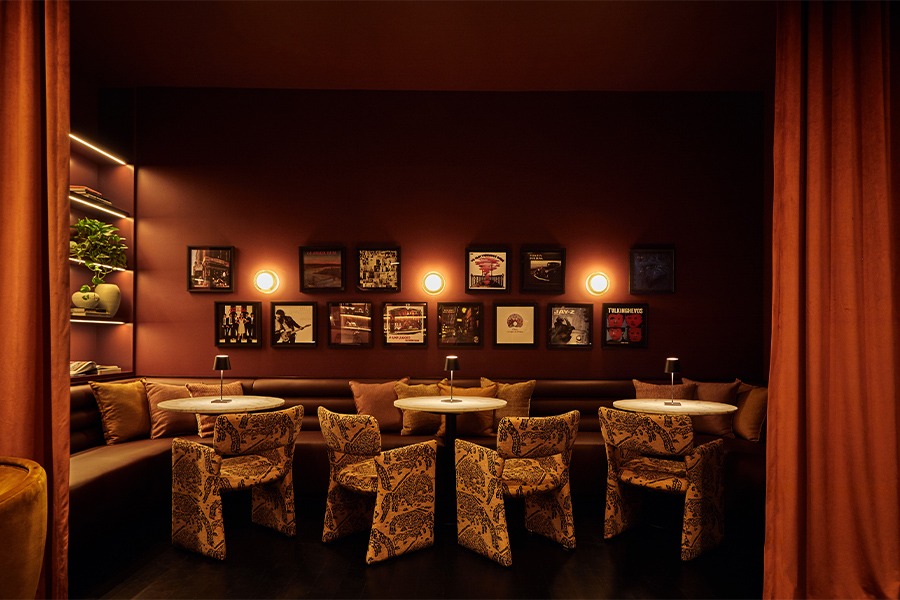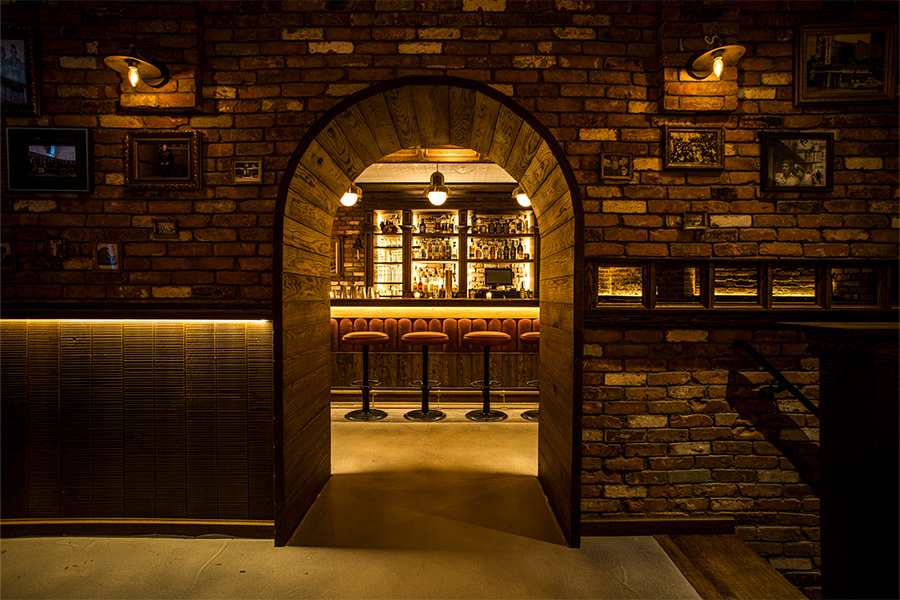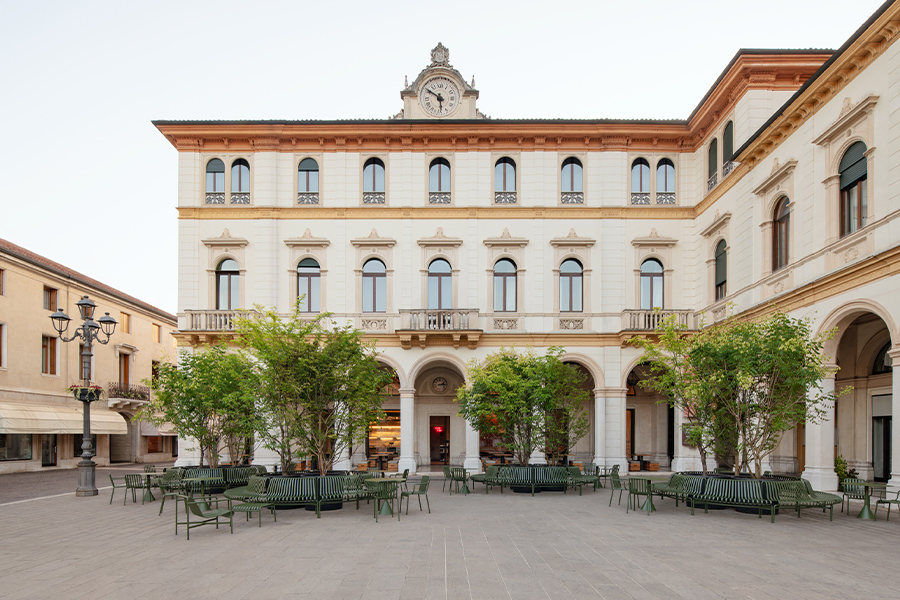
At Caffè Nazionale, the experience begins at the threshold.
Behind the historic colonnade of Arzignano, Italy’s 19th‑century City Hall, a burnished iron door with a distinctive diamond-shape design and green serpentine marble handle pivots open to reveal AMAA’s reimagined interior, shaped through a careful dialogue with the building’s history.
 “The conversations with the Soprintendenza (heritage authority) were not simply about dating materials or verifying their condition; they required a deep understanding of how the building had transformed over time,” says AMAA cofounder Alessandra Rampazzo. “This knowledge allowed us to make informed decisions about what to preserve, what to reinterpret, and what to let go of.”
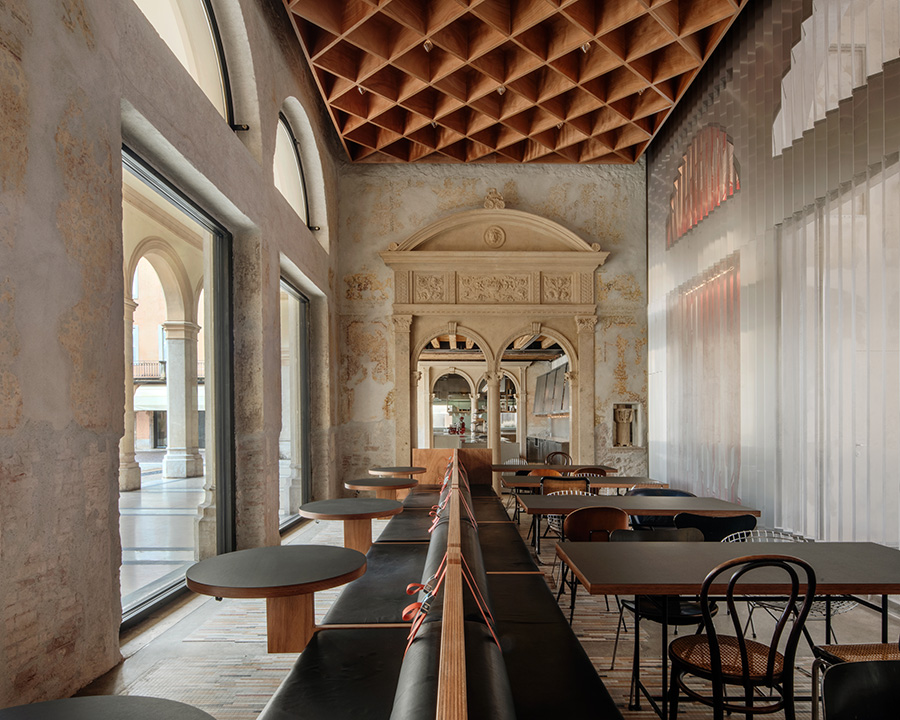
AMAA leaned into the building’s layered evolution. “What could have been constraints, ultimately, became sources of inspiration: traces of decay, raw surfaces, and imperfect materials turned into opportunities to reveal the building’s authentic character,” Rampazzo adds.
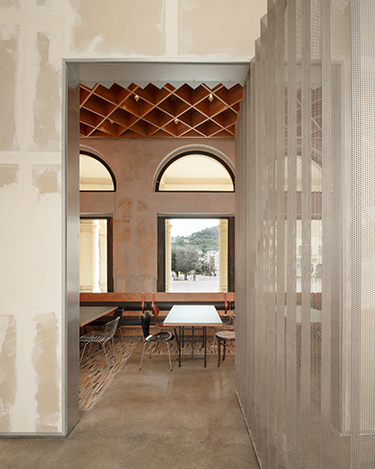
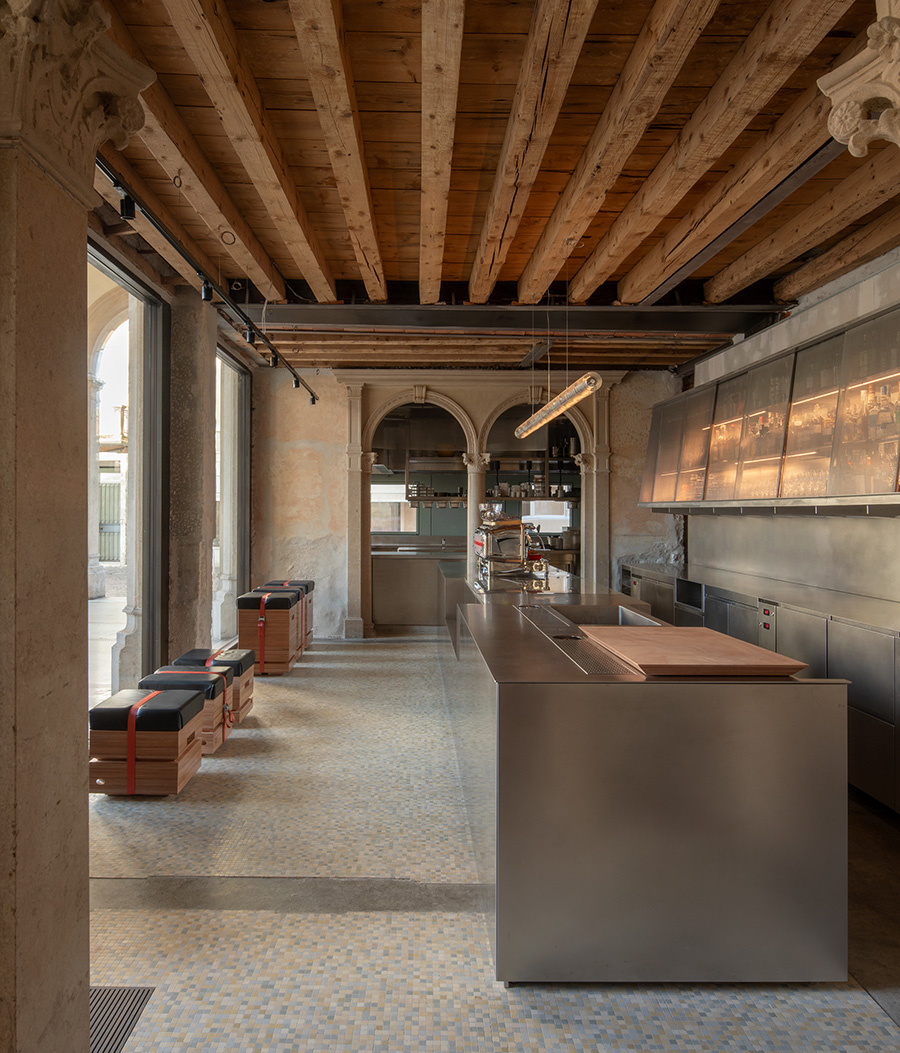
The spaces unfold like theatrical stages beneath exposed beams and deep, coffered ceilings. Of note is a pleated stainless-steel wall—part curtain, part screen—that filters views toward the inner birch courtyard. “It is a moment where the entire design philosophy becomes legible in a single architectural element,” says AMAA cofounder Marcello Galiotto. “A contemporary presence that does not overpower the existing building but helps reveal it more clearly.”
Collaborations with artists and craftspeople deepen the narrative: Stefan Marx’s posters animate the metal wall, while custom wooden tables and benches anchor the rooms.
Caffè Nazionale is imagined as a space where “time is layered rather than erased,” Galiotto adds, “a place that is lived, not merely passed through—a space where the threshold becomes an experience.”
This article originally appeared in HD’s January 2026 issue.