From orbiting space stations to underwater sanctuaries, the next frontier of hospitality is unfolding in places once deemed inhospitable.
Take the “friendly egg” habitats of the Axiom Space station. Designed by Philippe Starck, the modules imagine serenity in zero gravity. Meanwhile, Poseidon Undersea Resorts, conceived as a chain of luxury underwater resorts in Fiji, is envisioned as an otherworldly retreat boasting large acrylic-glass viewing walls, personal coral gardens, and submarine-based activities.
Here, we explore three more projects where design transforms isolation into an intimate and immersive exploration of hospitality that goes beyond borders.
Not A Hotel Rusutsu, Hokkaido, Japan
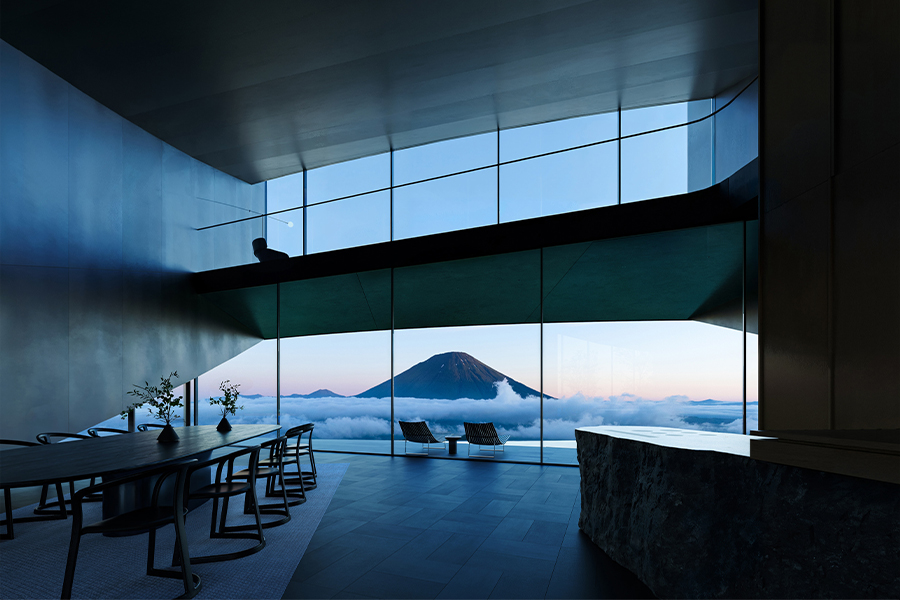
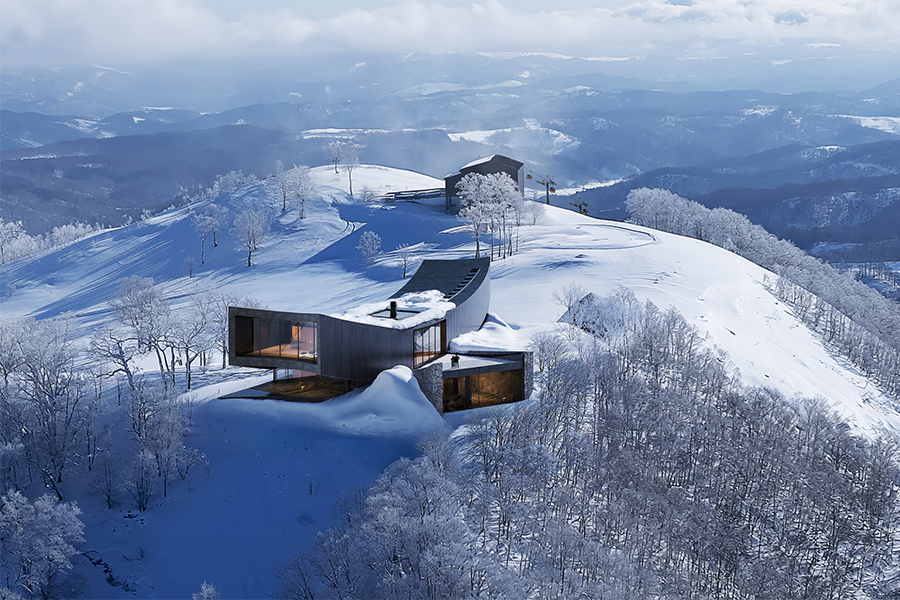
Rooted in the ski slopes of Hokkaido’s Rusutsu resort, the Snøhetta-designed Not A Hotel mountaintop villa, set to open in 2029, is ingratiated in the landscape, extending into the mountainside with an elongated, low-slung form. Because the landscape plays such a prominent role, uninterrupted views of Mount Yōtei create a meditative feeling that elevates both the journey and the arrival.
To achieve this level of nirvana, the design team immersed themselves in the site, celebrating the “almost cinematic procession leading into the sublime—the ski lift,” says Richard Wood, managing director for Asia at Snøhetta, who describes the lift as a staging device that delivers guests into the wilderness. “Typically, you would then ski back down the mountain, however, to visit Not A Hotel, we transcend the mountain top, we enter the void, and what we now deem to be the zenith—a state of peace on top of the summit.”
The environment also influences the contours of the structure while connecting guests to the land. “When considered with intention, it goes far beyond the concept of a walkable roof,” he continues. “It becomes a guiding philosophy for how one situates oneself within the environment, between land and sky, and how one engages with the soil and surrounding nature.”
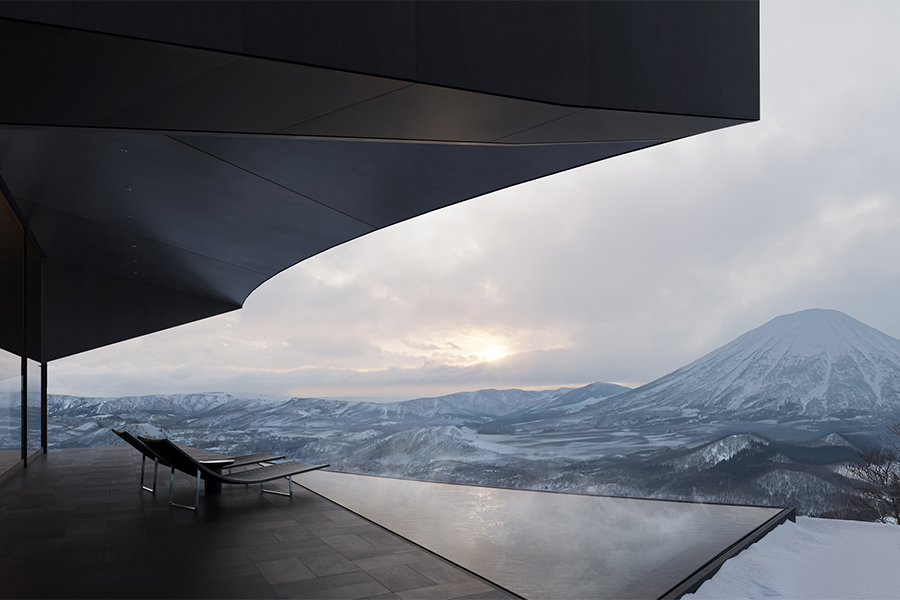
Serenity comes from the connection indoors, from the fire woven throughout the main spaces to the celebration of water in the subterranean spa. “Natural materials shape the interior finishes, and visual cues reference local craftsmanship as well as Hokkaido’s deep-rooted relationship with nature,” Wood adds.
That indoor-outdoor connection is further explored at the main entry, where the structure extends out to offer shelter. At the opposite end, the building similarly reaches outward, while along the sides, large sliding doors mark that border more distinctly. Inside, “you remain deeply connected to the landscape while feeling protected within—a balance between openness and refuge,” says Wood.
More than a hideaway, Not A Hotel signals hospitality’s next horizon: keyless, sustainable dwellings that invite a meaningful connection to place. “Together,” he says, “Not A Hotel will foster a community that reaches beyond the boundaries of the built environment.”
Our Habitas AlUla, Saudi Arabia
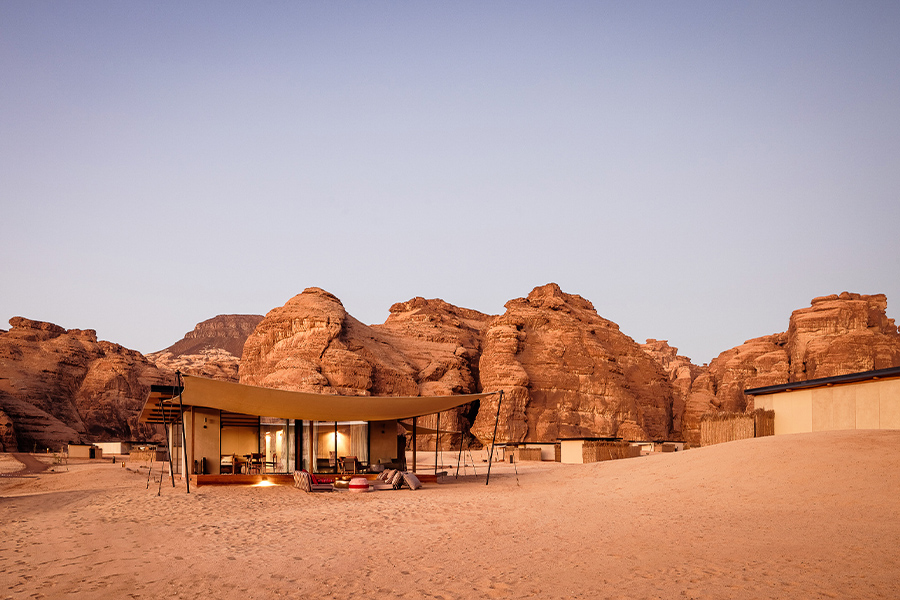
Set within the sculpted sandstone cliffs of Saudi Arabia’s AlUla, Our Habitas acts as a dialogue with the desert itself, boasting a design that “disappears into the environment rather than dominates [it], which allows the guest’s first impression to be nature itself,” says Ana Ventosa, architecture director of Our Habitas. Materials echo this approach, with local stone, sand-colored renders, and natural timber nodding to the surrounding cliffs and wadi floors.
Built within a UNESCO World Heritage site, the property reflects Habitas’ commitment to sustainability, notably with the use of modular structures that were prefabricated offsite and transported and assembled with minimal disruption. This method, she says, “drastically reduced waste, heavy machinery use, and onsite impact, ensuring that if the structures were ever removed, the land could return to its natural state.”
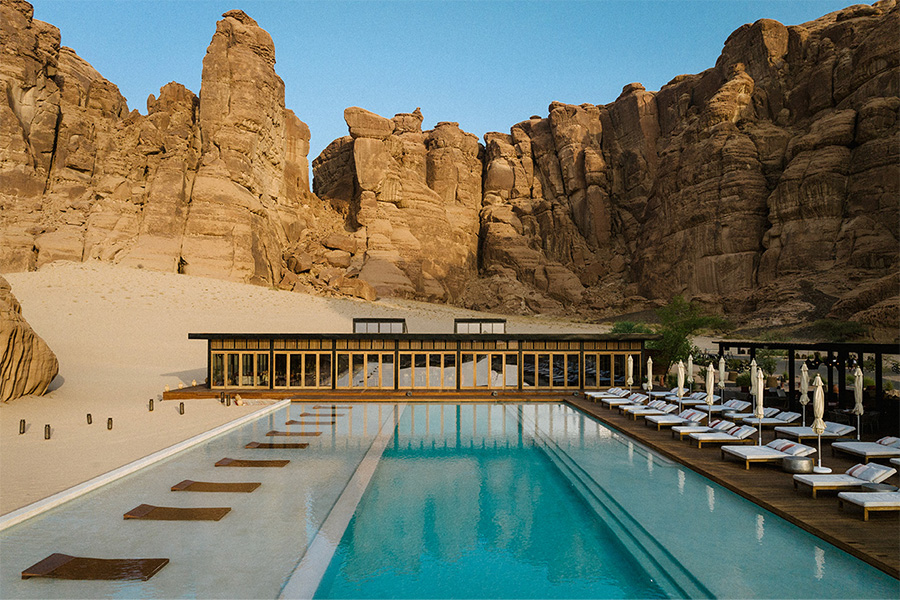
At the core of the Our Habitas ethos is human connection to nature, to others, and to oneself. This is fostered in shared moments via communal dining, wellness rituals in the desert, and open terraces that dissolve boundaries between indoor and outdoor living. Programming, too, aligns with this idea of openness, with the resort becoming a platform of shared experience rather than isolated luxury. “The design is not about spectacle, but about intimacy and belonging,” Ventosa adds.
Local culture and craftsmanship further deepen that connection. Heritage pieces, local patterns, and traditional rituals are woven throughout, grounding each stay in a distinct sense of place. “[We’re] crafting moments that leave a lasting imprint—moments of stillness, awe, and discovery,” she adds. “Architecture and curated programming serve as the platform to deliver these experiences to our guests, using the natural landscape of AlUla as the perfect backdrop to enhance every interaction and connection.”
Starlab
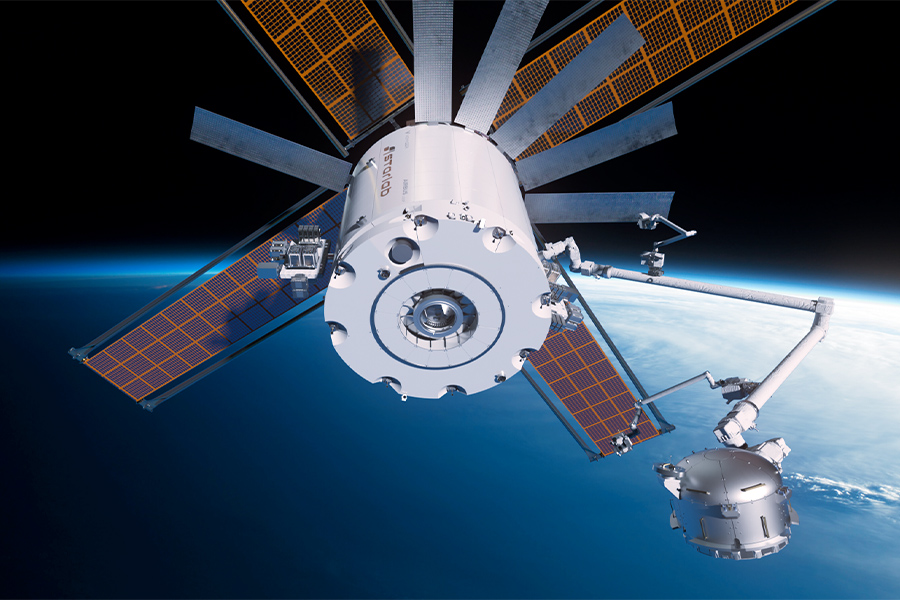
As the next-generation commercial space station, Starlab is designed as the natural successor to the International Space Station. With Hilton signed on as the official hospitality partner, the station will serve as a laboratory, living quarters, and destination. Multidimensional experience agencies Journey and ICRAVE, alongside Voyager Space and Airbus, have also been enlisted to shape the immersive, experience-driven environment in outer space.
“Building on decades of insight from the engineers and astronauts who shaped the first generation of space stations, we’re designing an environment where astronauts don’t just survive, but thrive,” says Jesse MacDougall, principal and design director at Journey and ICRAVE. “Our designs are focused on enhancing three fundamental aspects of wellness: physical, mental, and social.”
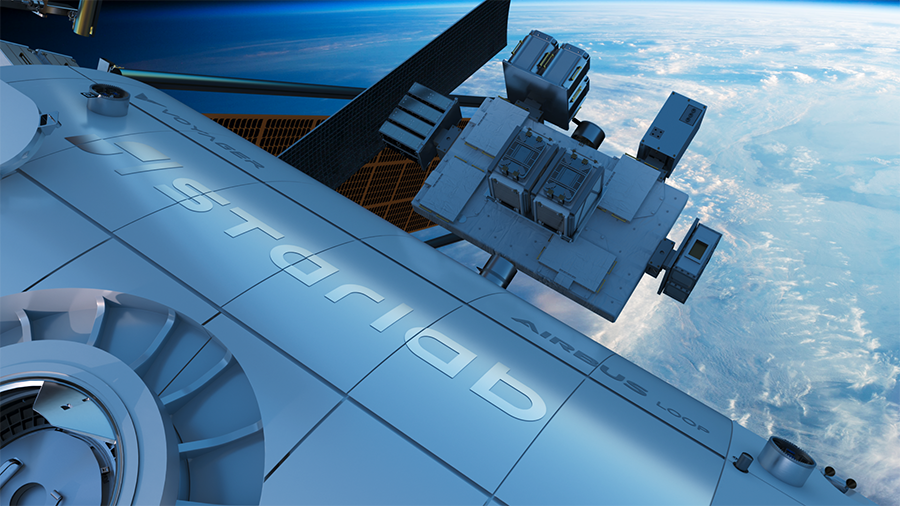
With the launch planned for no earlier than 2028, Starlab represents a radical interpretation of hospitality that will set new benchmarks for the future, with the crew or guests aboard Starlab experiencing life in microgravity. And though they’re isolated from Earth, the expectation is to deliver a design that is comfortable, usable, and aesthetically driven.
Yet, obstacles remain. The magnitude of equipment, infrastructure, and cargo create major design hurdles, while the absence of gravity provides both challenges and opportunities. Humans require orientation to perform effectively, “but there are a lot of things we can do when gravity is not in a play: a table can be on a wall, a ceiling can become an interface, an atrium can become an art installation,” MacDougall says.
“At Journey, we are creating the spaces of tomorrow,” adds design director Michelle Schrank. “We see commercial low-orbit travel as a market poised for significant growth in the next decade and beyond.”
This article originally appeared in HD’s November 2025 issue.