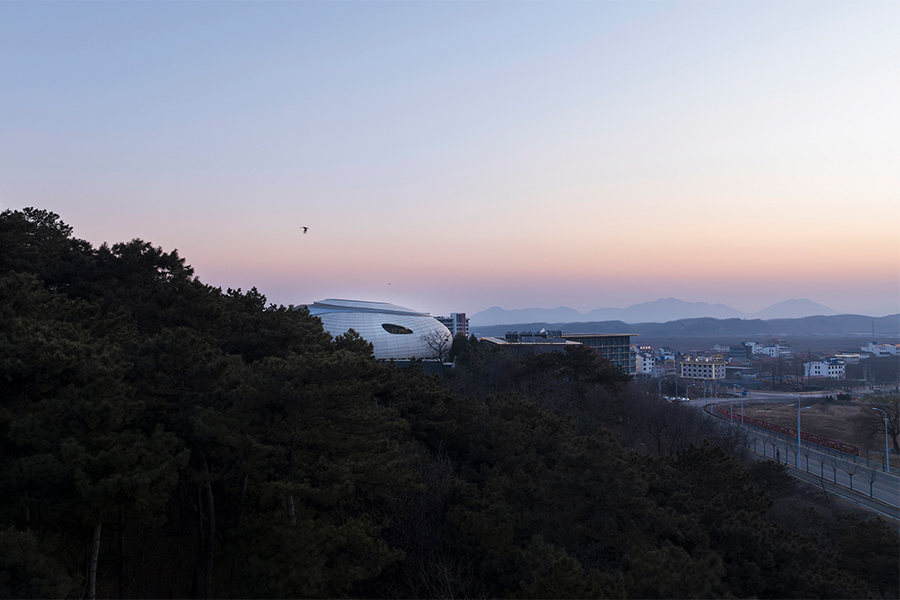
In 1908, a stately Secessionist-style courthouse, courtesy of Austrian architect Alfred Keller, enlivened Vienna’s Riemergasse. Drawing from its early 20th-century roots, the Innere Stadt landmark has been reimagined as Mandarin Oriental, Vienna by Goddard Littlefair.
 Even before the London- and Porto, Portugal-based design studio was awarded the project, director and cofounder Martin Goddard wandered through the former municipal structure, “taking photos of the little clues left behind,” points out director and cofounder Jo Littlefair. “He always believes in listening to the bones of a building and in this case, there were quite some brutal elements.”
Take the entrance. Its massive columns instill a “stoic, imposing” air, as Littlefair puts it, “a scale that speaks to the grandiosity of the building. We kept unpeeling the details, understanding what we needed to keep, reinterpret, or conceal.” The original flooring in the same area, for example, now hides underneath marble, but the waffle ceiling, its grids punctuated with lighting, is buoyed by fresh dentils and reblown glass casings that shimmer like water.
The hotel unfolds like a private residence. The salon-like lobby sets an intimate tone, backdropped by a luminous hand-embroidered installation from London artist and surface material supplier Fameed Khalique. Inspired by a Koloman Moser glass panel, it was brought to life by 17 different artisans who melded metal yarns with brass, glass beads, and crystal stones into a swirling motif and hints at the impressive collection of artworks gracing the rest of the hotel.
Most eye-catching, however, is the monumental staircase, spiffed up with plasterwork panels along the balustrade. This feature was an especially sensitive restoration because Goddard Littlefair wanted guests to “connect with where they are—to find a sense of luxury that doesn’t fight with heritage,” Littlefair explains.
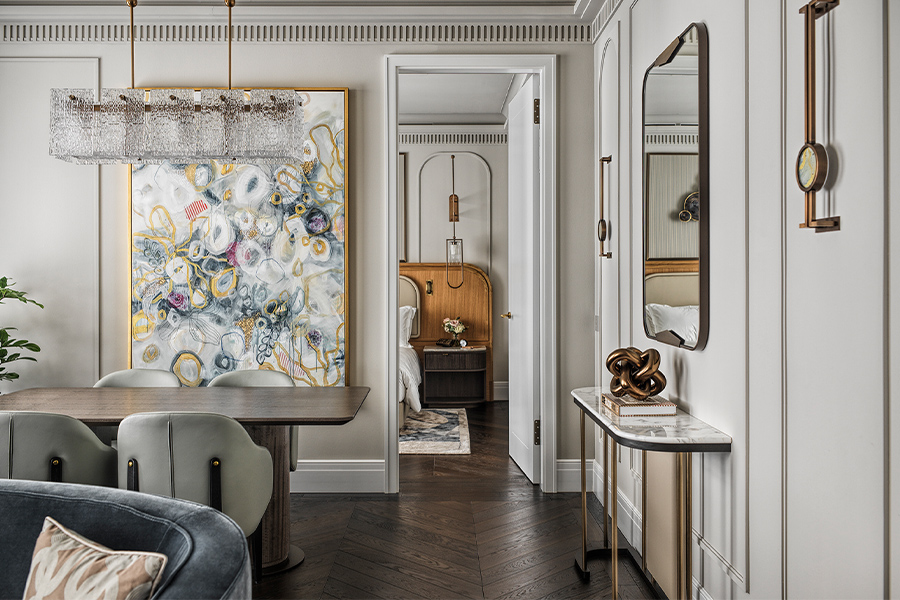
Likewise, the 138 guestrooms—there are also 25 residences on the top three floors—were designed as hushed Viennese apartments with bespoke furniture, including “seating that just wraps around you,” says Littlefair, and crisp marble contrasting with soft hues of gold, oyster, and pastel blue and pink. “We chose to not make the bathroom full-height, wall-to-wall marble. There is a marble mosaic floor and marble on the countertops, but we intentionally left some areas half painted with a little dentil detail running around the ceiling. Putting that layer in was a much more realistic approach, less harsh and cold,” Littlefair elaborates.
Mandarin Oriental is synonymous with capacious accommodations but at this historic property there were structural walls and existing window sizes to contend with, so Goddard Littlefair had to be “clever with the layout and dimensions,” points out Goddard, ensuring that a smaller guestroom module wasn’t impacted by the constraints of the building.
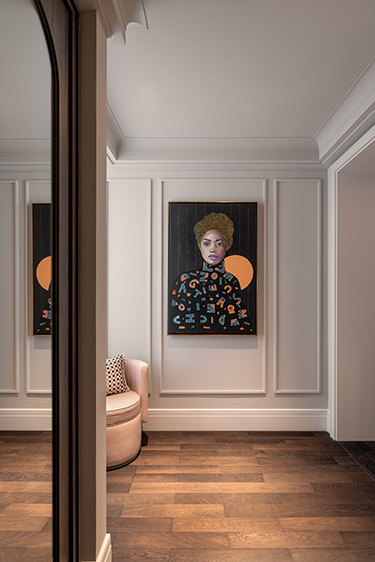
Creating an architectural language throughout the hotel—something the spaces beyond the staircase lacked in their previous form—was another challenge. “They were plain; they were offices,” adds Goddard. “We developed a playbook of cornices, doors, architraves, and paneling and used it like a toolkit to solve junctures and corners.”
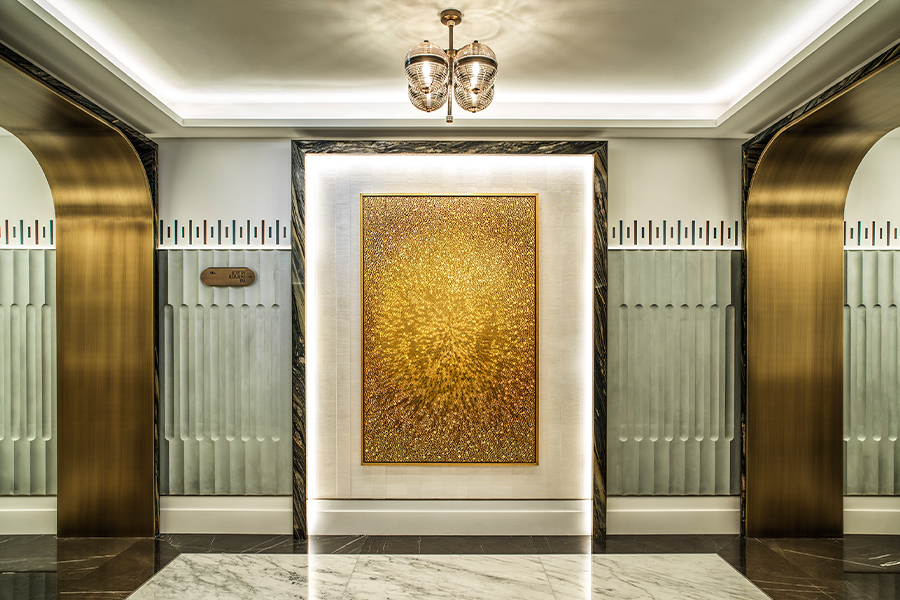
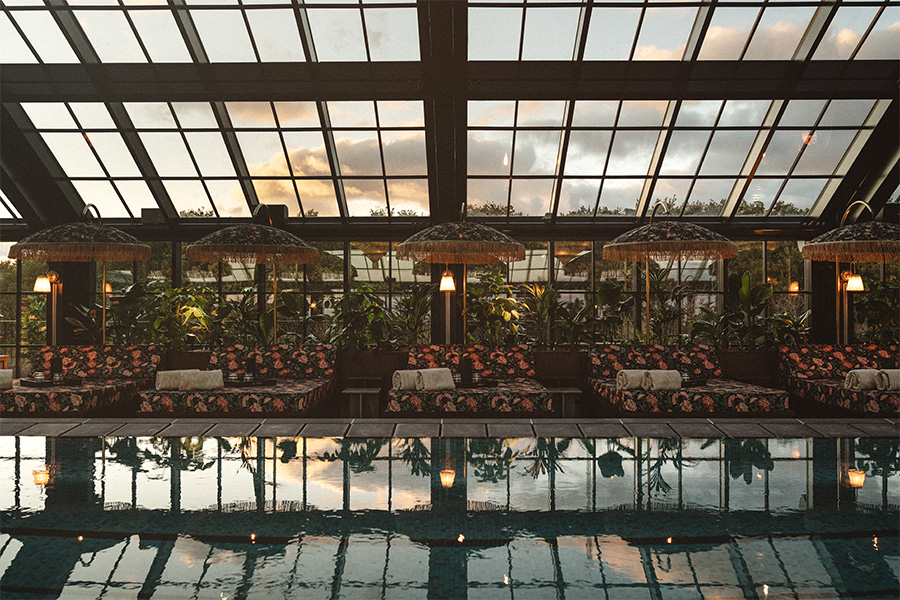
The spa, a subterranean respite complete with an approximately 43-foot indoor pool and fluted walls, shuns a “stripped-back, Zen” ambiance, as Goddard describes it, for a more glamorous one that maintains the discreet mansion aura. “It has its own presence.”
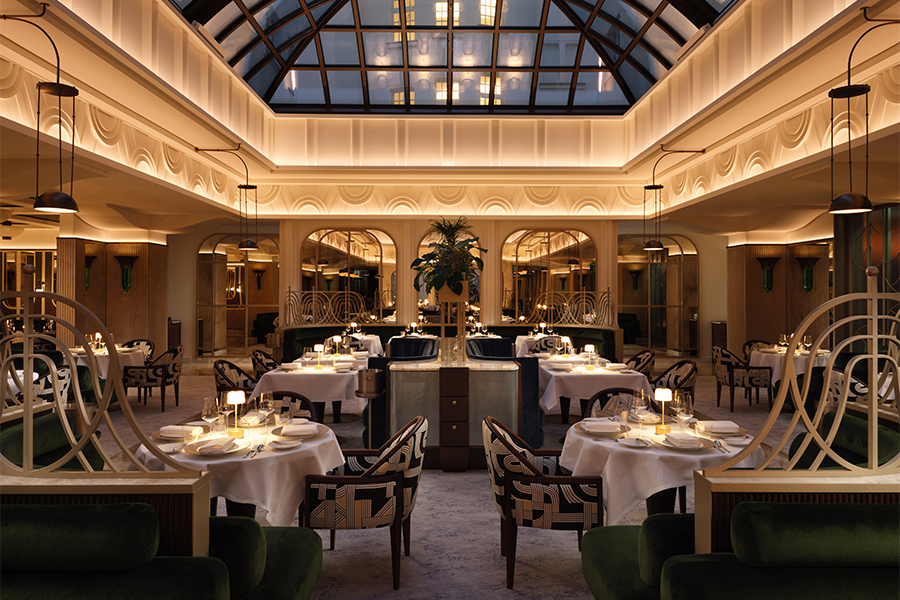
Just as the wellness offerings reel in locals, so do the F&B options that were conceived by Humbert & Poyet. Airy Atelier 7, the all-day brasserie, was hatched as a sequence of rooms. “The plan is organized around a bright central lounge beneath the glazed roof, which acts as an orientation point and brings natural light deep into the interior. From this center, the different atmospheres unfold naturally,” says Emil Humbert, cofounder of the Monaco-based design firm. Atelier 7’s winter garden vibes organically morph into the café, izakaya and bar, and Le Sept, the fine dining experience. “To keep the flow seamless, we worked with subtle thresholds.”
Coffered ceilings, ribbed woodwork, and refined partitions like banquettes, arches, and screens help transition “from one atmosphere to another without a hard break. You’re guided by light, proportion, and material cues rather than signage or obvious separations,” adds Humbert & Poyet cofounder Christophe Poyet. “This choreography is grounded in a contemporary interpretation of Vienna’s Art Nouveau legacy, expressed through structure and craft rather than decoration.”