As understanding of human neurodiversity grows, so too does the responsibility of designers to create spaces that feel safe, intuitive, and welcoming for all.
Roughly 15 to 20 percent of the world’s population identifies as neurodivergent, yet most built environments still assume a neurotypical user. “Every aspect of an experience provides design opportunities to promote inclusion,” says Staci Chan, an occupational therapy advisor addressing inclusive design research at Open Style Lab.
Take Centre Lise et Yvon Lamarre in Montreal, a residential and day center for neurodiverse young adults designed by Lemay. The home-like feel of the space is intentional with soft colors, wood, and calm acoustics translating to a welcoming and warm place.
Here, we highlight three sectors that are advancing design through a neuroinclusive lens.
Transportation Hubs
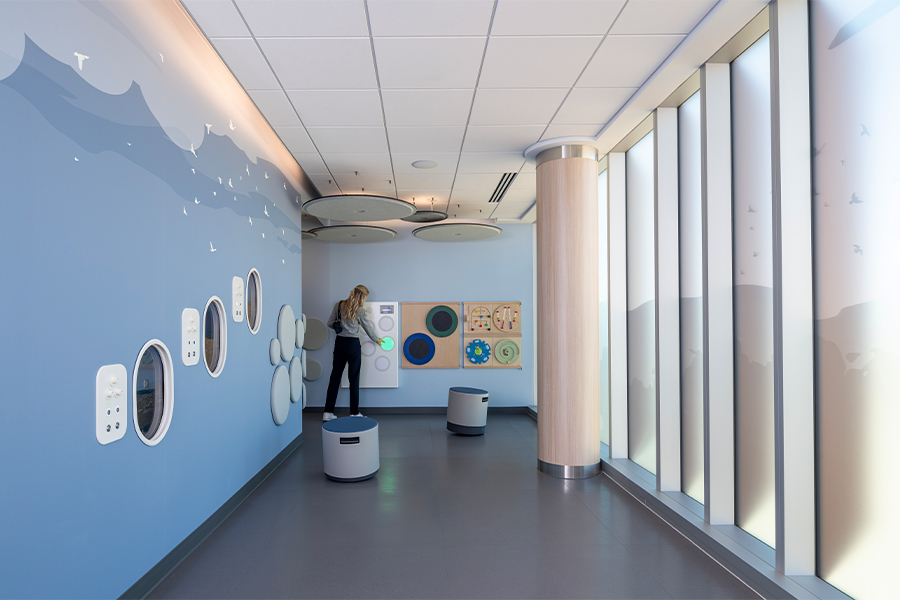
The sensory room at Gerald R. Ford International Airport includes an activity zone fitted with interactive touch panels
Airports are increasingly adopting more neuroinclusive strategies, including sensory rooms.
The HKS-designed Gerald R. Ford International Airport’s Sensory Room in Grand Rapids, Michigan organizes experiences into four zones—Transition, Respite, Active, and an Airplane Simulation Zone—allowing users to adjust sound, color, lighting, and visual cues for self-regulation.
Soft textures, soundproofing, nature-inspired visuals, and interactive sensory panels for safe fidgeting establish a calming environment. Post-occupancy data revealed a 60 percent reduction in user anxiety, reinforcing the value of stakeholder-informed, evidence-based design.
“When people can regulate lighting, sound, visual stimulation, and tactile input, they gain a sense of control that directly lowers stress and enhances wellbeing,” says Nicole Czapek, studio practice leader of health interiors at HKS. “If designers begin with sensory choice, they take the single most meaningful step toward creating environments that are not only more comfortable, but also truly neuroinclusive.”
Inclusive Workplaces
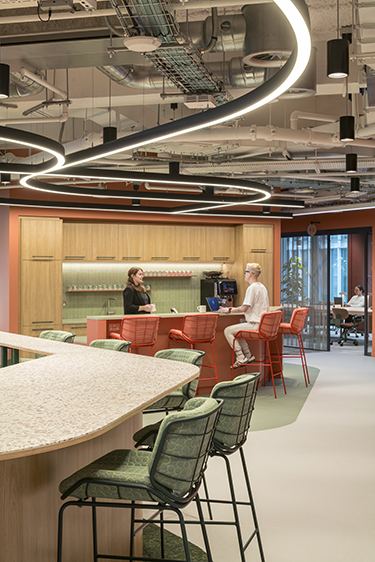
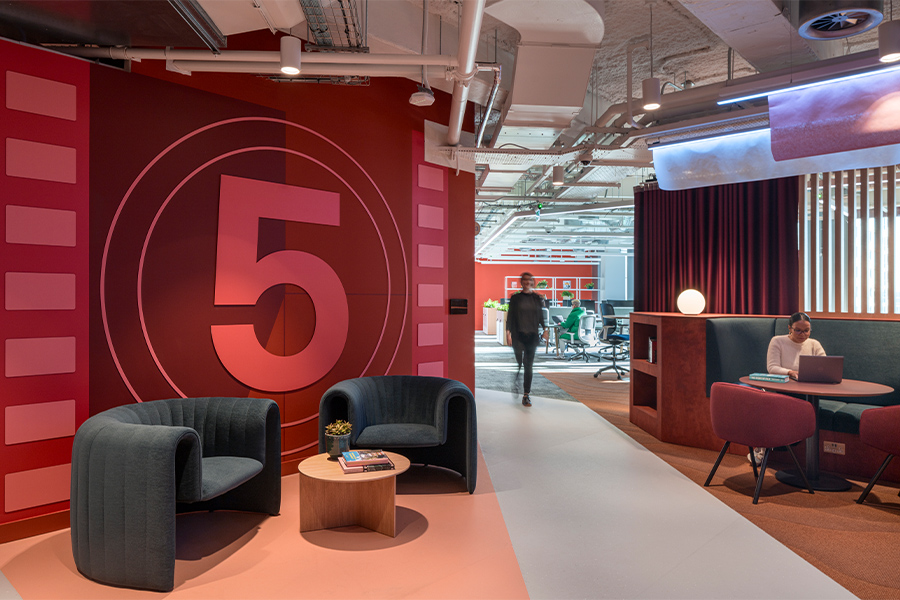
Lighting plays a key role in the Virgin Media O2 office
Workplaces are also evolving to better support a spectrum of cognitive and sensory needs.
“One size does not fit all,” says Megan Dobstaff, design director at Gensler. “It’s about supporting the full diversity of human brains and not forcing anyone to adapt to a single normal mode of perception, attention, or comfort.” This ethos is embodied in the Gensler-designed Virgin Media O2 headquarters in London.
“When designers say they’re designing for neuroinclusivity, it often results in a fairly neutral, perhaps spa-inspired environment,” Dobstaff says. “But the bigger challenge is providing a spectrum of sensorially rich environments.”
The Virgin Media O2 office provides bright daylight-filled spaces alongside moodier environments, as well as distinct floors—such as gaming, music, and sports—that allow people to self-select the environment that suits their task or mood. Simple options like adjustable lighting or noise-canceling headphones can also make an impact. “People on the neurodiversity and physical spectrum said they’ve never felt so cared for in a space,” she adds.
Evolving Hotels
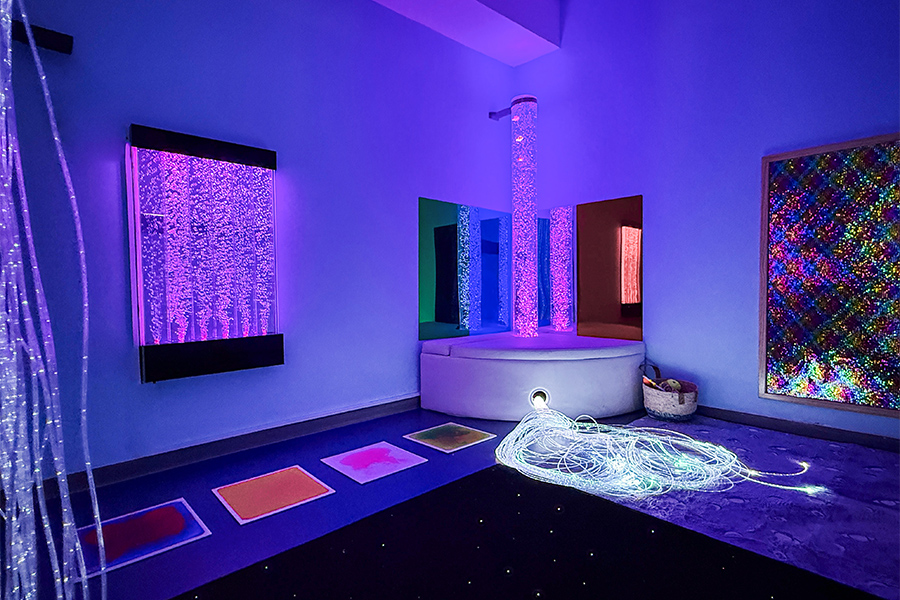
Two of Tui Blue’s properties currently offer dedicated sensory rooms, and three more of its resorts will add the concept in 2026
When it comes to neuroinclusive design in hotels, training is becoming a key starting point. Hotel brand Tui Blue, for instance, partners with a leading Special Educational Needs (SEN) agency to develop ongoing training that helps teams reflect on past experiences and prepare for future scenarios. Yet, service alone cannot bridge the gap.
HKS is pushing the built environment forward with the Sensa neuroinclusive hotel concept. Inspired by an infinity loop representing flow and balance, the concept organizes low- and high-sensory environments in an intuitive progression. Transition zones—like a lobby nook or textured lounge—serve as judgment-free areas for emotional expression, stimming, or decompression.
Sensa “helps neurodivergent guests feel in sync with their environment rather than overwhelmed by it,” says Hilari Jones, principal and hospitality studio design leader at HKS. “Neuroinclusivity in spatial design means creating spaces that honor the diverse ways people think, feel, and experience the world—spaces where every type of mind can shine.”
This article originally appeared in HD’s December 2025 issue.