
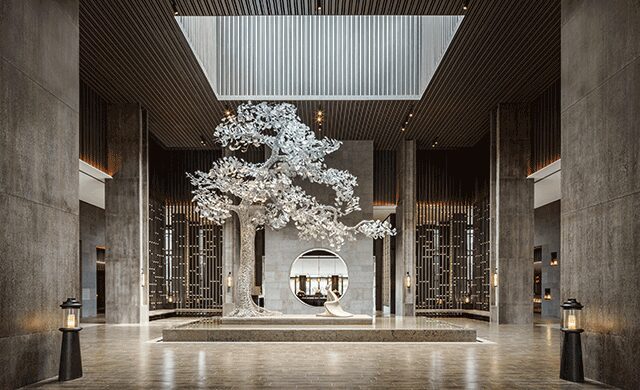

Guests are welcomed to the hotel by a 23-foot-tall gingko tree installation
Situated in the bucolic setting of Qufu, China, the birthplace of philosopher Confucius and the location of the Confucius Temple, JW Marriott Qufu stands as a graceful counterpart to its adjacent UNESCO World Heritage site. Designed as a reverent response to the spiritual roots of the city, the 197-key hotel stands as a modern tribute to the teachings of Confucius, with spaces carefully curated to pay homage to their surroundings.
While the exterior architecture of the property echoes the ancient structures found around Qufu, its interiors offer a liberal interpretation of the traditional details. “Take the fretwork screen in the lobby,” says HL Lim, founder of LTW Designworks, which handled the design. “You wouldn’t find screens like that back in the day. While the use of Chinese screens is traditional, the pattern we’ve applied here is contemporary.”
Lim adds that the unique aspect of the spiritually charged site demanded a response that sets it apart from typical hospitality settings. Indeed, the main feature of the hotel is its peacefulness, reinforced through the contextually driven design. “Upon their arrival, guests are welcomed by a 23-foot-tall gingko tree installation, but what they don’t notice right away is that the artwork is surrounded by water,” he says. “When it is quiet, you can hear the trickling sound of water.”
The theme of contemplative tranquility runs throughout the hotel. Public spaces on the first floor replicate the scholar hall at the Confucius Temple with a stone relief depicting tales of Confucian history, while the lobby emulates an outdoor courtyard outfitted in slate tiles, gray stones, and bronze lattice with ceramic ornaments. To further strengthen the feeling of down-to-earth luxury and express the philosopher’s teachings on humility, Lim chose materials like wood and bronze, combined with neutral shades of gray, white, and brown.


A stone moon gate partitions the atrium from the lounge
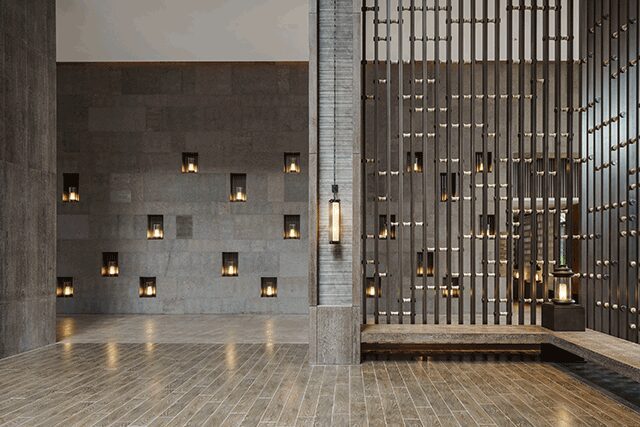
The lobby features slate tiles, gray stones, and a bronze lattice structure
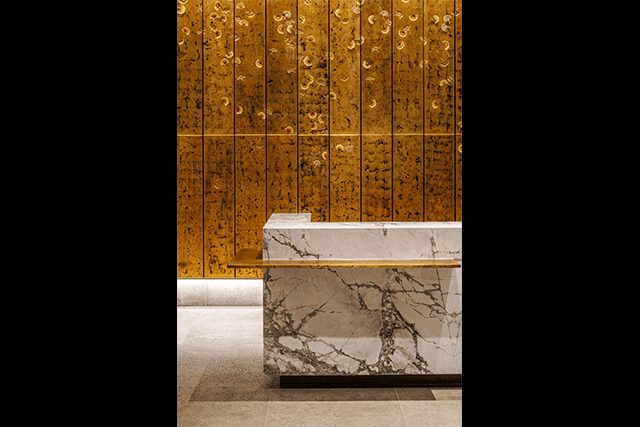
A gold accent wall behind reception recalls falling gingko leaves
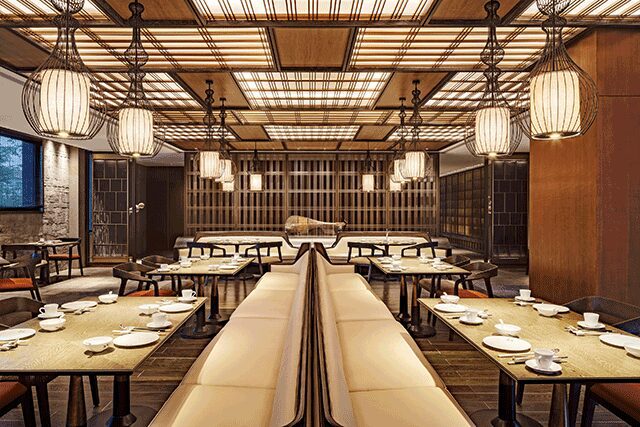
Stone walls and ivory seating comprise the two-story Residence restaurant
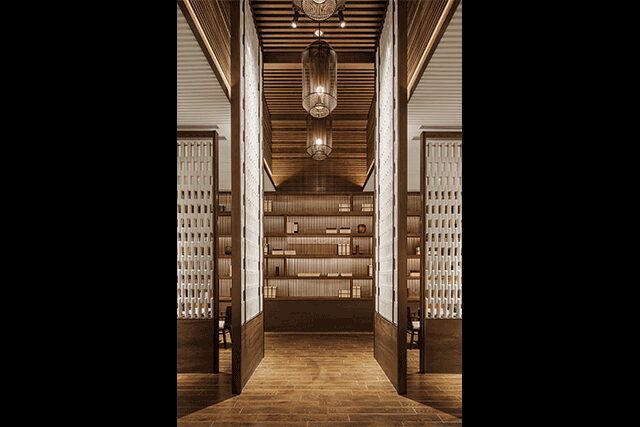
The Tea Library is inspired by tranquility and includes a garden

Guestrooms use a contrasting palette of brown and white to illustrate the rigidness of mountains and the fluidity of water