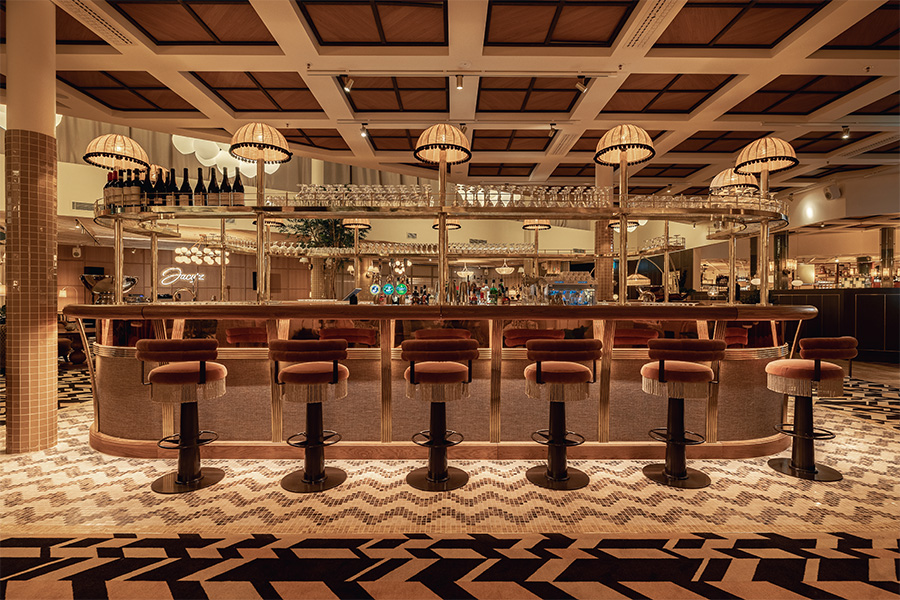
Sicily-born and raised chef Ciccio Sultano’s earliest memories of food come twofold. His worst memory is the first time he caught a whiff of the mere aroma of coriander. “It reminds me of squashing a bug,” he says. His favorite, however, hints at the sophistication of his palette, even from a young age: trying Geta durum wheat bread with lemon granita as a child. With these early defining experiences behind him, he pursued a career of flavor and experimentation.
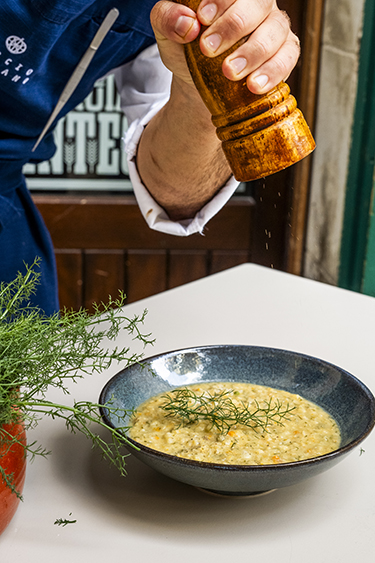
Macco di Fave, found at I Banchi restaurant in Ragusa Ibla, Italy
At age 16, he got his first job at pastry shop Sweet in Vittoria, Sicily, where he bartended, tracked expenses, set prices, and got a taste for cooking both pastries and main courses. He credits the shop for teaching him another more valuable concept: rigor. “[I learned that] doing something well costs less time and money than doing something badly, and that a job well done builds reputation as well,” he says. Sultano considers himself a self-taught chef, which he believes has helped him maintain his purity within the craft. “To become a chef, I continually fed my spirit,” he adds. “On one hand, my talent lies in how to quickly transform and fine-tune an idea. On the other, I have a good palette.”
Sultano’s next career move was a brief stint in New York working as a chef at the long-celebrated but now-closed Felidia, owned by celebrity chef Lidia Bastianich. It was there that he learned how to organize and manage a restaurant. But it wasn’t long until his home appealed to him again.
In 2000, with these fresh learning experiences in mind, he moved to Ragusa, Sicily, one of the island’s main cities, and opened Duomo Ristorante, where his process evolved again into what he calls “culinary anthropology,” or the concept of gradually deepening, betraying, and adding to a dish while rethinking its history so he can cook it for the present and the future. The past also proves as his inspiration, as thousands of years of the island changing ownership made diverse flavors and recipes mainstays for its inhabitants.
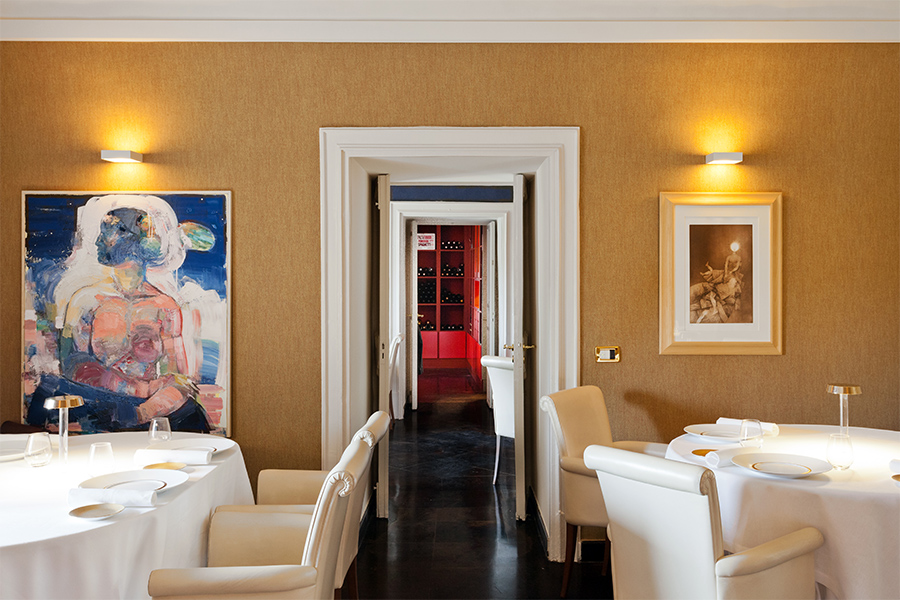
Located in the southern Sicilian city of Ragusa Ibla, Duomo’s interiors boast colorful artwork
Duomo has since been hailed as a bold reinvention of Sicilian cuisine that, for 25 years, has remixed traditional local flavors into unexpected dishes. “What we sell is not food, but skill, mastery, landscapes, and above all, nuances in the kitchen and dining room,” he says. In 2004, Duomo was awarded its first Michelin star, an achievement Sultano says he at first didn’t understand and had to get used to. But it was a different story when the restaurant earned a second one only two years later. “We celebrated with the staff for a fortnight straight, emptying dozens of cases of sparkling wine and champagne,” he recalls.
The passion poured into Duomo was infectious. He credits a love of music and an array of artist friends for helping him engage with those who “know and feel.” That includes his wife Gabriella Cicero, who started at Duomo in 2009 working front-of-house and has since been promoted to director of operations.
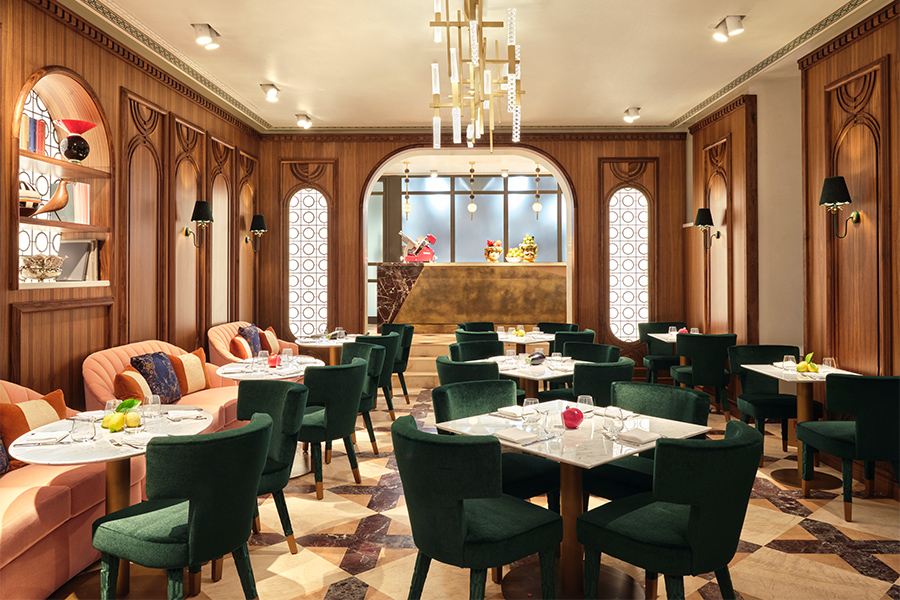
At Giano Restaurant, designed by Meyer Davis and founded by chef Ciccio Sultano, warm wood paneling and emerald velvet chairs set the tone
With her managing day-to-day tasks, Sulatno was able to spread his wings. In 2015, he opened casual dining spot I Banchi, also in Ragusa (a second location later opened in Palermo Airport in 2023). In 2018, he introduced Austrian diners to “pasta amara”—a bitter, cocoa-infused delicacy—at the aptly named Pastamara within Vienna’s Ritz Carlton hotel. The following year, he started hosting experimental dinners at Cantieri Sultano right next door to Duomo.
Then, in 2021, Sultano collaborated with New York-based studio Meyer Davis on a concept for the W Hotel in Rome. The buzzy, colorful restaurant has three main rooms and a private dining room, where diners can enjoy Sultano’s exploration of “cucina educate,” or mindful cuisine, which he defines as making the aristocratic, bourgeois, monastic cuisine of Sicily into more understandable and contemporary dishes. “It’s a modus operandi in which everything is held together not by accumulation, but by mastery, irony, and kindness—the three main qualities of an educated man,” Sultano explains. The restaurant design’s color-forward approach complements this culinary strategy alongside stone and brass surfaces, walnut millwork, backlit acrylic, and glass behind blacked steel that creates a striking prismatic effect.
Even with his robust, expanding portfolio and several decades in the business, Sultano still finds himself most excited in the kitchen. “I feel like I haven’t made many mistakes in my life choices,” he says. “When the staff and I realize that a recipe works, it’s that it works to spread joy. When guests leave my table, I want them to feel joyful—aware of having tasted the good and the beautiful.”
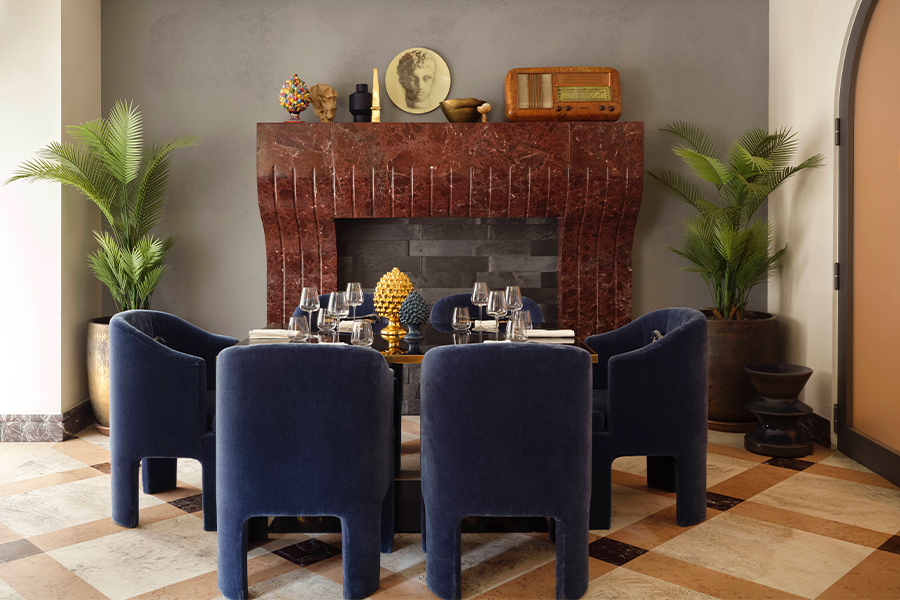
A dramatic oxblood marble fireplace anchors the private dining room at Giano Restaurant
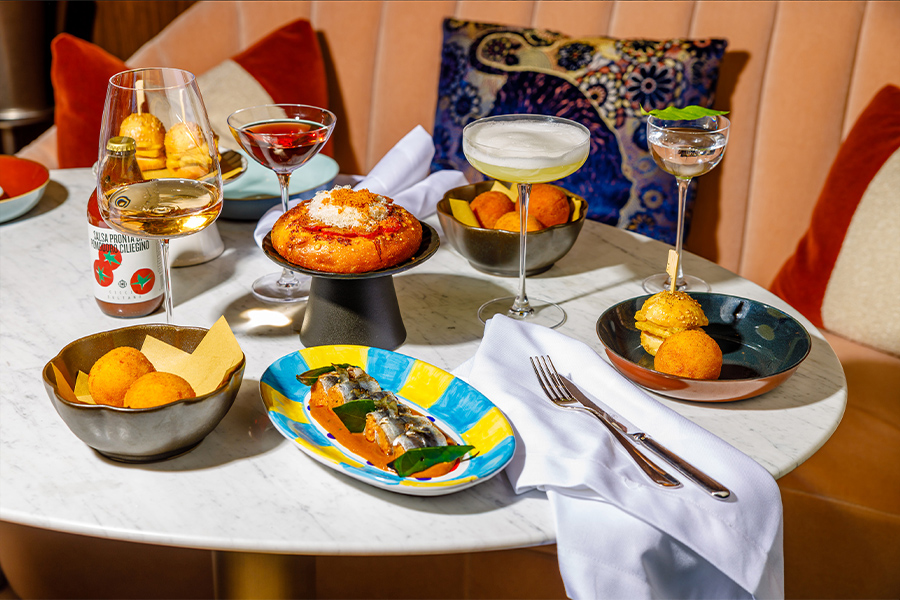
A Sicilian dinner spread reflects the culinary spirit of Giano
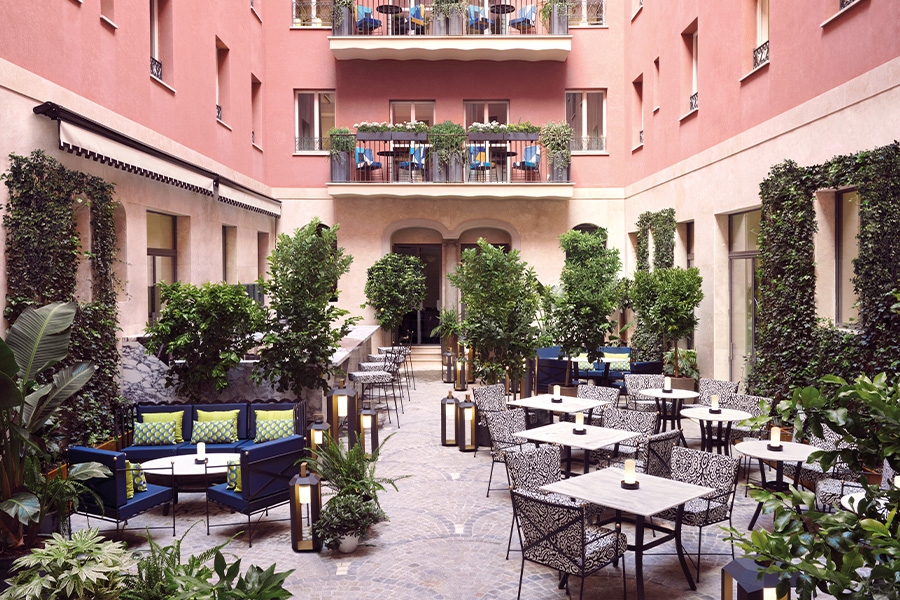
Lush greenery and intimate seating in the W Rome courtyard invite guests to gather
This article originally appeared in HD’s November 2025 issue.