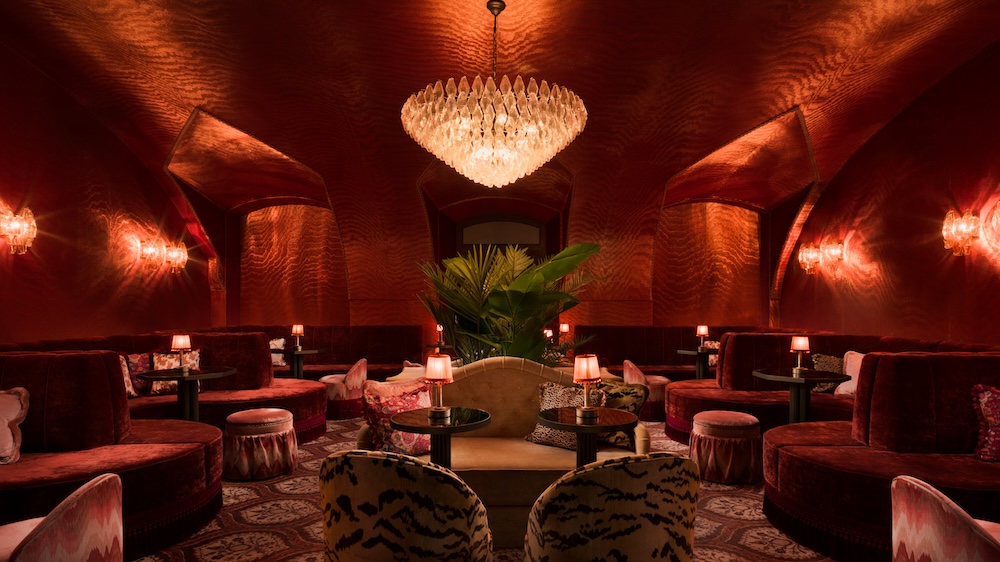
Tucked into a medieval alley in Vienna’s UNESCO-listed First District, Le Fou is a new cocktail bar that trades open-plan convention for a sequential, room-by-room journey.
Designed by London-based, Austrian-born interior designer Theresa Obermoser, the 1,773-square-foot space accommodates approximately 76 guests across four distinct lounges, each with its own color story and personality, unified by a custom natural-stone bar at the venue’s center.
 A philosophy built on personality
“The client wanted a layered, intimate, and characterful environment driven by a ‘more is more’ philosophy, where color, texture, and material richness each have presence while working as a cohesive whole,” Obermoser explains. “Crucially, [the client] Alexander wanted every room to tell its own story, almost as though each had its own main character, and my job was to translate those characters into design.”
Rather than gutting the historic structure, the team re-skinned its existing shell selectively. Certain pre-existing elements, including parts of the original bar and overhead features, were refinished in the new material language rather than replaced. Everything else is bespoke.

Four rooms, one composition at Le Fou
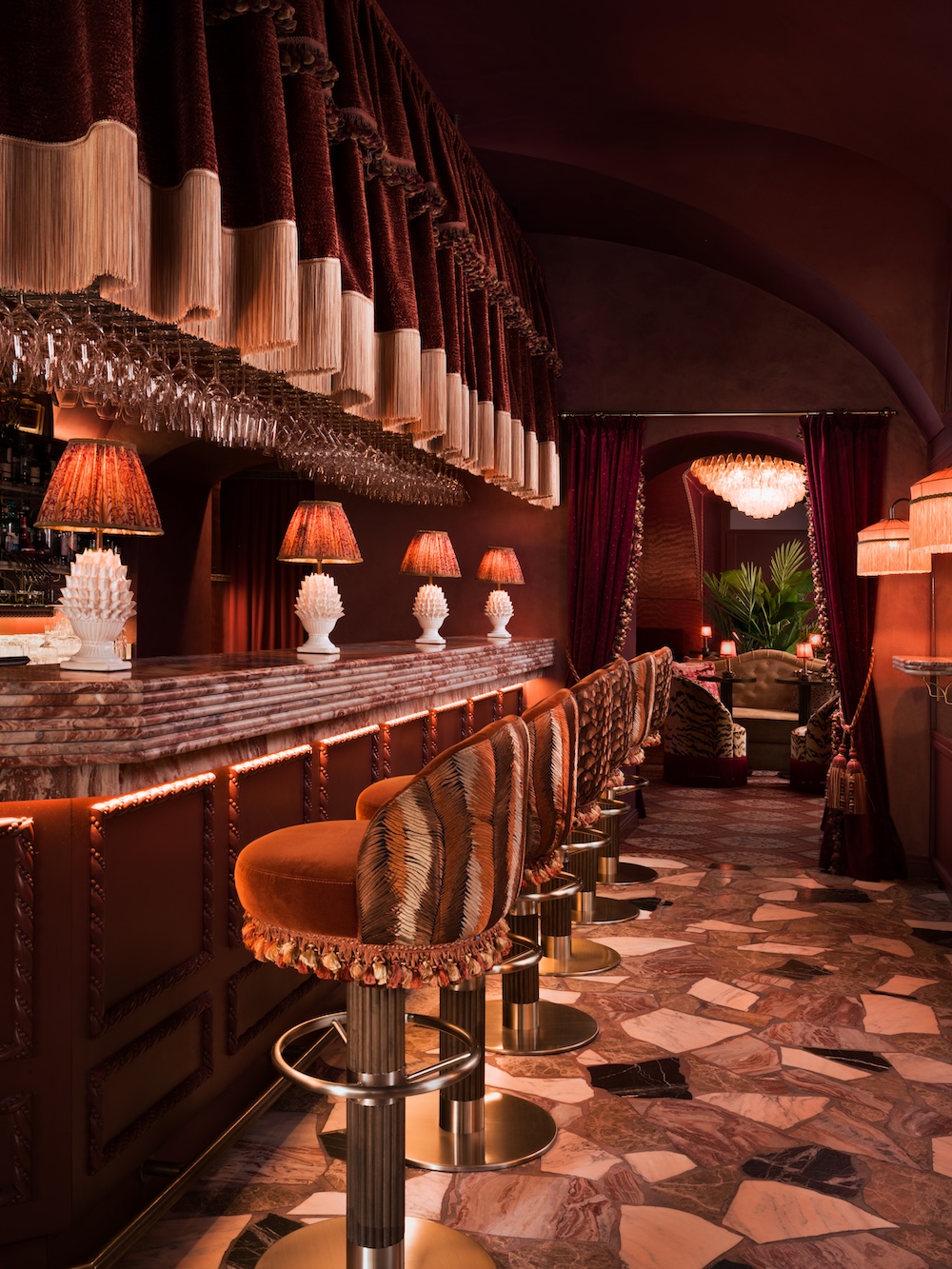
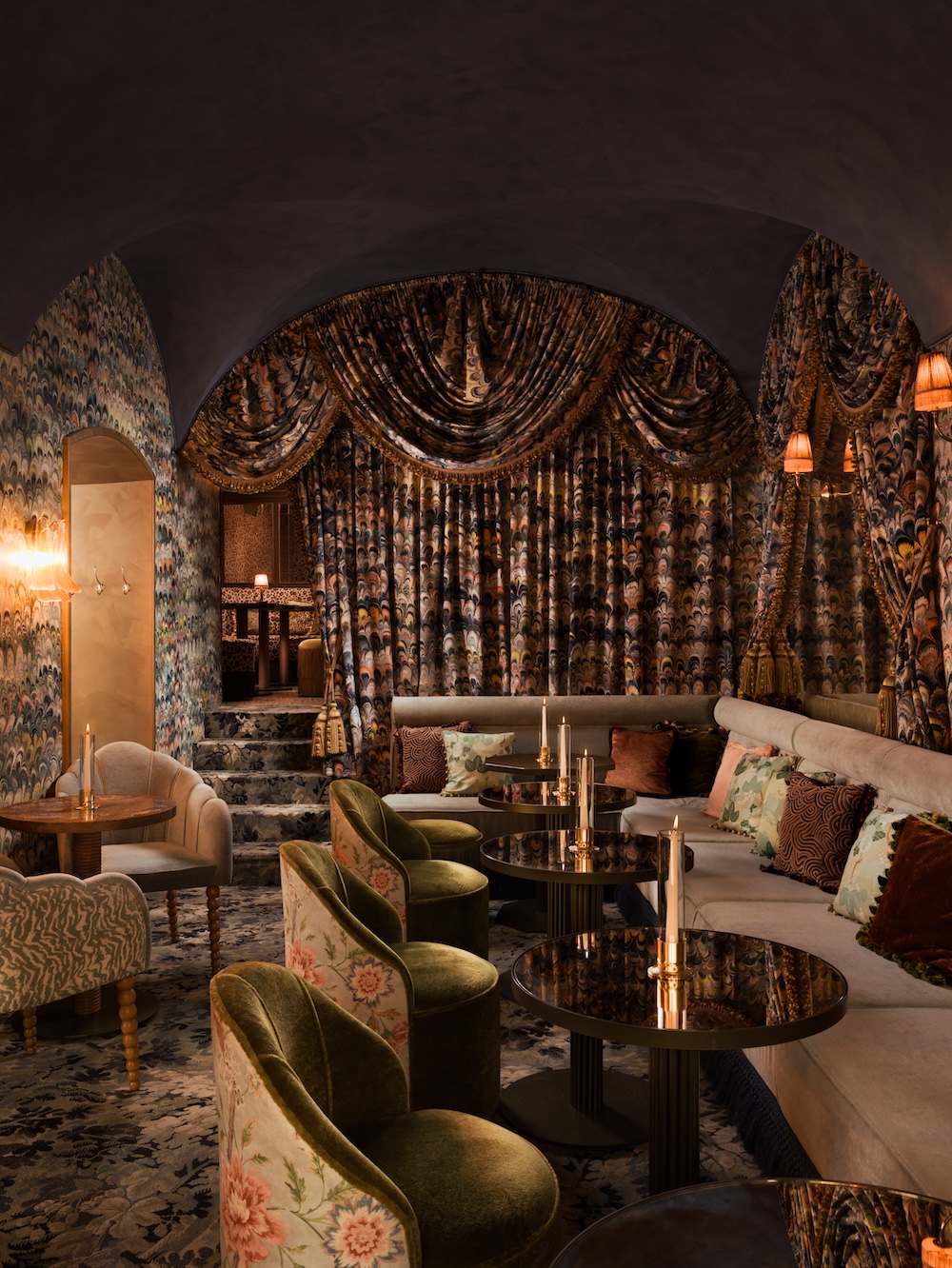
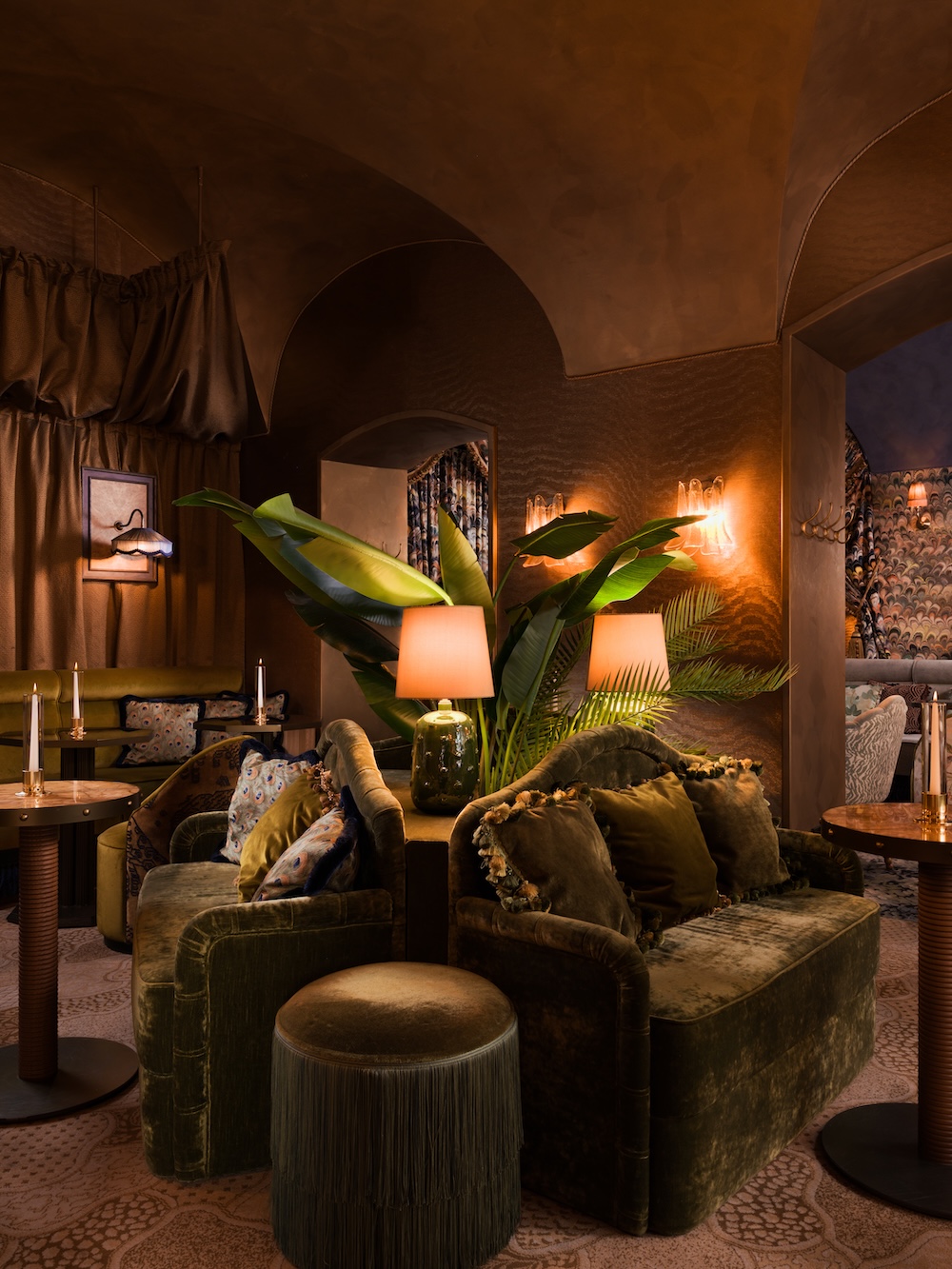
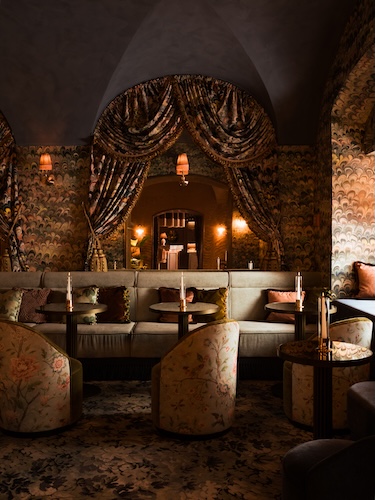
The sequence begins in the Main Room, which is swathed in rusty-hued moiré wallpaper, before transitioning into the Blue Lounge, defined by an Arabian-blue palette. The Golden Lounge follows, “built around [textile company] Lizzo’s peacock patterns, giving the room its jewel-toned, opulent atmosphere,” Obermoser notes. Here, a custom fabric tent structure conceals the room’s air-conditioning unit.
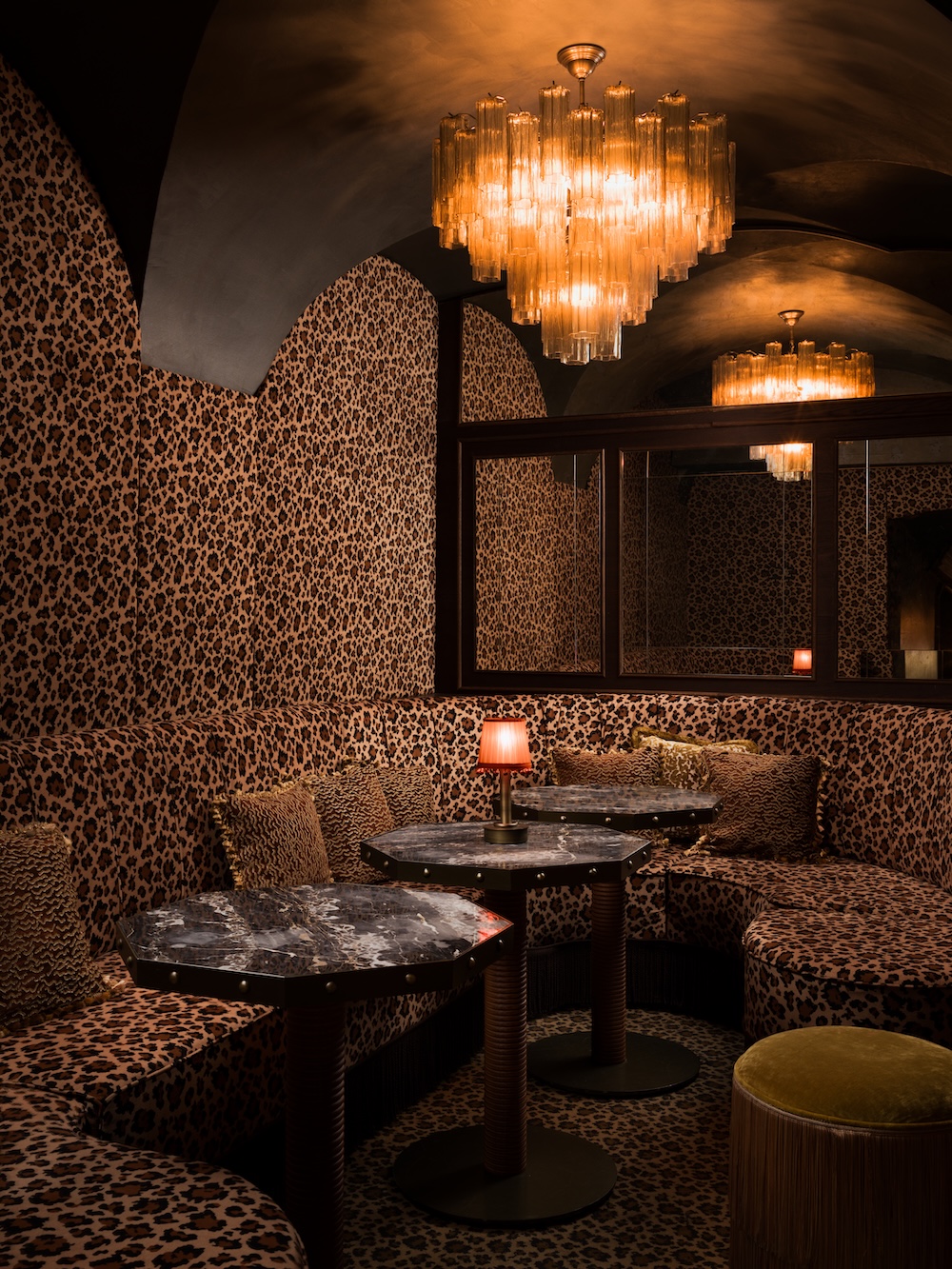
The journey ends in the cozy Leopard Room, the bar’s most intimate space. “The Leopard Room is a jewel-box where the floor, ceiling, and walls are all in Pierre Frey leopard, arguably the most photographed corner of the bar,” says Obermoser. “It turns the smallest room into the most immersive single-material moment.”
“Le Fou is presented as a fully custom interior, with wallcoverings and material treatments doing the work that art normally would,” she adds.
Meanwhile, the central stone bar, crafted by Austrian specialists Breitwieser, “sits at the center as the connecting piece, pulling the colors from the façade through into the Main Room and binding the four rooms into one composition,” Obermoser explains.