
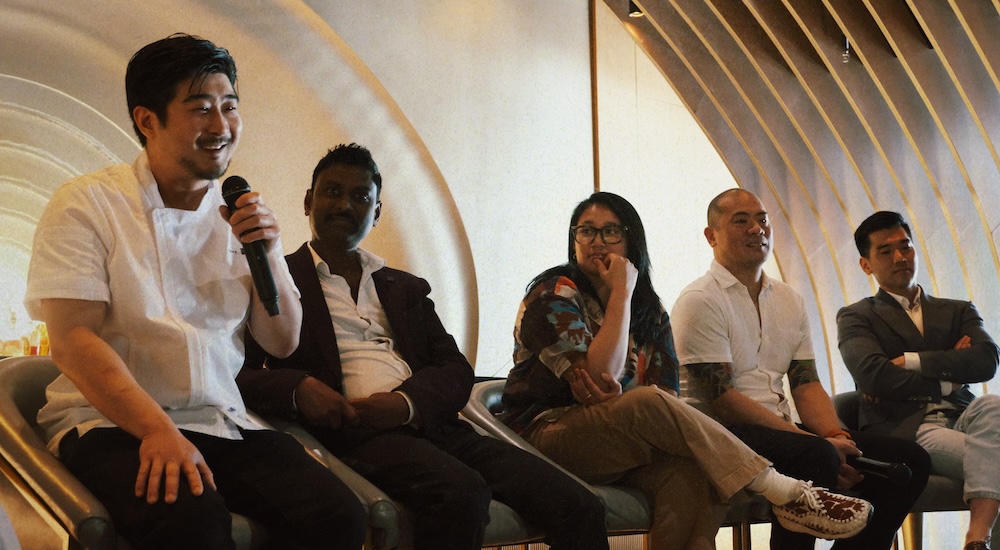
Moderated by Caper senior editor Maggie Wong, an AAPI Heritage Month discussion—hosted at modern Asian restaurant 53 in New York—examined how AAPI voices are reshaping hospitality through cuisine and culture.
Bringing together Mark Yu, executive chef of 53; Vijay Kumar, chef at Semma; Maximilian Soh, managing director of Oiji Mi, Steven Wong, owner and cofounder of Aqua Best; and Kimberly Camara, chef and cofounder of Kora, the panel traced the evolution of Asian cuisines in America—from generalized and misunderstood to influential and unapologetically personal.
The rise of cultural confidence
One of the panel’s strongest themes centered on the evolution of cultural confidence. Recalling childhood memories of bringing Korean food to school, Yu described the embarrassment many children of immigrants once experienced before joking, “We’re the cool kids now,” referencing the growing popularity of Korean cuisine and even Michelin-starred spots in the city.
Camara framed that evolution through the lens of lived experience. “As we continue to live differently, the food evolves along with it,” she said, connecting identity and memory to the way menus evolve over time.

Wong noted that the shift has also transformed the supply side of hospitality. As diners have become more curious about regional cuisines, access to ingredients and seafood once considered difficult to source has expanded as well.
Cooking without compromise
The discussion repeatedly returned to the idea that authenticity itself has historically been treated as a risk, with Kumar speaking candidly about the pressure many chefs once felt to align with Western expectations of fine dining. “At some point, we just have to do it,” he said of cooking food rooted fully in one’s own culture (like the snails from his Indian hometown), rather than trying to “fit into a Euro-centric world.” Camara responded with an observation that resonated throughout the room: “It’s crazy that being authentic to oneself is taking a risk.”
Yu followed with the idea that “the food represents itself and that’s what my focus is—just cooking good food,” rather than following any rulebook of what should be Westernized and what should remain rooted in his culture. He noted ingredients like fermented shrimp paste at 53 have not always been easy introductions for diners, but rather than soften those flavors, the goal has been to invite guests into the experience and encourage curiosity.
Soh also noted that diners often arrive at deeper culinary understanding gradually, beginning with familiarized versions of dishes before exploring more regional expressions. Camara echoed that sentiment, describing pastries and donuts like those served at her Filipino bakery, as “a gateway” into broader cultural flavors.
Advice for the next generation of chefs
“Don’t give up, keep working. It’s going to be challenging, but it’s fine. Tomorrow’s a new day—let’s see how we can fix a mistake that we made yesterday and keep moving.” —Vijay Kumar
“Always focus on the big picture [instead of] the day to day. You’re not able to do the big things if you can’t get through the small ones.” —Kimberly Camara
“Build relationships with purveyors because they’re the ones that can explain stuff to you. If you don’t know your ingredients, whether from your farmer or your butcher, you won’t have full knowledge to create another dish or properly price it or season it.” —Steven Wong
“Have good ethics and also eat as much as you can. Travel a lot, eat a lot, experience the service, experience the food. I think that’s the most important thing to becoming a better chef.” —Maximilian Soh
“Find a good mentor. You need to find someone who loves what they do and passes on that love.” —Mark Yu