Contemporary Thai restaurant Hommali has opened in New York’s West Village, marking the first independent venture from three women who built their careers in the city’s hospitality industry.
Chef Chattchakorn “Benz” Khajornchaisan, general manager Kritayanee “Air” Promsarin, and operations lead Pichalak “Picha” Srigungvarl all hail from Thailand and met while working in New York. Together, they’ve created a dining room that evokes the feeling of a Thai household, reflected even in its name: “hom mali” translates to jasmine rice, which is served complimentary to guests and woven throughout the menu.
A layout inspired by traditional Thai homes
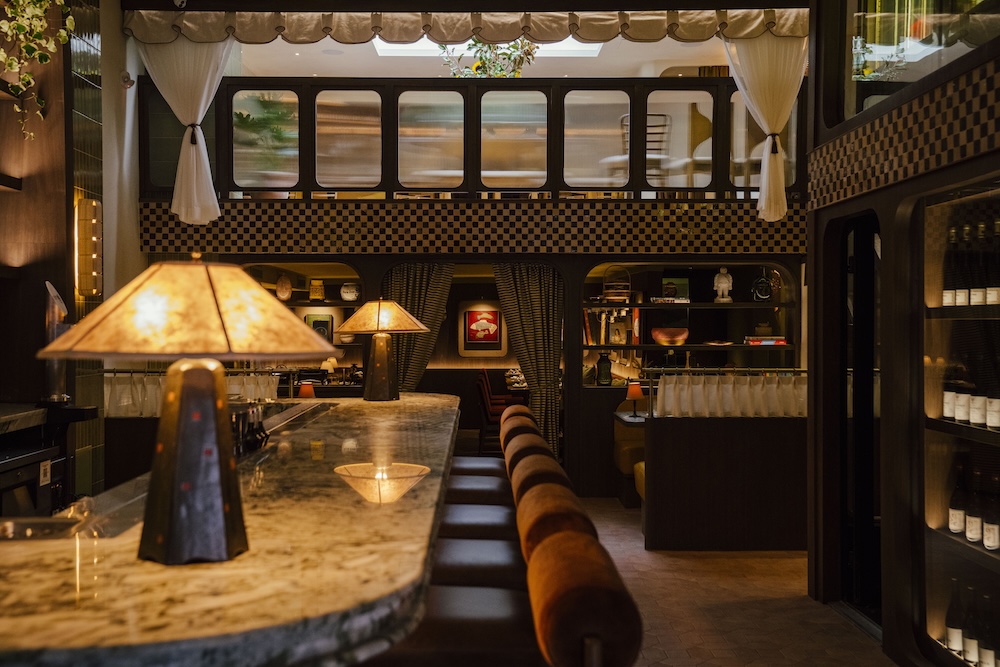
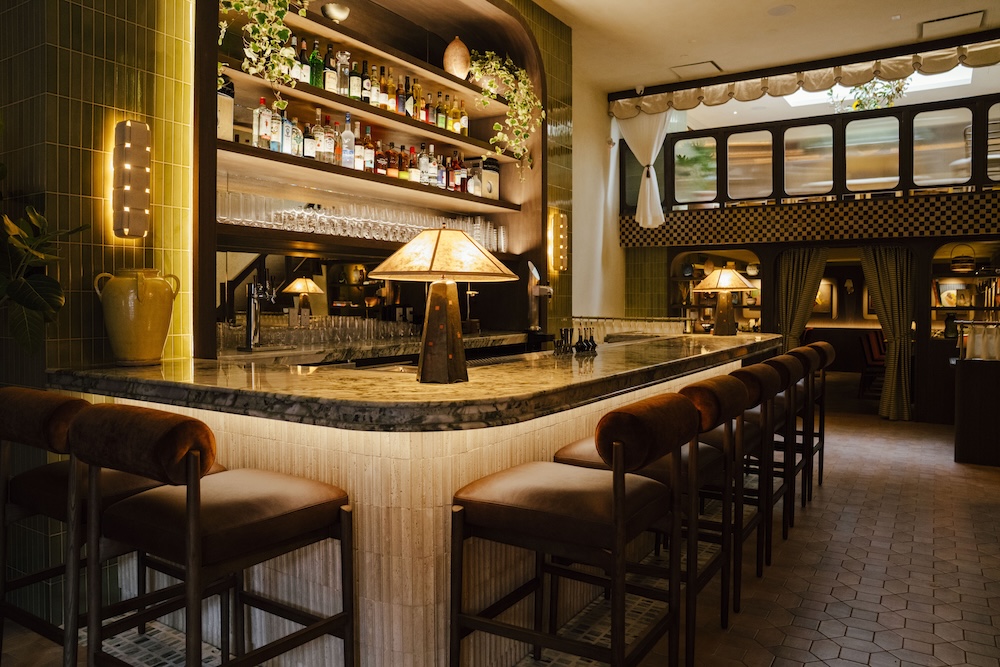
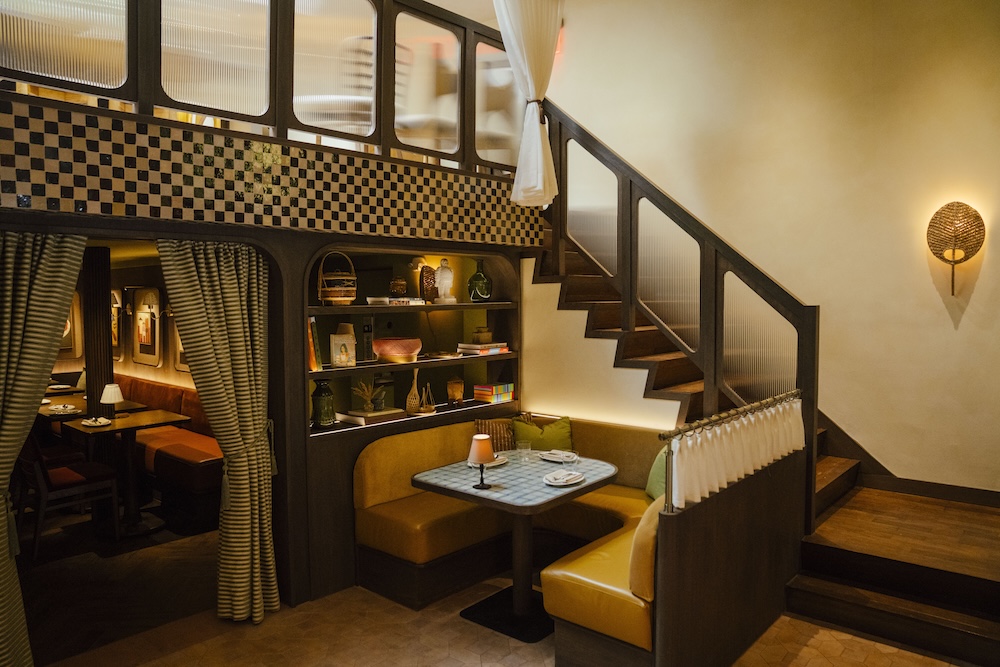
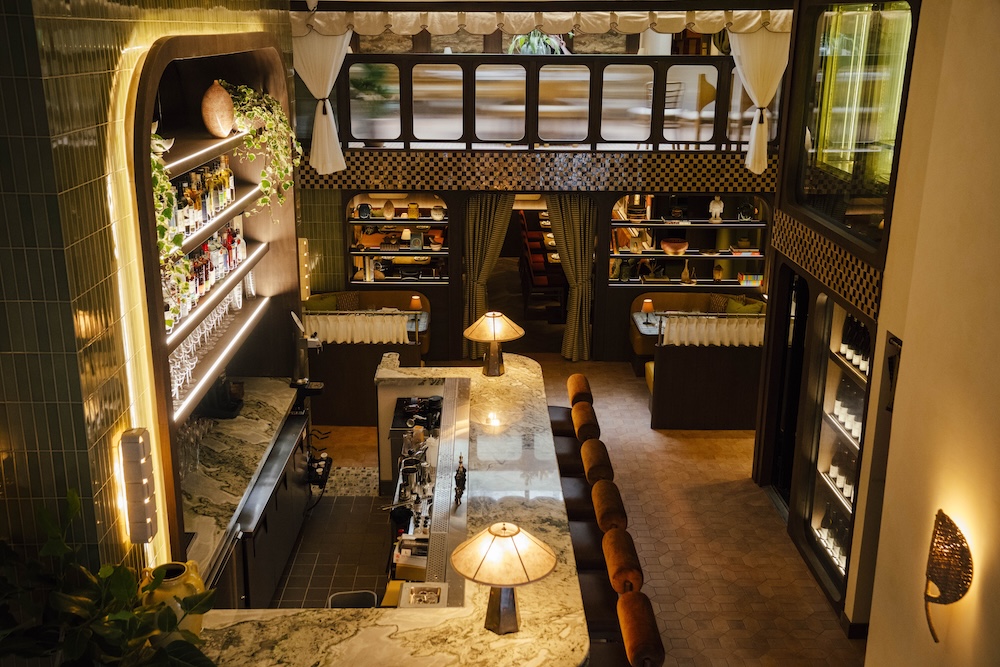
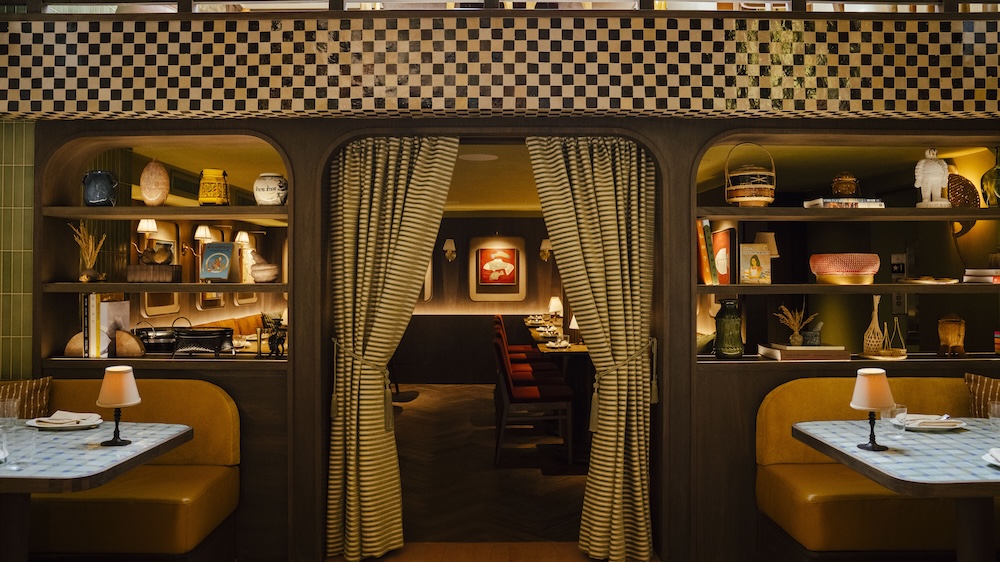
Envisioned by Brooklyn-based Surrane Design, Hommali borrows directly from the structure of a traditional Thai house, organized around a series of distinct zones rather than a single dining room. An eight-seat bar anchors one end of the space, while a 20-seat main dining den, flanked by banquettes for larger parties, sits at its center. Above, an airy mezzanine level tucked beneath a skylight offers communal seating and a semi-private dining option.
Hommali’s interior color scheme represents the life cycle of the rice plant itself: fresh green for young leaves, golden yellow for mature stalks, earthy brown for paddy soil, soft beige for rice husks, and warm cream white for polished rice.

Terracotta flooring throughout the restaurant reinforces its rustic, grounded feel, echoing the central courtyards found in Thai homes. The shelving near the dining den serves double duty, displaying personal items—including vintage Thai cookbooks from the late 1960s and early ’70s that the team found at a flea market—alongside more contemporary titles. Beyond decoration, the shelving also functions as a partition, helping define the dining space without enclosing it entirely.
Design details at Hommali
Throughout Hommali, functional design elements also help tell the story of the restaurant. At the entryway, a custom light installation shaped like a rice plant greets guests. The skylight overhead, meanwhile, is wrapped in textured 3D-printed wallpaper that draws inspiration from rice plants, adding dimension to the mezzanine’s natural light.
A dry-aging room, used for ducks and other ferments, sits alongside a wine cellar, both framed in tile and positioned as visual focal points rather than back-of-house features.
Thai artist Korakot Aromdee also contributed commissioned bamboo pieces to the space, while additional artwork was sourced from Bangkok’s Chatuchak Weekend Market, widely known as JJ Market.