Royal Palm South Beach, the inaugural property in Marriott’s Tribute Portfolio, has reopened following a more than $100 million transformation that breathes new life into one of South Beach’s most recognizable hotels.
Set in the heart of the Art Deco District, steps from Lincoln Road and surrounded by landmark architecture, Royal Palm was originally built in 1939. It long mirrored the story of the neighborhood itself, moving through decades of architectural significance, cultural shifts, and reinvention.
A new look for a Miami landmark
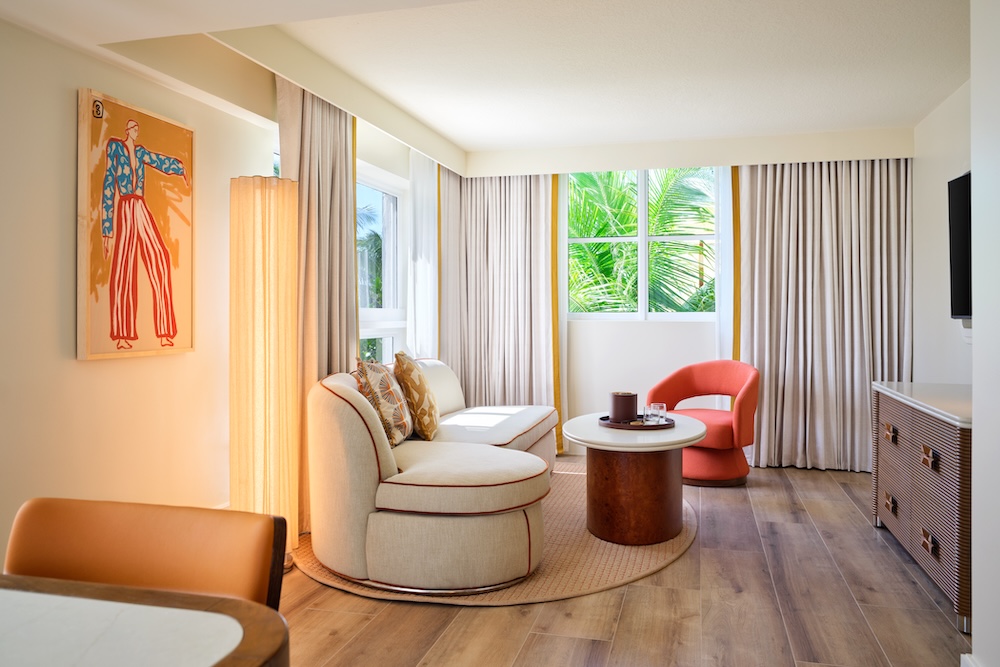
A redesign led by Coral Gables-based firm EoA Group preserves and reinterprets elements of the hotel’s historic foundation while introducing a modernity shaped by South Beach’s coastal setting.
“The Royal Palm, as a property, was historically derived, never a blank slate. It was a conversation that started in 1939, and honestly just never stopped,” says Malcolm Berg, founder, president, and design director of EoA Group. “Our responsibility, as a design team, was to listen, to extract the golden nuggets buried deep inside 80 years of reinvention; to distill them into a narrative the whole team could build from. We found that DNA where two coastlines met—the modernist bones of Miami Beach and the unhurried elegance of the French Riviera. Once that focus was set, that familiarity established, every discipline comfortably adopted the same common narrative—and every decision made felt fluid, intuitively logical.”

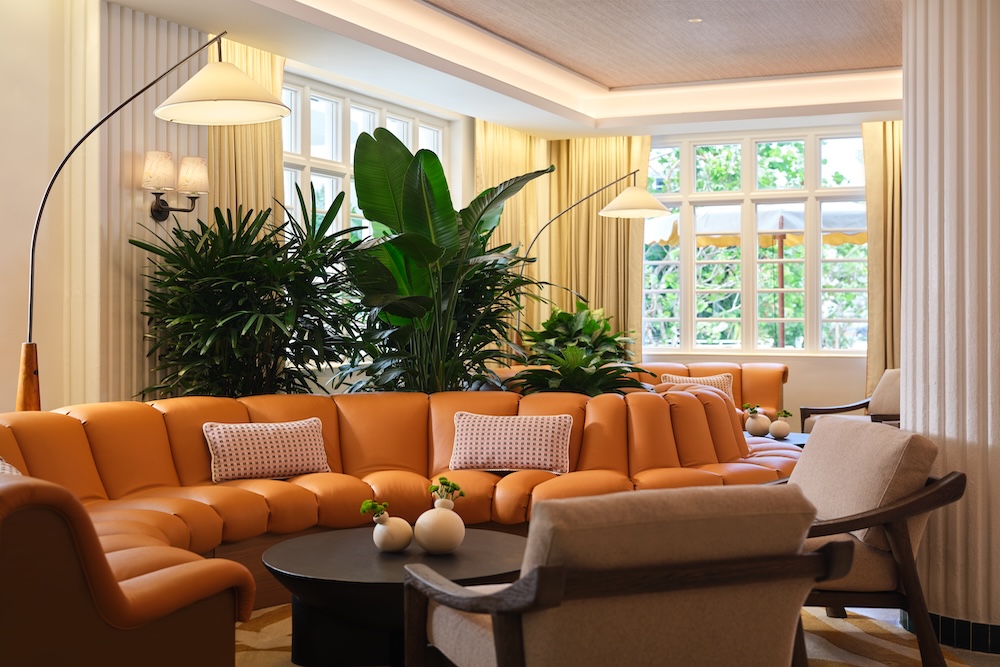
A look inside the Royal Palm South Beach
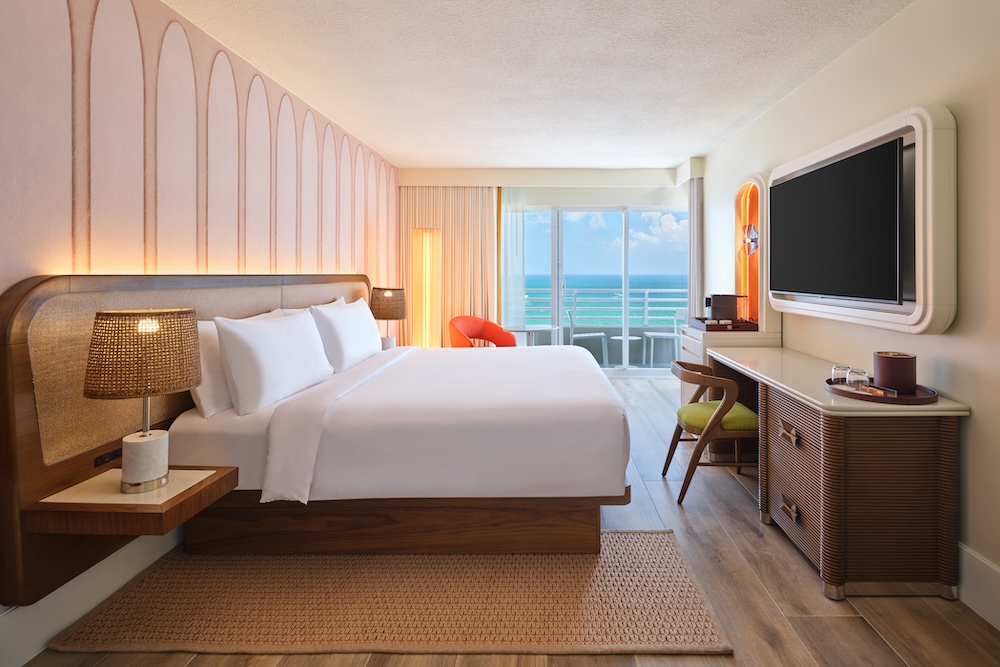
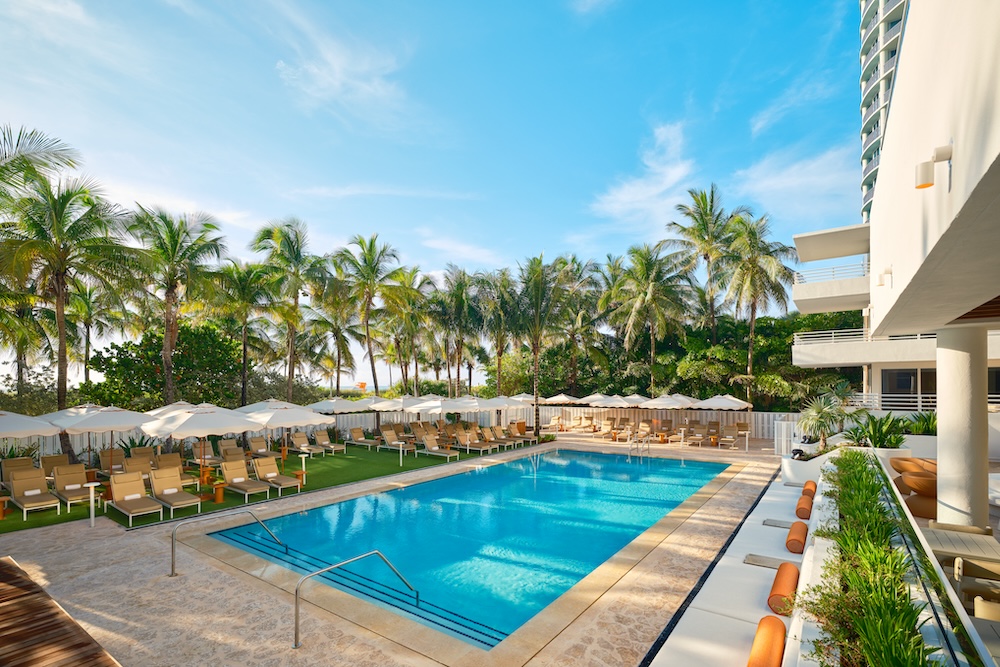
Owned by Park Hotels & Resorts and managed by Pivot, Royal Palm South Beach now features 404 revamped guestrooms and suites across three oceanfront towers—the East, West, and Lanai—rising 17 stories above Miami Beach. Accommodations span Classic Kings and Oceanfront Kings with full balconies to Bungalow Suites and two-bedroom suites with ocean views. The resort also includes a private pool, direct beach access, 18,000 square feet of indoor and outdoor meeting and event space, and a 24-hour fitness center.
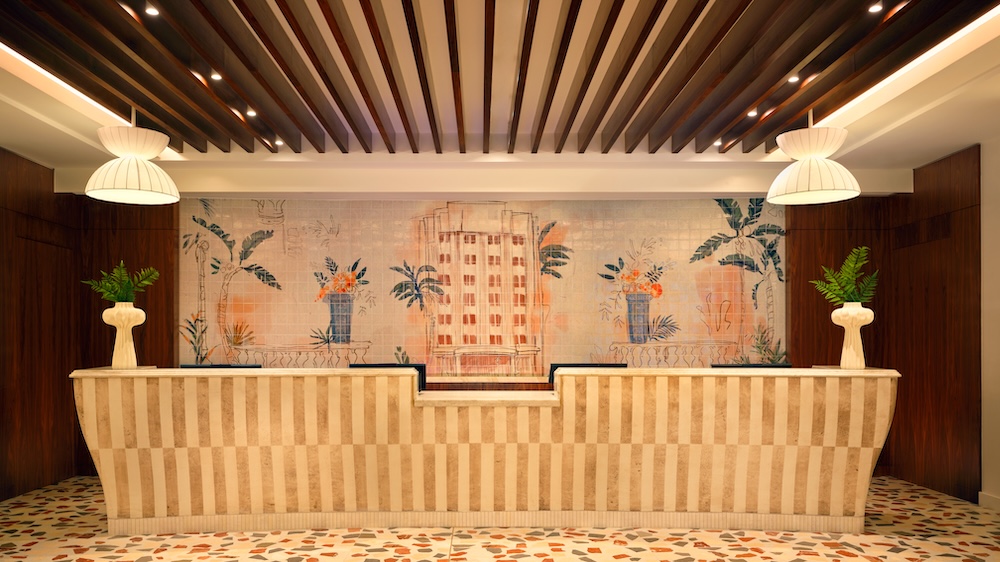
Original architectural details anchor the guest experience, including the preserved compass rose set into the original terrazzo lobby flooring and the original green glass reception desk, now reimagined as the Compass Rose Coffee Counter. Design influences draw from Miami’s cultural landscape—including the geometry of South Beach Art Deco, the expressive energy of Wynwood, and the layered identity of Little Havana—through proportion, materiality, color, and atmosphere.
Commissioned works by local and nationally recognized artists further root the hotel in the city’s creative landscape.
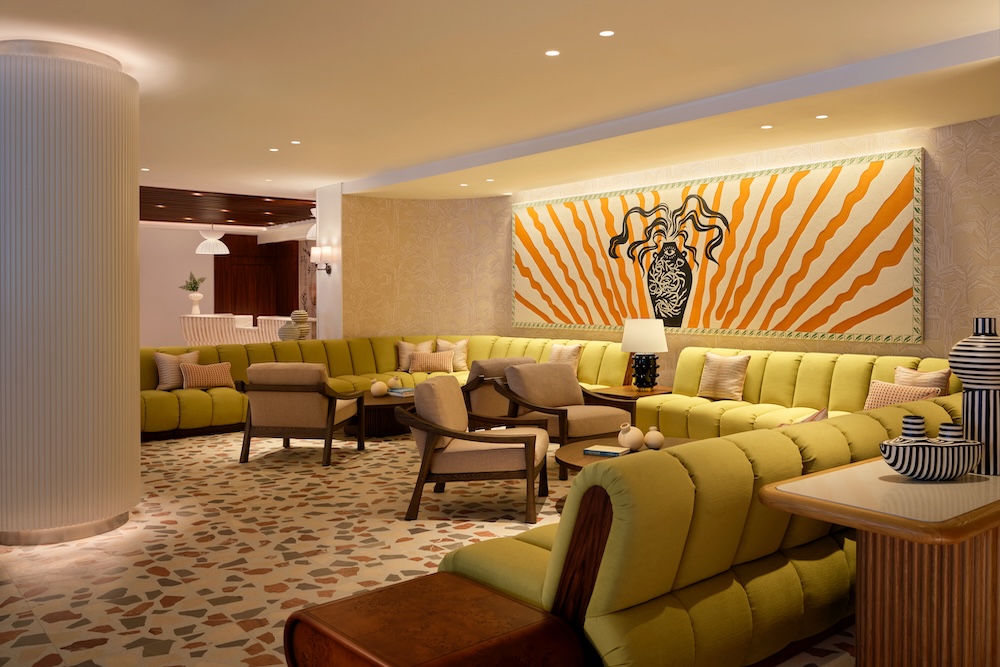
F&B rooted in Miami
The hotel introduces four distinct F&B concepts led by chef Adrian Colameco, each built as its own expression of Miami. The Paloma Club anchors the pool deck with coastal Latin cuisine drawn from Central and South America. Compass Rose, housed in a preserved historic space, is a Cuban coffee counter rooted in the rituals of Little Havana.
Meanwhile, Mixed Company, an indoor-outdoor lobby bar, offers rum-forward cocktails and Asian-inspired small plates. Cositas rounds out the program as an all-day market featuring grab-and-go items and a selection of retail goods that reflect the local culture.
“If you want one moment that tells you everything about this project, grab a drink at Mixed Company,” says Berg. “It is a lounge that greets you, connects you with the lobby, the garden, the firepit, and the pool beyond. It is both tropical and global at once, built so you can disappear into a crowd and still feel like the only person there. That’s our notion of privacy in public. A space designed for the guest to experience, not for a single hero shot on social media.”
“A 1939 Art Deco landmark still has the ability to surprise you,” he adds. “And make you wonder, ‘How is it we’ve never met?'”