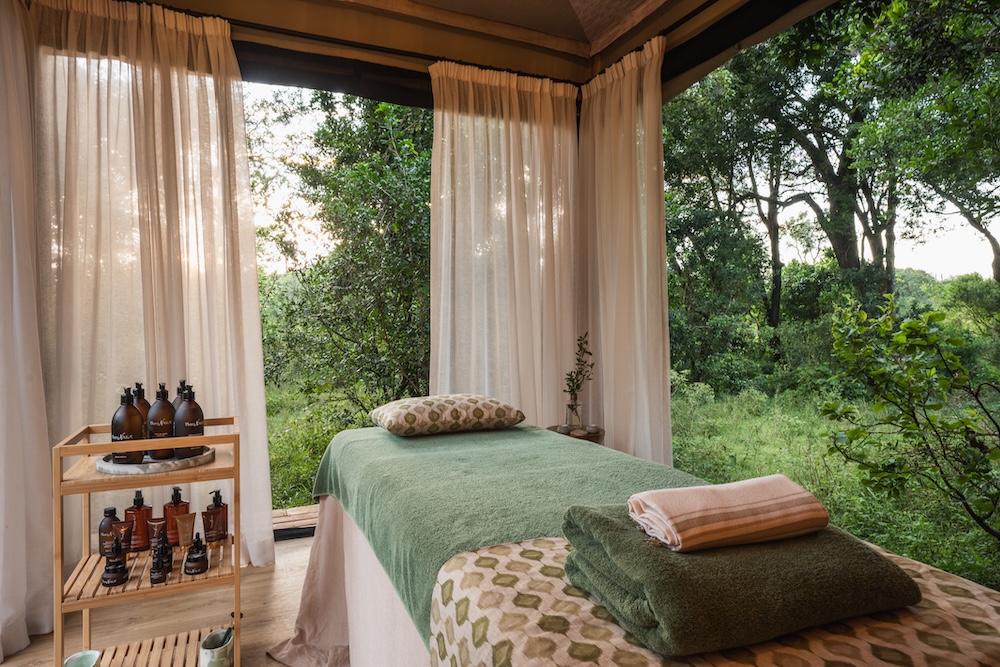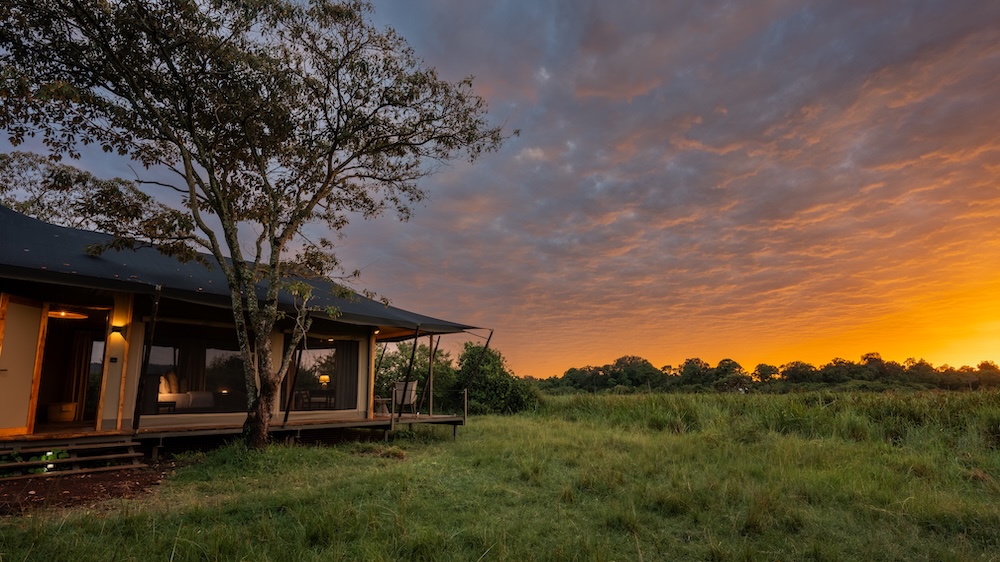
Conservation and hospitality company Wilderness has opened Wilderness Mara tented camp within Kenya’s Mara Triangle.
Built on the site of the former Little Governors’ Camp, the property brings together local craftsmanship and sustainable materials via a design by Chris Payne of White Elephant Interiors in collaboration with Wilderness.
Of the land
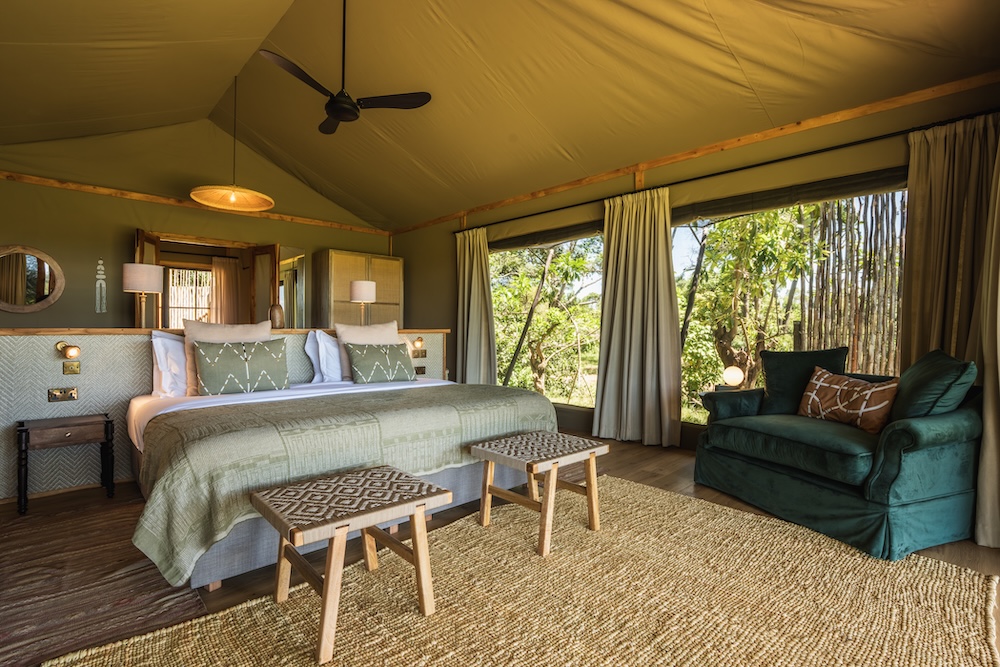
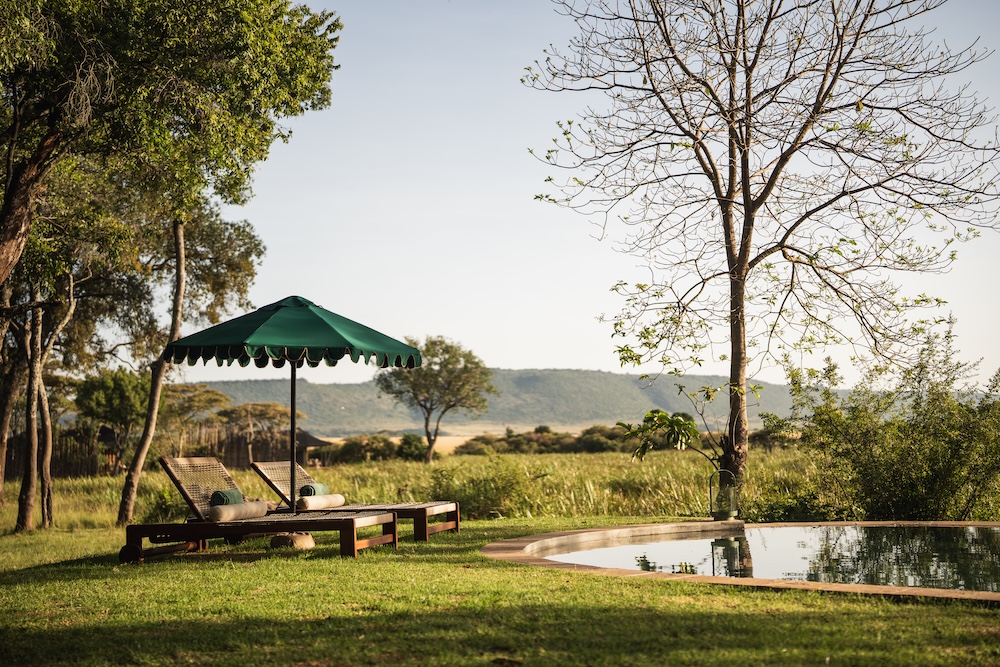
A dozen tented suites, including one family unit, sit along the edge of a seasonal marsh, oriented to maximize views and draw the outdoors in. Large tented windows filter natural light through fine netting to encourage airflow and create a soft, atmospheric quality throughout the day.
Hand-loomed curtains with a subtle chevron pattern are echoed in the headboards and cushions. Custom-made white oak cabinetry with woven rattan detailing introduces texture and warmth, while brass accents found across lighting, switches, and headboard details take inspiration from traditional Maasai jewelry. Full-height glass bathroom doors open directly onto private outdoor showers as well.

A palette drawn from the Mara Triangle
The interior palette references the Mara itself: the golden haze of late-afternoon grasslands, the cool blue-grey tones of dawn, the deep greens of marshes and riverine forests, and the earthy browns of open plains. “It was about honoring what was already here, while allowing the interiors to breathe with their surroundings rather than compete with them,” says Payne.
Much of the furniture, cabinetry, and joinery were produced in Kenya using sustainable materials. Locally woven textiles and handcrafted finishes reinforce a commitment to regional sourcing that extends throughout the property.
Material choices with purpose
Sustainability informs the material palette at every level. Bathroom rugs are made from 100 percent recycled plastic bottles. Deck lights, designed to resemble woven bird nests, were 3D printed in Nairobi from recycled plastic.
Meanwhile, timber comes from certified sustainable suppliers, and reclaimed and upcycled pieces are incorporated into the central guest areas. Existing furniture was restored and reimagined wherever possible.
Overhead fans and passive cooling principles reduce reliance on mechanical systems throughout the camp, while subtle LED lighting transforms the property after dark into what the design team describes as a twinkling extension of the surrounding landscape.
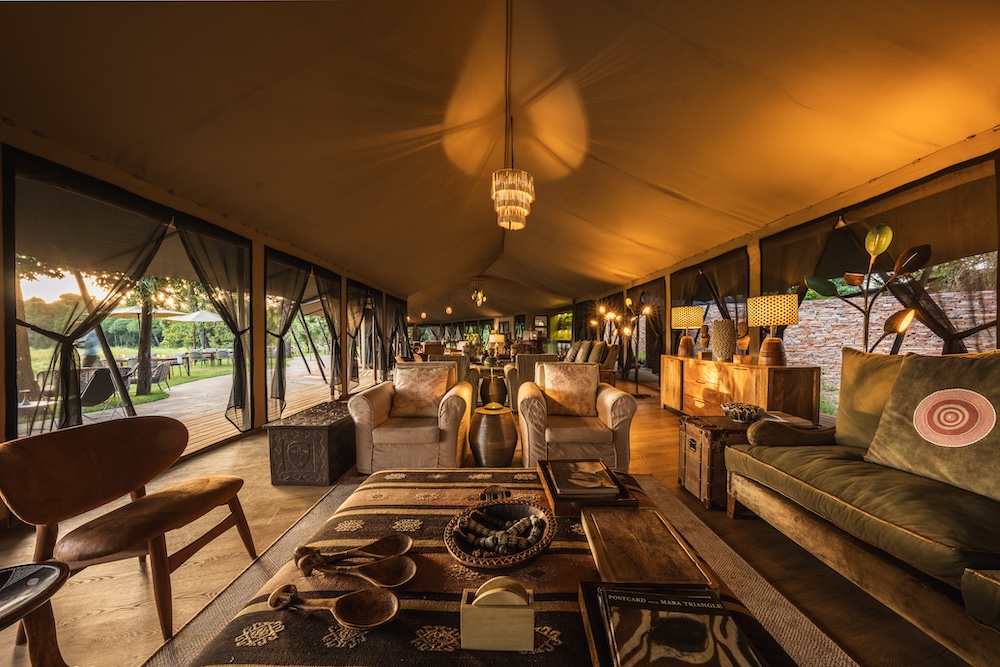
Communal spaces at Wilderness Mara
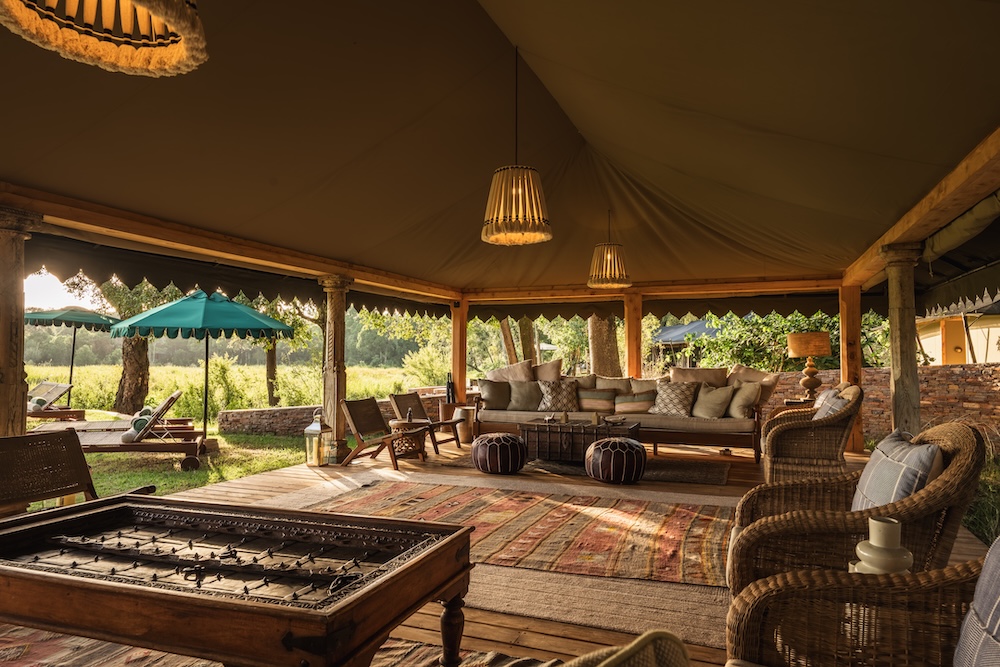
The camp’s gathering areas combine leather seating, sculptural lighting, and curated African artifacts. Low leather chairs by Kenyan designer Emma Campbell sit alongside green velvet sofas upholstered with pre-loved curtain fabric sourced from Nairobi’s secondhand markets, while beaded cushions by Sidai Designs—a social enterprise working with Maasai women—animate the pieces. A beaded feature mirror anchors the dining-lounge area, where baobab pod-inspired floor lamps and pendant chandeliers reference regional craft.
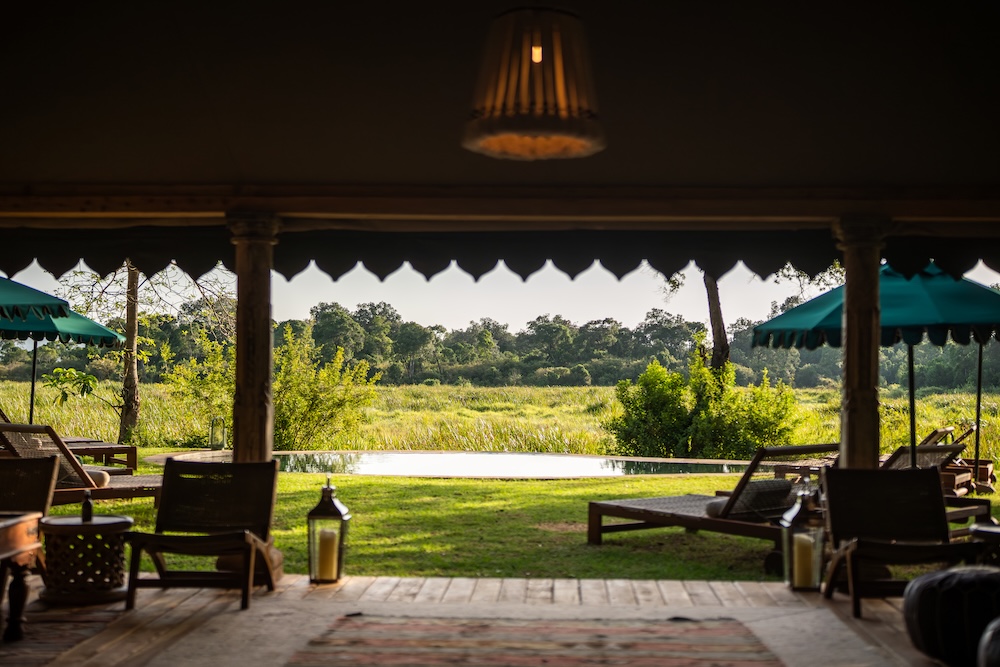
In the pool house, upcycled antique Indian wood columns, Malawian cane furnishings, and Cameroonian Bamileke stools create a layered meeting point of African design influences.
A quieter counterpoint, the study features a live-edge mango wood table, wildlife photography, and muted tones suited to reflection and creative work.