
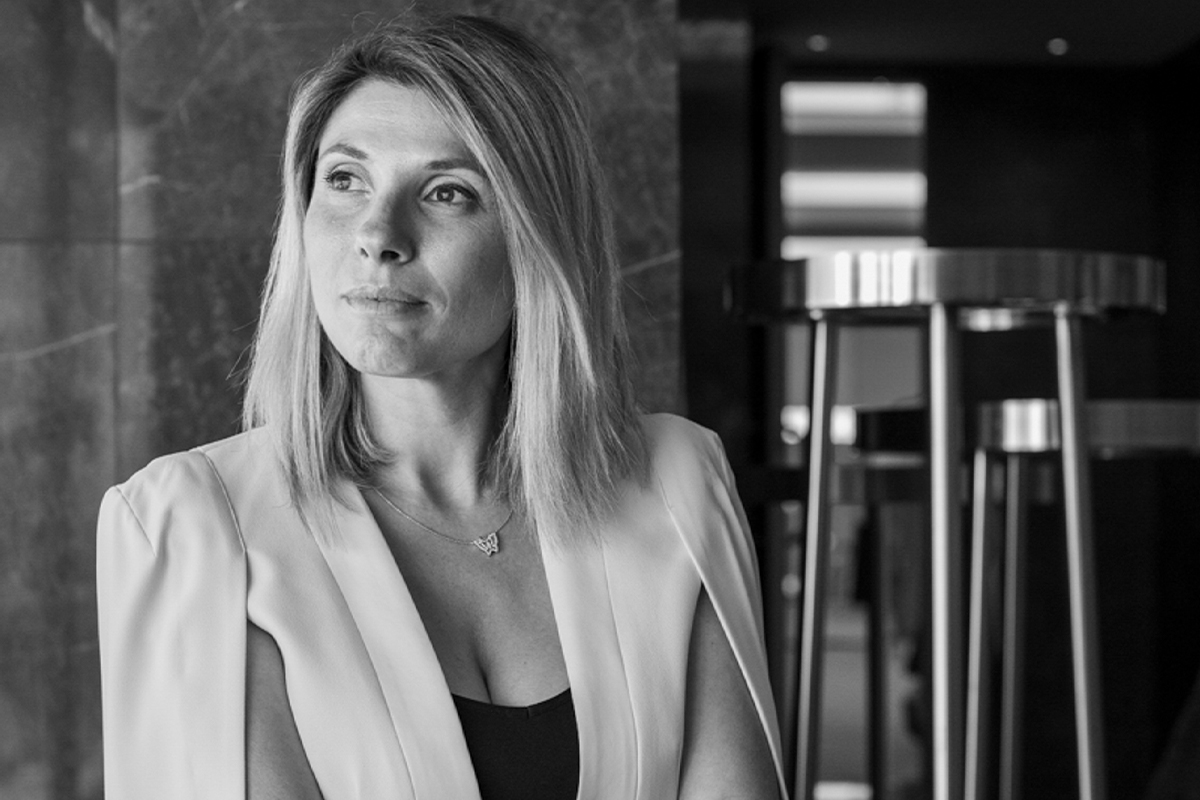
Ria Xenou recently spent months building a life-sized tree out of wire, twisting and molding the malleable material into an art piece that sat in her family’s living room until it was relocated to the garden. The Elastic Architects cofounder has never stopped loving the medium, which she began playing with at age 10, creating wire forms of people, animals, and organic shapes. It was always a way of centering herself, she says.
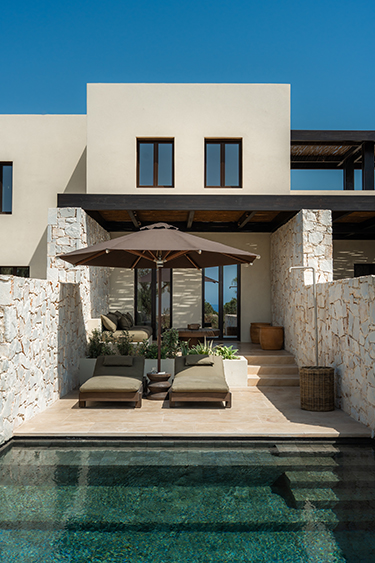
A pair of sun loungers overlook a private pool at Luura – Cliff, Paros
While her family pushed her to study civil engineering, she was always drawn to the arts. When she met her future husband and business partner, Alexandros Xenos, he encouraged her to pursue architecture, and she did. “When I was studying architecture, I found my world,” she says. “You’re creating art because you’re creating forms. You do the proportions and the symmetries. It’s a sculpture, but [one] that people can live in.”
After Xenou finished university in Athens, the couple bought a one-way ticket to New York. On their way to the airport, Xenou received a call from soccer star Demis Nikolaidis, who had stumbled upon her student drawings of the AEK soccer club and asked that she design the actual training center. That commission became the catalyst for Elastic, which she founded in 2005, with Xenos joining in 2009 after leaving his own development and construction practice.
Two decades later, Elastic carries an extensive portfolio: completed projects include Aman Venice, Delano Miami Beach, Four Seasons Mauritius, Banyan Tree Dubai, Amanvari, and Nammos London. Upcoming work spans Barbarossa in the Hamptons, Luura Cliff in Paros, along with Nammos and One&Only projects. The firm now runs a team of about 100 out of its Athens headquarters, with offices in Toronto, Dubai, Cyprus, and soon, London. Here, she reflects on her approach to hospitality, breaking through creative blocks, and the power of resilience.

How did you end up working on the Aman in Montenegro?
Ria Xenou: In 2009, Greece entered a financial crisis and all our clients stopped their projects. At that time, we had about five architects, but I didn’t want to fire anybody. I don’t believe in giving up. I’m going to fall fighting no matter what. I heard from a friend that the Aman in Montenegro [was looking for an architect]. I saw an opportunity and started sending emails to [Aman founder] Adrian Zecha saying how much we wanted to do work on this project. I was sending something like 10, 20 emails a day.
At some point, he called me and told me to stop. But I [insisted] he give me the chance. So he said, ‘You have 10 days to design three Aman villas, and if I like them, you will become one of my architects. But if I don’t, then I’ll make sure you don’t work in the industry again.’ I had never designed a hotel before, so I agreed—I had nothing to lose. For 10 days, there was no sleep. We had this amazing concept based on mathematics and proportions.
After your villa presentation, Zecha hired Elastic on the spot and went on to become your mentor. What did that mentorship teach you?
RX: In 2009, we shifted to doing hospitality projects, and [Zecha] taught us everything about hospitality. The [lesson] that remains untouched is we design for the guests, not our ego. We always think about the guest experience. We understand the arrival experience, what they should see, and how they should feel. Everything matters until they leave.
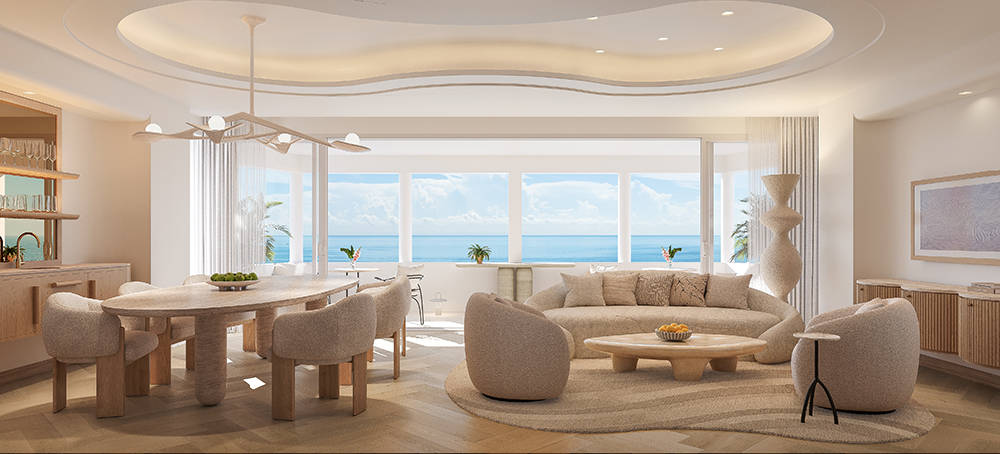
Expansive windows overlooking the Atlantic Ocean define the penthouse at Delano Miami Beach
What guides your approach to hospitality?
RX: There are two things. One is aesthetics and the other one is the “why.” It starts with historical analysis and storytelling, which creates the first notion of how we want to approach it. Then, it shifts to the look, feel, and form.
When a guest comes to a property we’ve designed, they have to feel the untouched beauty the owner or whoever invested on this land saw—we have to offer that back to the guests. We spend time onsite to understand every element: the whispers of the wind, the sunlight, the shades, the trees, the desert, the views. It should feel like it belongs to the specific location, but with twists, like sculptural forms. You will see that many of our designs have a softness, a femininity.
What’s the most challenging part of the creative process?
RX: There are times I might spend 10 hours trying to figure out what the concept is and how it should look. It’s failing after failing after failing after failing. You’re tired and you want to have a break, but that might be the moment you have an idea. I’m sketching a hundred crap things until I get one nice one. This is the hardest part: When you want to give up but you don’t.
What do you do to break through those creative blocks?
RX: I sit. I like being on a plane because I have nowhere to go, and I take the tracing paper because I start with an idea, and I end up with a pack of tracing papers. Usually in my airplane seat, there are papers all around me, but that’s my favorite part.
As the firm expands, how do you keep your team happy?
RX: The culture is not something you can teach. It’s something you learn from experience, and it becomes part of the DNA. [Outside of the office], we volunteer, we play basketball, and we have beach parties.
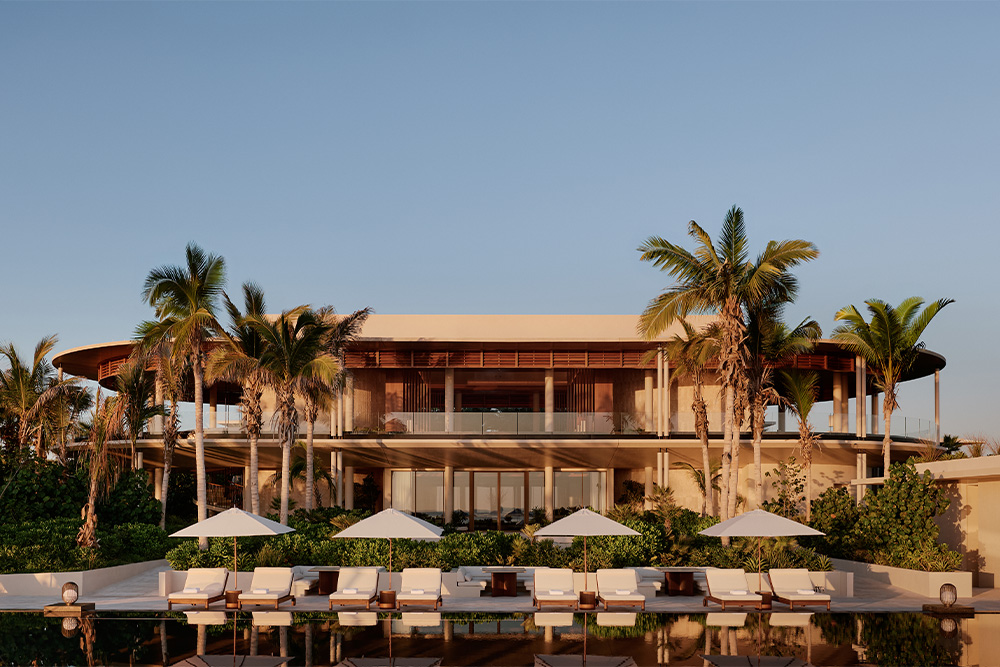
Casa Grande sits at the heart of Amanvari, housing the property’s dining venues alongside a pool lined with loungers
Tell us about Amanvari, which recently opened on the East Cape of Baja California Sur, Mexico.
RX: It was a five-year process [working on] the masterplan, architecture, and interiors. It was super challenging and fast-paced. It only has 18 keys and a spa, but it has more than 60 residences and every one is different. We had different buyers who gave us feedback to expand our ideas and visions for the project. Aman has a consistency with symmetry, and it was astonishing to see that the Aman buyers and guests also have the same perception of symmetry. If there was a mistake or shift in the drawing, they would comment on it.
We designed about 180 custom furnishings, creating a whole furniture line for this project. We designed the carpets, light fixtures, handles, and fabrics. I remember spending 15 to 20 hours inside a mock-up room every day with my team with Aman checking every single detail. And we only used four materials throughout the project: concrete, stone, wood, and metal.
With Nammos expanding to New York, how are you adapting the brand’s luxury lifestyle experience for the city?
RX: When you go inside a Nammos, you feel joy and you feel fresh. Every Nammos is different, but you feel those two things the moment you step in because it’s designed to feel like that. In New York, we’re starting with the restaurant, which is opposite Rockefeller Center.
After everything you’ve built, how do you define success?
RX: The fact that we can do projects we love with people we love. You work with the smartest and most talented people and clients who are visionaries. Then, you get to choose and say, ‘That’s my project.’ I often say to my daughters that I feel like I’m cheating because I’m getting paid to do what I love.
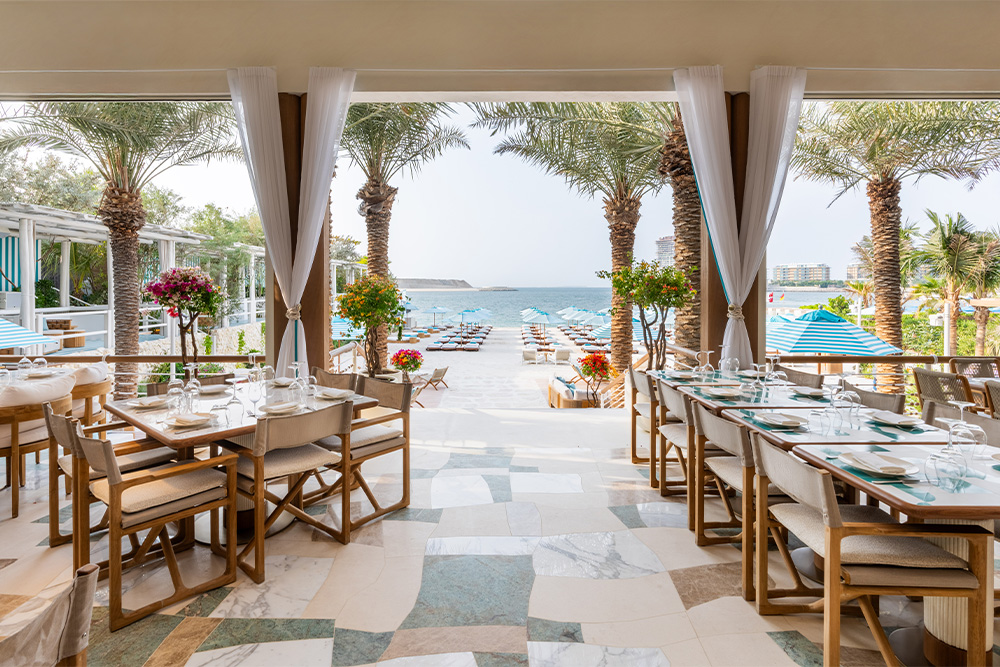
Nammos Dubai, a beachfront dining destination, keeps the focus on its seaside setting
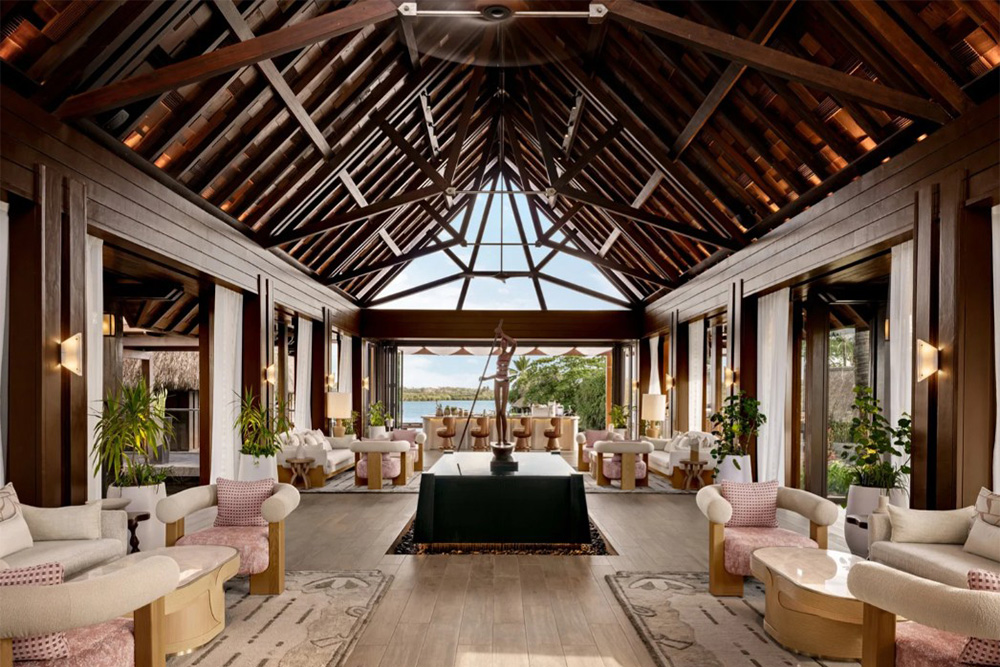
The Four Seasons Resort Mauritius at Anahita, where Elastic refreshed the property’s dining venues and bars
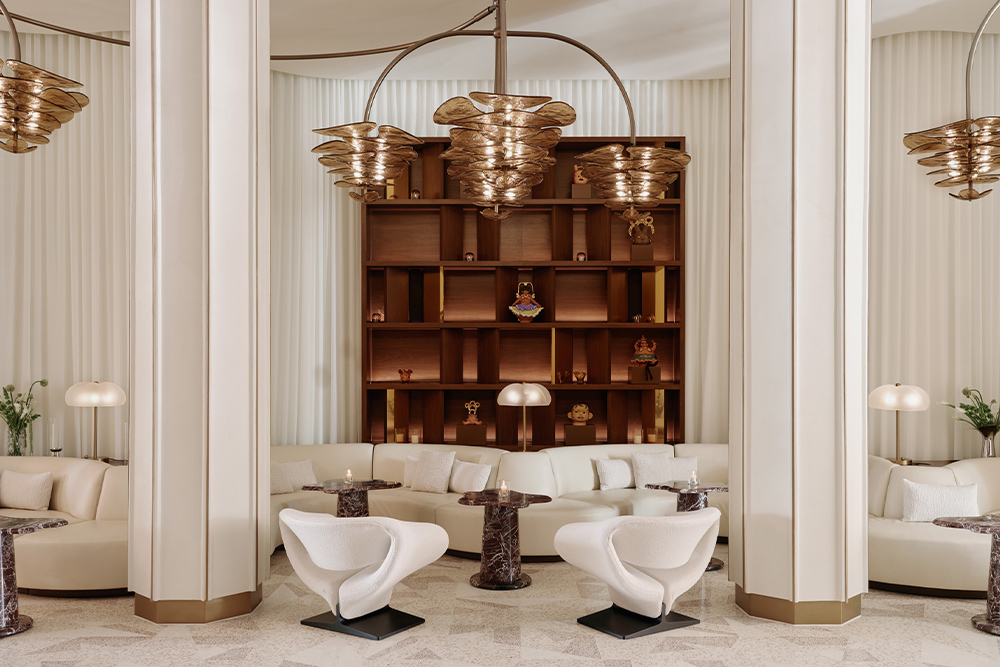
Dark wood built-ins contrast the bright and airy palette at the Delano Miami Beach lobby
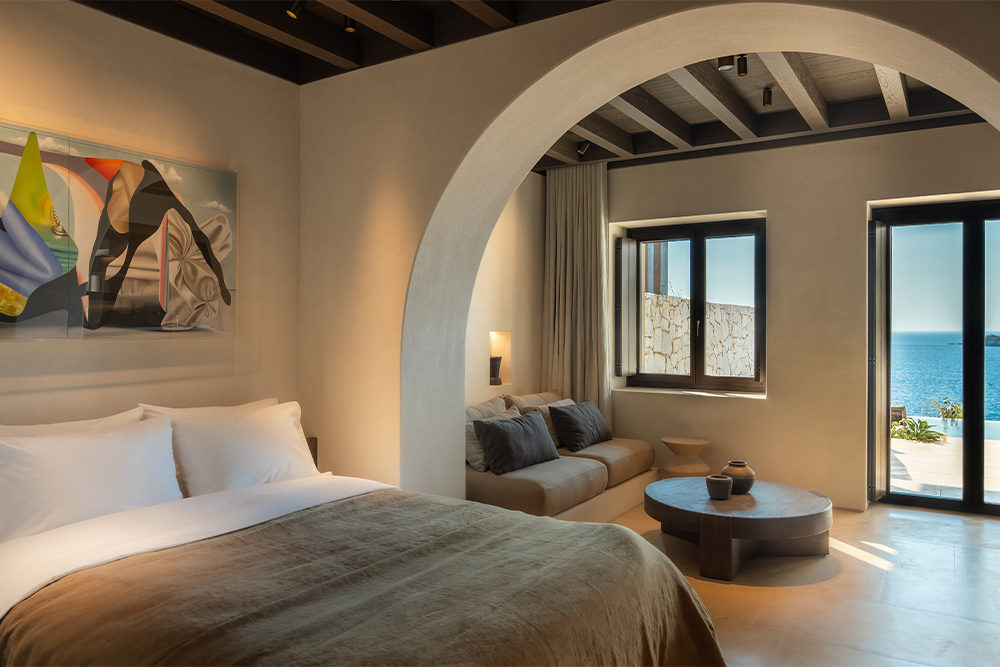
Elastic led the architecture at Luura – Cliff, Paros, with interiors by Lambs and Lions
Photos by Robert Rieger, John Athimaritis, Louisa Nikolaidou, and courtesy of Aman and Luura Hotels
This article originally appeared in HD’s September 2026 issue.