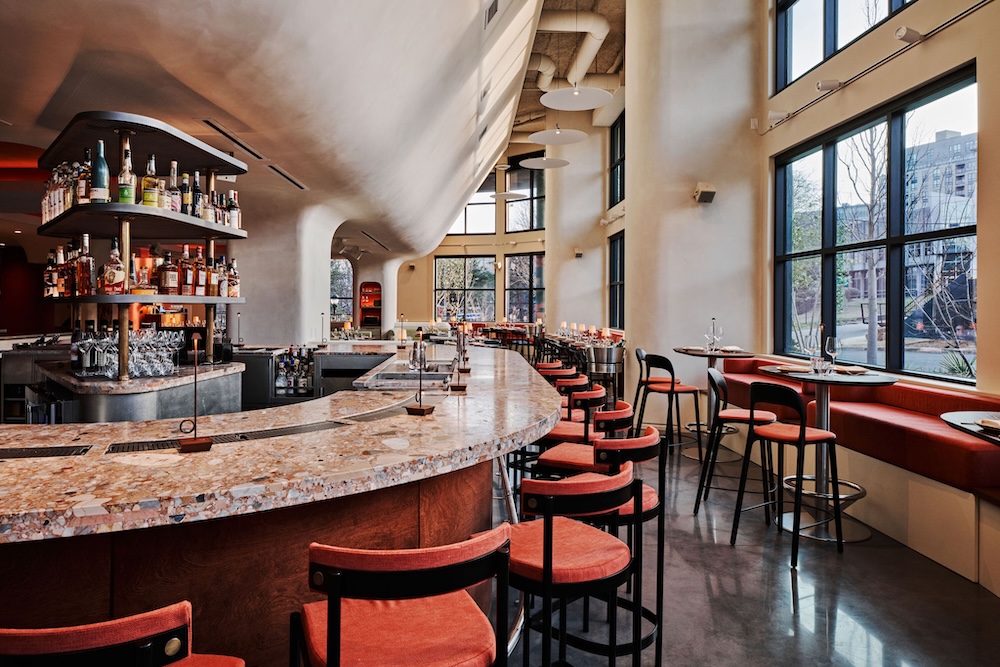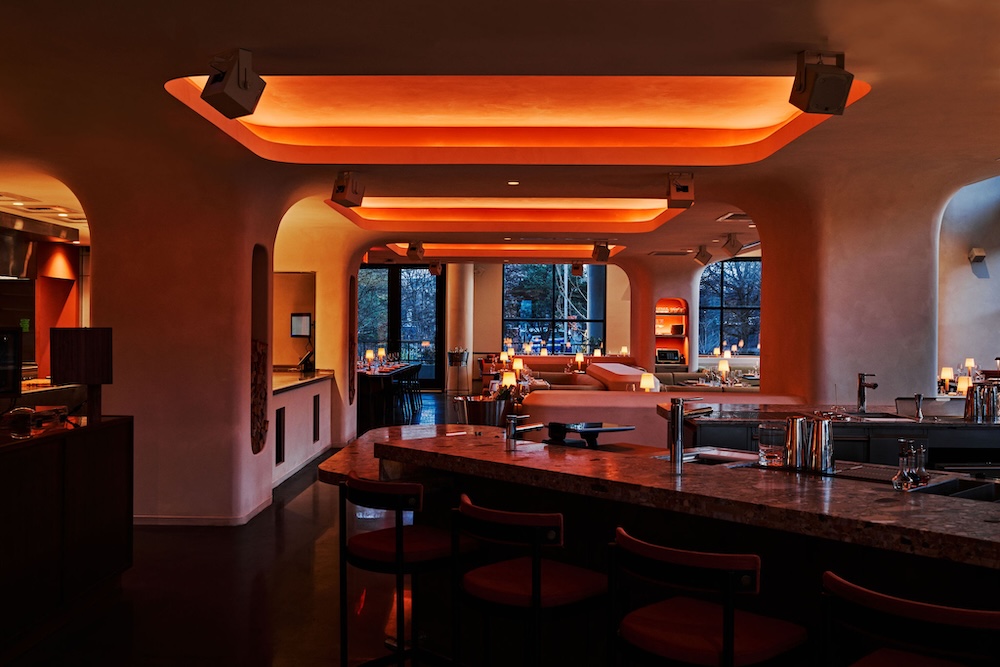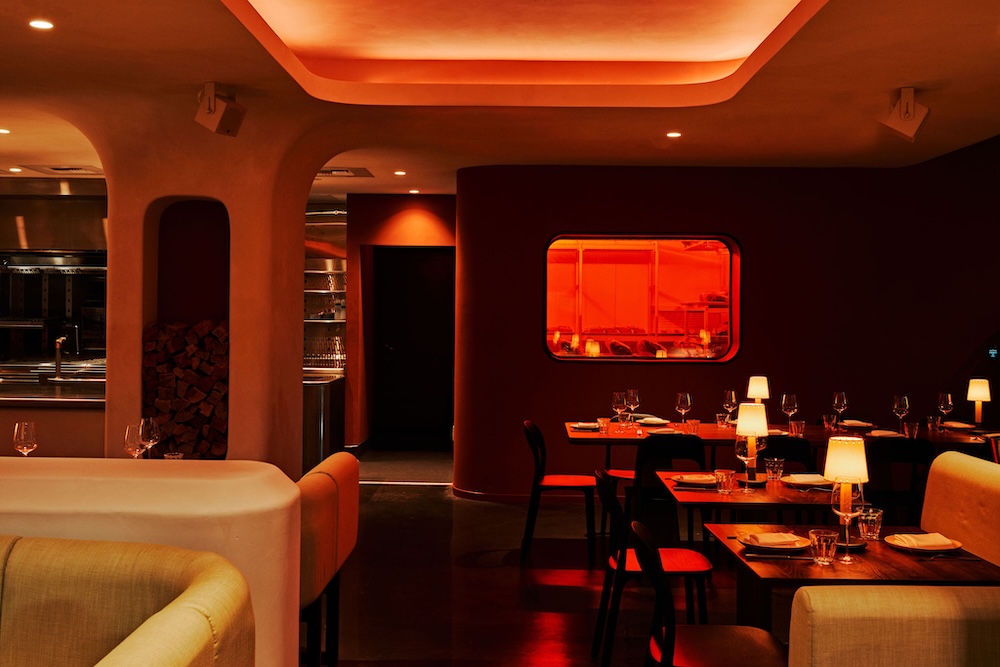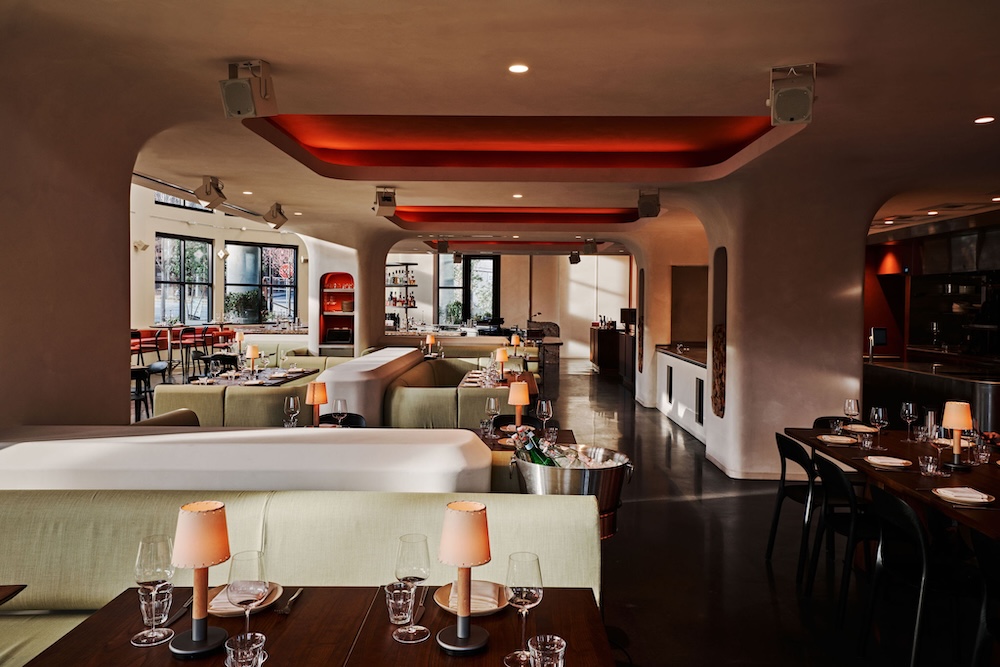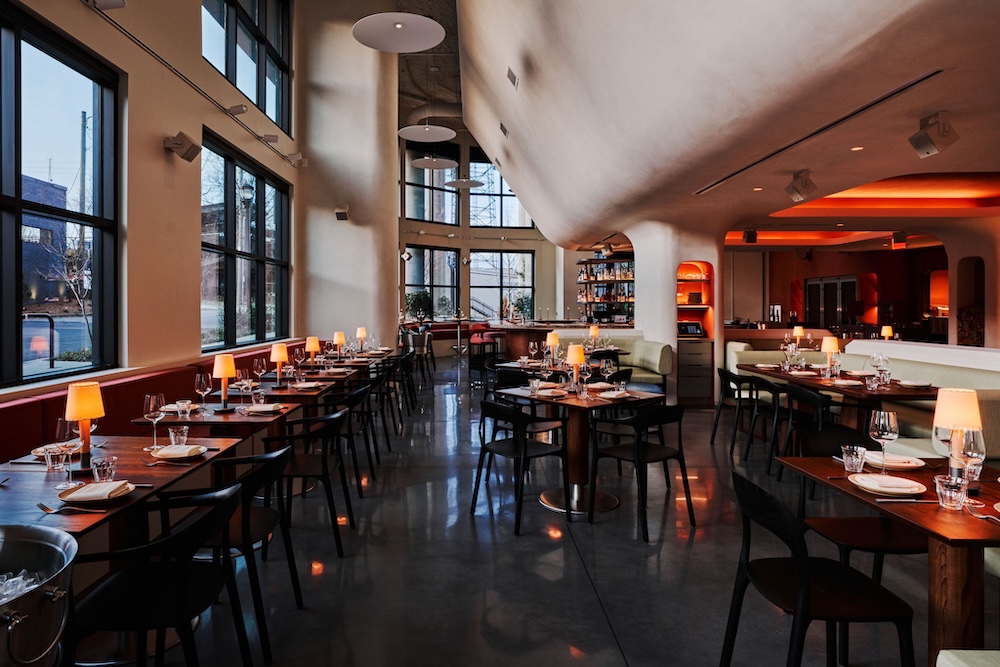
A new restaurant in Atlanta’s Westside is blurring the line between kitchen and dining room, process and performance. Füm—a collaboration between Arcturis | square feet studio, HAND, and Grassfed Culture Hospitality—is organized around a wood-fired hearth and open kitchen, where the act of cooking becomes central to the spatial experience.
Named after the Italo-Gaelic word for “smoke,” the concept draws from the rhythm of an Italian piazza, translating it into a modern immersive environment. The layout unfolds through a series of distinct yet interconnected zones including a pasta-making room, dry-aging chamber, wine area, and a cocktail bar by Oslo-based Behind Bars.
The goal was to create “a living Italian marketplace… where craft is not hidden, but fully integrated into the guest journey,” says Pili Restrepo Hackler, cofounder and creative director of Grassfed Culture Hospitality. “We were inspired by the linear rhythm of Italian daily life: moving from coffee to wine to pasta to fire, each moment unfolding naturally into the next.”

A sculptural design language
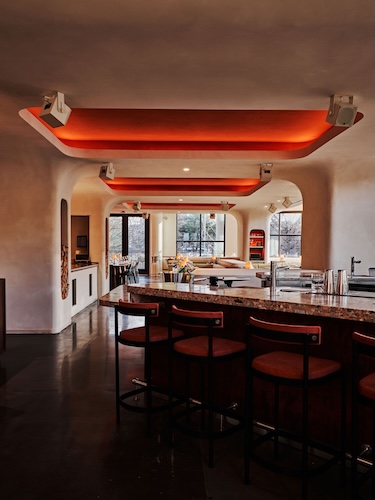
Developed in collaboration with Grant Blakeslee of HAND, the space takes on a sculptural language informed by the human body—its bones, curves, and internal voids—resulting in an environment that feels intimate and continuously unfolding.
Curved soffits hover above the dining room, columns wrap existing structure, and carved openings frame views into the open kitchen, all working to soften the building’s original framework while guiding circulation. The elements “conceal structure and mechanical systems, organize circulation, compress and release space, and respond directly to the architecture that was already there,” says Blakeslee.
Color and art at Füm
A restrained palette of paprika red, pistachio green, warm white, and walnut draws from culinary references, while limewashed plaster surfaces add depth and softness to the sculptural forms. Stainless steel elements in the open kitchen provide contrast, grounding the space in performance.
Art and craftsmanship further animate the space, including works by Colombian artist Mateo Cohen Monroy that add a layer of abstraction and movement, softening the more structured architectural elements.
Throughout, craftsmanship remains at the forefront, with local artisans contributing to key elements ranging from the hearth to custom furnishings and lighting. This emphasis on making underpins the entire concept, which Restrepo Hackler describes as “a love letter to craft. To the hands that knead, stir, grill, ferment, cure, and wait patiently for flavor to reveal itself—a place where craft is honored, and where people can gather, slow down, and be nourished in more ways than one.”