
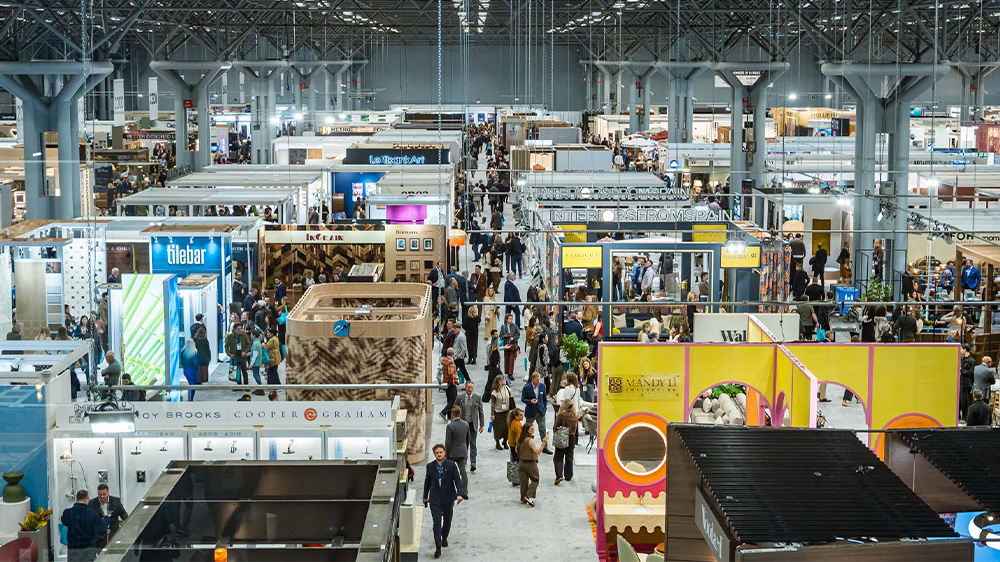
From compressed budgets to a quieter, more intuitive definition of luxury and the rise of passive wellness, day one of BDNY spotlighted how hospitality design is increasingly measured by how it performs—for owners, operators, and guests alike.
1. Managing budgets is a collaborative process
Panelists offered a multidisciplinary take on project budgets through the lenses of design, branding, ownership, and purchasing during the session Does Great Design Need a Big Budget?, Boutique Design managing editor Caitlin St John moderated the discussion, which explored how thoughtful design strategy, material ingenuity, and focused investment can create memorable, authentic spaces that guests won’t forget.
A big budget doesn’t guarantee good design, the panelists agreed. What matters more is delivering a genuine sense of cohesion, authenticity, and intentionality. “You can spend so much money and it doesn’t have a sense of place,” said Harken Interiors’ Chris Sommers.
When deciding what belongs in a project budget, several speakers emphasized starting with a solid business plan, clear goals, and a firm grasp of project timing. “It’s a team effort to understand what numbers we’re managing,” said Tammy Miller of Alternate Resources.

Eyal Einik of Tidal Real Estate Partners added an owner’s perspective: “It’s deciding who your design team is. You need to be in lockstep.”
Bringing in key players, such as manufacturers and consultants, early in the process can also guide decisions about product specifications that align with budget goals. “Manufacturers know what something will cost, what’s durable,” Sommers said.
Still, the panel cautioned that some cost-saving decisions can backfire operationally. IHG’s Stephanie Edwards pointed to casegoods as an example: cutting corners there “may save money now but cost money down the road” when furnishings need early renovation or replacement. “Get something to stand the test of time,” she said.
2. Thinking local while designing global
In The Future of Hospitality: A Global Journey From Japan to Bhutan, Paris, Copenhagen, and the Arctic Circle, Bjarke Ingles Group (BIG) partner Kai-Uwe Bergmann, presented a global portfolio of projects, ranging from a treehouse north of the Arctic Circle surrounded by 350 birdhouses to a ski-in/ski-out hotel in the Valley of Watchmaking outside of Geneva. Throughout the presentation, Bergmann shared insights on how local architecture, history, and materials inspired solutions that feel at one with their surroundings while still challenging and redefining what hospitality can deliver.
One standout example: CapitaSpring, a 51-story biophilic high-rise in Singapore’s financial district that houses residential, commercial and green spaces. “We wanted you to feel like you’re in a lush tropical forest,” Bergmann said, pointing to features like a five-level green oasis at the building’s core and a rooftop edible garden that supplies its five restaurants.
Bergmann also shared images and details from the NOT A HOTEL project on Japan’s Sagishima Island, which comprises three luxury villas. Japanese design served as the driving force behind the project. For example, traditional tatami-mat patterns appear in the arrangement of the black slate flooring, while photovoltaic panels echo the slate roofs found in local villages. “This is an ode to Japanese historic architecture combined with Scandinavian modernism,” Bergmann said. “It’s a modern interpretation of the Japanese villa.”
3. Speed comes from commitment, not shortcuts
A typical hotel renovation takes 18 to 24 months, right? During The Fast-Track Hotel: Lessons From Accelerated Model Room and Hotel Delivery, panelists argued that this timeline can shrink to under a year when design, procurement, and manufacturing run side by side instead of one after another. That approach means setting clear budgets early, committing to trusted vendor partners from day one, and bringing manufacturers in while the specs are still being written. Moderator Dan Ryan of Agency 967 and the “Defining Hospitality” podcast laid out the financial case: For a 210-room hotel, finishing 20 weeks early can return about $1.8 million in accelerated revenue.
Speed doesn’t mean skipping steps. Panelists stressed that the concept phase is where a fast-track project builds its momentum, so teams shouldn’t try to save time there. Christian Schnyder of Beleco Design called a strong, uncompromised concept the project’s “North Star.” Anna Peretz, speaking from the brand perspective, urged ownership, brand, and design teams to make decisions in the room instead of letting reviews stretch for weeks.
The model won’t fit every project, especially luxury brands with long review cycles. For adaptive reuse projects and properties racing toward a seasonal opening, though, a small and decisive team may be the most valuable specification on the job. “It’s fast decision-making. It’s collaborative decision-making,” says Bryce Sprecher of Summa International. “You need to be able to fully engage with the owner, with vendors, with brand. You are part of a team. You’re not fully in control.”
4. Luxury is felt more than seen
Marble and white gloves no longer define the high end. In From Aesthetics to Experience: The New Role of Design, moderated by Lindsay Keir of II By IV Design, panelists described luxury guests who value personalization, privacy, authenticity, and emotional connection over visible wealth. Four Seasons’ Amy Fothergill pointed to time as today’s most precious luxury, and to the “core memories” guests carry home long after they’ve forgotten the finishes.
That shift asks design to perform, not just photograph well. Victor Schmick of Davidson Hospitality cautioned against spaces built for photos and awards instead of the people who use them. He noted that the smartest design often works out of sight, in service paths and back-of-house routes that keep the guest experience from ever feeling clumsy. Panelists also called for bringing operators into the earliest concept conversations and for building a sense of place through local craft and history instead of themes.
For designers, the focus is moving away from how a space looks and toward how it feels to arrive in, stay in, and work in.
5. Wellness is going passive
Wellness has moved well beyond the spa. During The New Language of Wellness: Designing Hospitality Spaces That Restore, Recharge & Inspire, moderated by Megan Pierson of POLYWOOD, panelists framed wellness as a baseline expectation, not a competitive “widget,” as entrepreneur and wellness advocate Dale Moss put it. Guests increasingly expect to leave feeling better than when they arrived.
The most effective strategies are passive. Warm evening lighting, natural materials, calming scents, and thoughtful acoustics can support rest without asking guests to sign up for anything. Personalization plays a role too, but panelists drew a clear line around data. “I want to be seen, but I don’t want to be studied,” says designer Galey Alix.
Little of this requires a big budget. Hotels can support sleep, water, food, and movement through choices as simple as a better lightbulb or filtered water in glass bottles. It’s a reminder that the most meaningful wellness design is often the most accessible.