
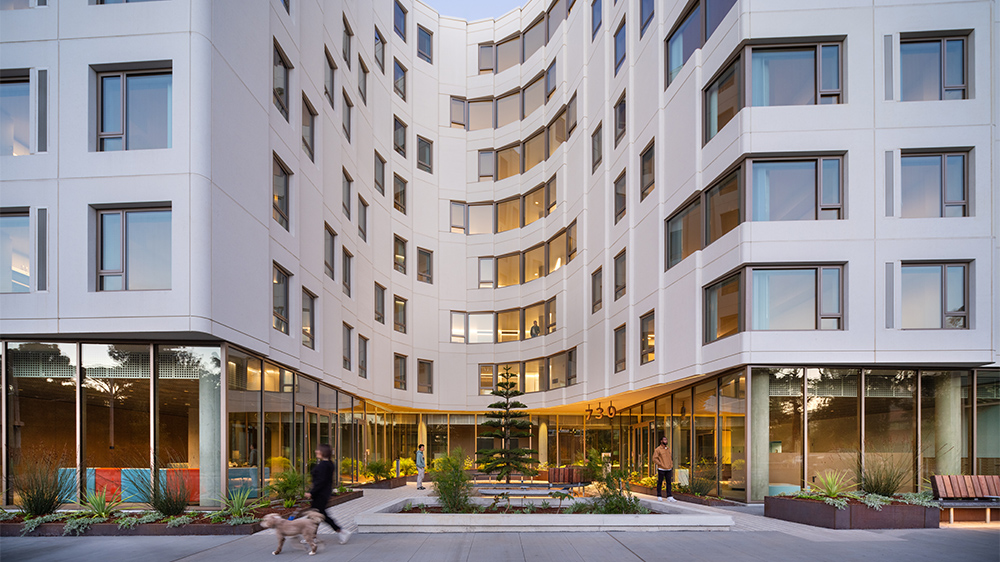
OMA takes on affordable housing, lessons from Frasier Crane’s living room, and New York puts the subway’s heat to work. All that and more in this week’s Five on Friday.
Can we leverage sweltering subways for good?
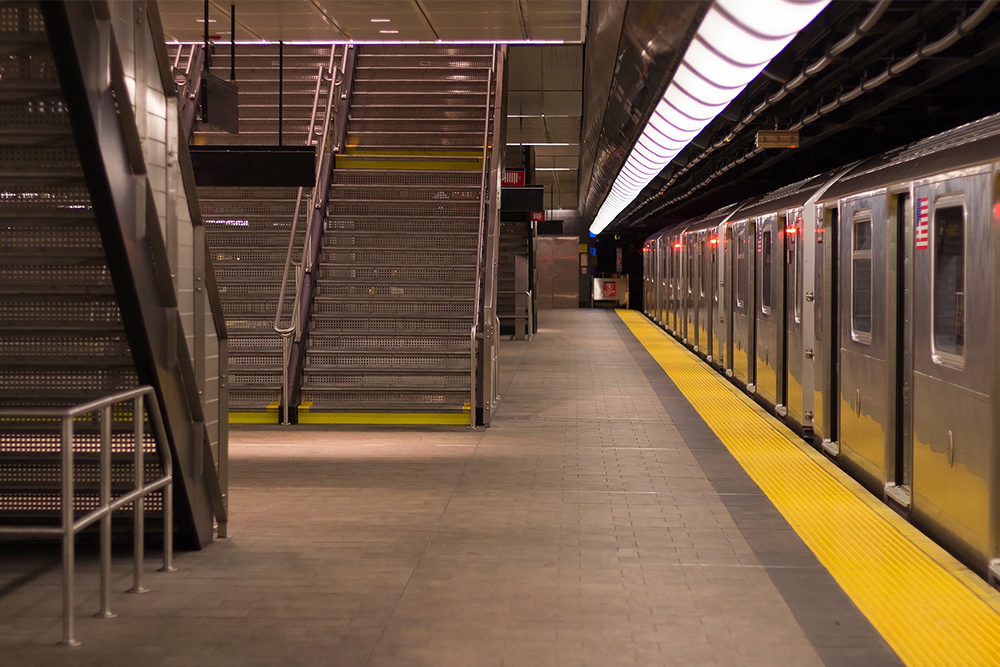
Photo courtesy of Adobe Stock
New York’s subway stations are so hot this summer that even the mayor is chiming in. That’s right—Mayor Zohran Mamdani is partnering with state transit officials to study a heat-capture system to not only cool platforms but also heat city buildings during winter months. The New York Times reports that a feasibility study for a “thermal energy network” will move forward at the cost of $800,000, with the New York State Energy Research and Development Authority footing the bill. The study requires digging holes more than 500 feet below an unused station platform at the Brooklyn Bridge-City Hall and Chambers Street stop to siphon excess heat into a network of pipes connected to nearby municipal buildings. Several residential buildings—and even St. Patrick’s Cathedral—have benefitted from similar geothermal heat-capture systems, which have yielded success stories across Europe as well. If findings are positive, design work could kick off early next year. Til then, maybe avoid transferring at Union Square.

OMA completes first affordable housing development in the U.S.
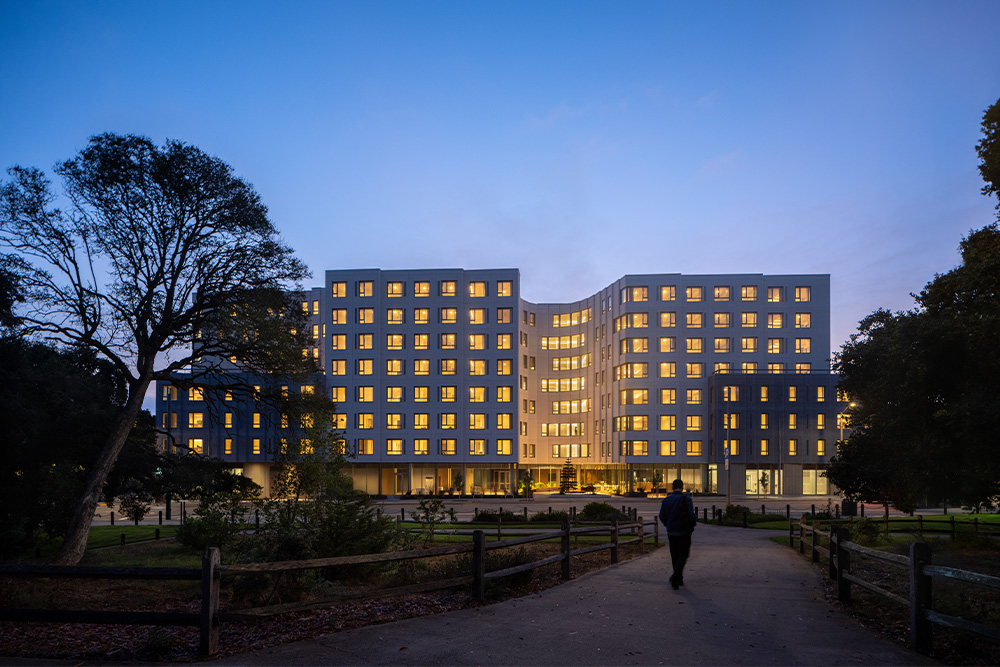
Photo by Jason O’Rear
730 Stanyan in San Francisco has been unveiled as the latest project from the New York office of OMA. Completed in partnership with locally based practice YA Studio, the 160-home residential complex is anything but standard fare. According to Dezeen, 730 Stanyan is the first 100-percent affordable housing development in the U.S. Located near Golden Gate Park, the eight-story complex opens to support the Chinatown Community Development Center and the Tenderloin Neighborhood Development Corporation. The design fits right in, too, with a façade of modular GFRC wave panels fashioned to echo the rhythms and forms of local townhouses.
Some many collabs, so little time
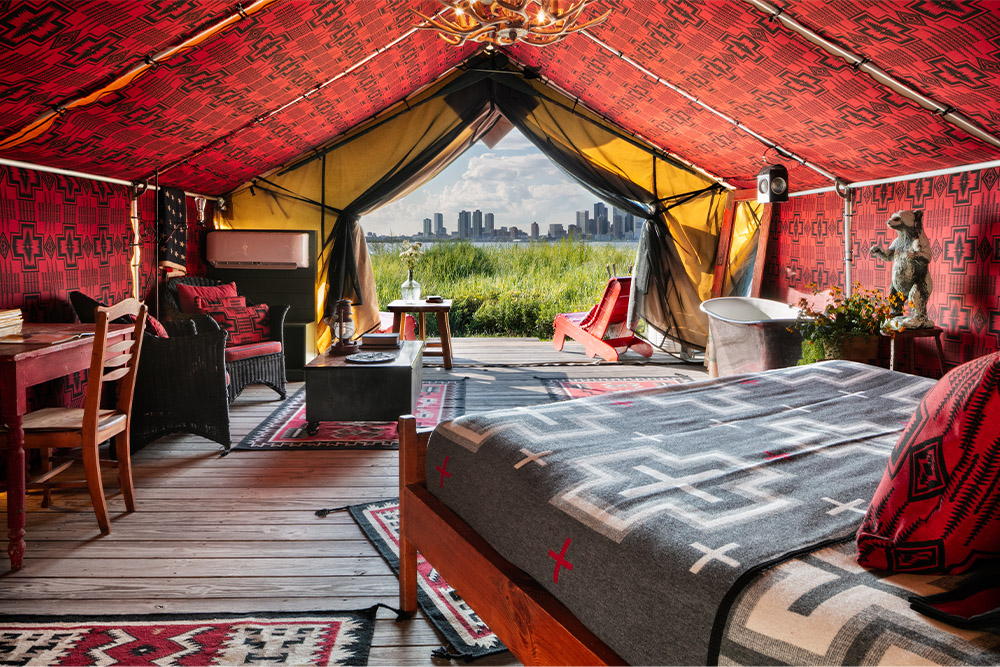
The Urban Cowboy Tent at Collective Retreats Governors Island in New York; photo by Ben Fitchett
If you’re wondering how to close out your summer with a bang, consider checking out one of several recent brand collaborations between hospitality power players. Here in New York, boutique hotel brand Urban Cowboy has inaugurated a signature tent at Collective Retreats Governors Island, which recently joined Dovetail + Co’s portfolio. Across 325 square feet, Urban Cowboy’s tent punctuates the luxury glamping destination with the brand’s unmistakable eclectic design—including a clawfoot soaking tub positioned to maximize views of the Statue of Liberty. On the West Coast, Lulu and Georgia partnered with West Hollywood’s Sunset Tower Hotel to reimagine Duke’s, the property’s private event space. For our jetsetters, the W Sardinia – Poltu Quatu is maximizing its first full season with a curated slew of partnerships offering guests access to yachting, automotion, fashion, wellness, and contemporary art. Perhaps this writer will spend Labor Day splurging on a one-way ticket to the Italian island for some much-earned extravagance.
An ode to “Frasier” (and ’90s minimalism)
View this post on Instagram
Wistful for simpler times when we had a surplus in the economy and a soda cost 50¢? Travel back with me to the 1990s when “Fraiser” was a household staple skyrocketing in the ratings and absorbing all the Emmys in its path. Say what you will about the show, but there’s one thing we can’t besmirch—that fabulous apartment overlooking Puget Sound. One of the sitcom’s writers, Joe Keenan, sat down with Dwell to discuss the legacy of the show’s set design, which was conceived to inspire envy and reflect the mode. An aspirational contemporary sensibility defined Frasier Crane’s spacious abode, contrasting relatable neutral tones with postmodern colorways and ’90s modernism flair. Decidedly different from the heteronormative functionality of Jerry’s apartment on “Seinfeld” or the cozy domesticity of the Brooklyn brownstone on “Living Single” (the “Friends” apartment exists so exceedingly far outside of reality and we will not discuss it here), Crane’s apartment was deliberately crafted to echo the era’s minimalist designers, like Christian Liaigre and Holly Hunt. Hell, even Marcel Breuer’s iconic Wassily chair is a key talking point of the very first episode. Maybe this show was about more than pop psychology after all.
Hospitality Design wants to hear from you!

It’s officially that time of year! No, not Back to School. It’s time for Hospitality Design’s 2026 Reader Survey. Open now through September 4th, the survey will gather your feedback and help shape what’s next for HD. From the projects, people, products, and trends we cover to how and where we get together to celebrate our industry—your input will move us forward. Tell us what you value, what you want, and what we can do better. We can’t wait to hear from you!