
Behind the scenes of Christopher Nolan’s meticulously crafted film sets, a beloved Houston theater gets a new lease on life, and the stadiums shaping the future of the World Cup come into focus. All that and more in this week’s Five on Friday.
The architecture of the World Cup
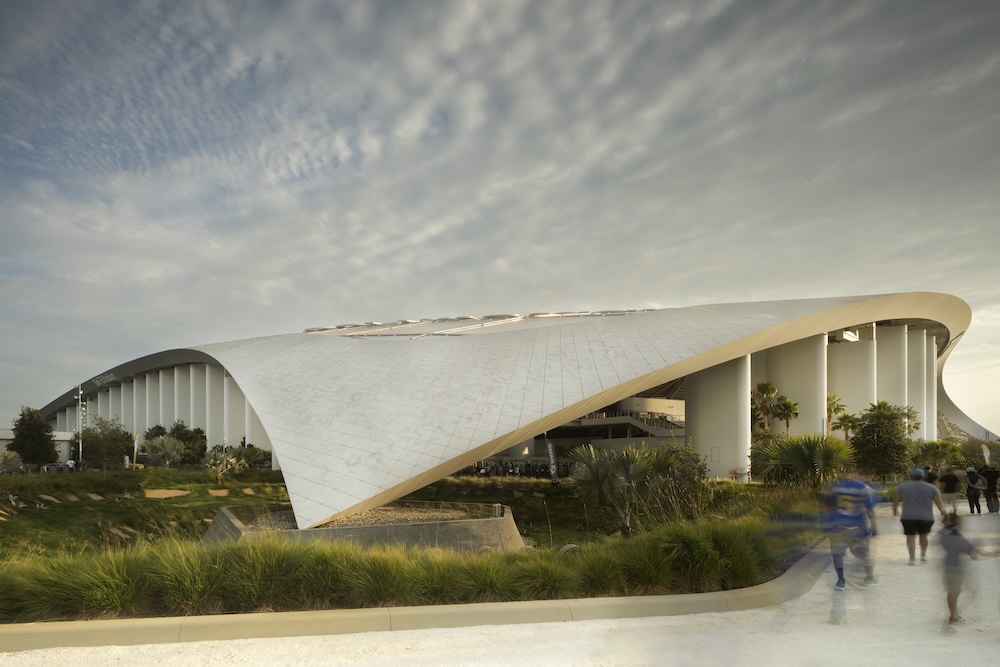
SoFi Stadium in California; photo by Nic Lehoux
As we celebrate Spain’s victory over Argentina, ArchDaily is glimpsing ahead to what’s in store for the 2030 FIFA World Cup. Unlike past iterations of the games when ambitious stadiums and infrastructure projects are funded to streamline and stun the masses, this year’s World Cup relied largely on adapting existing venues to meet FIFA standards. This move reflects a broader shift in sports architecture that prioritizes adaptive reuse, optimizing existing buildings for longterm performance, and the integration of sports venues into wider urban systems. The 2030 World Cup will outdo the scale of this year’s games with matches spread across 11 venues in Spain, six in Morocco, and three in Portugal—not to mention others in Argentina, Paraguay, and Uruguay. While new construction and redevelopment of existing stadiums is already underway, the buzziest project in the mix is the proposed Hassan II Stadium located outside of Casablanca. Designed by Oualalou + CHoi in collaboration with Populous, the arena would become one of the largest soccer stadiums in the world with a capacity of 115,000 and feature a tensile roof system inspired by the traditional Moroccan moussem tent. Meanwhile, Spain is busy transforming the Santiago Bernabéu Stadium, renovating Camp Nou, and expanding and modernizing venues like La Cartuja in Seville and Gran Canaria Stadium. Nearby, Portugal’s Estádio da Luz and Estádio José Alvalade are also receiving enhancements to improve flexibility and spectator experience as the typology steers more toward multiuse infrastructures.

An ode to the sets of “The Odyssey”
View this post on Instagram
Courtesy of Christopher Nolan, Homer’s epic arrived on the big screen earlier this month, promising a Grecian spectacle and, at the very least, three hours in an air-conditioned theater amid a swell of global heat waves (it’s probably nothing). Oscar-nominated production designer Ruth De Jong again collaborated with Nolan to teleport audiences back to Ancient Greece via—hallelujah!—dozens of practical sets. The 91-one day production filmed on open seas in the Mediterranean upon a real, 115-year-old warship as well as the hills of western Sicily, where the 15th-century Castle of Santa Caterina stood in for Odysseus’s home of Ithaca. The film also recreates the walled city of Troy on the night of its collapse. Filming for the historic siege was held primarily in a mud-brick village in Morocco’s Ouarzazate province, where De Jong and her team constructed more than two acres of sets including the Temple of Athena. Oh, and they also really did pile all of those sweaty actors into a hollow, 35-foot-tall wooden recreation of the Trojan Horse. Read more about the immersive practical sets on Arch Digest.
A historic Houston theater undergoes a revival
Garden Oaks Theater in Houston; photo courtesy of Gensler
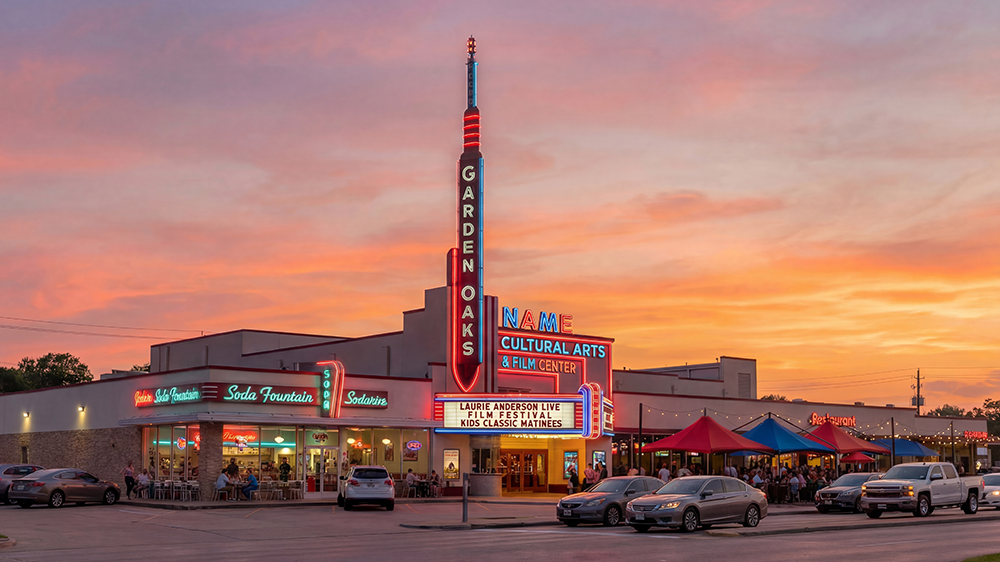
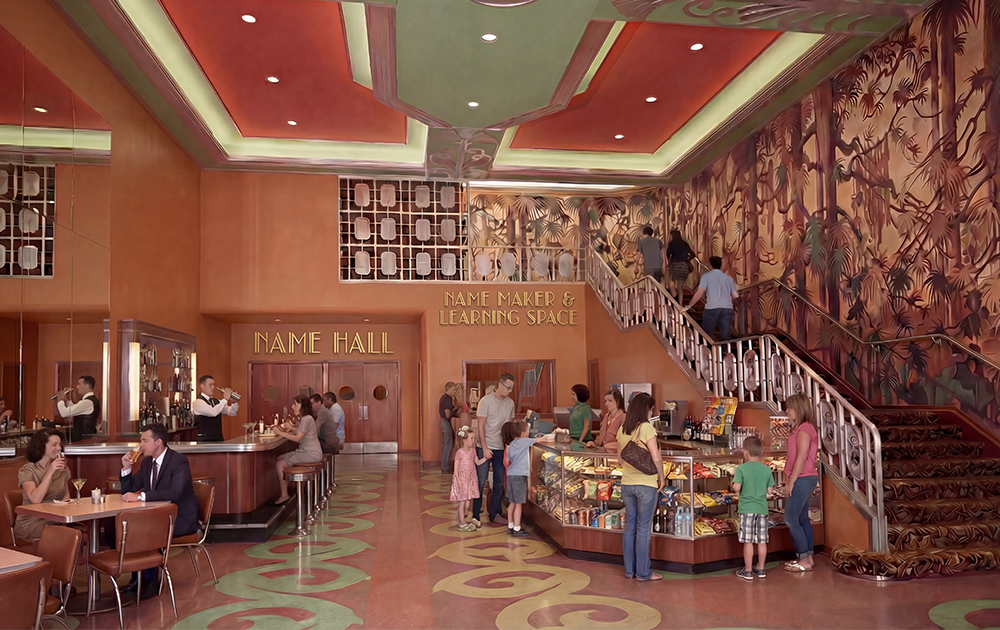
At nearly 80 years old, Houston’s Garden Oaks theater touts a rarified grandeur that transports visitors back to the heyday of Art Deco. Its architectural splendor is a key reason a preservation campaign is currently underway to renovate the landmark. Architect’s Newspaper reports that local nonprofit Arthouse Houston is leading the charge alongside Preservation Houston, Gensler, and filmmaker Wes Anderson to transform the building into an arts community center and cinema. Originally designed by Dallas firm Pettigrew & Worley, the former movie palace was last owned by a church congregation beginning in the 1990s before settling into an undetermined fate in recent years. The current goal is to raise $14 million by the end of July, with $7.1 million designated for the purchase of the building and $6.9 million funding renovations and restoration.
The natural habitat of the New York teen
View this post on Instagram
Nickelodeon classic “Hey Arnold!” set the bar high for the aspirational teen bedroom. Like the titular cartoon New Yorker, plenty of today’s teens earn similar envy with dynamic chambers of solitude across the five boroughs. Some kids like 16-year-old Cassius maximize limited space in his family’s one-bedroom apartment, often using his bedroom as his experimental music studio while his parents sleep in a Murphy bed in the living room. Fellow 16-year-old Daisy enjoys the coziness of her eight-by-nine-foot bedroom, which she likens to “Alice in Wonderland.” Meanwhile, 13-year-old Chloe has plenty of space to practice spinning on pointe in her tutu beside pictures of Misty Copeland and Beyoncé. There’s also siblings like Frida and Bianca, who share a bunkbed in a bedroom constantly evolving right alongside them, and then there’s just straight-up spoiled brats like Simon who have built-in shelves, a desk, and a basketball hoop. Whether you’re looking for inspo, escapism, or a walk down memory lane back to your old childhood bedroom, dive into Curbed’s expansive and eclectic roundup of the teen bedrooms throughout New York. This writer is particularly partial to the colorful, moody vibes of Nina’s room, which very much resembled mine at 13.
Meet the 46th Gold Key Awards Judges

Eight elite industry leaders have been announced as judges for this year’s Gold Key Awards. Selecting this year’s winners and finalists will be Dala Al-Fuwaires, House of Form; Paul Haslhofer, EDITION Hotels/Marriot; Phil Hospod, Dovetail + Co.; Greg Keffer, Keffer Studios; Andrés Lamos, Ensemble; Cynthia Peller Hum, Crescent Heights; Kelly Sawdon, Mothership Hotels; and brand consultant Elizabeth Rose Schneider. The 46th annual Gold Key Awards Gala will take place on Monday November 9th at Cipriani 42nd Street in New York. Entries are open through July 31 so submit today!