
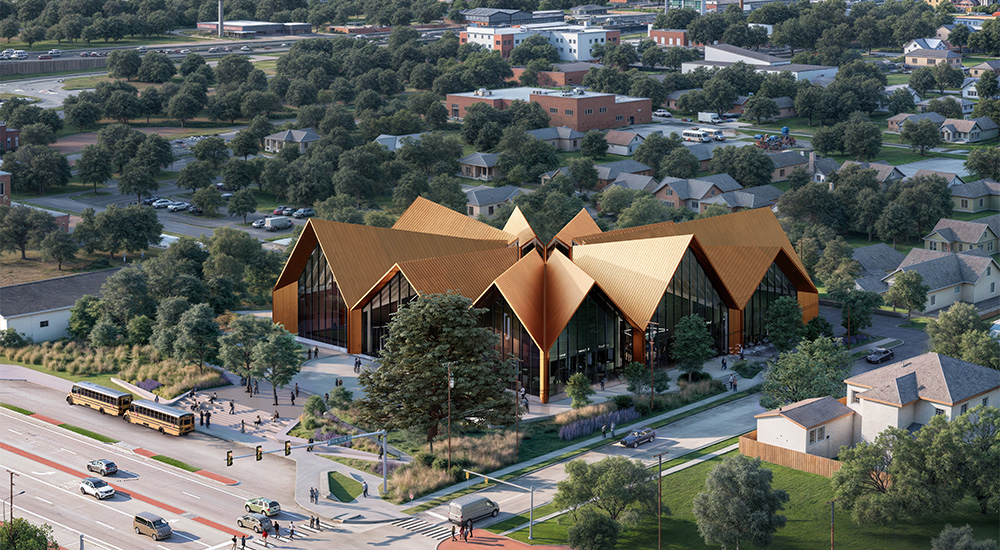
The National Juneteenth Museum takes shape, Crosby Studios scores with a World Cup exhibition, and Quan Thai explores Queer spatial identity. All that and more in this week’s Five on Friday.
Crosby Studios feeds your World Cup fever
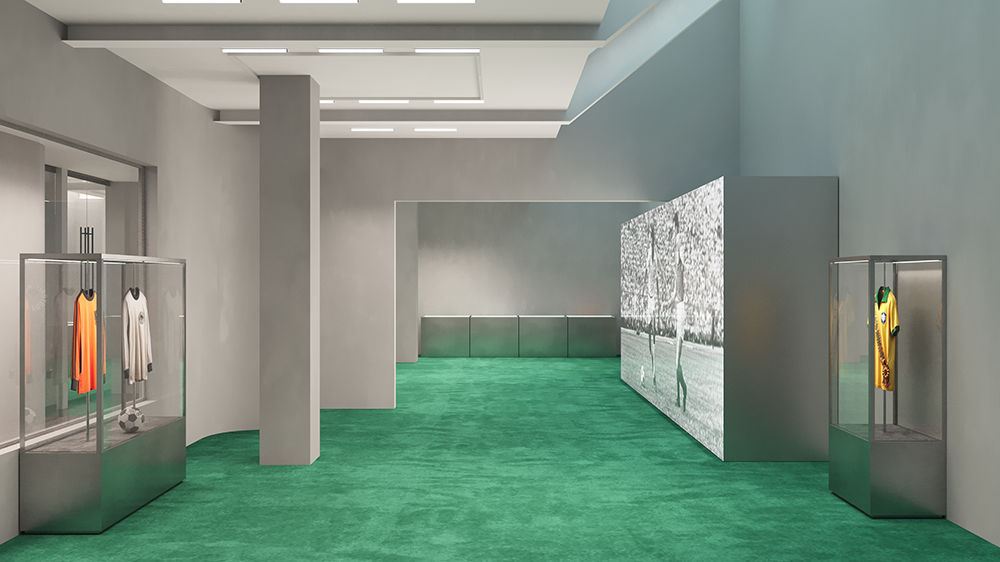
Rendering courtesy of Crosby Studios
If you’re glued to the World Cup, consider taking a break from the TV between matches to head over to Manhattan’s West Side. At High Line Nine, you’ll find “Home of Football: Home & Away,” an exhibition of more than 60 artifacts for soccer fans to devour, designed by New York- and Paris-based Crosby Studios. The exhibit—developed in collaboration with Home of Football and curatorial collective Air Afrique—showcases match-worn jerseys, trophies, photos, and other rare memorabilia across six rooms. Led by artist and designer Harry Nuriev, Crosby Studios incorporated numerous architectural, graphic, and acoustic elements in the space to enrich the experience. Mint green hues are reminiscent of a soccer pitch, while white circles and curves nod to soccer balls. “Home of Football: Home & Away” is on display through Sunday, July 19th.

“Love Island” superfan builds her own (miniature) villa
@catschanzenbach The highly anticipated kitchen stairs in my 1:48 scale Love Island USA villa #miniatures #loveislandusa #3dprinting #loveisland #villa ♬ original sound – CatSchanzenbach
Like the rest of us, Caitlin Schanzenbach is addicted to “Love Island USA.” Unlike the rest of us, Schanzenbach is channeling her passion for trash TV into an unprecedented design project. People reports that the product development engineer has embarked on a mission to create a miniature version of the show’s villa. Her not-yet-completed design is based off shots from the dozens of fixed cameras installed throughout the panopticon-like set. Despite requiring more than 900 hours of labor so far, the 4-by-2-foot design has cost just $250 to build. Materials include balsa wood, markers, beads, translucent architectural panels, resin for the swimming pool, and PLA filament for Schanzenbach’s 3D printer and supplies. EVA foam upholstery and hand-painted foliage also punctuate the recreated set. Keep tabs on Schanzenbach’s ongoing project via TikTok.
BIG’s National Juneteenth Museum comes into focus
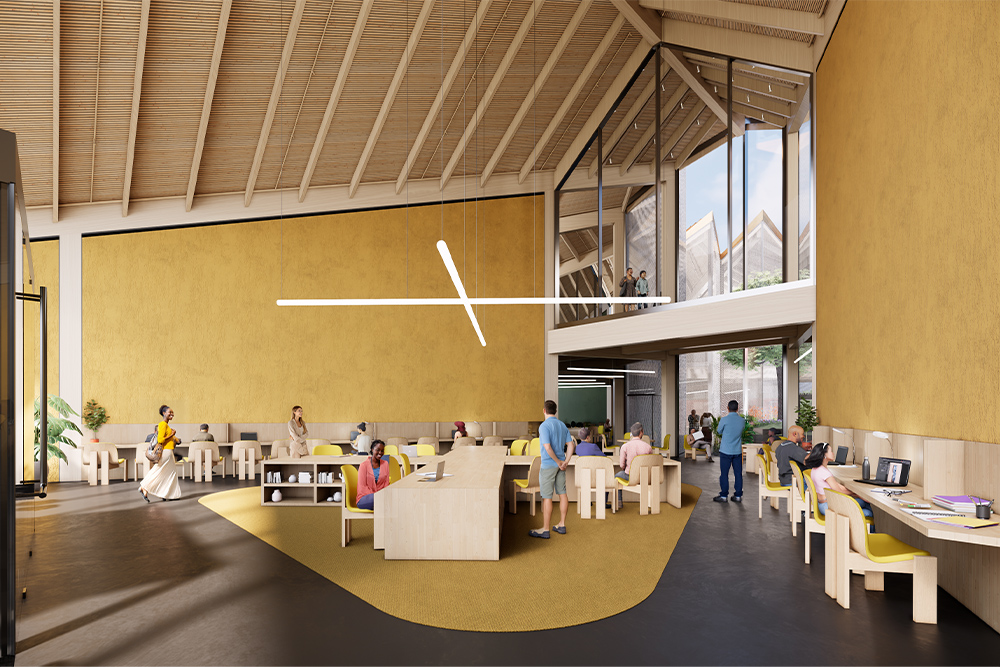
The National Juneteenth Museum will feature a business incubator and coworking space; rendering courtesy of BIG / Bjarke Ingels Group
Bjarke Ingels Group (BIG) has unveiled new images of the forthcoming National Juneteenth Museum in Fort Worth, Texas. Designed in collaboration with Alligood Song Architecture and architect of record KAI Enterprises, the 72,000-square-foot institution will serve as a national center dedicated to preserving the history and legacy of Juneteenth, ArchDaily reports. Recently released renderings reveal a mass timber structure organized around a publicly accessible “nova star” courtyard referencing the Juneteenth flag, as well as an undulating roof. The museum will reinterpret familiar residential forms through a civic lens, and house immersive galleries, a business incubator, a food hall with local vendors, a theater, a flexible black box event space, and other gathering spaces. The project is slated to begin construction this fall.
Quan Thai reflects on Queer interiors
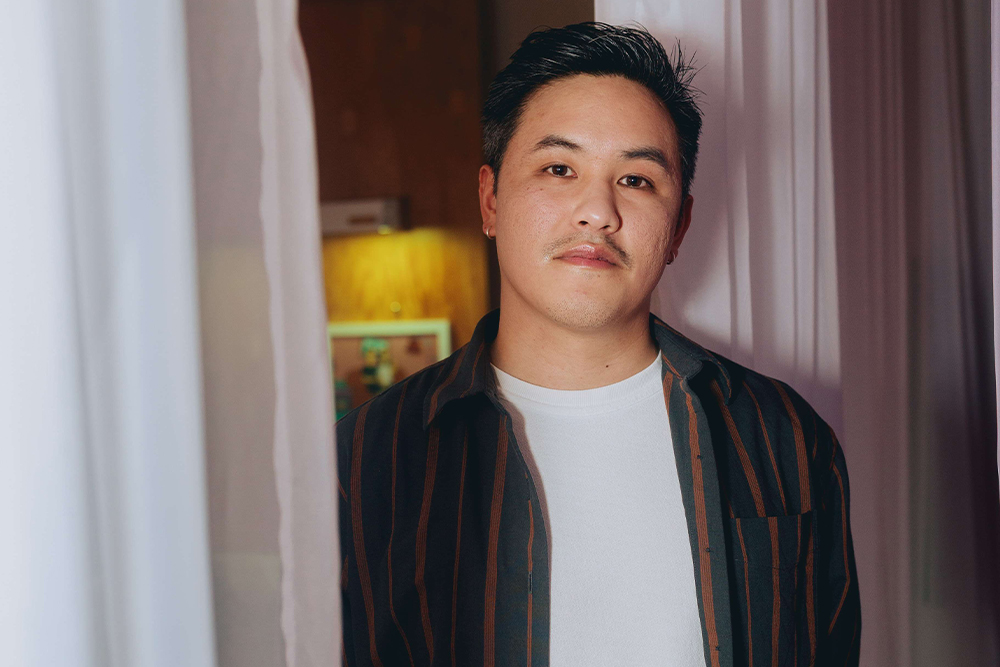
Detroit-based multidisciplinary architect, educator, and artist Quan Thai; photo by Albert Hoang
To close out Pride Month, Azure magazine revisits the “To•Be•Longing: Portraits of Queer Living” exhibition, which occupied a single suite at the Ace Hotel Toronto this past January. Curated by architect and educator Quan Thai, the show invited guests into a living space that reinterpreted a traditional residential floor plan as a more liminal environment. Modular furniture and curtains blurred residential interior boundaries to further support fluid deconstructions and reconstructions and challenge the heteronormative archetype of home. Personal objects, contributed by the Queer community in response to the theme, imbued the setting with personal flair and greater depth. In a recently published Q&A, Thai discusses modular furnishings, the bond between architecture and Queer identity, and how interiors enforce heteronormativity—and how to dismantle these restrictive frameworks.
Submit your favorite rising stars to BD’s Ones to Watch
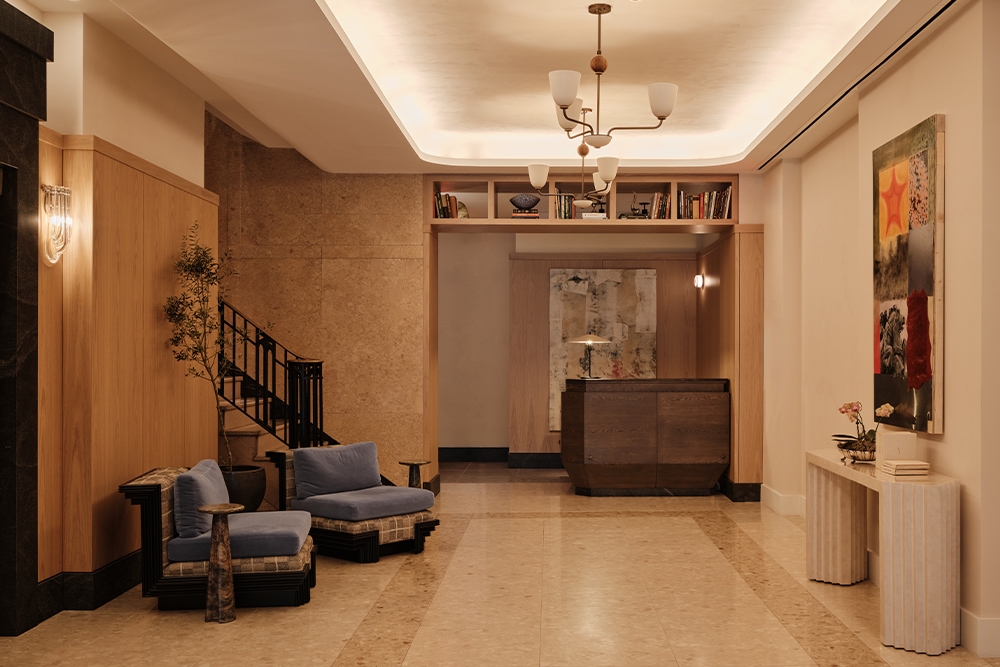
The first-floor lobby at Mint House Washington, DC – Downtown; photo by Christian Torres
Formerly dubbed the Boutique 18, Boutique Design magazine’s recognition of emerging hospitality designers and their growing contributions to the industry has been renamed Ones to Watch. Nominations are now open for industry leaders and peers to submit a rising talent for acknowledgment in the Fall 2026 edition of the magazine. Nominees will also be honored this November at the 46th annual Gold Key Awards gala. Designers nominated must have between five to 10 years of experience in the hospitality design industry and actively engaged in the design and/or architecture process. Submissions close on August 3rd, so don’t wait to celebrate one of this year’s brightest talents!