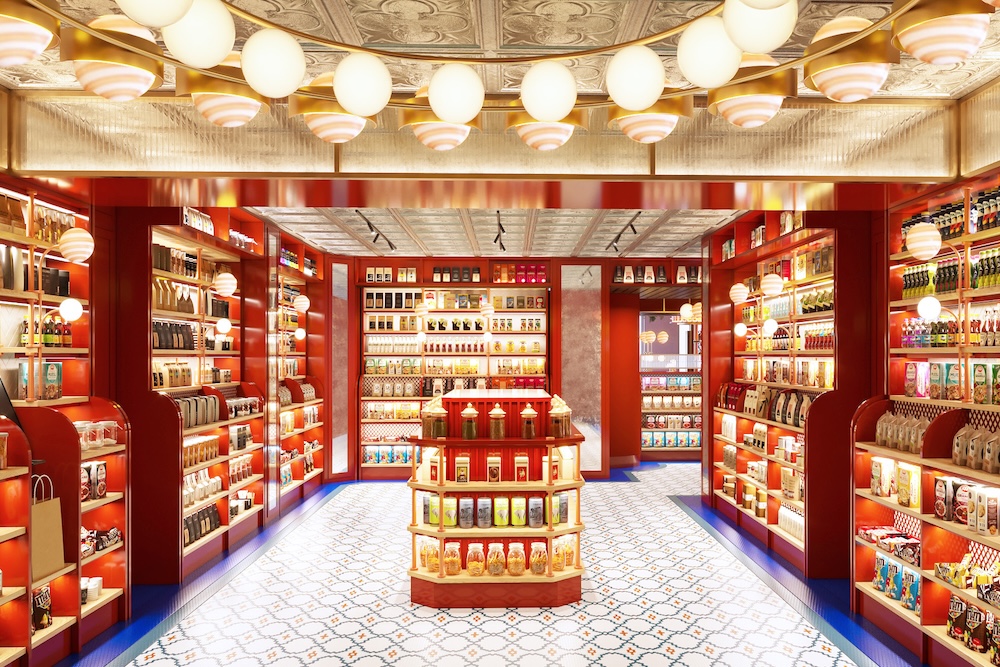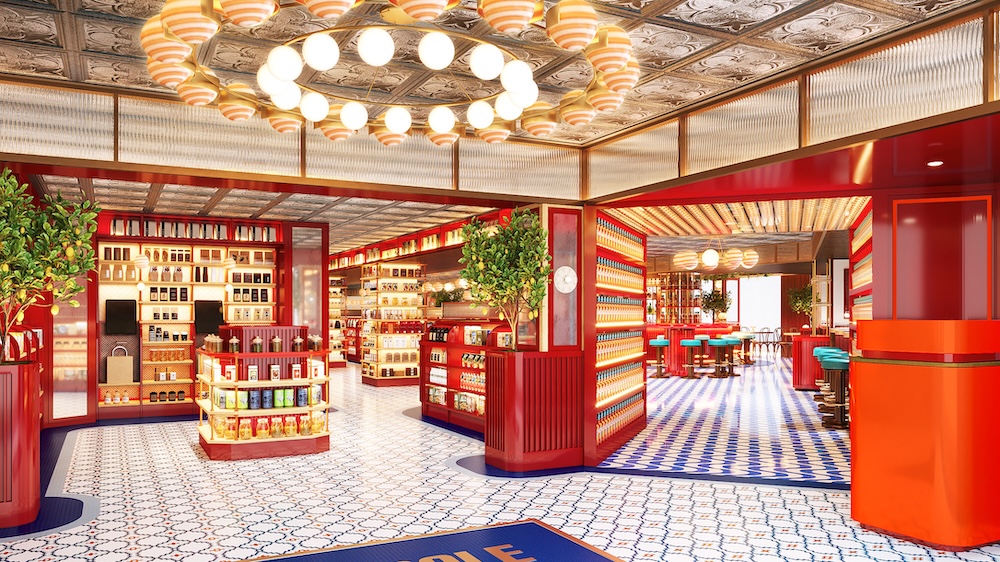
Grand Central Terminal is set to welcome two new culinary concepts this fall: the 250-seat Osteria Centrale and Mercato Centrale, a gourmet grab-and-go market. Both designed by Rockwell Group, the venues will add new dining options to the Beaux-Arts landmark.
Vizz Group, which owns and operates both concepts, is partnering again with the Metropolitan Transportation Authority (MTA) and Grand Central Terminal. The company also owns and operates the 400-seat Grand Brasserie in the train station’s Vanderbilt Hall, a project Rockwell Group completed in 2024.
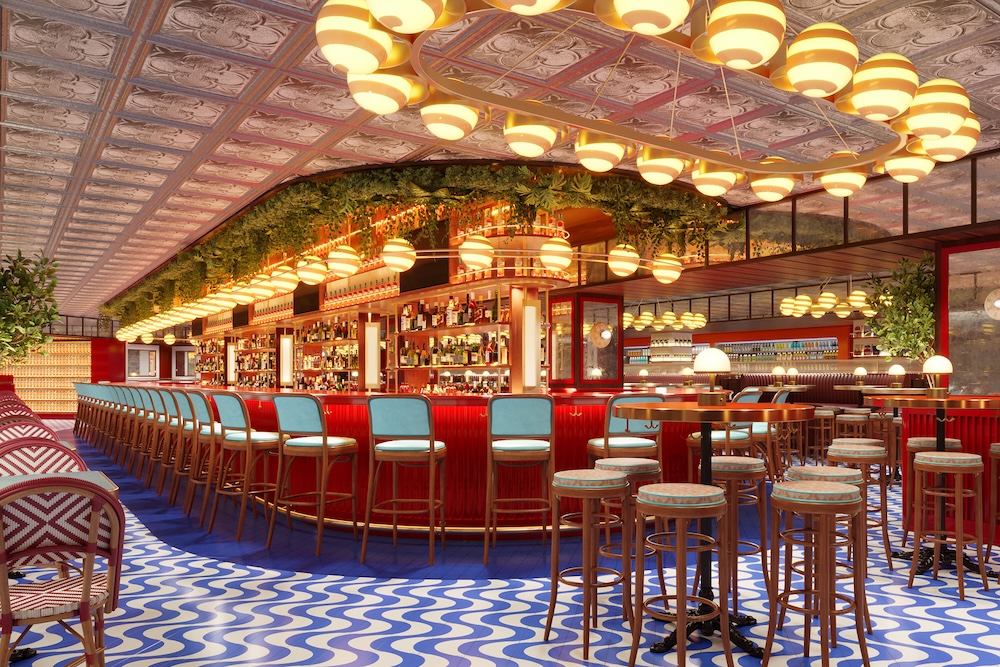
A central bar anchors the Osteria’s Design
Spanning 6,960 square feet, Osteria Centrale will offer everything from business lunches to a dedicated aperitivo hour, dinner, and late-night dining. The restaurant’s centerpiece is an oblong 50-seat central bar that anchors the dining room.
Located in the terminal’s southwest corner, the space is accessible via the Main Concourse level, near a staircase that leads to 42nd Street. Much of the seating, including the banquettes, consists of high-tops, a layout designed to accommodate guests stopping in for a quick spritz or a full meal.

Osteria Centrale will also be available for semi-private and private events, ranging from family-style dinners and cocktail gatherings with light bites for 20 to 50 guests, to full-restaurant cocktail receptions accommodating up to 200 guests.
Mercato Centrale serves commuters on the go
Complementing the osteria, Mercato Centrale will cater to commuters and visitors seeking convenience, stocking more than 500 grab-and-go products.
“We are thrilled to partner again with Vizz Group to bring celebration and community to Grand Central, one of my favorite places in New York,” says David Rockwell, founder and president of Rockwell Group. “Centrale was inspired by an Italian spritz garden: We wanted to transport busy commuters to an uplifting space where lingering, connecting, and catching up isn’t just encouraged, it’s embedded in the culture.”
“Our design is defined by a colorful palette of amber, cherry red, and capri blue accentuated by bold, swirling patterns and textured materials like ribbed glass, porcelain tile, and leather upholstery,” he adds. “Meaningful details connect the restaurant and market to the history of New York and the terminal itself, grounding visitors in the surrounding city.”