
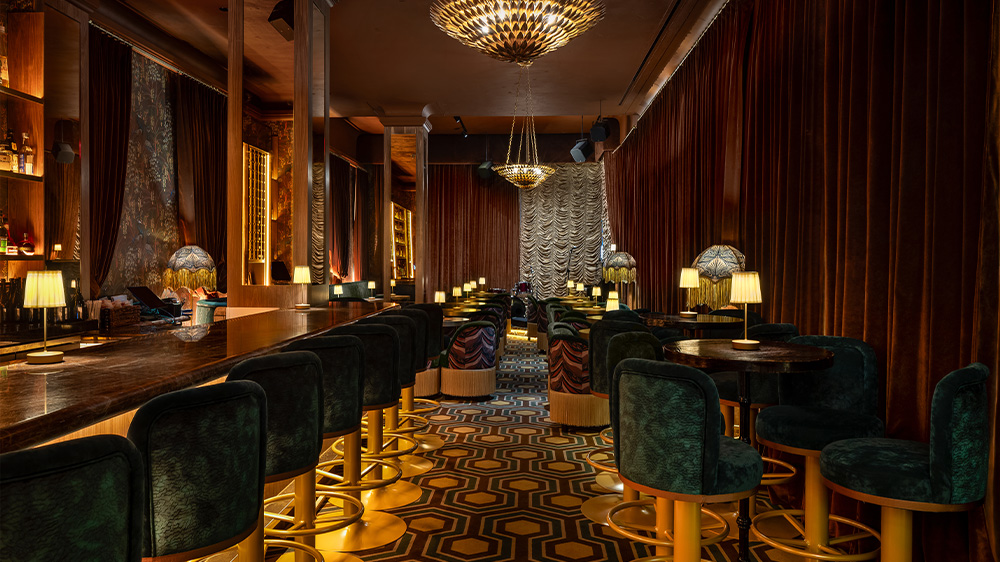
In New York, a night out can be as much about the room as the reservation. The city’s latest hospitality and retail arrivals offer plenty to take in, from theatrical hotels and art-filled dining rooms to intimate jazz clubs and jewel box boutiques. Whether you’re checking in for the weekend or exploring between appointments, these destinations put design at the heart of the experience.
Where to stay
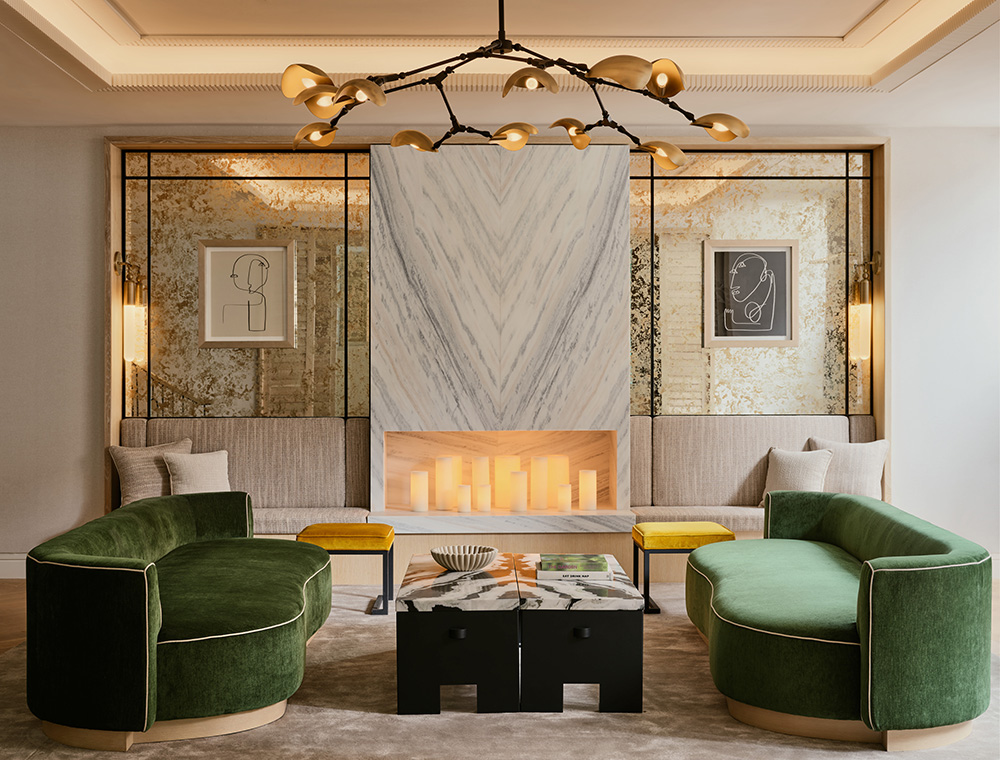
The Kimpton Ashbel New York – Park Avenue, designed by Busta Studio; photo courtesy of Kimpton Hotels
There’s no hotel scene quite like New York’s, where newcomers range from intimate, residential retreats to splashy destinations made for seeing and being seen. On the maximalist end of the spectrum is Faena New York, Alan Faena’s theatrical Chelsea arrival, which brings the brand’s signature mix of art, hospitality, and nightlife to Manhattan.
A subtle counterpoint is Lore Group’s Hotel Park Ave, which also came online this year. Envisioned by creative director Jacu Strauss, the 180-room property resembles an art collector’s home with statement-making pieces like Jan Hendzel’s 12-foot-tall wooden sculpture that greets guests in the lobby.
For something more subdued, the Kimpton Ashbel New York – Park Avenue occupies a 1928 Beaux-Arts building reimagined by Busta Studio as a 205-room Park Avenue townhouse. Commissioned artworks, warm woods, custom furnishings, and flashes of color enliven an otherwise calming architectural envelope, while a series of residential-style spaces replace the traditional hotel lobby.

Nearby, the 529-room Kimpton Era Midtown New York offers a decidedly contemporary counterpoint. The 33-story new-build pairs architecture by SLCE Architects with interiors by INC Architecture & Design, whose jewel box-like guestrooms combine warm woods, muted tones, and built-in window seats framing the skyline.
Downstairs, chef Rocco DiSpirito’s Bar Rocco channels the spirit of a classic Italian-American brasserie at the hotel, with a striking scarlet ceramic bar anchoring a lively space that shifts easily from morning espresso to cocktails and dinner. Rich red tones, glossy surfaces, and warm lighting lend the restaurant a sultry, cinematic quality, extending the hotel’s modern take on classic New York glamour.
Where to eat
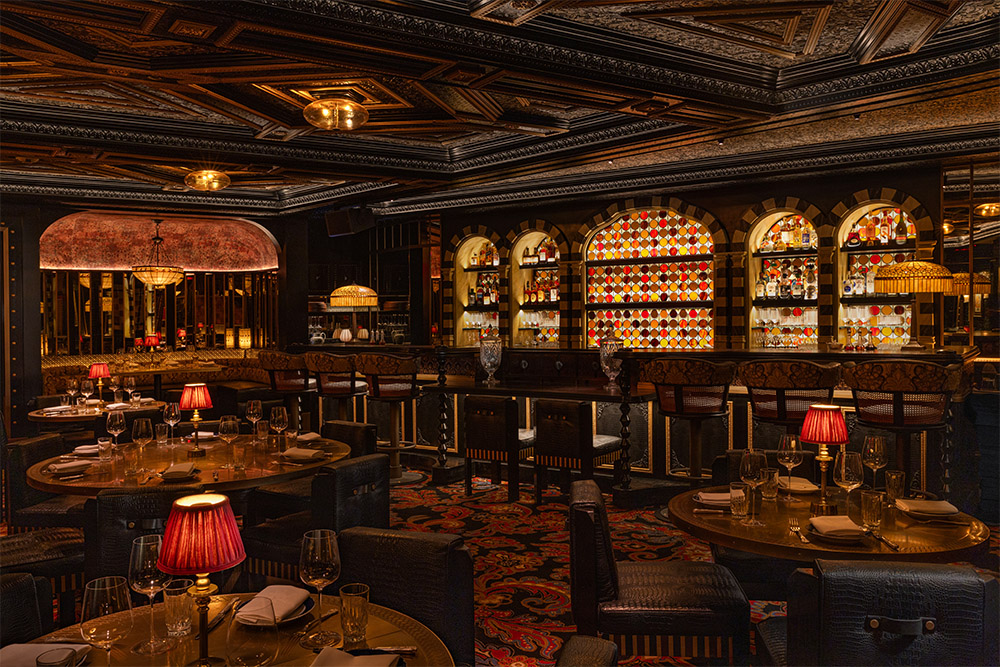
The moody interior of Ambassadors Clubhouse; photo by Michael Kleinberg
The city’s restaurant scene has always been at the epicenter of taste—both culinary and aesthetic—and this latest crop of arrivals delivers plenty of both.
Start at Ambassadors Clubhouse, the New York outpost from JKS Restaurants, the group behind London’s acclaimed Gymkhana. North End Design conceived the nearly 8,000-square-foot, two-story restaurant as a maximalist ode to the grand party mansions of India, layering dark woods, jewel tones, patterned carpets, carved ceilings, animal prints, and Tiffany-style chandeliers into a transporting backdrop for chef Karan Mittal’s Punjabi cooking.
For a more refined take on drama, head to Marcel 945 Madison, the new restaurant inside Sotheby’s home at the iconic Breuer Building. Designed, owned, and operated by Roman and Williams in partnership with Sotheby’s, the bi-level restaurant juxtaposes the building’s Brutalist bones with walnut-paneled walls, cocoa-hued mohair banquettes, warm candlelight, and original furnishings and lighting. A rotating collection of Sotheby’s artworks and design objects—all available for acquisition—means the room is constantly evolving.
Over in Hudson Yards, Michelin-starred chef Sujan Sarkar has brought his Chicago restaurant Indienne to New York. The intimate, 34-seat dining room, designed in collaboration with locally based Mapa Mueller, unfolds through a series of richly detailed spaces defined by coffered ceilings, woven grasscloth-style panels, crafted millwork, and saturated color.
And the team behind Greenwich Village institution Dante has expanded its footprint with Dante Aperitivo in the West Village. Husband-and-wife duo Linden Pride and Nathalie Hudson channel the easy glamour of an Italian aperitivo bar in a polished setting of gleaming brass, pressed-tin ceilings, and checkerboard floors—a subtle visual nod to the original Dante, whose MacDougal Street roots date to 1915.
Where to tune in
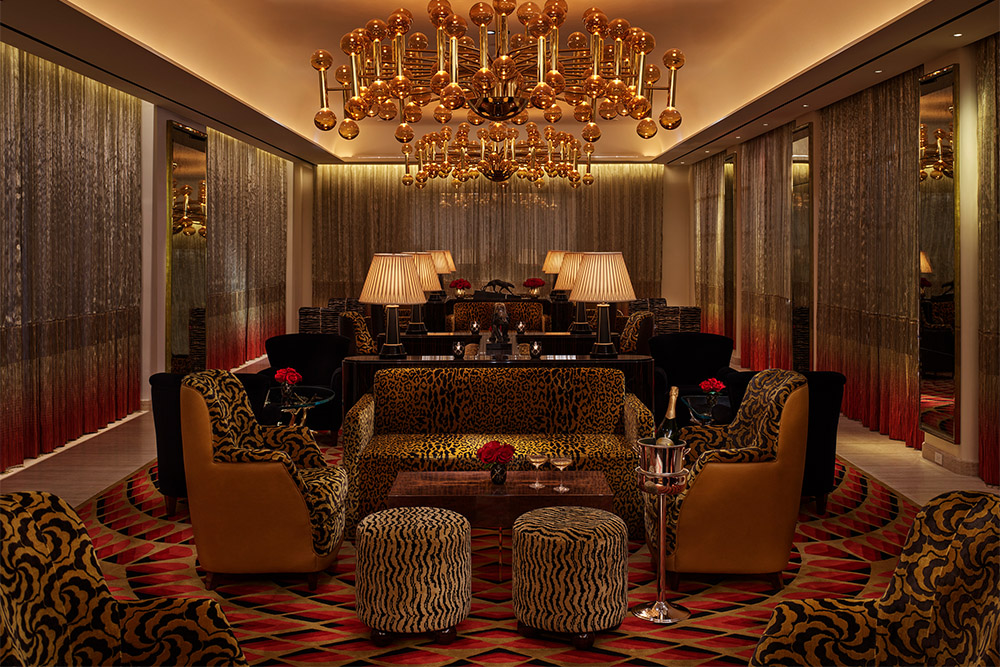
The Living Room at Faena New York; photo by Nikolas Koenig
At Faena New York, the Living Room brings a dose of old-school glamour to Chelsea with nightly live music, guest performers, bands, and DJs. Shimmering gold accents, layered textures, leopard-clad lounge seating, and a sculptural central bar create a cinematic backdrop for a program that moves between jazz, soul, swing, disco, and beyond. A terrace tucked beneath the High Line extends the action outdoors.
For something a bit more intimate, Winnie’s Jazz Club brings the spirit of New York nightlife to the Garment District. Recently redesigned by Garrett Singer Architecture + Design, the venue pairs rich emerald seating and amber-toned drapery with custom wallcoverings, while a dedicated stage, carefully calibrated sightlines, and acoustics put the music at center stage.
The 4,500-square-foot Pocket is a 170-seat subterranean jazz and supper club located beneath the Muse New York in Midtown. Rich wood-paneled walls, retro mood lighting, and framed portraits of jazz musicians give the space a familiar vibe, inviting guests to take in the rhythmic staccato of the music.
Where to shop
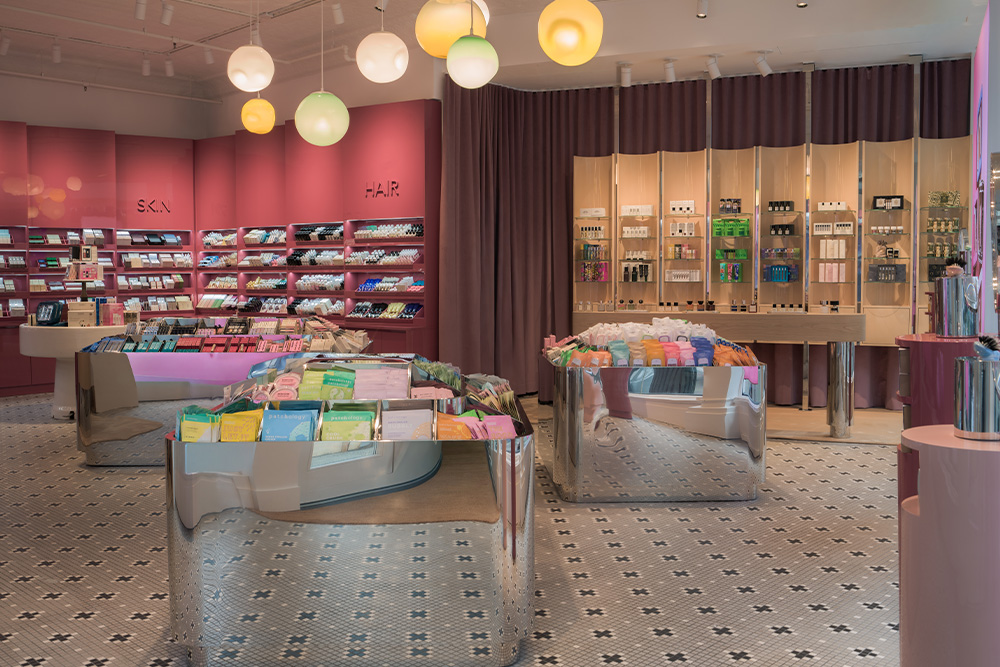
The 765-square-foot Little Luxuries store by BEAUTYSPACE store; photo by Matthew Kappas
For her first permanent New York store, Victoria Beckham enlisted artist Alexander May and designer Ole Lund of Lund&Partners to create an intimate SoHo home for the brand. Located at 150 Mercer Street, the boutique brings together ready-to-wear, accessories, fragrance, and beauty against a sophisticated backdrop of burgundy tones, pale marble, timber, lacquer, and velvet—a New York interpretation of the visual language established at Beckham’s Dover Street flagship in London.
At Union Square, Little Luxuries by BEAUTYSPACE proves good things really do come in small packages. The 765-square-foot shop—the company’s first brick-and-mortar concept—is devoted entirely to mini and travel-size beauty products from more than 100 brands. Keffer Studio leaned into the premise with a Neapolitan-inspired palette of soft pink, cream, and warm brown, mirrored chrome islands, handblown glass pendants, and oversized magnifying glasses in the storefront.
Finally, follow your nose to Baobab Collection on Bleecker Street. The fragrance brand’s 407-square-foot West Village boutique is its second New York location and showcases its sculptural candles, diffusers, and hand-finished vessels within an intimate environment of natural materials and textured surfaces. Designed as much around ritual as retail, the shop makes a convincing argument for keeping those statement vessels around long after the last wick has burned.
Where to drink
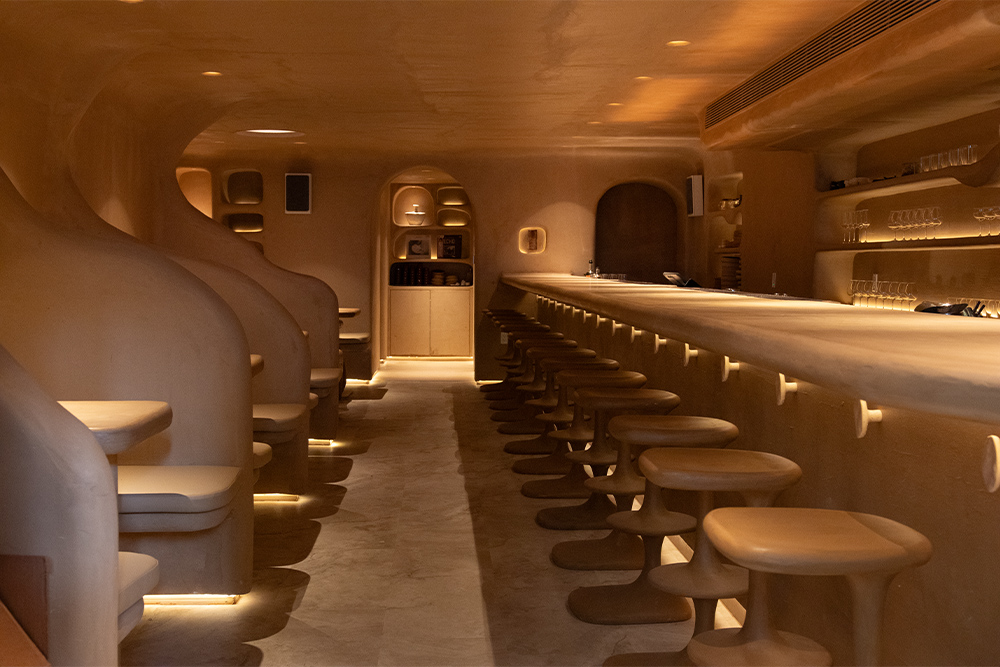
The sculptural Love Thy Neighbor in the West Village; photo by Aichan Mama
New York has never lacked for places to grab a drink, but a new selection of bars proves that the setting can be just as compelling as what’s in the glass. Tucked into the West Village, the 40-seat Love Thy Neighbor celebrates the neighborhood’s deep ties to the LGBTQ+ community. Inside, Wild Form Design Studio embraced sinuous forms, sculptural surfaces, and a restrained palette to create a space that feels fluid, intimate, and welcoming.
In Hell’s Kitchen, Monkey Thief—from partners Avi Singh, Rishi Rajpal, and David Muhs—is a vibrant, multispace venue inspired by the jungles and bustling night markets in Asia, boasting a bright and warm design accented by lush greenery, large windows, and purple neon lights.
Further uptown in Midtown East, restaurateur Simon Kim’s Bar Chimera takes a more theatrical approach. Named for the three-headed creature of Greek mythology, the Rockwell Group-designed venue unfolds beneath the soaring, 60-foot volume of Philip Johnson and John Burgee’s landmark 550 Madison. Three bars—dedicated to wine, martinis, and whiskey—each have their own personality: rosé and terracotta hues soften the wine bar; polished pewter, mirrors, and sage green define the martini bar; and warm woods, amber glass, and cognac leather lend the whiskey bar a moodier edge. At the center, a 23-foot Norfolk pine stretches toward the ceiling, reinforcing the space’s connection to the building’s adjacent garden.
This article originally appeared in BD’s Fall 2026 issue.