
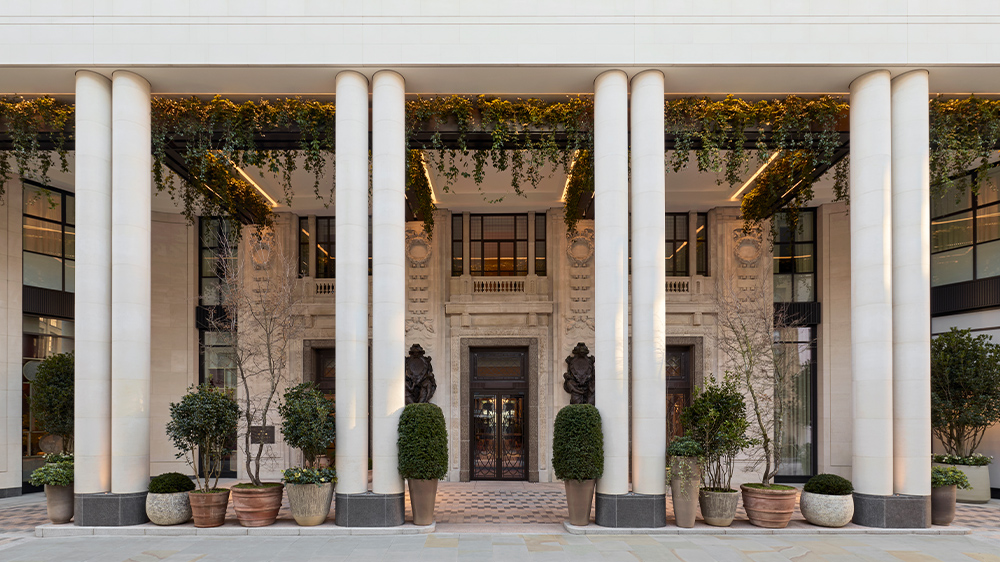
Six Senses’ debut UK hotel and spa, alongside its inaugural Six Senses Place members club, opened in March at the Whiteley, the mixed-use redevelopment of one of London’s original department stores. Founder William Whiteley’s 1851 visit to the first world’s fair, the Great Exhibition at London’s Hyde Park, sparked his dream of bringing the globe’s finest innovations together under one roof.
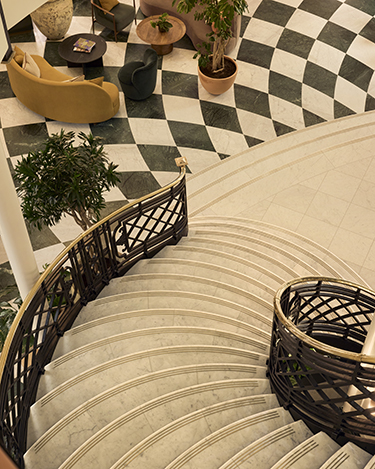
Green-and-white checkerboard floor frames the original marble staircase in the lobby, which was restored and lengthened
In 1911, the Harrods and Selfridges rival opened with architects John Belcher and John James Joass’ synthesis of post-Victorian grandeur and nascent Streamline Moderne influences within a Neoclassical framework. This cross-cultural creativity remains relevant to modern-day London.
“Our design celebrates the eclectic spirit that has always defined the Whiteley,” says AvroKO founding partner Adam Farmerie, “drawing from different eras, cultures, and design languages while unifying them through a thoughtful curation of good taste.”
The biophilia underpinning Six Senses’ philosophy isn’t an obvious bedfellow for retail psychology, but AvroKO found fertile ground by adapting merchandising strategies to showcase nature. “Department store techniques that guide customers toward consumption—display cases, dramatic focal points, strategic lighting, choreographed movement through space—translate well into hospitality when you redirect their purpose toward immersion and wellness rather than transactions,” says Farmerie.

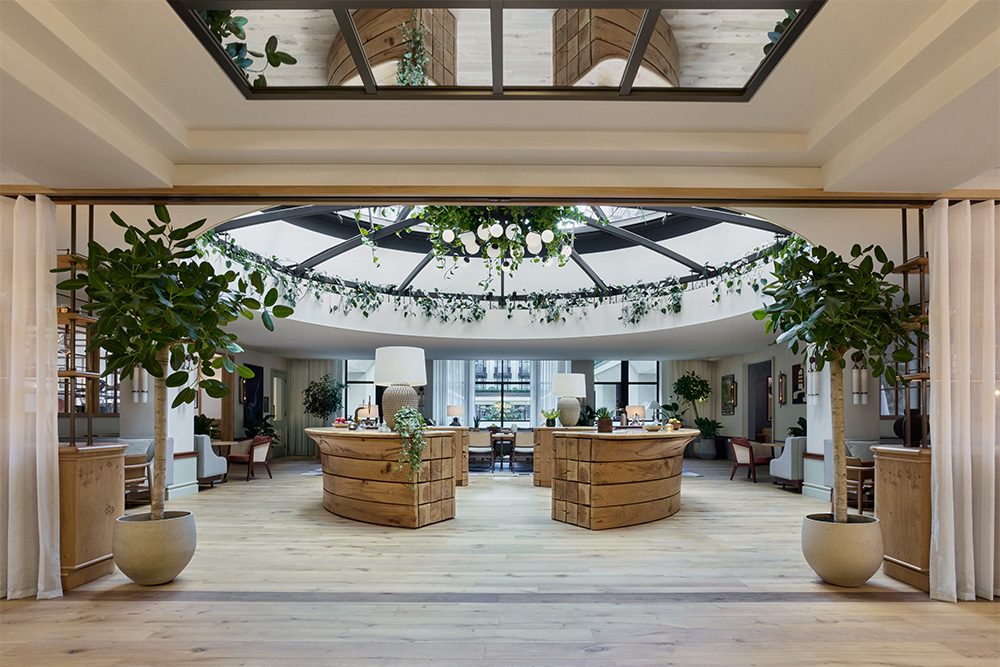
In Six Senses Place’s Dome Bar, two double-sided sculptural wood blocks below the oculus accommodate the bartender’s workspace as well as a walkway for club members
In the reception, glass vitrines and timber cabinetry reference Victorian emporiums but house botanical specimens and kombucha dispensers rather than goods. London-based architecture firms Foster + Partners and EPR Architects, meanwhile, ensured the original staircase was meticulously restored and lengthened by four steps, with millions of marble and wrought-iron pieces disassembled, renewed, and refit by hand. Green-and-white checkerboard marble flooring twists around the stairs in a radial pattern. Curios with a kaleidoscope of treasures, colorful rugs, varied furniture, and art inspired by British New Wave cinema instill the Great Exhibition’s inventive spirit. These visual feasts guide guests through zones the way well-designed store layouts subconsciously direct shoppers.
AvroKO humanized the high-tech spa with sinuous lines, warm woods, and tranquil water features. Ula Saniawa’s handmade porcelain petals cascade above the reception area’s reflecting pond, while plaster vaults and arches inspired by European subway platforms flank the swimming pool. Softly lit corridors evoking subterranean waterways lead to the Alchemy Bar, which hosts workshops and consultations for personalized remedies. Oak cabinetry teems with old-fashioned tincture bottles, while dried flowers and herbs hang from the ceiling.
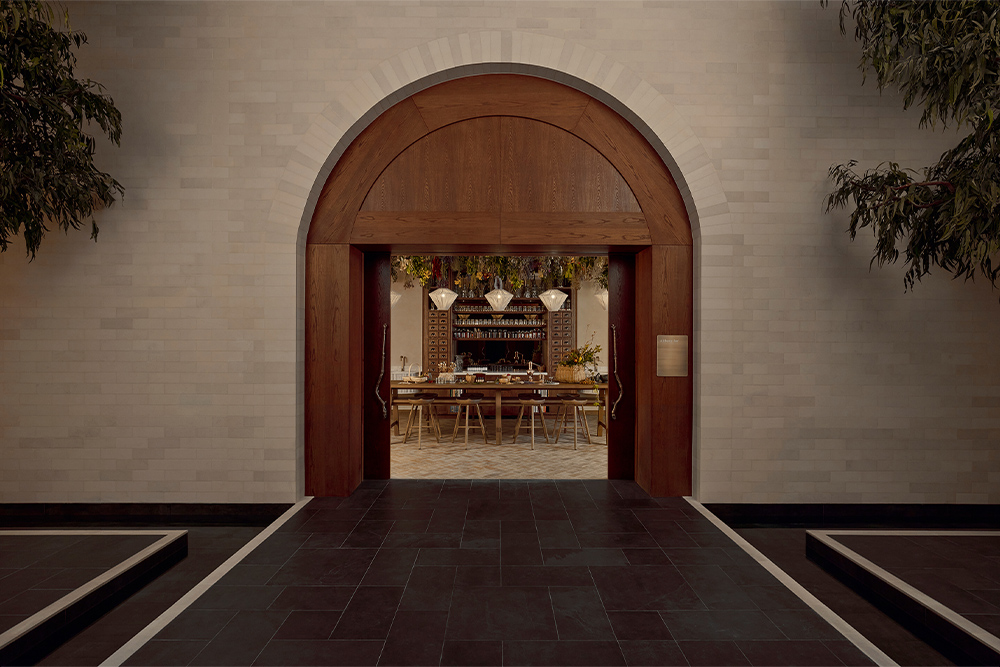
Oak cabinetry is filled with old-fashioned tincture bottles, while dried flowers and herbs hang from the ceiling at the Alchemy Bar
Inspired by the bathrooms in Paris’ Maison de Verre, Crittal window-like showers in nearly all the 109 guestrooms and suites make guests the star attraction, unless linen curtains are drawn for privacy. In the Whiteley suite, the lounge’s rugs and a vintage wardrobe doubling as a DJ station juxtapose modern stone side tables and a crushed velvet sofa. Curvilinear furniture harmonizes the two bedrooms’ world-traveler aesthetic, one with saturated blue Venetian plaster walls and the other in vibrant green. Each is accessed by its own bathroom, where a central round tub sits atop a circular stone pattern suggestive of water ripples.
As with all Six Senses locations, sustainability remains a priority. The property’s Regenerative Impact Fund reinvests 0.5 percent of revenue into London initiatives like SUGi’s Pocket Forests, which encourage biodiversity, pollination, climate resilience, and community wellbeing. For example, Whiteley’s Kitchen, Bar & Café not only serves seasonal fare from its Victorian manor house-style kitchen with classic French hoods and green enamel fixtures, it also uses green-colored paper made from 25 percent kiwi skin waste mixed with recycled paper pulp.
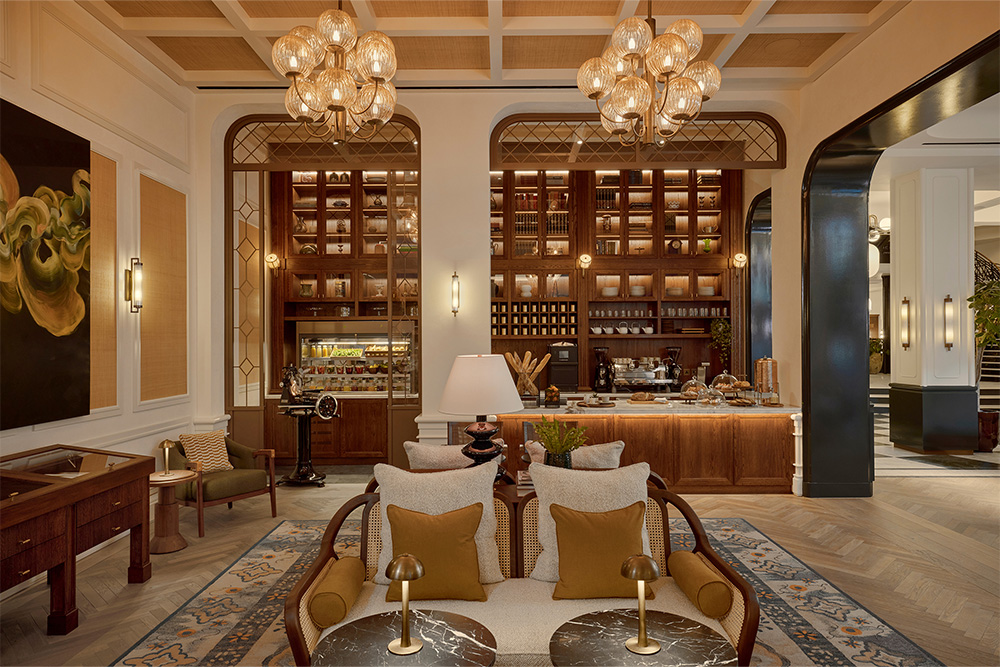
Whiteley’s Café boasts an oversized armoire that references an apothecary table with drawers holding a wide variety of teas
“It’s the small, consistent actions that have a large cumulative impact,” says Patrick Jones, director of sustainability at Six Senses London. Jones curates local brands for the retail boutique, sourced a custom Lotus Eletre car for guests’ use, and organizes sustainability tours, speakers, and workshops in the Earth Lab. “Focusing on conscious, biophilic design gives [the hotel] a sense of place,” says Jones. “Humans are drawn to nature and having more than 1,000 air-purifying plants helps create a sense of calm and wellbeing while bringing nature into the heart of the city.”
For AvroKO, sustainability begins with resilient materials that tell stories as they age so spaces remain relevant, desirable, and loved for decades rather than years. “When luxury guests have seen and experienced almost everything, it’s often the connection to time that feels most extraordinary,” says Farmerie. “Spaces that embrace age, craftsmanship, and permanence offer something increasingly rare: the opportunity to feel grounded, connected, and part of a story larger than oneself.”
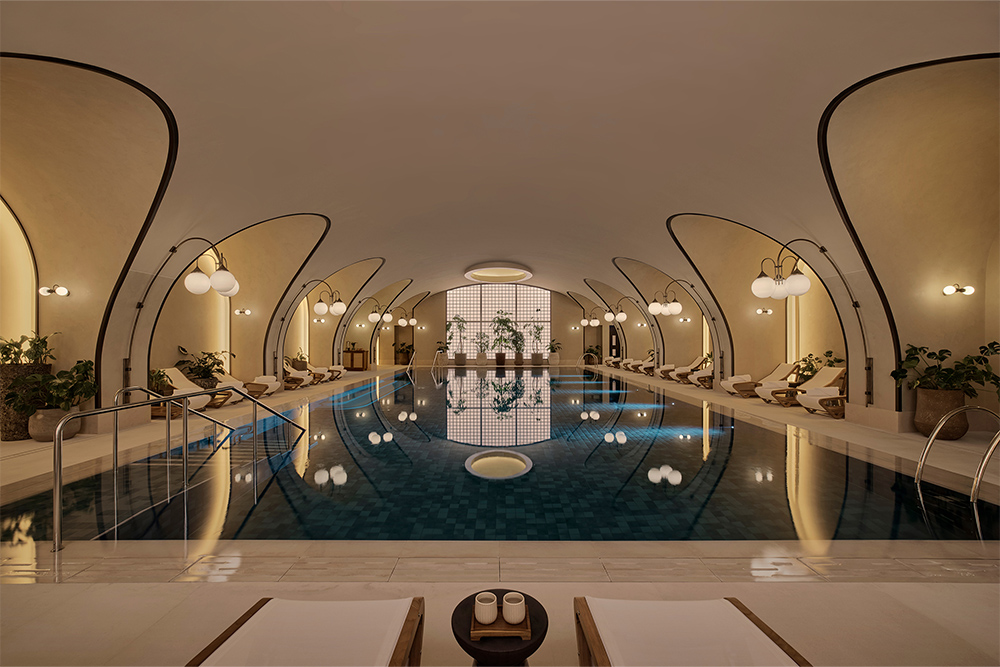
Plaster vaults and arches define the sinuous pool area, with nooks inspired by European subway platforms
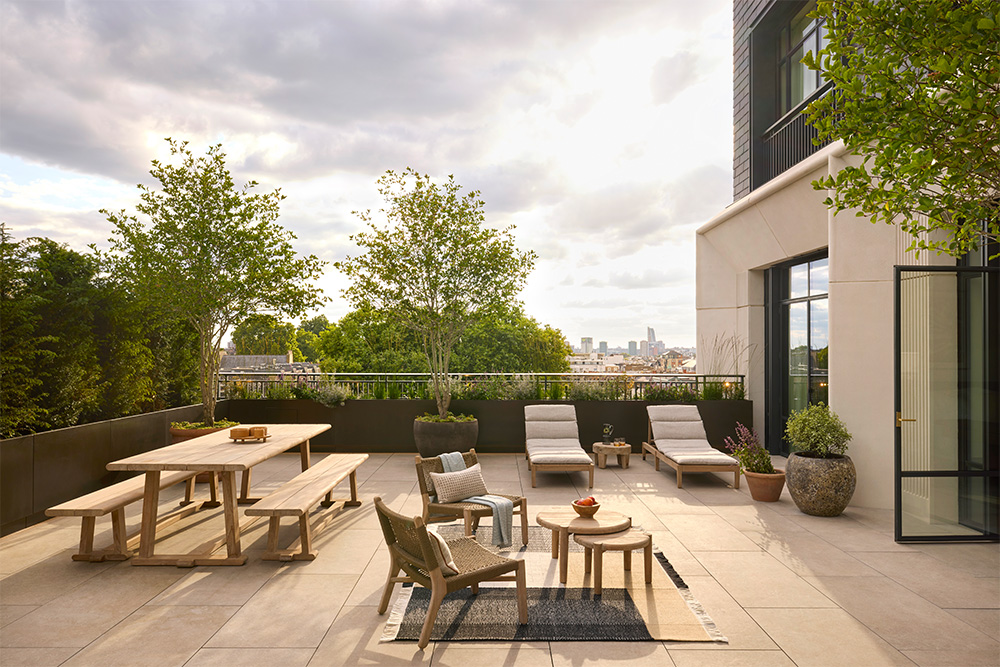
The Notting Hill suite features two expansive terraces
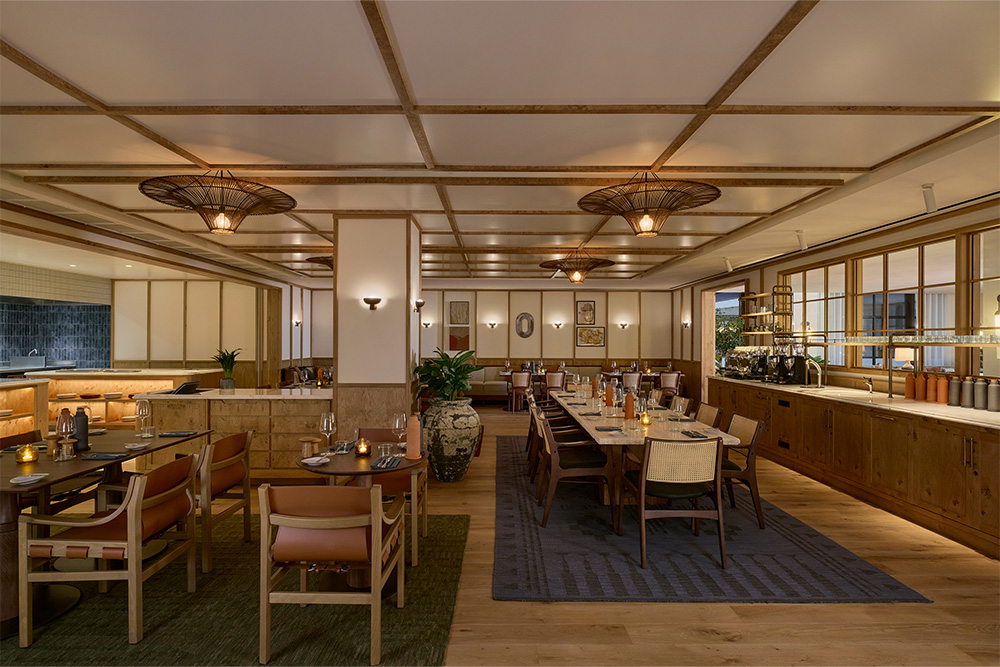
In the dining room of members club restaurant the Place, large rattan chandeliers dot the ceiling, while tables are anchored by a trio of bespoke rugs
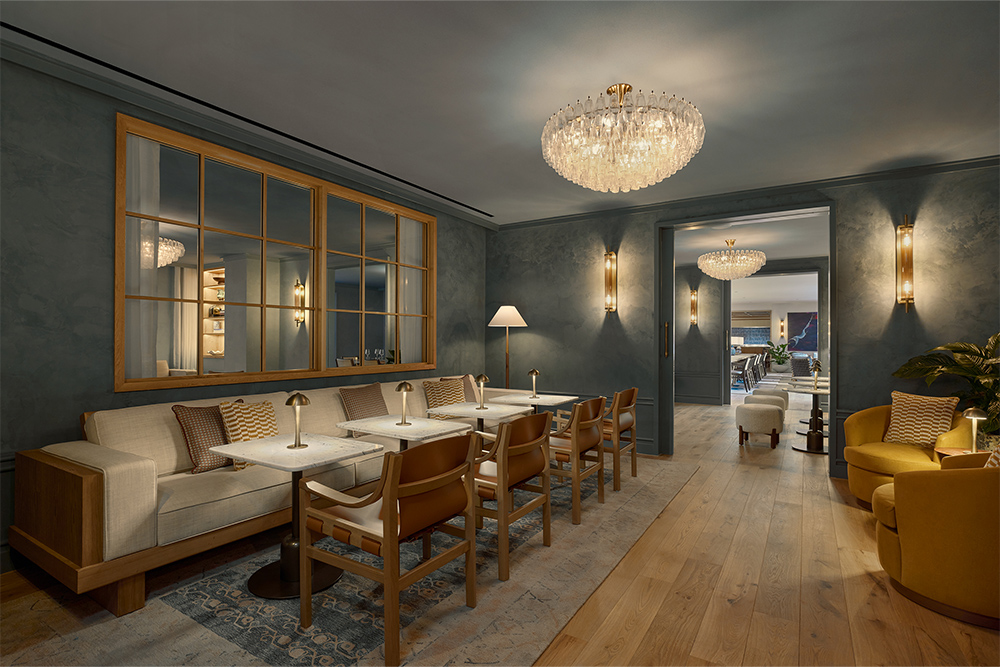
Brass accents, tanned leather, natural timber, and crystal chandeliers contrast with the blue hues of Brimstone, one of a series of lounges within Six Senses Place’s Library
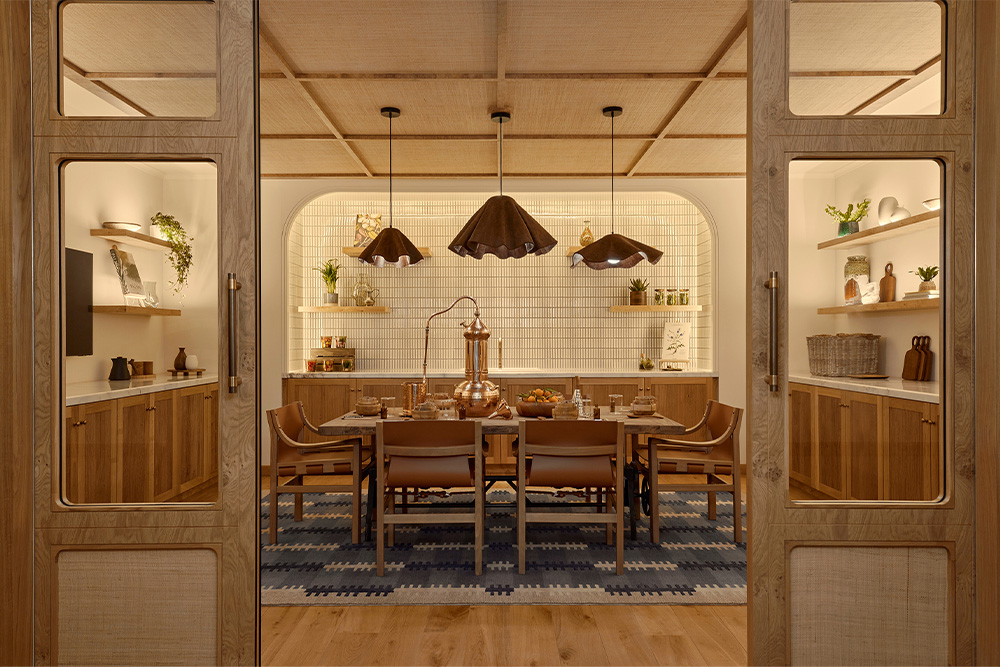
The Earth Lab, a dedicated space that demonstrates the brand’s approach to conservation, hosts workshops that focus on botanical preparation
This article originally appeared in HD’s July 2026 issue.