
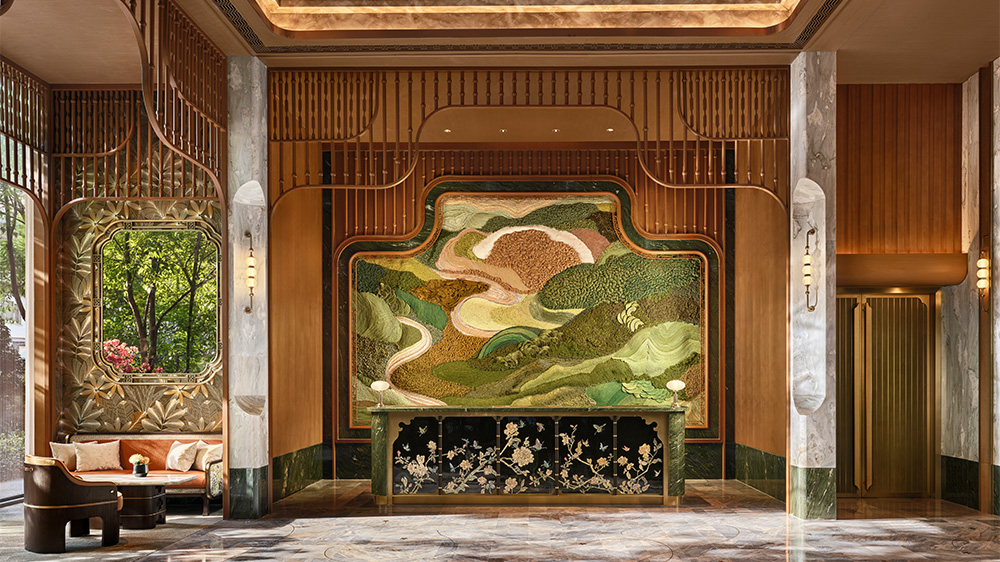
In the sky courtyard of Shangri-La Kunming, a central tea pavilion serves as one of the first impressions of the 75-room hotel in the capital of China’s Yunnan province. It’s an arrival rooted in the region’s tea culture, where fragrant Pu-erh becomes a guiding thread throughout the design. “The sense of scale, natural light filtering through the custom windows, layers of greenery, and a dramatic floor-to-ceiling tea library displaying a curated collection of Yunnan teas create an immediate sense of discovery,” says Patrick Ho, project director in AvroKO’s Bangkok studio and the project lead for Shangri-La Kunming.
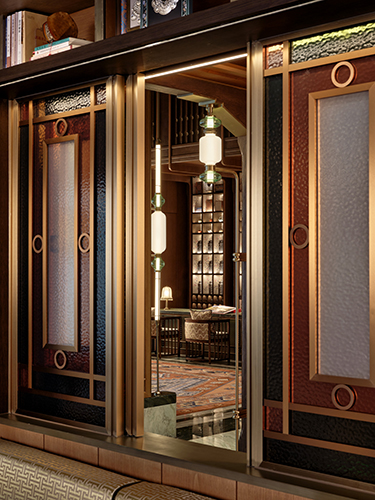
Traditional tea tins and classic teaware line the back wall of the Horizon Club Lounge reception
The experience continues across the hotel’s public spaces and guestrooms, unfolding in the colors of the local landscape, with the palette moving from botanical greens and delicate floral tones to deeper, earthier hues. “We allowed that progression to shape the material journey throughout the hotel,” Ho notes.
The design team also looked beyond tea to understand the cultural richness of the Chinese province. “We knew Yunnan for its world-renowned Pu-er tea, but our research also revealed its significance as one of the region’s largest flower-trading hubs, alongside the rich traditions of the Yi, Bai, Hani, Naxi, and many other ethnic communities,” says Ho. “What struck us was the specificity of these traditions and their deep connection to nature. Textiles, patterns, and botanical motifs are not simply decorative, but living expressions of identity, landscape, and memory.”
Indigenous patterns are translated into fabrics, wall treatments, and carved timber, while regional botanicals inform artwork and embroidery. Even the geometry of tea fields finds expression in the spatial layouts. Materials were also deeply considered, with the team spending three days visiting local stone warehouses, reviewing slabs for particular color variations, veining, and scale that would sit naturally within the broader palette.

Kunming’s mild climate and year-round blooms have earned it the nickname City of the Eternal Spring, which comes into full view in the guestrooms. “We wanted to bring that feeling of perpetual spring into the guestrooms to create freshness, softness, and quiet renewal,” says Ho. The Premier rooms, for instance, introduce nature in motion through butterfly- and bird-adorned furnishings and wall patterns. Meanwhile, in the Rose Blossom Romantic suite, blush tones, delicate floral patterns, and intricate latticework evoke the feeling of wandering through a spring garden.
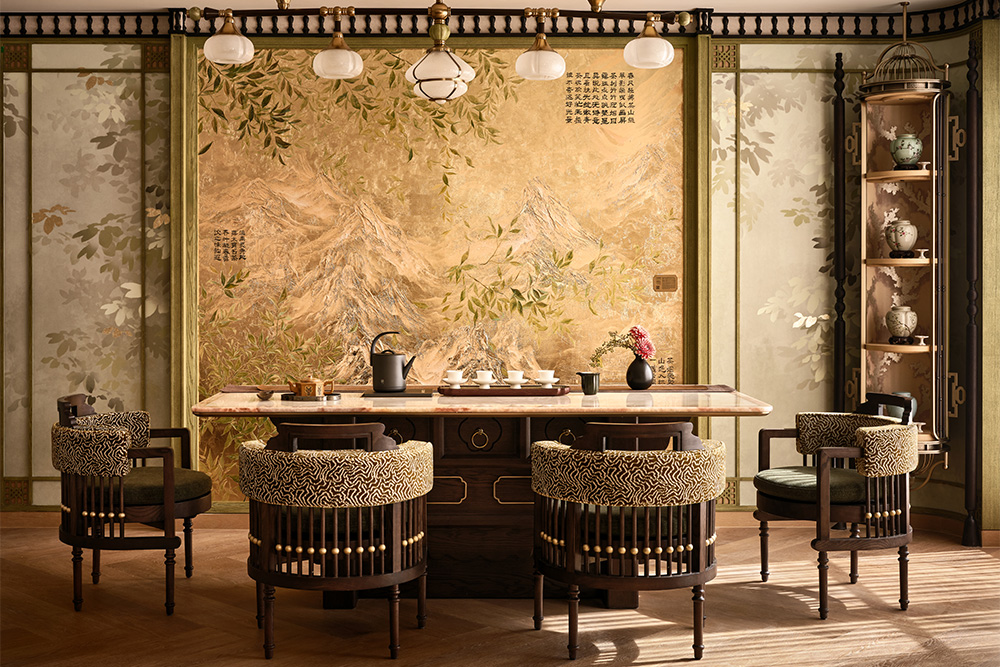
Botanical references, lush tones, aged wood, and handcrafted furnishings continue in the Tea Mansion Shangri-La suite, where a dedicated tea ceremony table sits against gold-leaf wallpaper, paired with traditional Chinese calligraphy
At the pinnacle is the Tea Mansion Shangri-La suite, where the province’s tea culture is at the forefront. A central tea bar showcases rare Pu-erh and handcrafted ceramics from a renowned local tea master’s personal archive. Earthy tones, aged wood, and natural textures recall misty plantations, tied together with the lingering aroma of tea. “We selected materials that could age gracefully and develop character over time,” explains Ho. “Much like Pu-er tea, which gains depth and complexity with age, we wanted the interiors to carry that same sense of patience and evolution becoming richer through time and use.”
Yet the story of Yunnan is also told through the eyes of someone who arrived from elsewhere. “[We] explored how Yunnan had been experienced and documented by those who came from beyond the region. That research brought us to Joseph Rock, and his story became an important breakthrough for the project,” says Ho. The Austrian-American botanist spent years documenting Yunnan in the early 20th century, and his accounts became inspiration for the fictional valley of Shangri-La in James Hilton’s 1933 novel “Lost Horizon.”
Rock served as the vision for SUMA, the hotel’s bar and lounge, which unfolds as an explorer’s private study and garden filled with collected objects, botanical references, and traces of his journeys through the province. Here, light filters through bamboo, reminiscent of mountain mist, and seating is tucked into alcoves that nod to village hearths. At the center, a bar is woven with Indigenous patterns, while a whiskey lounge pairs blue tones and dark timber with aboriginal textile-inspired wall panels.
Outside, a sky garden of native plants and organic forms echoes the rolling hills and terraced fields beyond. “Ultimately, Joseph Rock gave the story a human connection between Yunnan and the wider world,” Ho adds. “His journey reinforced an idea central to the project: Yunnan is not a place you understand all at once.”
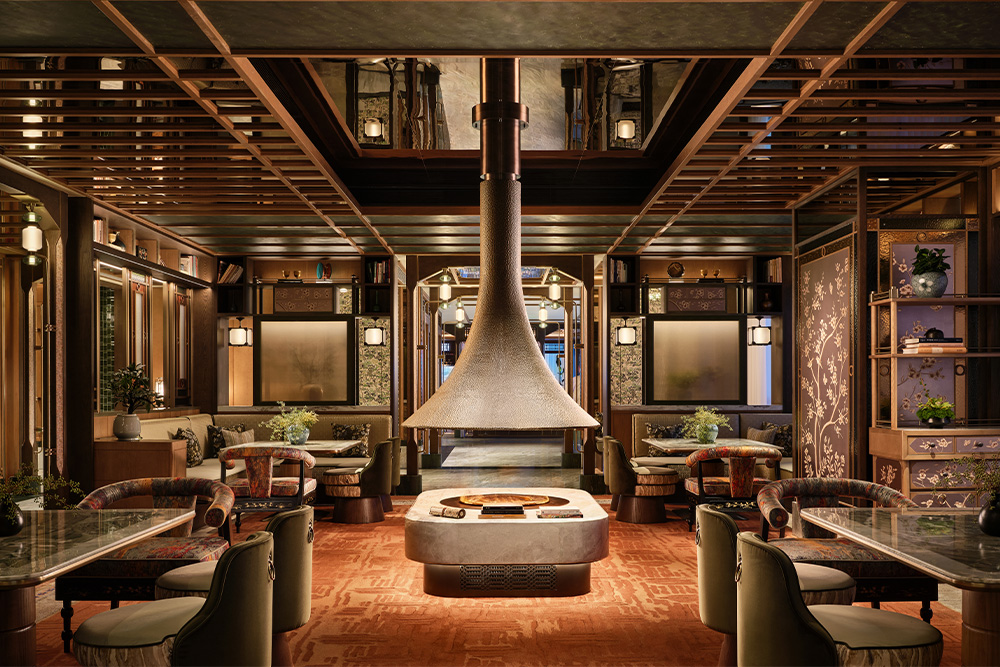
A central fireplace anchors the Horizon Club Lounge, a pavilion-like living and dining space that evokes a tea merchant’s mansion
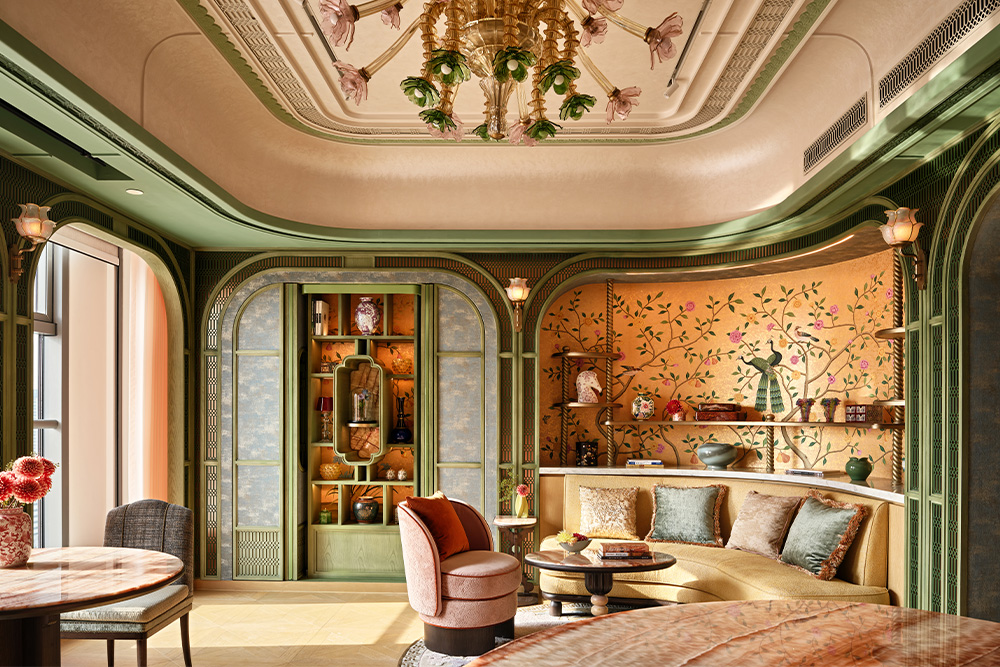
Blush-pink hues, intricate green latticework, and cascading rose motifs lend a whimsical feel to the 1,292-square-foot Rose Blossom Romantic suite
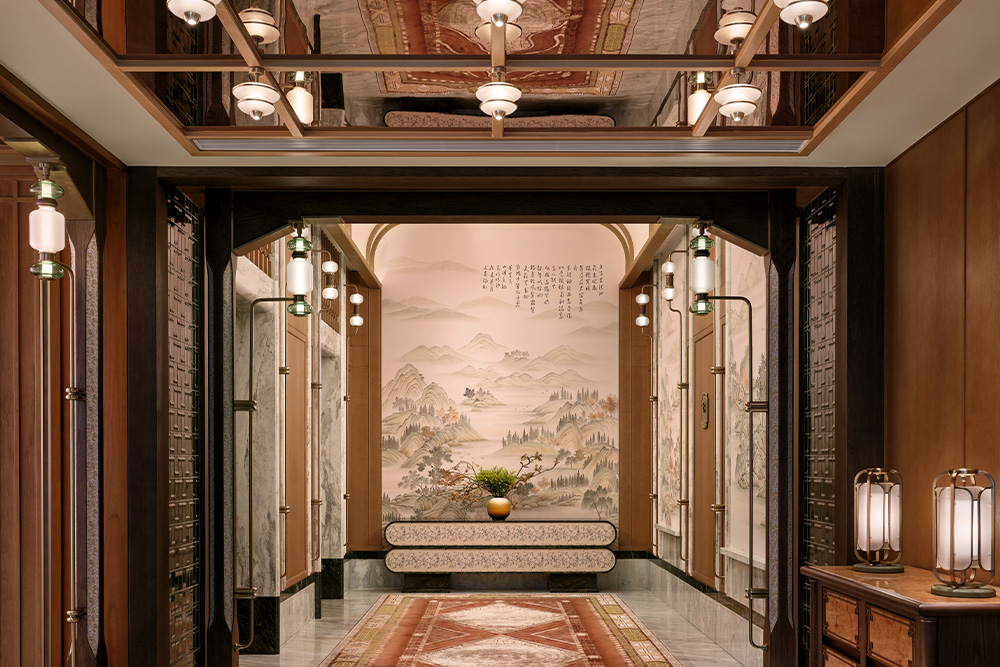
Mirrored ceilings and motifs inspired by the Yunnan province line a corridor, which features artwork depicting the region’s mist-covered mountains
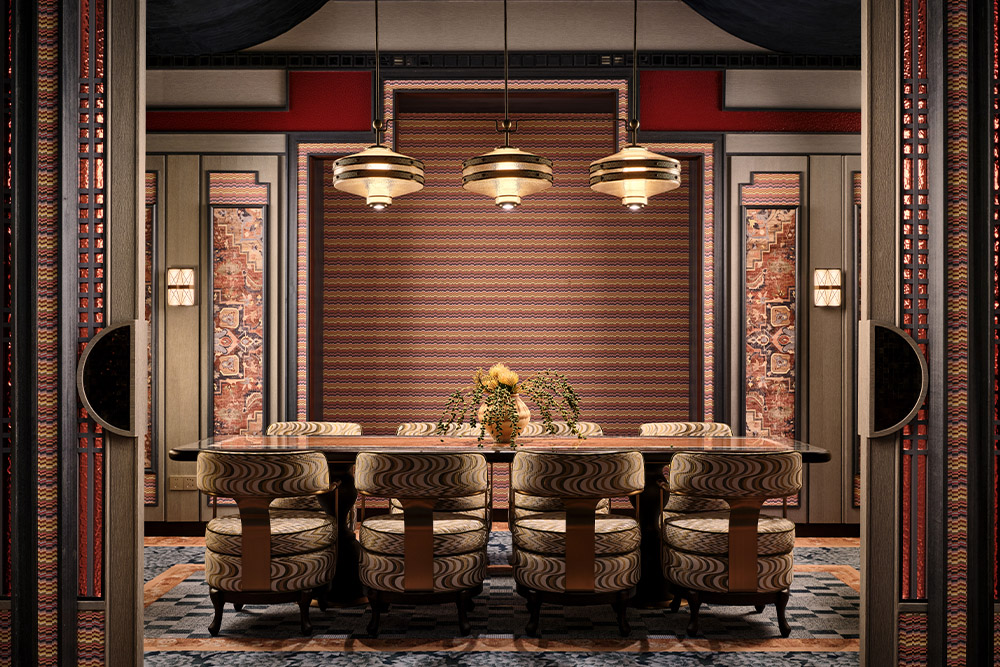
SUMA restaurant draws from the travels of Austrian-American botanist Joseph Rock, whose early-20th-century explorations of Yunnan helped give rise to the concept of Shangri-La
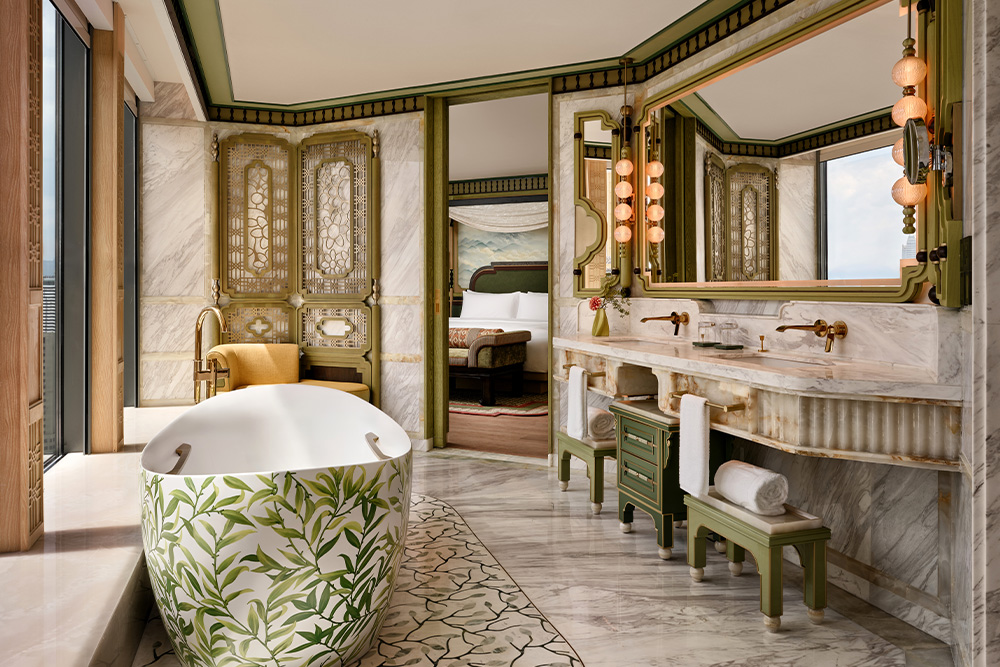
Sage green hues and floral detials soften the marble-clad bathroom of the Tea Mansion Shangri-La suite
This article originally appeared in HD’s October 2026 issue.