
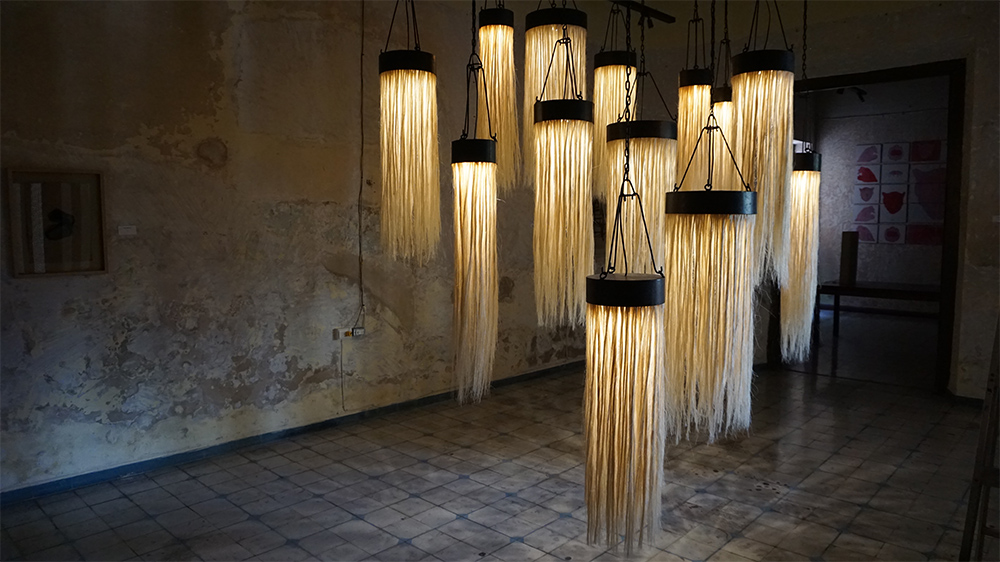
A verdant jungle landscape backdrops designer Angela Damman’s home in Telchac Pueblo, Mexico, northeast of Mérida. Damman and her family moved to the rundown, late-19th-century hacienda in 2012 from Colorado, and as the dilapidated structures gradually transformed into a soulful sanctuary, she was struck by the grounds’ flourishing plants.
 Damman was surrounded by sansevieria, better known as mother-in-law’s tongue, as well as the spiky agaves henequén and sisalana, and she was captivated by this unfamiliar slew of succulents—unsurprising given her professional background in plant-based biomass energy and a childhood shaped by the outdoors. Raised on a farm in Minnesota, Damman and her siblings spent much time playing in the woods. “I had a strong connection to nature, and it inspired my imagination,” she recalls.
Although Damman chose the business path, she initially contemplated a career in fashion design and put herself through school at the University of Wisconsin by making clothes and jewelry. Once she discovered the centuries-old history of indigenous henequén—dubbed green gold—weaved into Yucatán textiles, she was hooked, spending time in neighboring villages with the craftspeople tirelessly working their backstrap looms or hand-spinning softer sansevieria fibers into threads with a trusty bicycle wheel.
Henequén’s resilience is well-suited to rope, string, and twine, the latter conjuring images of the heavy-duty version that wrapped the hay bales from her past. “Hay baling was always one of those jobs you hated. It was hot and dusty, and the twine would blister your hands, but my brother and sisters and I used to have hay bale-throwing competitions, so there’s a bittersweet nostalgia,” she explains.

Damman’s deep dive into these ancient Mayan crafts elicited reverence, but she also saw an opportunity to preserve the fast-fading traditions, collaborating with skilled artisans to improve the economic development in their rural communities while refining and innovating production. One day, as she worked alongside weavers, Damman noticed how a bundle of luminous black fibers resembled a sleek horse tail, and she was driven to recreate that sheen and texture through a meticulous process of extracting, drying, boiling, combing, and naturally dyeing the fibers grown and cultivated on her property.
Elegant handbags were Damman’s inaugural products starring the fibers, but it was her foray into home décor that caught the eye of architects and designers. One of her sculptural chandeliers graces a bedroom at the Meyer Davis-designed Casa Dragones in San Miguel de Allende; other shaggy creations, designed in partnership with OV & Co., lend Los Mochis London City a dramatic air. Damman’s works will also enliven several forthcoming projects, including the Standard, Mexico City and Richard Sandoval’s restaurant dLeña inside the Greenleigh, part of Marriott’s Autograph Collection, in Houston.
To demystify how Damman’s designs are brought to life, last fall she launched Nepantla, a multi-day site-specific exhibition with curator and ALRATITOstudio founder Nadia Guitteau, that explored the notion of material memory. She welcomed the public into her studio, where henequén was once aptly stored and packaged, and revealed the nuances of these ever-changing fibers. “I constantly find them beautiful,” she says. “They feel alive.”
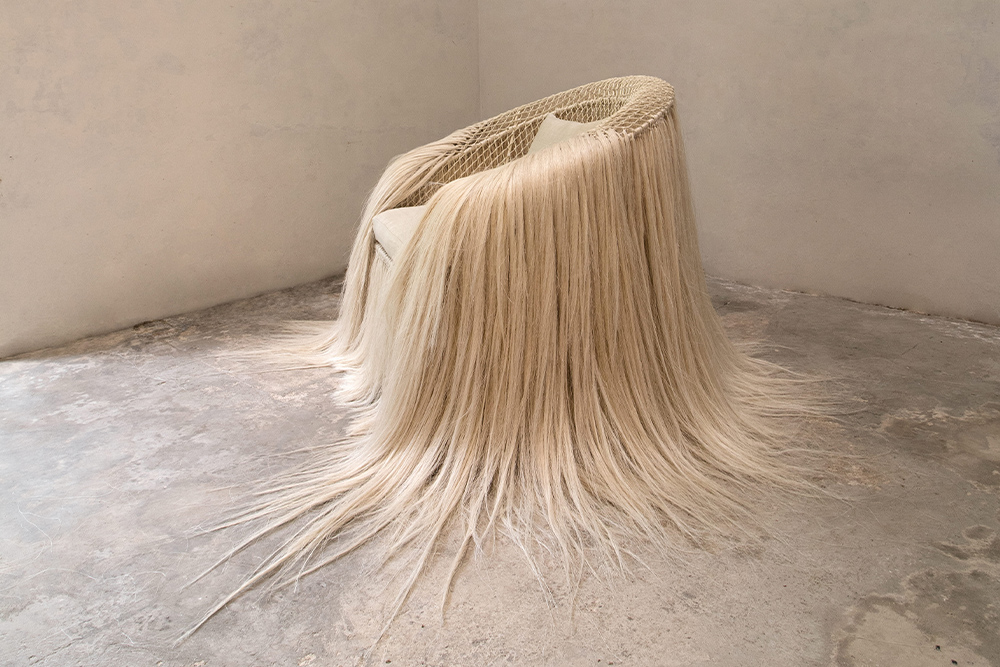
The limited-edition Kau chair was produced in espadin agave fiber
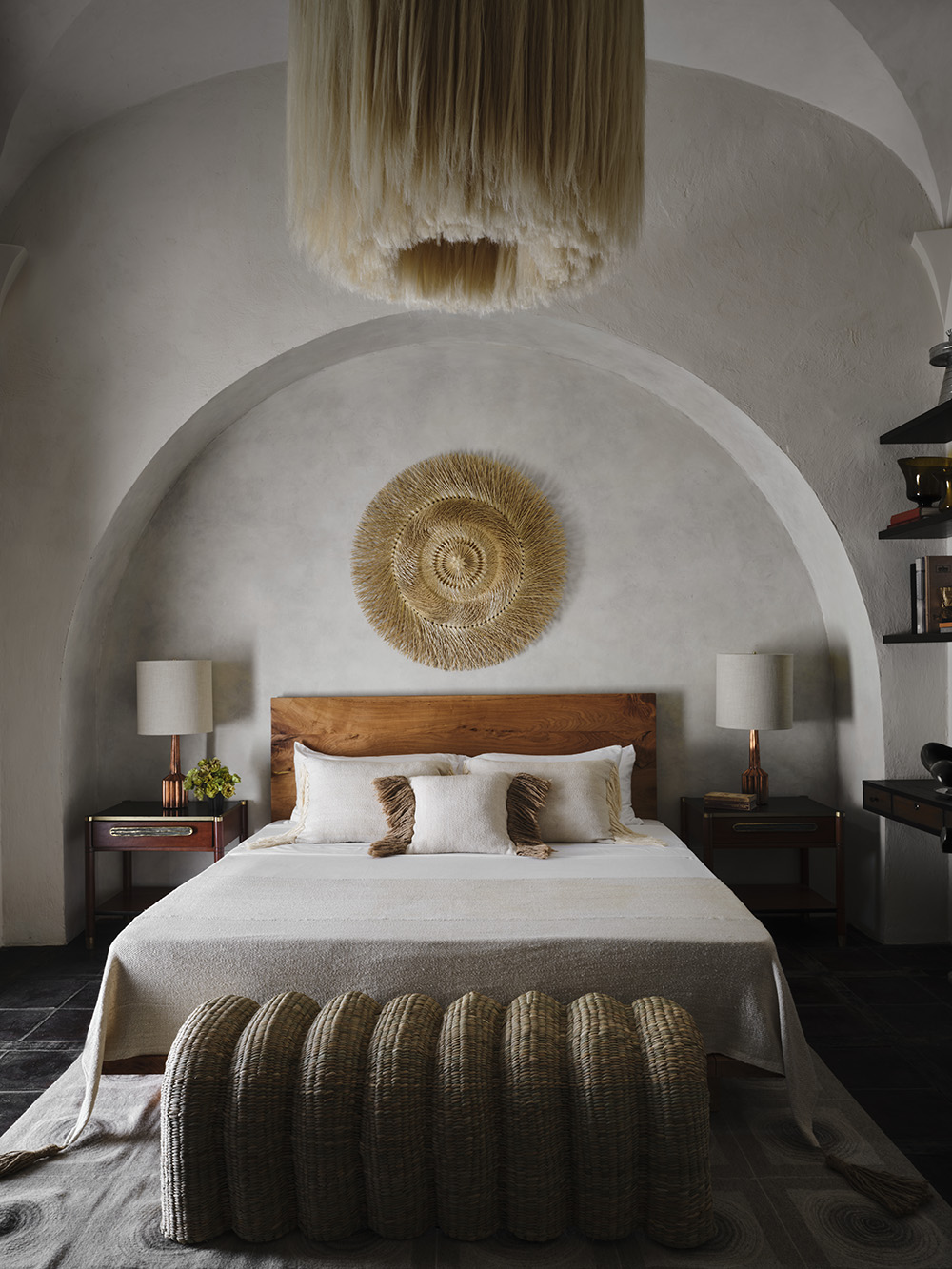
Damman’s pendant hangs in a guestroom at Casa Dragones in San Miguel de Allende
This article originally appeared in HD’s August 2026 issue.