
During the revival of the Huntington Hotel in San Francisco, 250 pieces of artwork at its signature restaurant—the beloved neighborhood staple the Big Four—were documented, removed, and meticulously remounted in their original positions. When newly installed light boxes interfered with the artwork placement, designer Ken Fulk insisted they be readjusted. “It was dramatic at the time, but I was insistent that we were true to what had been created,” recalls Fulk, who led the project’s creative direction.
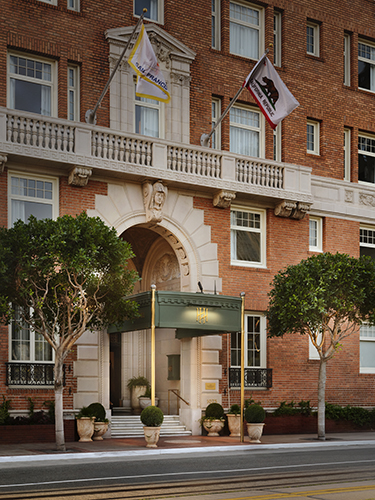
The property was originally built in 1922 as a luxury apartment building named for railway magnate Collis P. Huntington, before opening as the Huntington Hotel two years later in 1924
The instinct to preserve became the guiding principle for the renovation, undertaken in partnership with Lucid, Highgate’s in-house design and construction studio, and BAR Architects & Interiors. The vision was to restore a Nob Hill landmark that has occupied one of San Francisco’s most storied addresses since opening as a hotel in 1924, after originally being built as a luxury apartment building named for railway magnate Collis P. Huntington.
“There’s a big lit up Huntington Hotel sign that sits atop the building. [One of the owners] Greg Flynn and I lit that when we were reopening the hotel,” Fulk shares. “It’s symbolic that the sign comes back on because from my studio building of 20 odd years, I would look up the hill and that’s what I saw. It’s always loomed in my imagination.” After a renovation in the 2000s that didn’t feel true to the Huntington and its subsequent closure during Covid, it was a natural fit for Fulk to bring the hotel into its next chapter.
Working with locally based Flynn Properties and Highgate, Fulk carefully retained the character that made the Huntington what it was. “When we tackle a place that has provenance and history, the first line is always, ‘Don’t screw it up. How do you protect what’s there?’” says Fulk. The hotel’s recognizable neon sign remains in place, glowing above California Street, while the entrance looks across to Huntington Park, with cable cars passing by and other iconic properties, like the Pacific-Union Club, anchoring the surrounding streets. “It’s a very prestigious sense of arrival, but when you come through these doors, the hotel is intimate,” says Fulk.

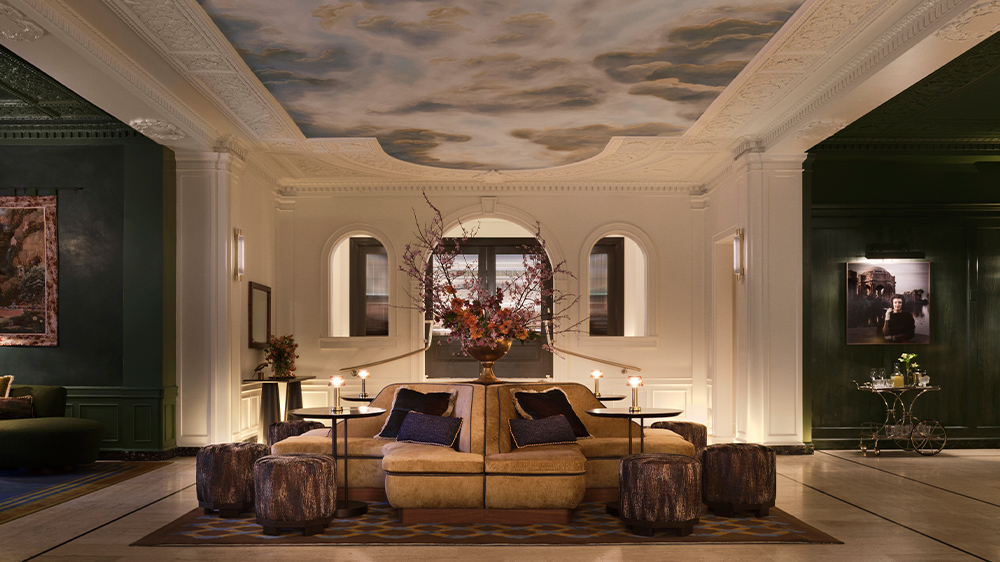
Inside, the lobby’s large check-in box was removed to open up the space, while plasterwork and detailing were restored and the historic travertine floors polished. Above the seating area, local artist Rafael Arana repainted the sky mural, while layers of history unfold through the art, including photographs by Slim Aarons that capture the original hotel heiress, Dolly Fritz, alongside a custom tapestry in green and blue tones that echoes the park beyond.
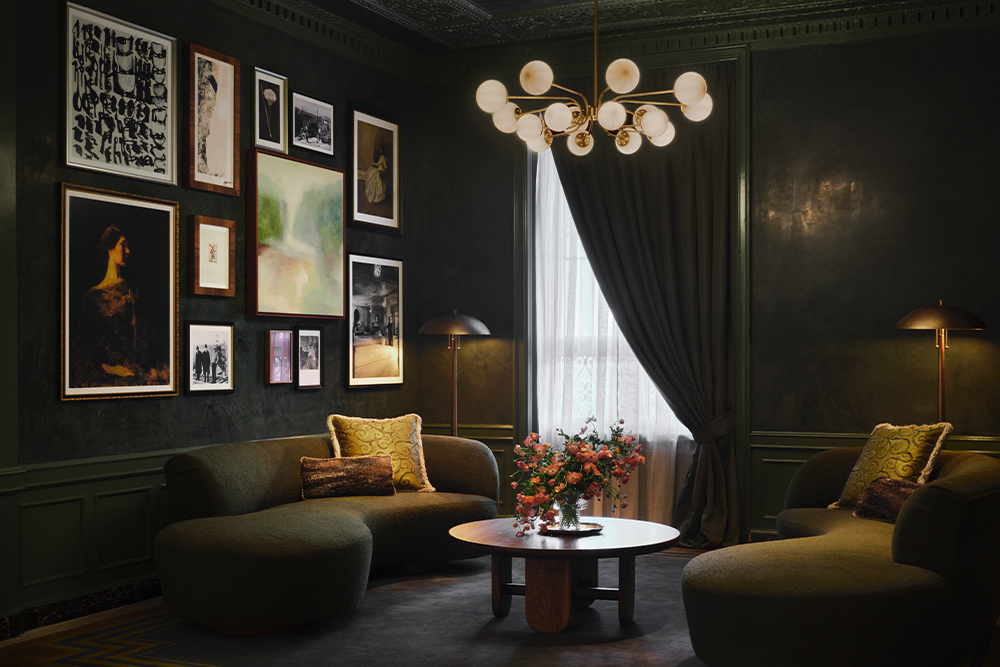
A bulbous chandelier and gallery wall bring contrast to the moody lobby lounge
The hotel’s connection to the landscape is also on display in the guestrooms, where warmer tones complement views of the park and the city skyline. “What’s so remarkable about San Francisco is the physical environment,” says Fulk. “I still get my breath taken away every day turning a corner, and that happens at the location of the Huntington, whether you’re looking out the windows or stepping outside.”
Guests can also soak in the views from the revived Nob Hill Spa, where a pool—framed by sage green, soft drapery, and mashrabiya-inspired latticework—overlooks the city. “We brought the spa back to life,” Fulk says. “For those of us who aren’t guests, we can take a staycation here with its dramatic double height, huge views, and swimming pool. It’s an oasis in the city.”
The revival also touches the F&B venues, with Arabella’s, a new cocktail lounge, wrapped in a mural of female muses inspired by Arabella Huntington, wife of Collis P. Huntington and once known as the richest woman in the country. Its feminine aesthetic is offset by mahogany wainscoting and haberdashery fabrics inspired by train cars. Here, the team “took something from scratch that never existed, yet somehow made it feel as if it had always been there and it was part of your life,” says Fulk.
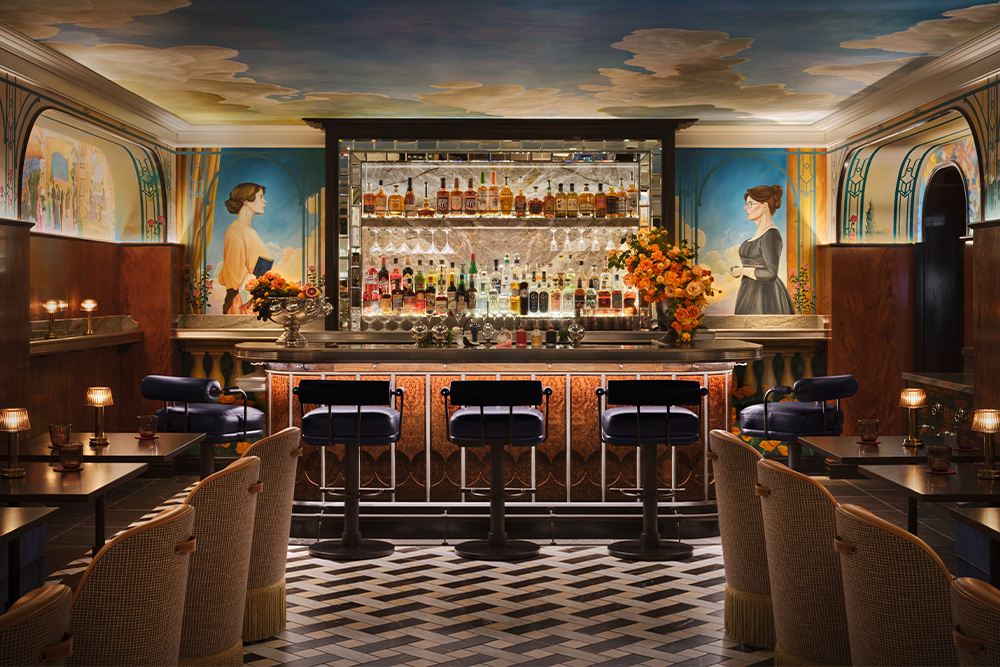
A mural of Arabella Huntington by Rafael Arana wraps the walls of Arabella’s, a cocktail lounge found just off the hotel lobby
Then there’s the Big Four, which has been part of San Francisco’s social fabric since 1976. “Everyone has desperately missed it from being part of our daily lives,” Fulk shares. “It’s a San Francisco kind of clubhouse.”
The entire restaurant was carefully taken apart and put back together, much like its artwork. New bar stools and lighting join more subtle interventions, including fabric wallcoverings and supple green glove leather on the banquettes. “It’s like a good facelift,” Fulk explains. “It was about doing a lot of things to a sacred space but making it feel exactly like the best version of itself.”
Throughout the hotel, the interventions are designed as a continuation, allowing its history and familiar character to remain untouched. “The hotel has a very human scale,” Fulk adds. “It feels like the doorman you know is welcoming you. It feels personal.”
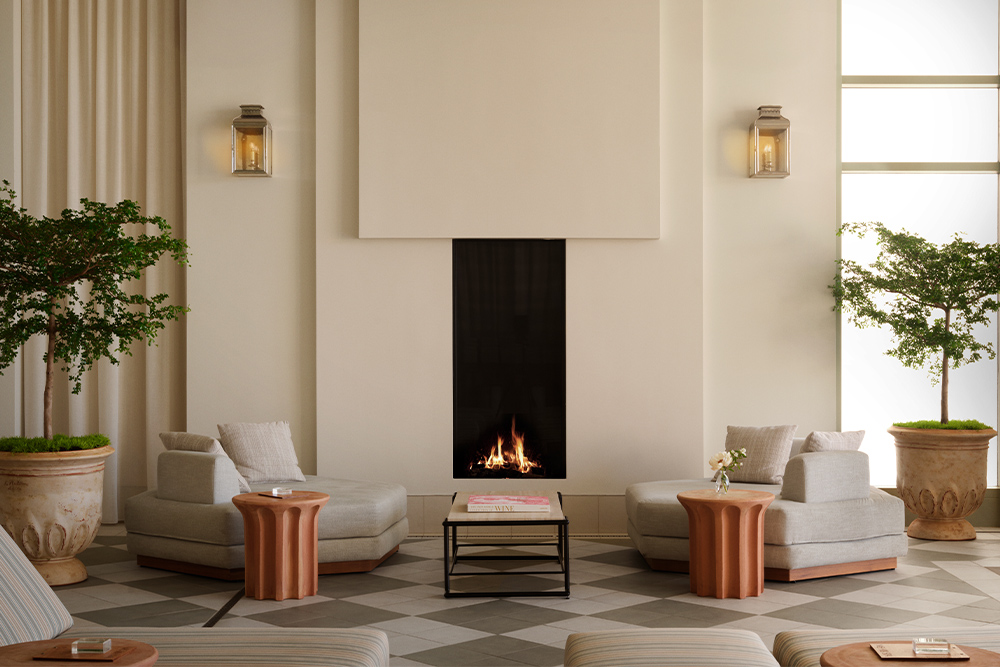
The Nob Hill Spa features a double-height fireplace for gathering
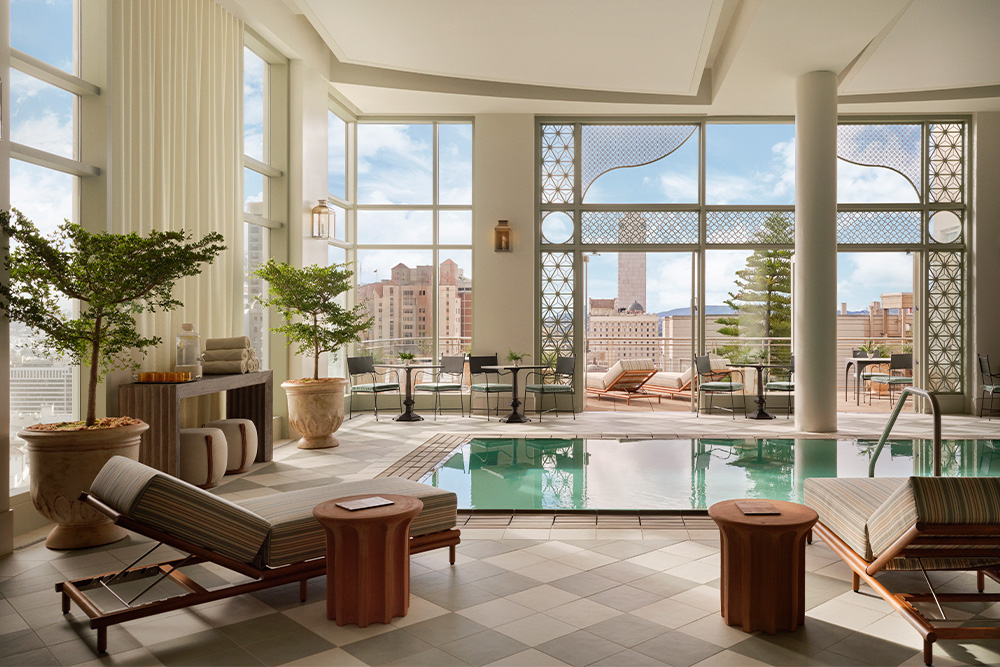
The Nob Hill Spa pool is enveloped in serene sage green, with Moroccan-inspired latticework and soft fabric panels lending texture and intimacy
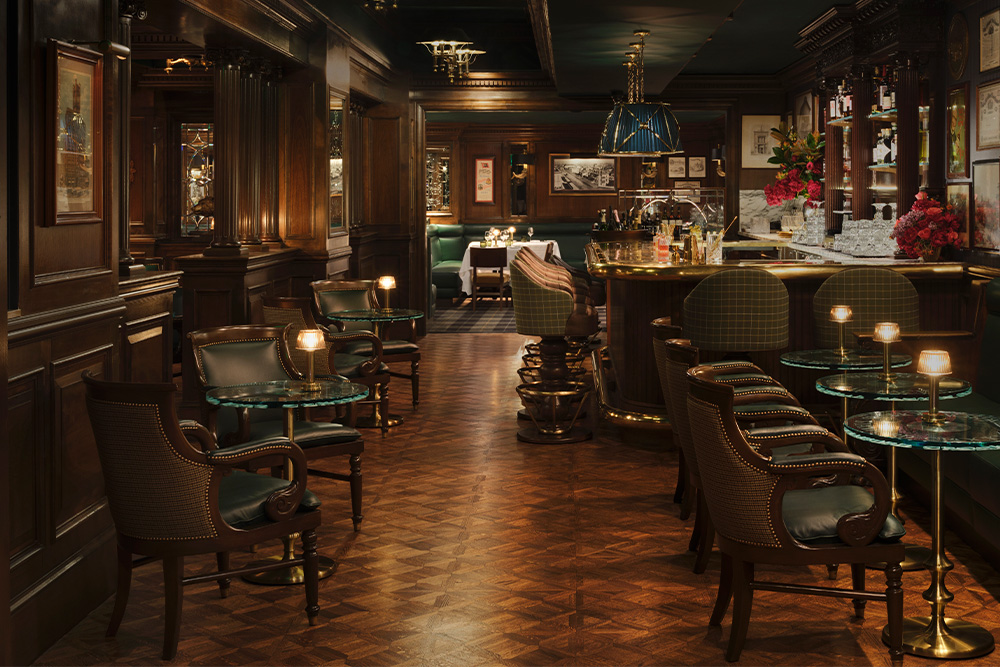
At the Big Four, which first opened in 1976, original wood floors were refinished, new felt panels added to the ceiling, and salvaged furnishings refurbished alongside the reinstallation of the restaurant’s artwork
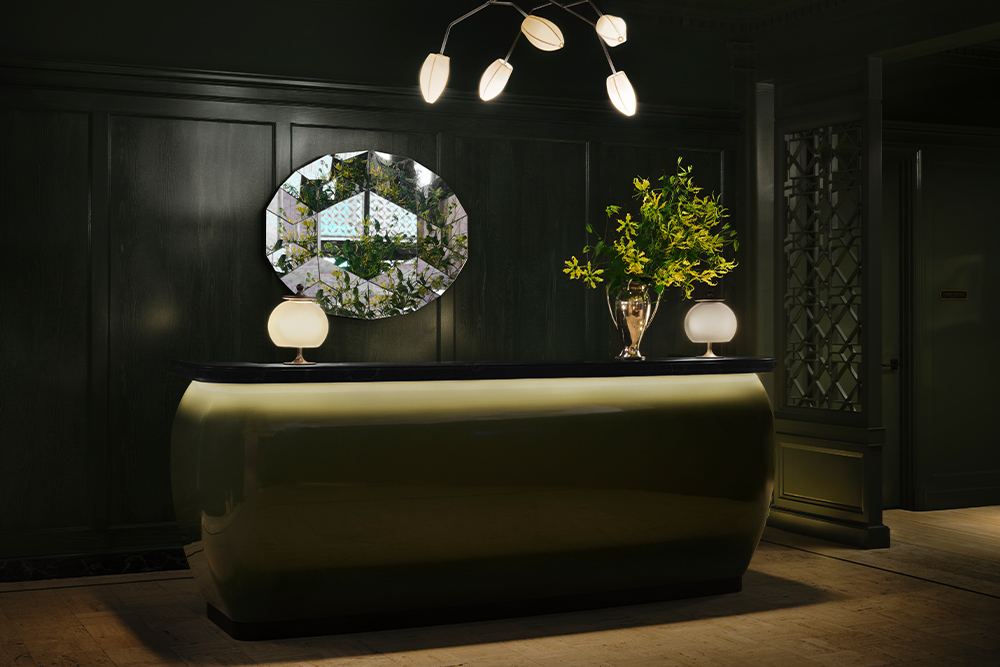
Dark olive green hues envelop the reception area, where botanical details include a miniature tree atop the desk and leaf motifs in the mirror behind it
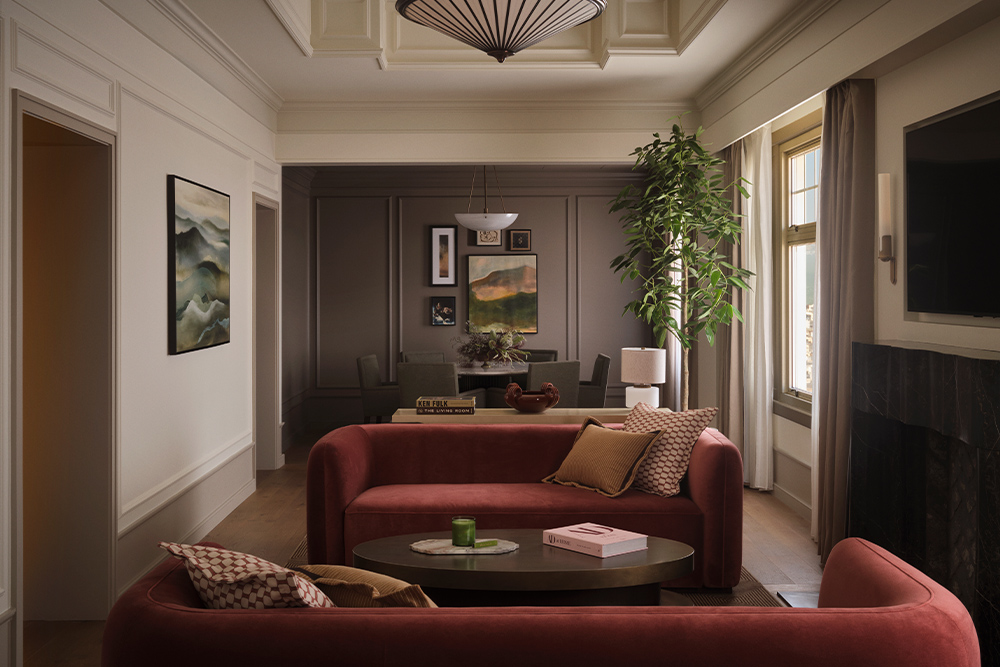
Ashy brown and muted red tones define the living area of the hotel’s 1,500-square-foot penthouse, punctuated by plants and artwork
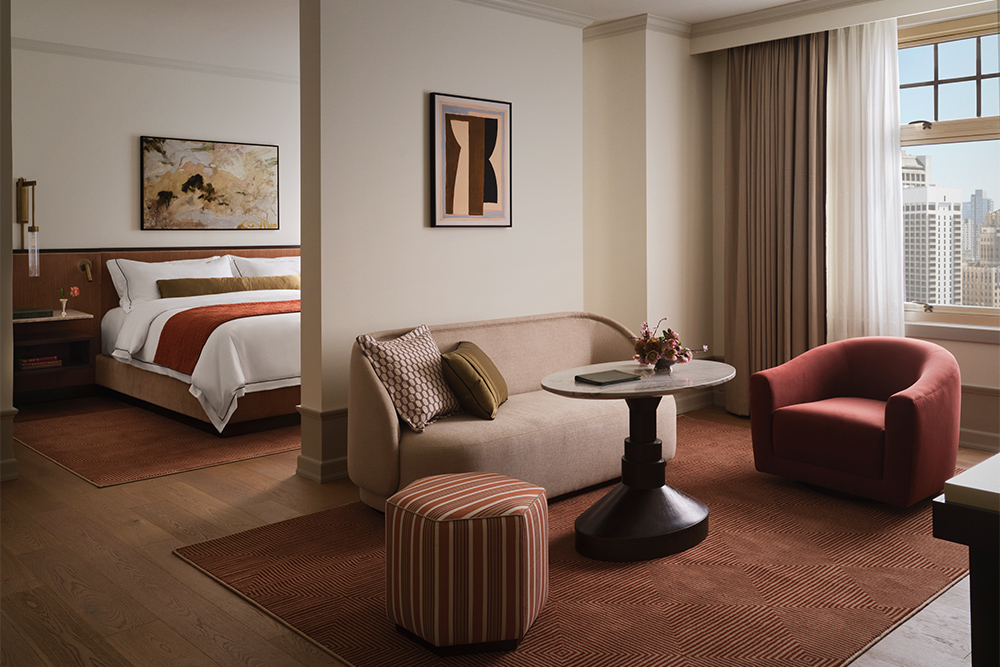
Herringbone floors and moldings that recall the original building give the Huntington Hotel’s guestrooms and suites a timeless, residential quality
This article originally appeared in HD’s October 2026 issue.