
The story of the Stoneleigh is something of Dallas folklore. When it opened in 1923, the Frank J. Woerner-designed building was the tallest west of the Mississippi. As the story goes, newly minted businessman and former colonel Harry E. Stewart was so impressed by this handsome edifice that he bought it outright. He employed Dorothy Draper, the most sought-after decorator east of the Mississippi, to deck out the hotel and his 11th-floor residence with all the world’s finery.
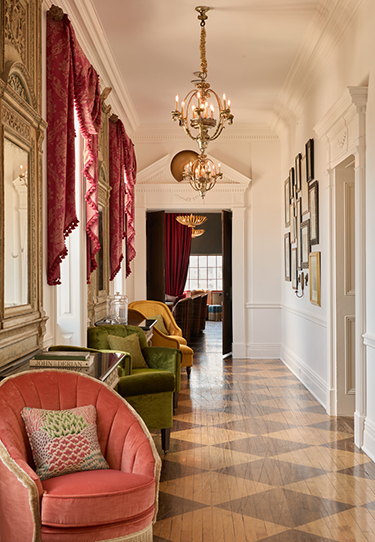
Ornate chandeliers line a corridor on the 11th floor
Nearly 100 years later, Brookfield Properties assembled a veritable dream team to take the Stoneleigh right back to its glory days, including Los Angeles- and London-based design firm Fettle and multi-Michelin starred chef Michael White, who lent his Italian fine dining mastery to the hotel’s dining outlets.
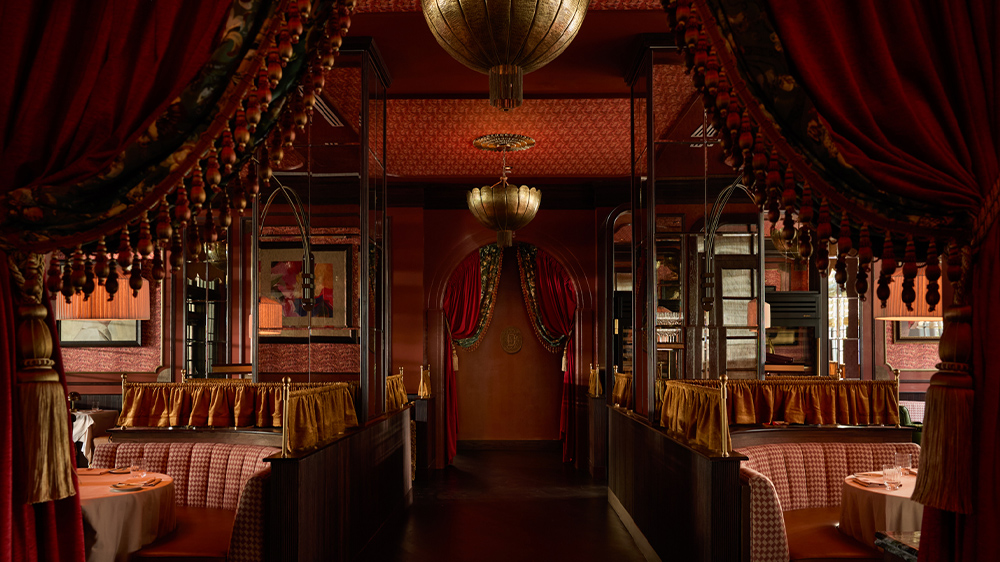
The drama starts even before guests enter the lobby through a striped awning that heralds the maximalist design story that is to unfurl inside. In the lobby, for example, a carefully curated collection of antique and bespoke furnishings swathed in lush fabrics greets patrons. It’s here they can partake in late-night bites and cocktails at the sumptuous Bar Leonessa, where the onyx bar, pink chairs, and ornate lighting evoke a clandestine, Prohibition-era vibe.
Fettle’s design vision started with transformation—the millwork and architectural details, for one, look like they’ve always been there. “When we started working on the building, it felt quite muddled and generic,” says Fettle founder Tom Parker. “There wasn’t a destination F&B element or a defined relationship between spaces in the lobby. We tried to re-establish a design hierarchy within the lobby, tying it to its architecture and bringing back its formality and grandeur,” he says.

That opulence also appears in the Lions Den, named both for the building’s iconic stone entry statues and the tales of a previous Prohibition-era supper club in the building. “We wanted to rediscover the majesty [of the space] and bring it back to life,” Parker says. To that end, the property already had a winning formula: The building is part of a great neighborhood within an iconic setting and connected to Draper.
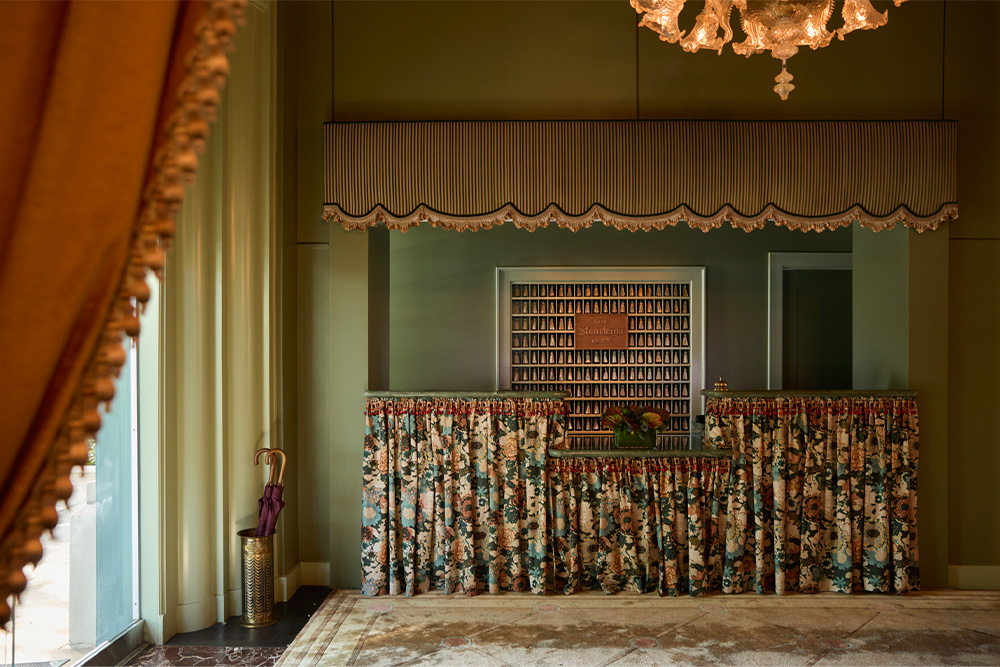
Soaring ceilings and restored Beaux-Arts details set the stage in the Stoneleigh’s lobby
Whimsical wallcoverings and lush patterns create a bold style, anchored by walnut wood paneling, bespoke lighting, and art that reinterprets key moments and influences from the property’s past through a contemporary lens. With subtle references to the hotel’s Art Deco roots, the artwork takes cues from the original 1920s-era design with pieces that nod to the Stoneleigh’s role as a place to see and be seen in Dallas.
The vibrant story continues to the 11th floor, where a collection of five distinct signature suites sits among the hotel’s most historic rooms. “There are so many subplots within this building, it’s like a soap opera,” Parker says. “It’s almost as if the building is a central character and each of the rooms plays its own supporting role.”
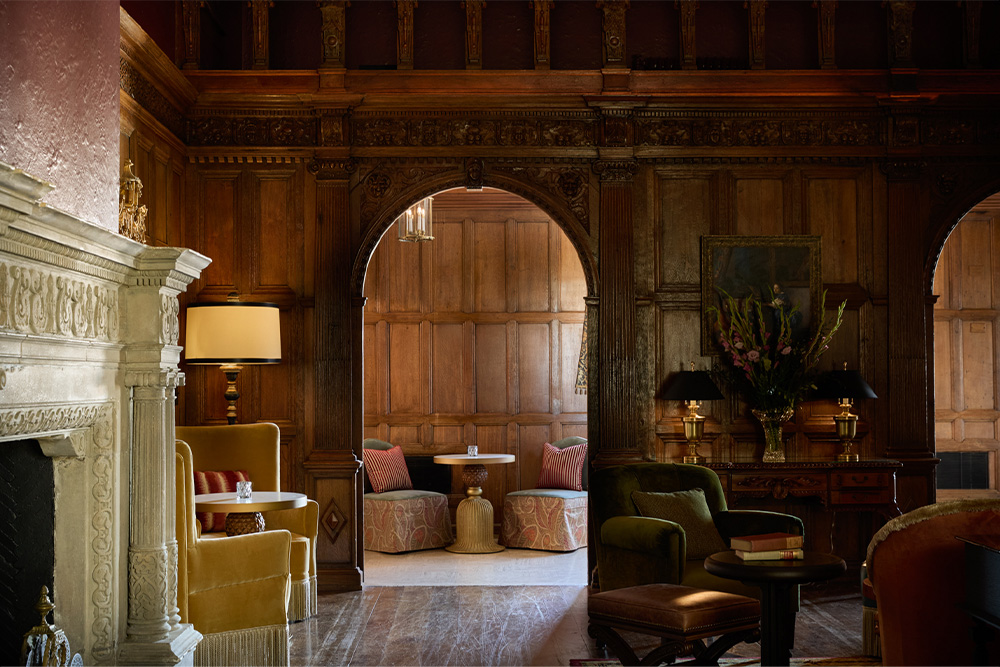
Found on the 11th floor, the Music Room boasts carved, centuries-old English oak wood paneling
The center of the drama is the Music Room, where 500-year-old paneling that Draper imported from London and painstakingly adjusted blends naturally into its new space. The Draper suite, meanwhile, is modeled after Dorothy’s elegant New York apartment, featuring a recurring fabric motif designed by Oscar de la Renta. In the Presidential suite, which Parker counts among his favorite spaces, Fettle chose to employ Draper’s signature approach of drenching beds, walls, and furniture in the same patterned chintz.
“There’s a very fine line in maximalism between elegance and chaos,” Parker points out. “It’s so hard to get that approach to look correct, because you need a level of organization and structure within the chaos. We found that using a lot of different types of pattern works within an overarching color scheme and breaking up the pattern work with different solids and textures was effective.”
The biggest challenge was to carefully thread the needle of reinvigorating a Dallas landmark into a decidedly modern landscape. Yet, on any given night, the hotel’s lobby is teeming with activity. “We hope we’ve created an authentic glimpse into 1930s Dallas,” says Parker, “with all the elements and layering, without it being a replica or pastiche.”
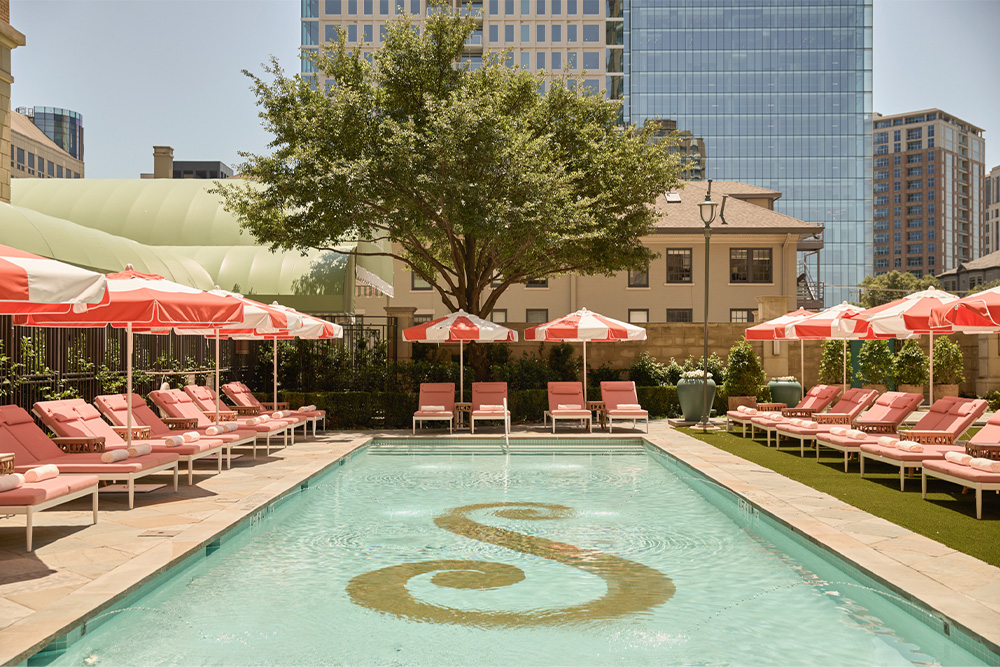
Inspired by Dallas society doyennes of the 1920s and ’30s, the reimagined pool area pairs coral and green hues with custom Italian parasols
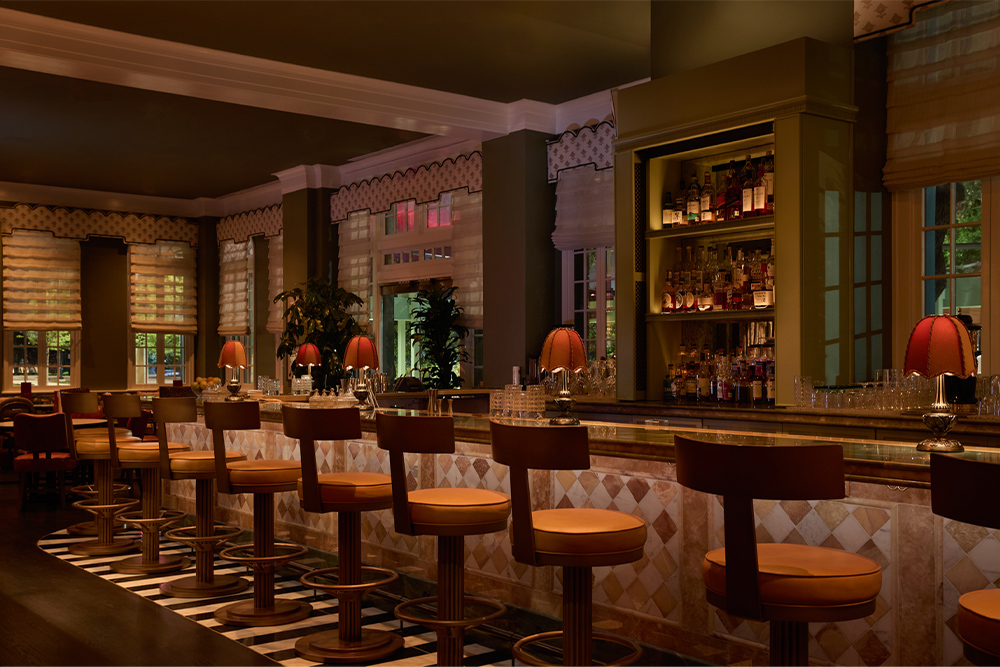
An onyx and marble bar anchors Bar Leonessa, where the back bar features displays bearing the hotel’s original “S” logo
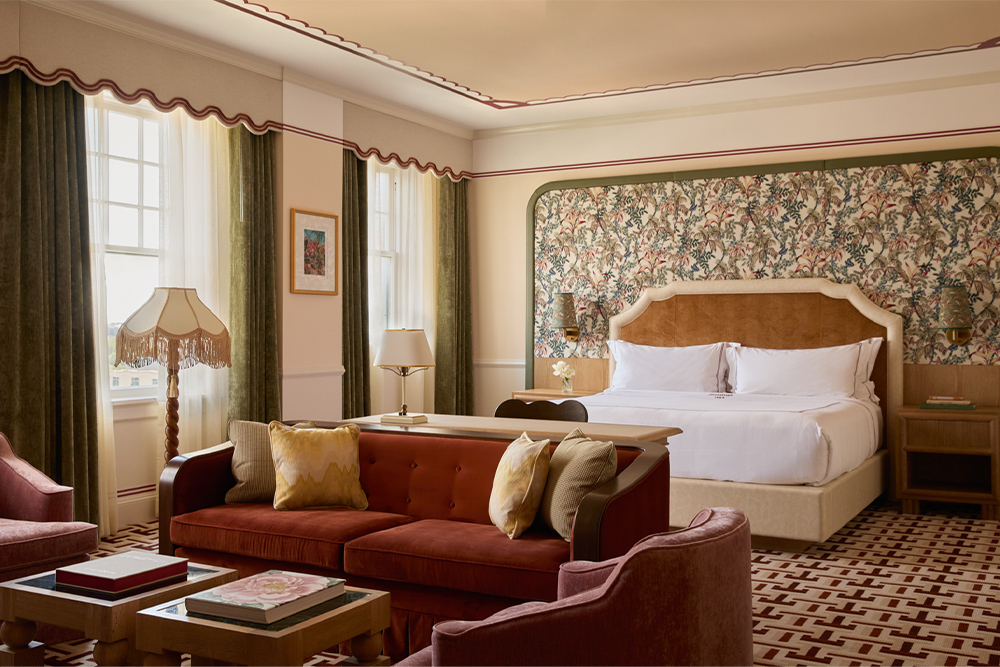
Intricate patterns, wool carpeting, and 1930s-style custom furniture reflect the building’s roots in the Junior suite
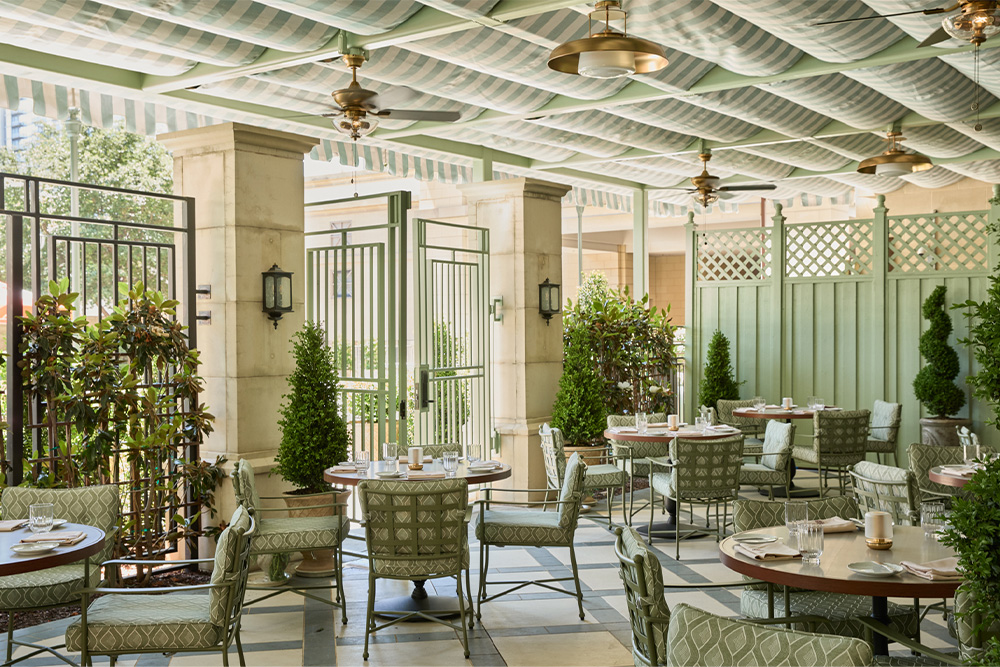
The Lions Den patio marries sage green hues with striped fabric canopies and lush greenery for an inviting spot to linger
This article originally appeared in HD’s October 2026 issue.