
Are we doing this right?
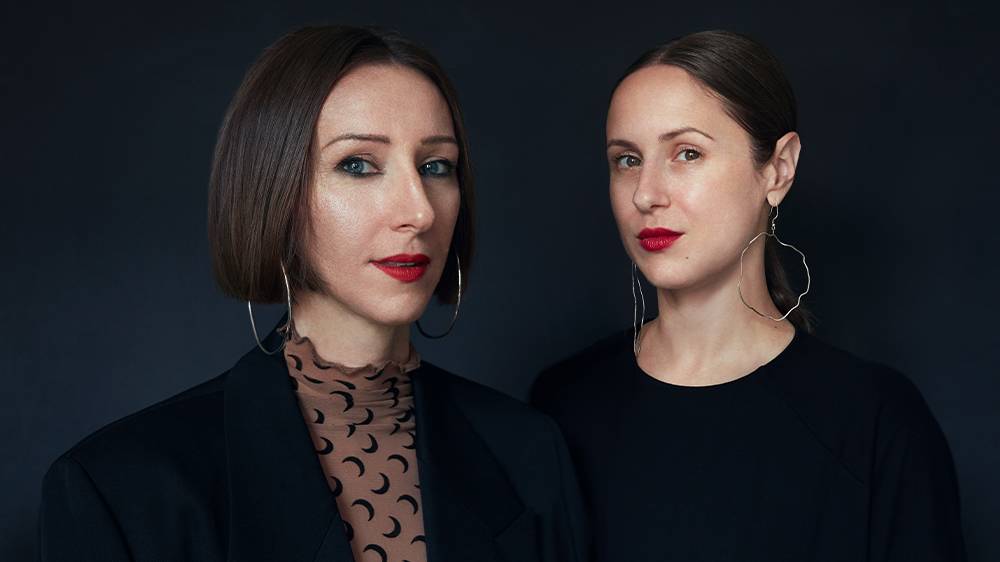
We ask ourselves this question constantly. We’re Vanessa Watts and Erika Dray, founders of Watts & Dray, a hospitality studio in New York. We opened our practice in 2021 because we have a good idea about what is missing in design, and we have a big ambition to make the cool spaces we want to see in the future.
But the reality of building a profitable, scalable design studio is decidedly more granular than our big dream of serving a hot design vernacular. Our lives are suddenly dominated with things we never really considered, like organizing a business development calendar and negotiating software licenses. It’s a funny place to be. We’re finally free to design on our own terms, yet so many administrative tasks are between us and that work.
But we are not alone. With our column HOT STUFF, we’re sitting down with our industry friends to talk about the minutia. We want to hear how they are handling the less glamorous side of the job. Sometimes it’s gratifying to know you’re not the only one navigating the murky waters of business management. So, let’s get that dish—it will be hot, we promise.

We recently chatted with our friends Paolo Ferrari, founder of Toronto-based firm Studio Paolo Ferrari, and Courtney Lauderdale, studio director of operations, about running their design practice, which they founded in 2016.
“Even after having done this for such a long time, it’s still almost like an impossibility. You walk into a space and think, ‘I cannot believe this is real.’ It’s a surreal experience, and it’s the best,” Ferrari says.
With projects like Long Bar, Shebara Resort, Desert Rock, and Peridot (a total mic drop moment), the studio is making vision-forward international design and building experiential worlds that evoke awe.
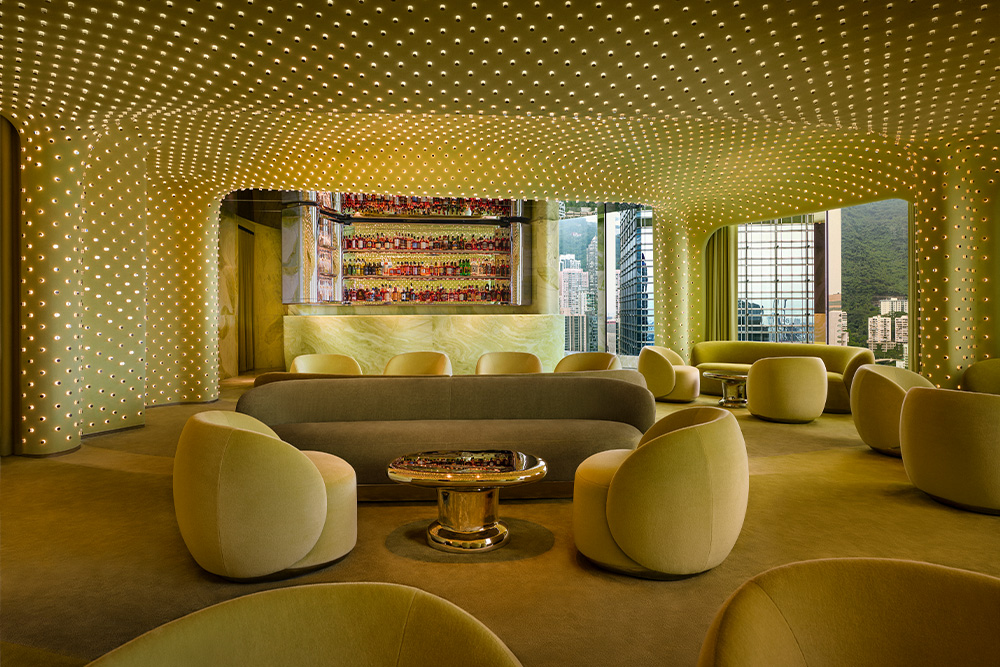
Peridot in Hong Kong; photo by Virgile Simon Bertrand
But how do they do it?
As they tell it, the studio is broken into two parts: the design part and everything else.
“The best mornings are waking up inspired,” Ferrari says, “I make Courtney late because I won’t stop sketching at our kitchen table.”
The weight of the responsibility of owning a firm is “always a complicated piece,” Lauderdale says. “We’re the advocates for everyone in our studio—for the work, for our clients, and their brand.”
Ferrari points to his architecture education as setting the foundation for his high level of discipline and commitment. “My professor laid it out and said, you can’t do anything else. You can’t work a part-time job,” he explains. “You have to commit fully to this. That conversation scared the shit out of me because I didn’t have a safety net. That uncertainty was the most important thing—not having that would have watered down the fire.”
When he started, he may have been thinking about bucket-list projects, but today, “there are no more dream projects, there are only dream clients,” he says. “On paper, you can have a project that is pluses all down the board, but if the client doesn’t value what you’re doing, it’s not worth it. It’s an alignment of values. When we’re all striving for the same thing, it makes a huge difference.”
“When I look at design, I think, ‘Is it about the thing or is it about the idea?’ And it’s really about the idea,” Ferrari says. “The work is a result of that idea. The idea has more value than the thing.”
While the future looks bright for the firm, we wanted to know if they won the lottery, what would they change. “We would still have the design studio, but we would design whatever we wanted and if something got value engineered, we would be like, ‘it’s cool, we’ll pick up the wallcovering,’” Lauderdale jokes.
Ferrari took it a step further, telling us “When I look at the uber wealth in the world, I think I would have way more fun if that was me. Design is such a powerful tool, and it’s interesting to think about it. Back in the day wealthy people like the Brion-Vega family in Italy, commissioned Carlo Scarpa to build this mausoleum.”
Today, billionaires aren’t using their wealth to create “wildly incredible things,” he says. “There’s such beauty in building and investing in the work we do, and I would do it for myself. That would be the most exciting thing.”