
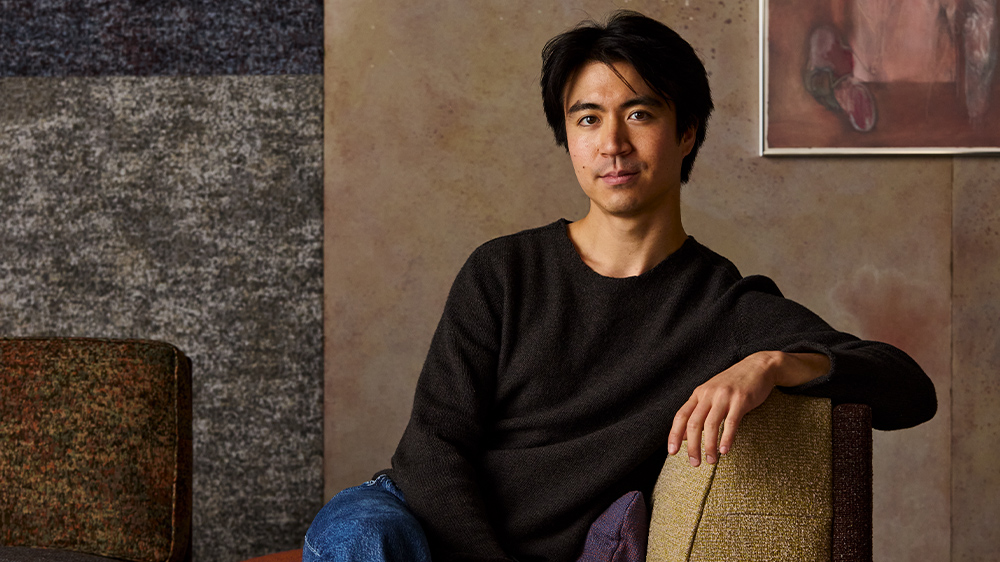
Born into a family of New York artists of various disciplines—his father and paternal grandmother painters, his paternal grandfather a photographer, and his maternal grandfather an architect—Liam Lee was drawn to creative endeavors from a young age. While studying English at the University of Chicago to pursue poetry, he also took classes in architecture history, including a semester abroad at Oxford where that was his focus. After graduating, he worked at Reiser+Umemoto, RUR Architecture DPC editing their monograph while considering going to grad school for architecture. But to avoid accumulating debt, he instead took a job with Brooklyn-based set designer Mary Howard.
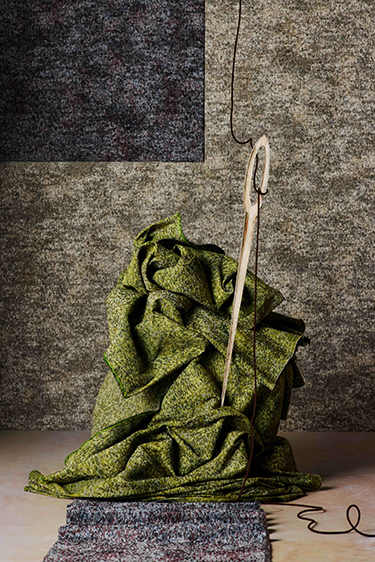
The Magic Eye pattern refers to computer-generated graphics from the 1990s
Still, Lee wanted more: a creative outlet he could own entirely. He began working with wool fiber in his apartment, and shortly before COVID, started selling his work through the Noguchi Museum Shop. When the pandemic hit and he was laid off, Lee devoted himself to the practice, expanding his work to furniture pieces that pair wool with color-forward, biophilic forms. “Being stuck within the confines of my small apartment during the pandemic, I wanted to find a way to render the domestic interior into a microcosm of the outside world,” Lee explains. “I was looking at a lot of plants, seed pods, and mushrooms because they appear otherworldly when you see them as a chair.”
Opportunity arose out of the peak of social isolation as curators and artists took note of Lee’s Instagram page. By 2021, he was able to open Studio Liam Lee in Bushwick, Brooklyn, after which he exhibited in notable art shows around the world while allowing his creativity to take him in unexpected directions. “Needle felting is an additive process—it has no set endpoint, and you keep adding material continuously,” he says. “I prefer working that way because it echoes the natural growth logic of plants, like someone tending a bonsai tree, cutting a branch here and letting another grow there.”
At one such exhibition opening, he met Annie Ming, marketing director at HBF and HBF Textiles, who admired his work. She invited Lee to design a textile collection for furniture, and he jumped at the chance. The resulting Paint By Numbers line offers a vibrant yet elevated range of colorways on four distinct patterns inspired by art history, from the fin de siècle artistic movement of the end of the 19th century to 1990s-era computer graphics. “I think of the colorways as puzzle pieces for designers to compose a cohesive environment,” he says. “It was different from my usual work but rewarding to make all the creative decisions and launch it into the world. I would love to do more projects like this.”

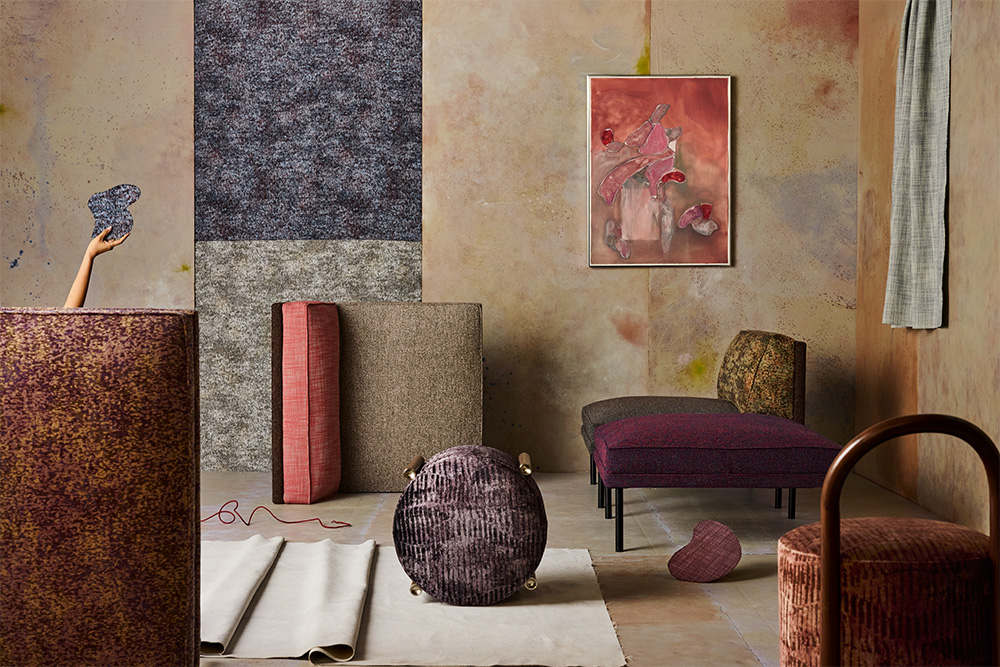
The Paint by Numbers line for HBF Textiles comprises four vibrant patterns
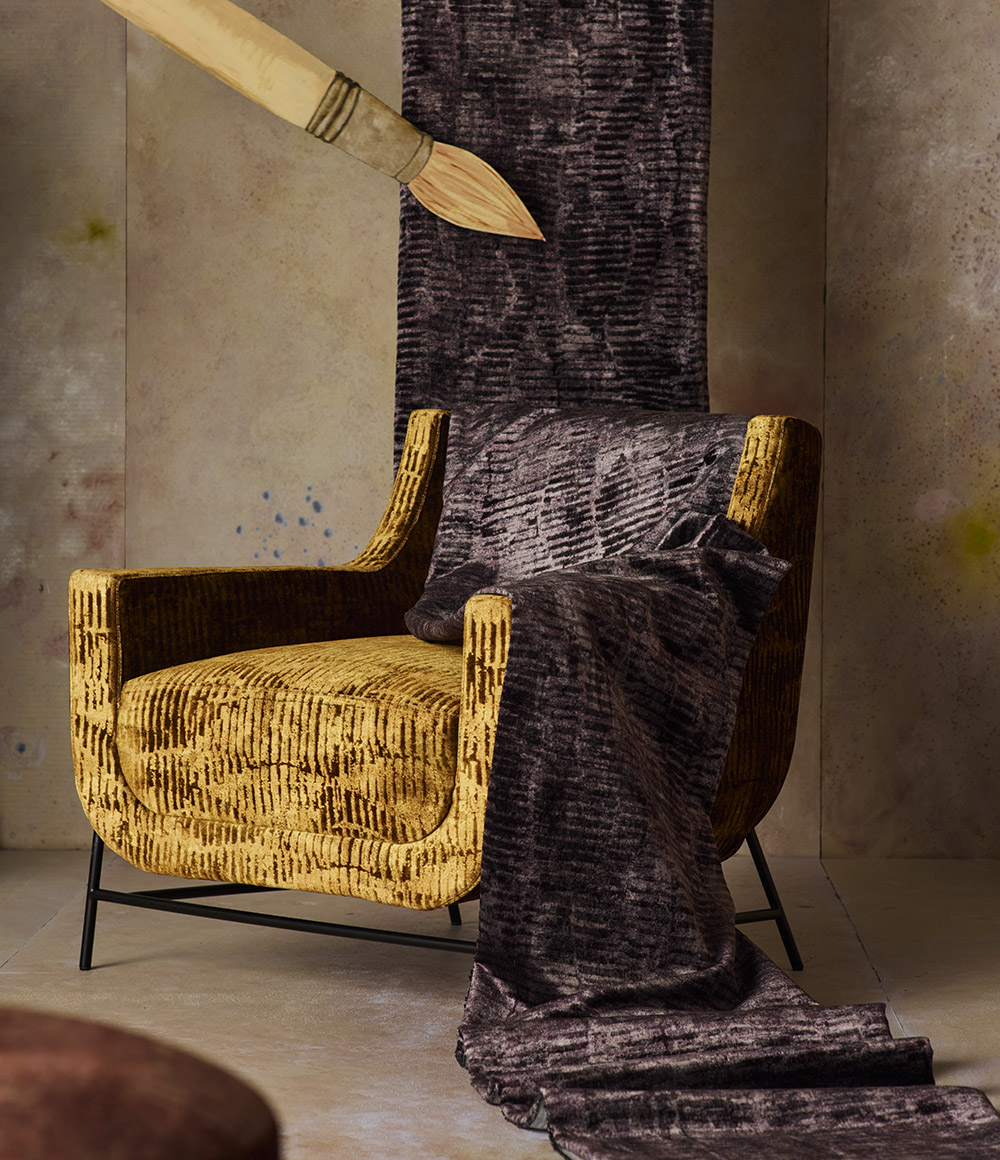
Impasto, a textured velvet, boasts an undulating, woven structure
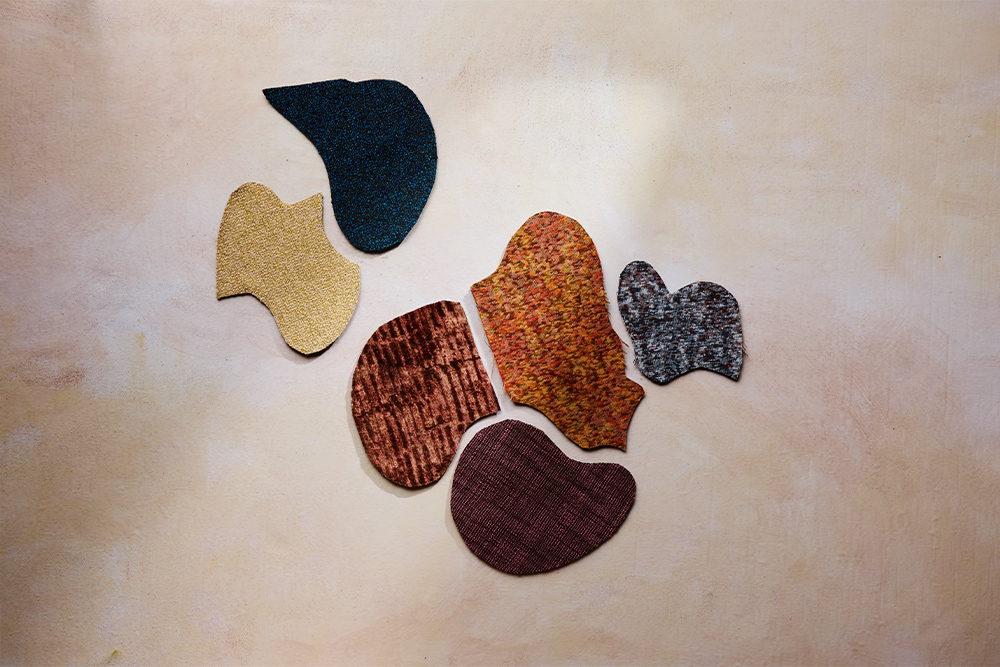
Lee’s understanding of color lends itself to a layered, tactile collection
This article originally appeared in HD’s August 2026 issue.