
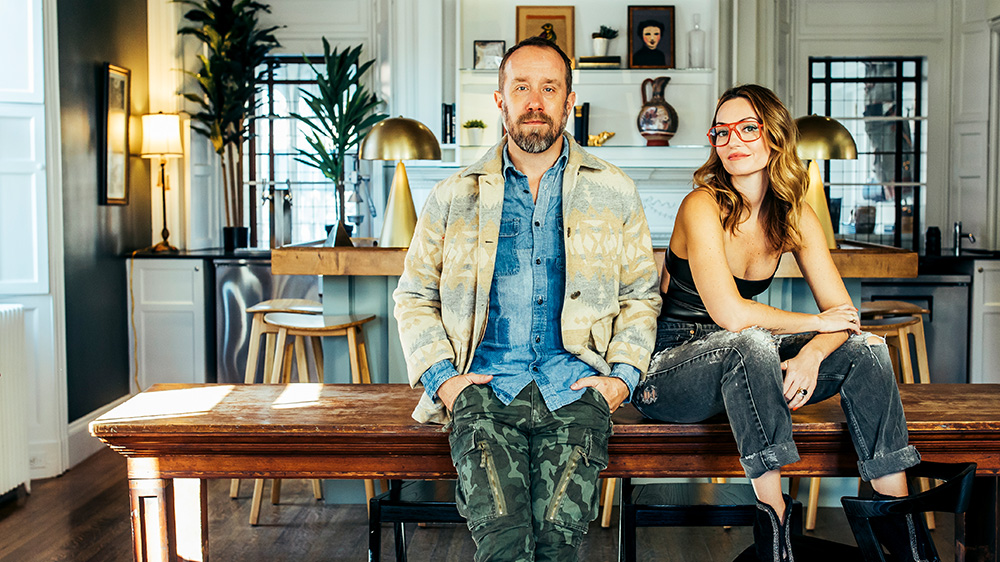
Educator-turned innkeeper Rob Blood presides over a cluster of more than 60 charming small hotels that reside in quaint towns and secondary cities across the U.S. Many occupy historic buildings but rather than employ a singular aesthetic, Lark Hotels takes its cues from each property and destination, creating stays immersed in their surroundings.
Blood’s career in hospitality began in 2002, when he took a leap of faith to leave his career as an educator “to pursue the dream of running a B&B,” he says, recalling that he “found an affinity for creating amazing experiences for people.” Encouraged by the smile on guests’ faces and the mentorship of the inn’s owner, Blood was ready to buy his first hotel within two years. “I figured out how to buy the place with no money and slept on the floor in a back room,” he says of his acquisition of what would later become the Kennebunkport Captains Collection. “The fundamentals of what we do now all started then—it was this idea that guests weren’t coming for me, they were coming for themselves,” he says.
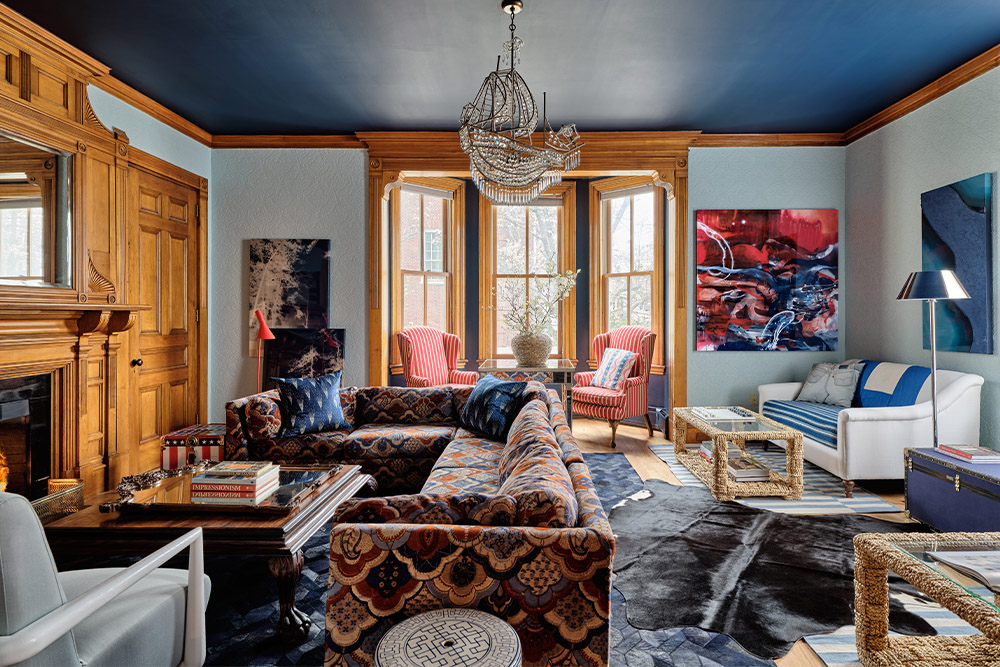
The Hotel Portsmouth in New Hampshire marries red, white, and blue hues with vintage furnishings
By 2012, Blood’s portfolio of hotels was growing. As he was preparing to launch the Attwater in Newport, Rhode Island under the newly created Lark brand, he met Megan Kennedy, a free-spirited creative and astute businesswoman who joined Lark as the Attwater’s first GM. The two immediately had chemistry. “Our partnership grew as we began taking on creative projects together, realizing we had just the right balance and ideas came easily to us together,” Kennedy recalls. Kennedy dove into Lark, working her way through nearly every role at the nascent hotel brand, but ultimately choosing to settle into the role of creative director.
Kennedy’s instincts soon became integral to Lark’s identity. Coming from a lineage of innkeepers and antiques dealers, she had long been fascinated by both the art of hosting and the objects that give a space personality. Her grandmother Dorothy ran an antiques shop as well as an inn in Bennington, Vermont, and was the consummate host, always eager to “meet people and collect things,” as Kennedy recalls.

Her parents, too, were avid antiquers and thrifters. “I was walking the fields of Brimfield [Antique Flea Market] in Massachusetts at a young age and weekends were spent at auctions. I admired the way my mother would weave meaningful and special things into the design of our home in a way that looked elegant and purposeful,” she adds. “I try to take that with me. I have a deep love for unusual things with soul.”
Buoyed by the success of their burgeoning business and guests’ admiration for their eclectic design aesthetic, Blood and Kennedy launched interior design firm Elder & Ash in 2019. The pair married in 2020, fittingly, onsite on opening day of one of their hotels.
Here, they share the story behind each brand’s personalities, drawing from location and history to create one-of-a-kind destinations.
Lark
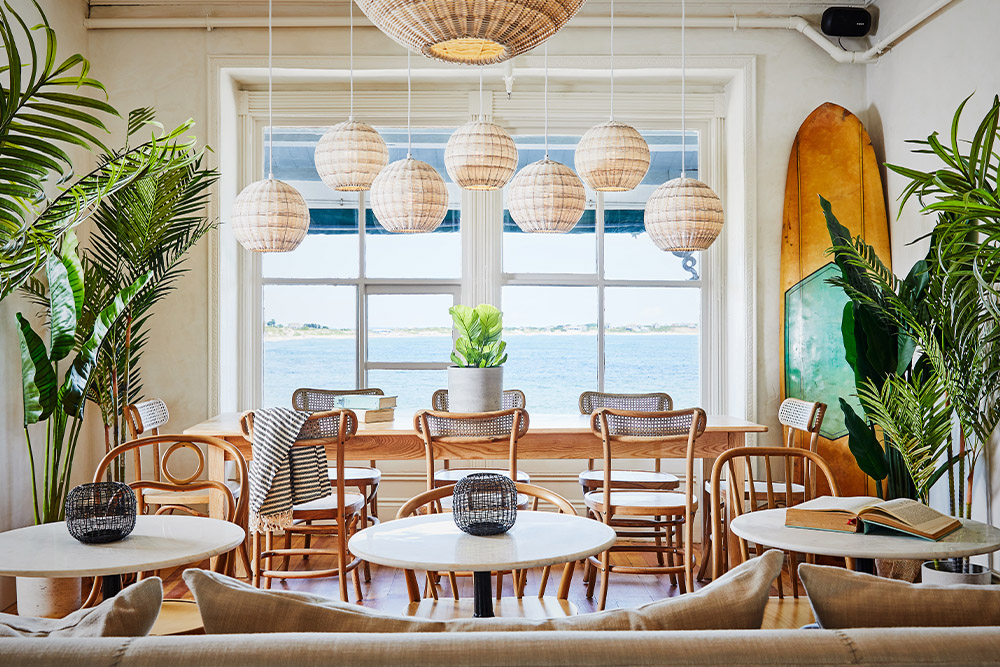
A muted coastal charm characterizes Block Island Beach House in Rhode Island
The company’s original namesake collection comprises 20 hotels ranging in size from eight to 95 rooms, primarily in destination towns. Targeted to the leisure traveler or, as Blood puts it, “a business professional who wants a more authentic experience,” the upper upscale properties combine design, history, and a strong sense of place. “Larks have a distinct story to tell. They offer a highly localized and thoughtful design; they are often in iconic destinations and rely on authentic non-prescriptive hospitality,” Kennedy adds.
The Kennebunkport Captains Collection, for example, brings together three historic mansions once owned by prominent sea captains and passed down through their families for several generations. The 45-key property is anchored by Nathaniel Lord Mansion, the most opulent of the four homes, where guests gather for breakfast in the lush garden. And no two guestrooms are alike: attic suites frame the night sky through skylights above the beds, while rooms in the carriage house offer a different experience. Original art and curated antiques add to its distinct New England charm.
Kennedy’s approach to the collection is centered around opulent parties and gatherings hosted at the mansion. Consider the William Jefferds House, with its soft, bright, and monochromatically patterned aesthetic. Meanwhile, the Captain Lord Mansion is bold and dramatic, “making a statement with ornately carved antique four-poster beds complemented by contemporary portraits and line drawings, rich velvet textiles, and accents of vibrant, unexpected colors at every turn,” she says. Captain Fairfield is funky and whimsical juxtaposing a modern aesthetic with the historic architecture and details of the home. “Rather than to be literal, our goal was to take an approach that would allow our guests to feel as if they were part of the lives of these figures, but in today’s world,” she says.
Blind Tiger
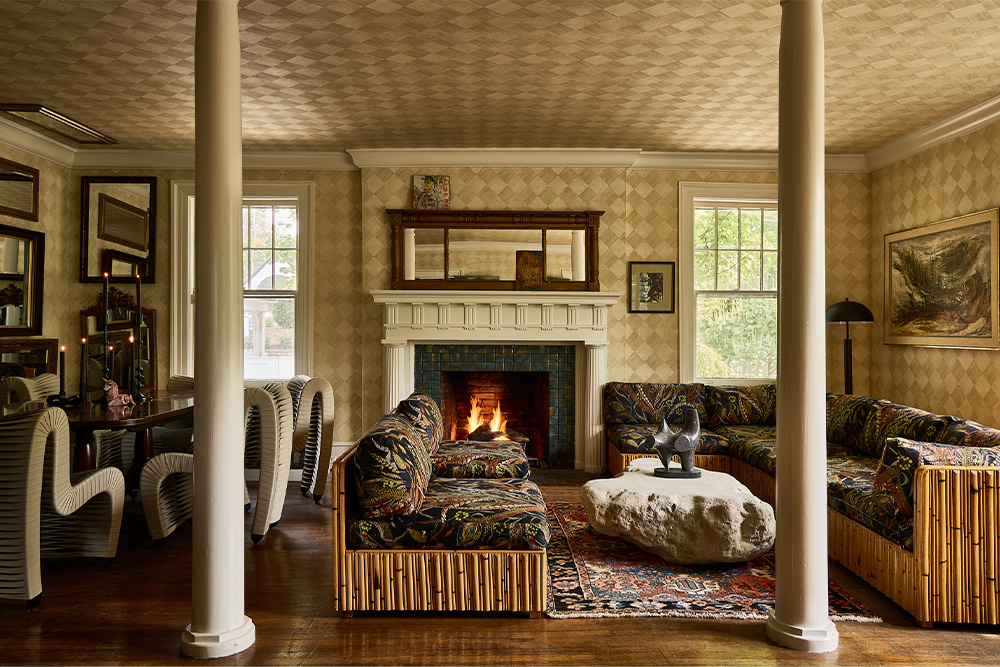
Bold patterns and textures come together at Blind Tiger Asheville in North Carolina
“We want people to feel like they’re staying with their most well-connected friend when staying at a Blind Tiger,” Blood says of Lark’s collection of intimate historic homes. Typically around 14 keys and well-suited for full property buyouts, the hotels lean into a hyper-local approach.
This goes far beyond the design as well. Lark taps into local tastemakers to create personal guides to each destination. “They share a letter saying what they would do on a day off [in the city] and what you should see [while you’re here],” he says.
Consider Blind Tiger Portland in Maine. When a brick mansion came up for auction in 2020, there was one stipulation: Lark needed to open it the next day. Kennedy turned to the antiques shops of Hudson, New York to fill the mansion with one-of-a-kind finds that juxtapose graphic wallcoverings and local art. Today, 15 rooms are spread across two mansions located on residential Danforth Street, with guests choosing between hosted or unhosted experiences.
The Lark portfolio currently includes four Blind Tiger experiences, ranging from a 14-room guest house tucked away on a small street in Asheville, North Carolina to a 14-room brick mansion dating back to 1881 on a tree lined lane in Burlington, Vermont.
AWOL
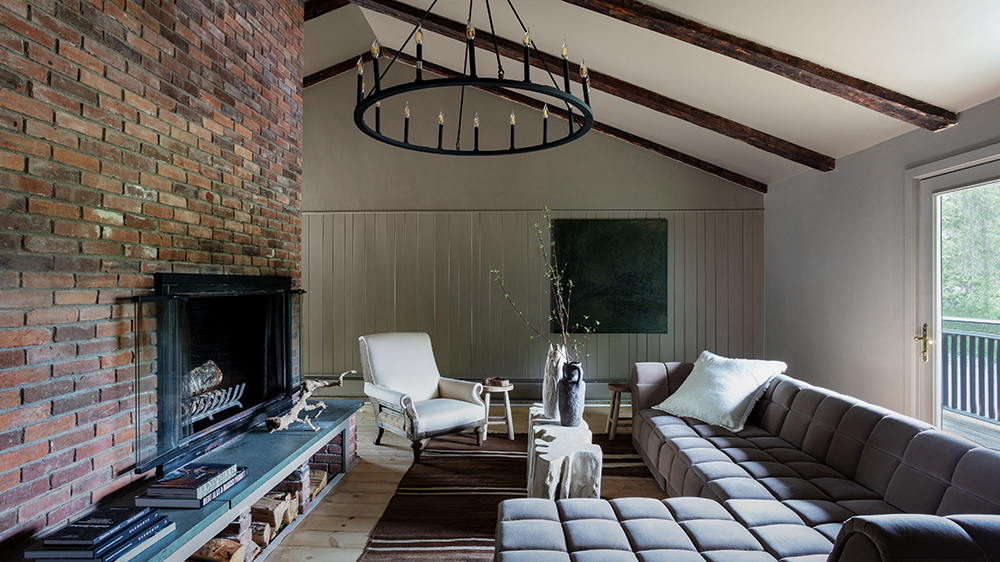
The living room at AWOL Stowe in Vermont evokes a chic rustic aesthetic
If Blind Tiger channels in-the-know locals, AWOL is about getting away from it all. Ranging from 17 to 35 keys, the brand gravitates toward off-the-beaten-path destinations from Vermont to Cape Cod. The hotels are pared back, with uncomplicated interiors grounded in natural materials and the landscape beyond.
At AWOL Provincetown that means embracing a secluded property overlooking the moors rather than the traditional New England B&B aesthetic associated with the destination. Initially conceptualized as a standalone brand of one, the Provincetown property was an answer to the traditional Cape Cod market. In contrast, it’s “layered and a bit undone,” says Kennedy. “The thing that first attracted us to the hotel was that all 30 rooms faced the water, offering unobstructed views of the tidal moors. We knew we needed to do whatever we could to make the landscape the hero in the redesign.” Guests won’t find shiplap walls, rope knots, anchors, or nautical stripes. Instead, rattan, cotton, linen, and weathered metals create a rustic, understated luxury.
The initial AWOL resonated so much with guests that it made sense to expand. Today, AWOL includes a lodge on the fringes of the Cady Hill forest in rural Vermont as well as a private retreat in Kennebunkport, Maine.
Bluebird
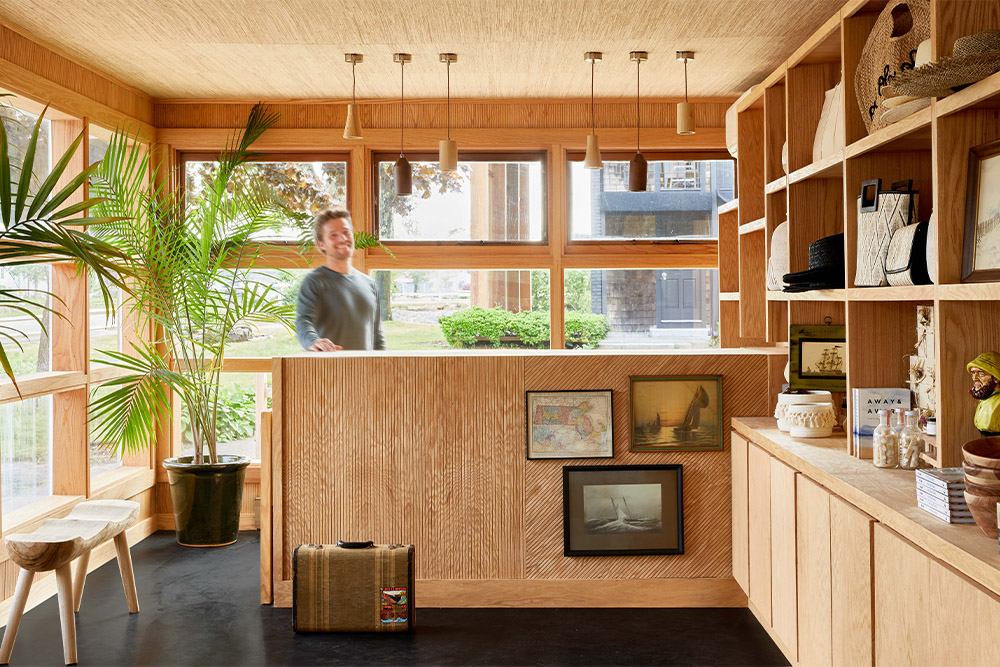
Warm wood clads the entry of Bluebird Dennisport in Massachusetts
Bluebird emerged during the pandemic when hotel owners were seeking ways to reposition properties with limited renovation budgets. The most accessible of Lark’s four brands, it centers on the reinvention of classic roadside motels and lodges, using targeted design interventions (like family-friendly rooms) to give aging properties new relevance. “Sometimes the greatest creativity comes from constraints,” Blood says.
At Cady Hill Lodge in Stowe, Vermont, for example, the familiar mountain lodge is recast for a new generation of travelers. Knotty pine, leather seating, and plush textiles nod to its alpine setting, while guestrooms with wood-crafted bunkbeds recall the easygoing spirit of summer camp. Indoor and outdoor pools, a fitness center, and access to the surrounding landscape position the property as a basecamp for exploring Stowe year-round.
Across its portfolio, Lark’s four brands encompass 63 properties, with a pipeline that includes projects in New Orleans and Vancouver. The brands cater to different travelers and destinations but share a common philosophy. “Each of our hotels has a unique identity to share with the world,” Blood points out, “and we’ll never allow them to become a commodity or fit into a mold.”
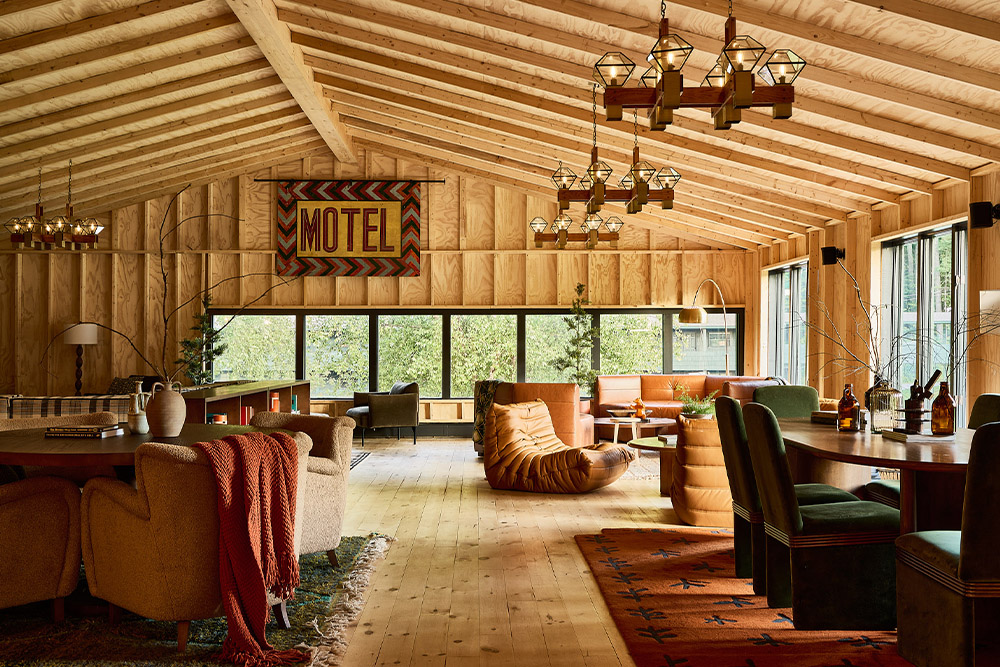
Birch plywood-paneled walls define Bluebird Cady Hill Lodge in Stowe, Vermont
Photos by Christopher James, Matt Kisiday, Read McKendree, and courtesy of Lark Hotels
This article originally appeared in HD’s October 2026 issue.