
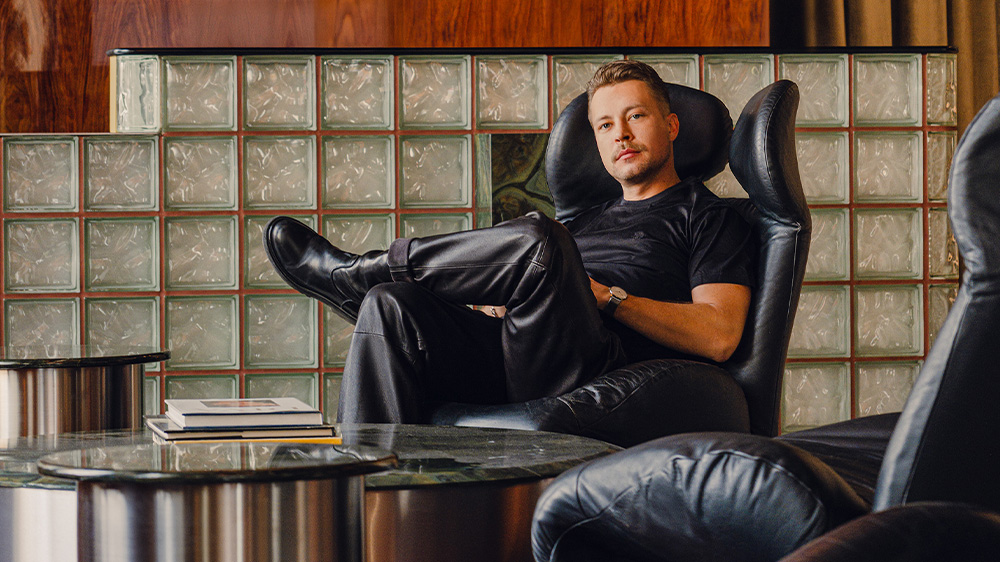
Exuding midcentury alpine vibes, the 70-room cōmodo is a modern wellness retreat born from a 1960s sanatorium. When it opened in Bad Gastein, Austria in 2022, the hotel marked a daring departure from the Belle Époque architecture and rustic chalets that defined the spa and ski town south of Salzburg. It also sparked the debut of Berlin-based weStudio, founded by architect Barbara Elwardt—the cōmodo’s owner—and designer Piotr Wiśniewski, who previously worked together at ioo Architekten.
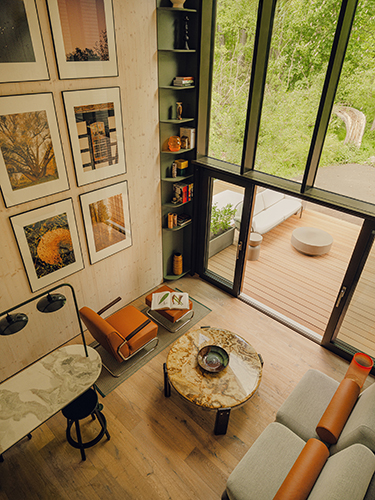
One of the holiday homes that comprise Greenview Tornow in Germany
The cōmodo may have launched weStudio, but Wiśniewski’s path to design began decades earlier in Poland. “My grandfather wanted me to be a doctor, and I was given a lot of books on the human body and biology. But when I saw the volumes, they didn’t speak to me,” he recalls. Instead, it was design that reeled him in. At the age of 10, Wiśniewski started drawing alongside an art teacher for hours every Saturday, eventually earning architecture degrees from the Poznań University of Technology in Poland and UdK Berlin.
The cōmodo became an early expression of that philosophy. Filled with bespoke weStudio-designed elements like pebble-inspired sofas and sconces glowing against tiles, the hotel represents a Gesamtkunstwerk, the German term for a complete work of art. “From the beginning the narrative was honest and there was a vision of everything coming from one hand,” he explains.
That same all-encompassing yet site-specific approach carries through to Mamula Island, on the northwest coast of Montenegro. The 32-key hotel, now part of the Banyan Tree portfolio, invigorates a mid-19th-century fortress with custom furniture that draws from the property’s historic arches.

Both projects caught the eye of hoteliers, and some even hoped weStudio would produce replicas of those designs for them. “We work contextually. We won’t copy the cōmodo for you, but we will use the same way of thinking—the same design approach—to create a different product,” says Wiśniewski.
Among those who celebrated this mindset were Michael Todt, Florian Kollenz, Christian Lainer, and Kai Hollmann, founders of the Companion Vienna, which debuted this spring. They wanted their 138-room hotel in the shadow of Westbahnhof railway station to become a coveted destination, and they sensed weStudio’s flair for layered design could make that happen.
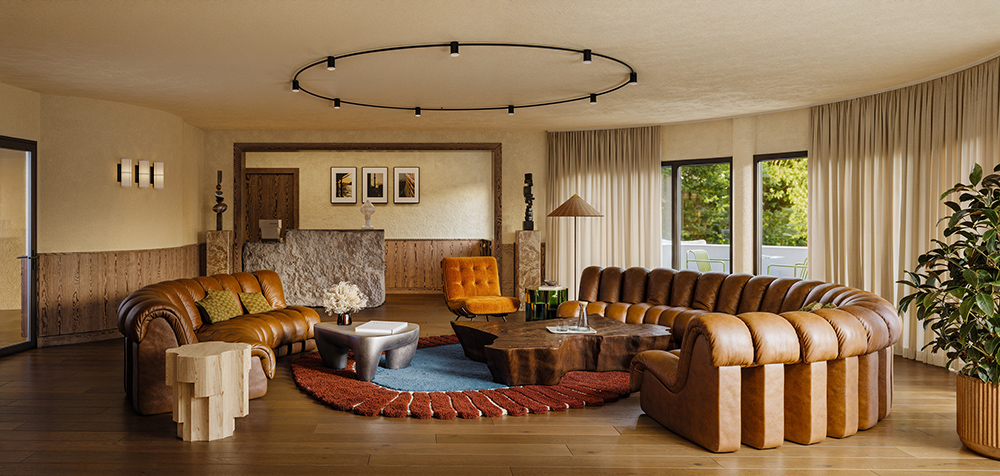
The alpine chic lobby in Haus Edelweiss boasts materials like wood and leather
Viennese references are plentiful, “so you can get lost in them quickly,” Wiśniewski points out. But he peeled them away until a coherent design language informed by the early-20th-century Wiener Werkstätte collective emerged. “The Wiener Werkstätte resonated with me, and I wanted to tell a story that is a continuation of it, adapted to the modern traveler.” The late-19th-century building allowed that to happen organically with raw, weathered elements juxtaposing moody colors and glossy finishes. “A polished surface looks even more polished when it’s close to a rough wall,” adds Wiśniewski, “and it’s something that brings on emotion.”
Urban vibes give way to pastoral ones at Greenview Tornow, a collection of holiday homes in the forested landscape north of Berlin that fuses earth tones with swaths of timber, while the upcoming Haus Edelweiss Oberstdorf, some two hours from Munich, will amplify nature through the lens of Bavarian heritage.
Bavarian craft meets modern calm in Haus Edelweiss, the mountainside basecamp in Oberstdorf
The environment will also shape the 202 branded Andaz Heber Valley Residences at the Slope in Utah, slated for completion in 2029. The Dolomites-meets-Japan aesthetic, bolstered by materials from the surrounding Wasatch Mountains, will feature 75 different types of furniture and lighting designed by weStudio and brought to life by its reliable production team.
Wiśniewski’s designs are tailor-made, but they also tend to incorporate vintage pieces that reflect a passion for sustainability and an appreciation for the past, tying into his childhood as “a little collector,” as he puts it. “It started with Pokémon cards I protected and numbered. I took it very seriously.”
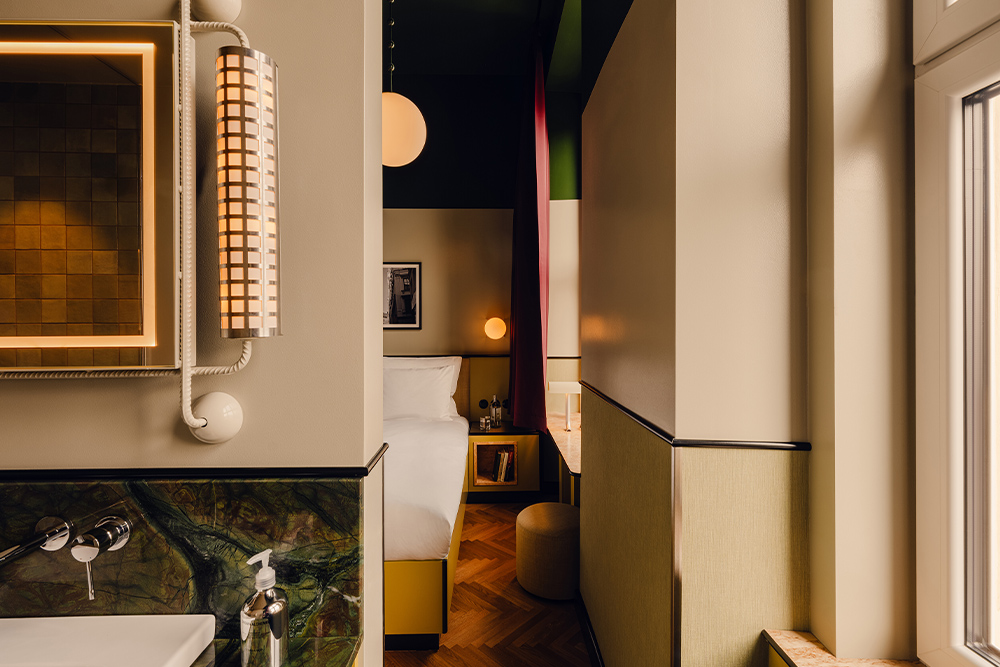
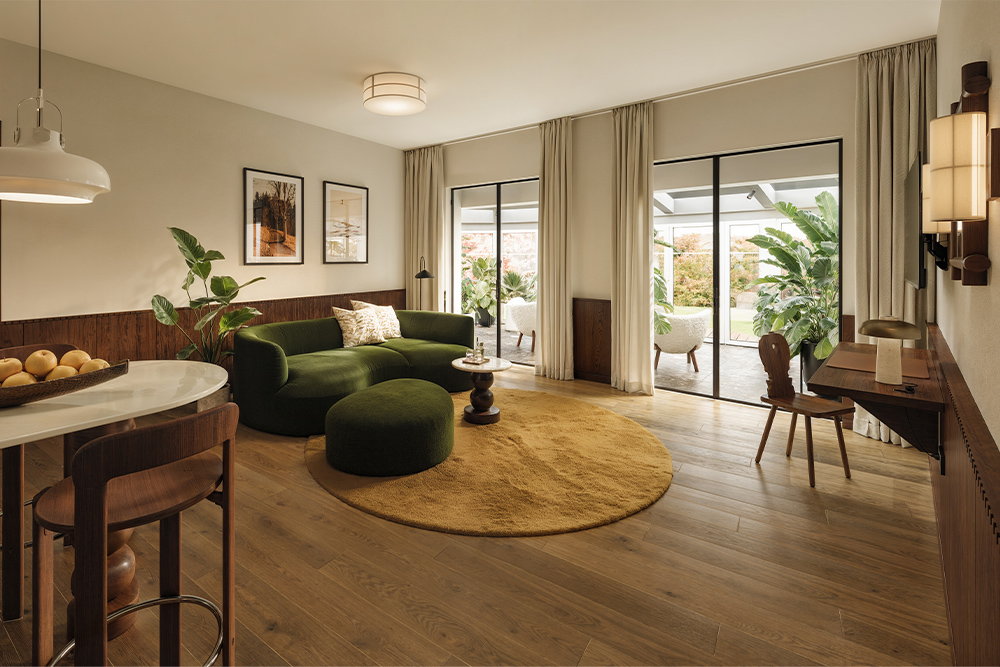
A Companion Vienna guestroom, where horizontal wall divisions soften the space
This article originally appeared in HD’s September 2026 issue.