
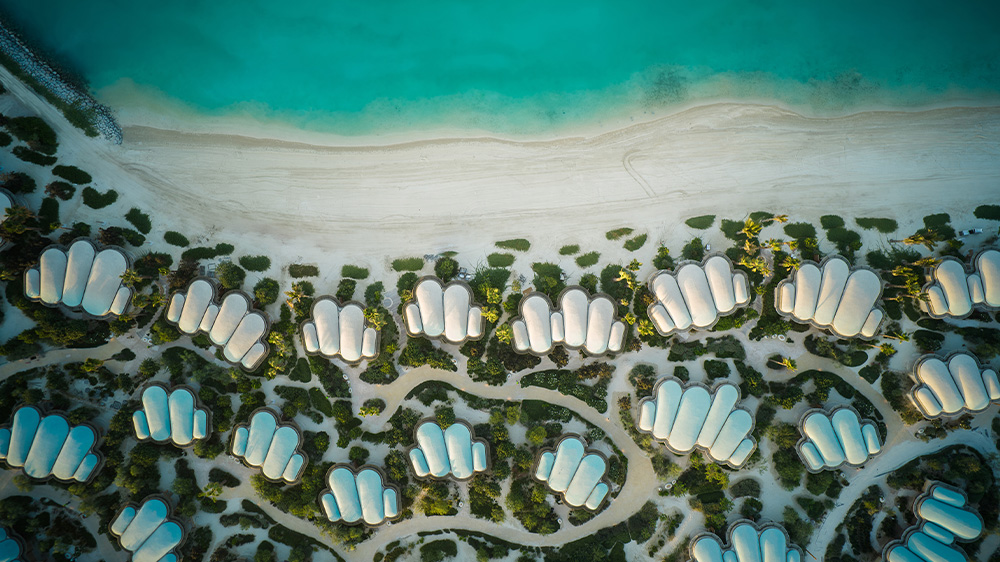
For InterContinental the Red Sea Resort, sustainability isn’t a feature, it’s the foundation. “It’s embedded from concept to delivery, never applied as a finishing layer,” says Kristina Zanic, CEO and founder of Kristina Zanic Consultants, which conceived the interiors.
Set on Shura Island, the centerpiece of Red Sea Global’s ambitious regenerative tourism destination, the resort is also part of London architecture firm Foster + Partners’ Coral Bloom masterplan, which comprises 11 hotels. Here, the property appears to emerge from the dunes while minimizing its impact on the island’s delicate ecosystem.
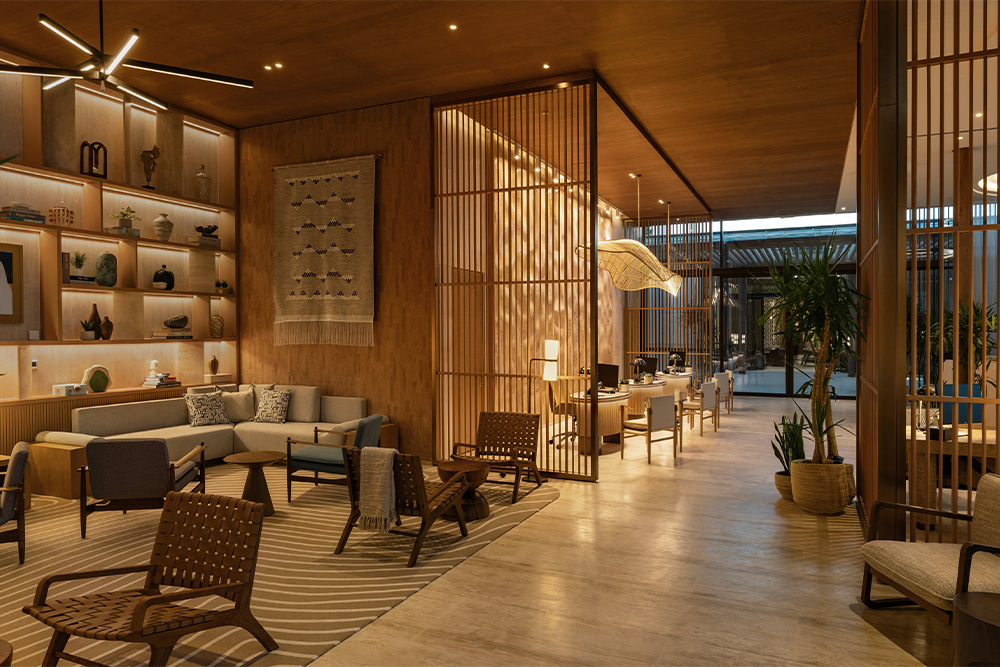
A sculptural timber wall and leaf-shaped rattan light fixtures define the light-filled lobby
Powered by renewable energy and awarded LEED v4 BD+C Platinum Certification (the highest global benchmark), the resort embodies barefoot luxury while also giving back to its surroundings. “That means choosing ease over ostentation and expressing quality through craft, comfort, and a genuine sense of place,” Zanic points out. Throughout, tactile materials—think timber, rattan, rope, and handwoven textiles—pair with a restrained neutral palette inspired by the sand, sea, and sky. Seamless indoor-outdoor transitions further blur the boundary between architecture and landscape.
The journey begins with a series of winding pathways that encourage exploration. Inside the light-filled lobby, a sculptural timber wall and sweeping leaf-shaped rattan light fixtures establish an immediate connection to nature. Generous open volumes gradually transition into more intimate spaces, including a residential-style library and club lounge that offer moments of respite.

The same narrative unfolds across the resort’s three restaurants and serene spa. All-day eatery Darein draws on Moroccan and Levantine hospitality through Mediterranean tones, artisanal Zellige tiles, and communal seating gathered around a show kitchen. Ardo showcases South American influences through saturated hues, rich textures, and Latin-inspired art, such as a central tapestry at the bar. Finally, at 305 mocktail bar, vibrant references to Miami and Havana emerge through bright hues and a Cuban-inspired bar and cigar service. Nearby, the spa offers a quieter expression through a skylit reception, arched screens, and muted palette.
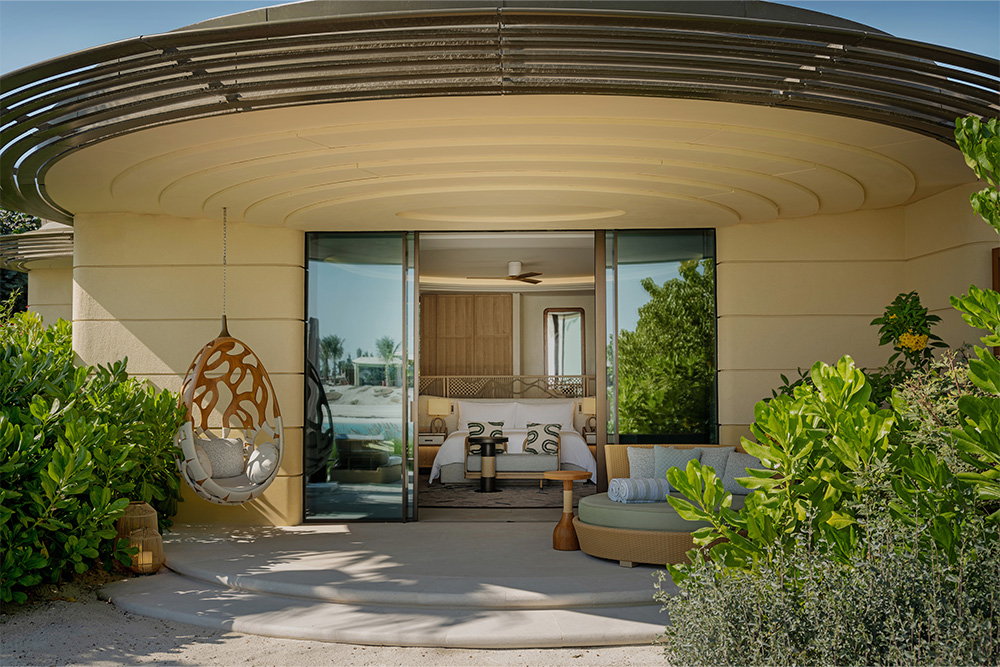
Framed by rope screens that filter light, the suites boast beds that are oriented toward the water
Meanwhile, in the 210 guestrooms, beds are positioned toward the Red Sea and framed by rope screens that preserve the view. Spacious outdoor lounges extend the living areas into the landscape, reinforced by layered ceilings, open layouts, and bespoke furniture.
That connection to place extends beyond design. Biodiversity initiatives—including coral regeneration and a mangrove nursery—actively restore the surrounding ecosystem, while experiences are designed to cultivate environmental awareness. The brand’s signature children’s club, Planet Trekkers, for instance, introduces younger guests to the region’s marine life through playful, ocean-inspired interiors before leading snorkeling and diving excursions to nearby reefs.
“The journey of discovery that runs through the interiors is intended to build awareness and a sense of stewardship,” says Zanic. “[The property’s] goal—a 30 percent net conservation gain by 2040—depends in part on guests leaving as advocates for the place.”
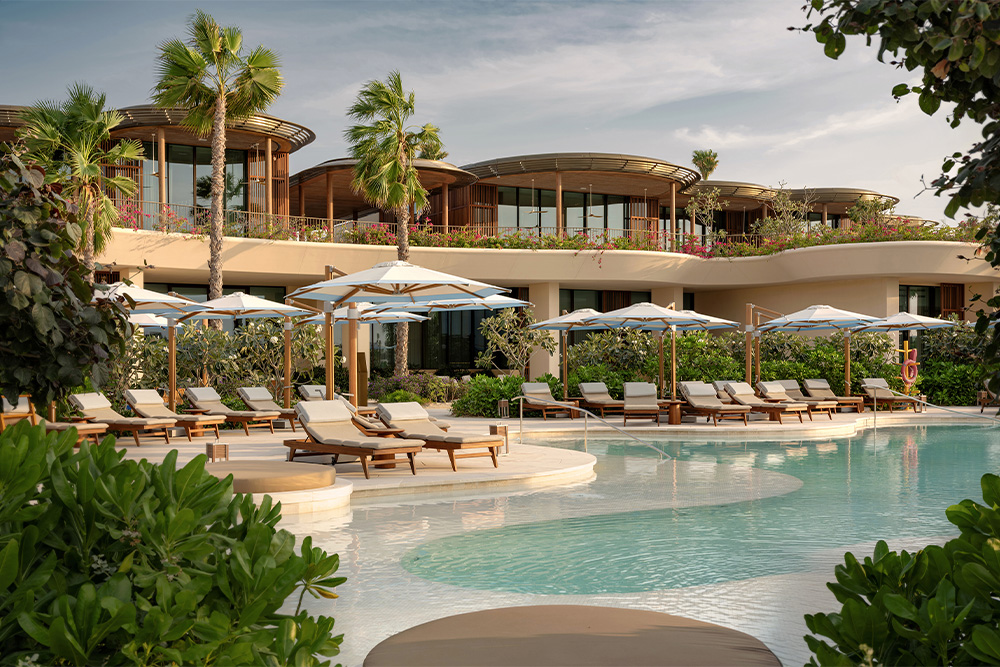
The resort’s lagoon-style pool anchors the outdoor experience, where loungers, landscaping, and uninterrupted views nod to the property’s take on barefoot luxury
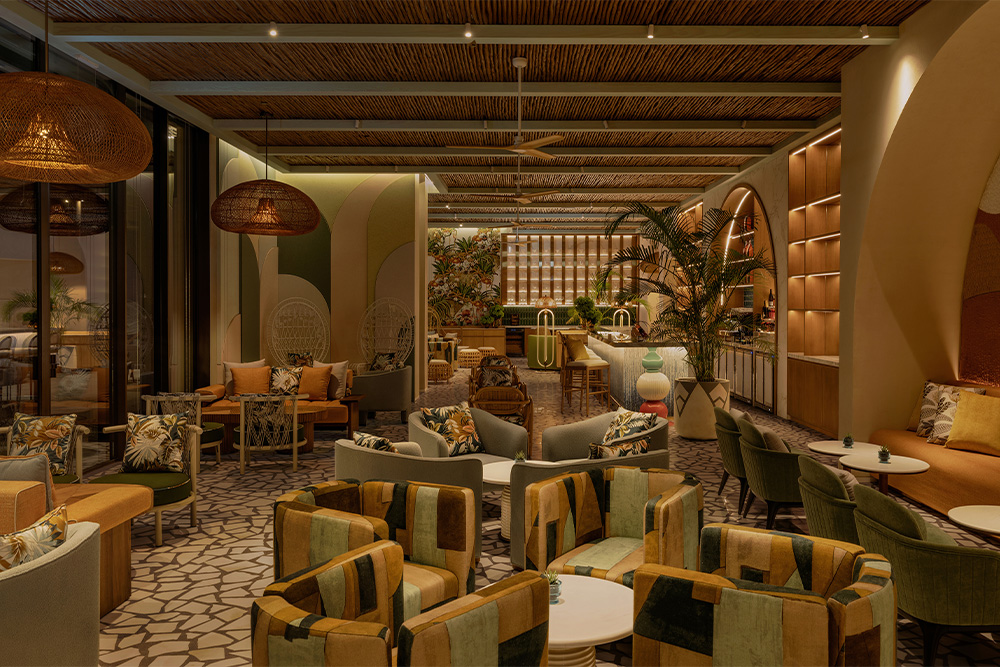
Miami meets Havana in the vibrant 305 mocktail bar
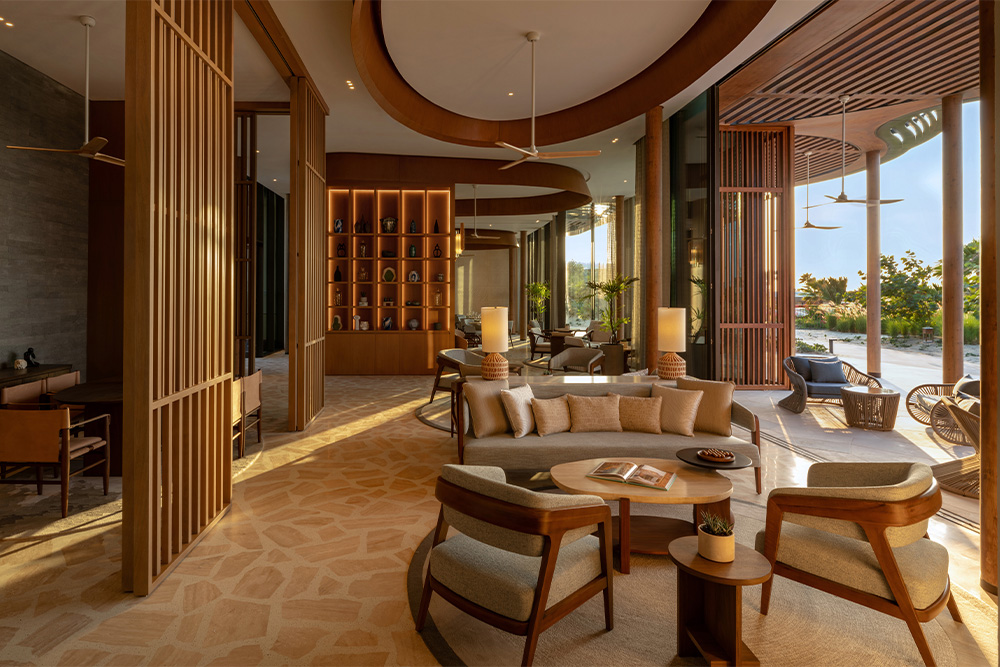
The line between indoor and outdoor is blurred at the residentially inspired club lounge, where open volumes transition into more intimate spaces
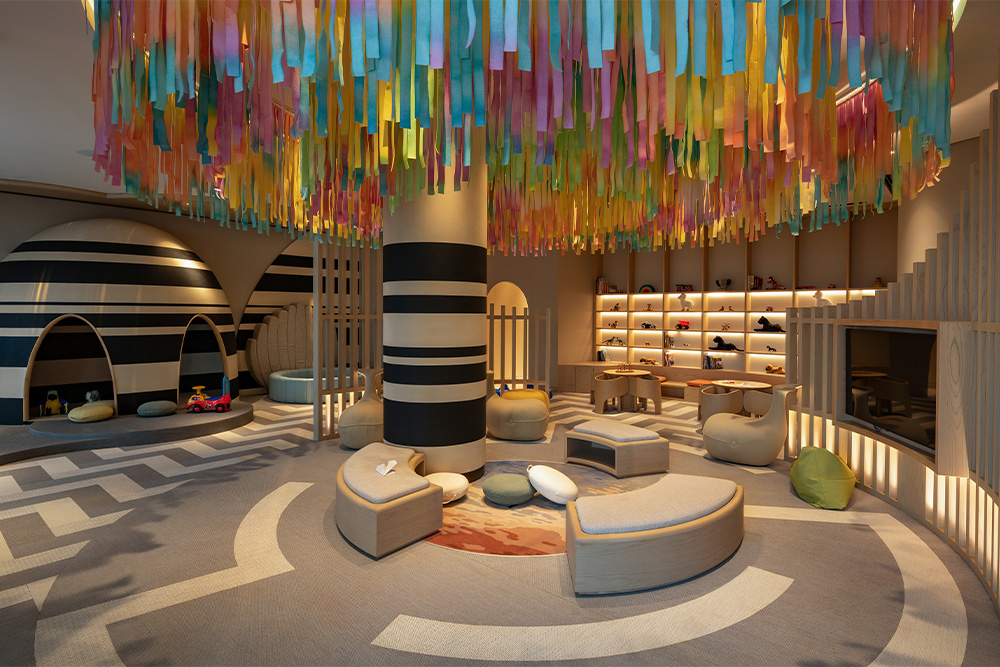
The brand’s signature children’s club, Planet Trekkers, boasts playful, ocean-inspired interiors as well as indoor-outdoor play spaces
This article originally appeared in HD’s July 2026 issue.