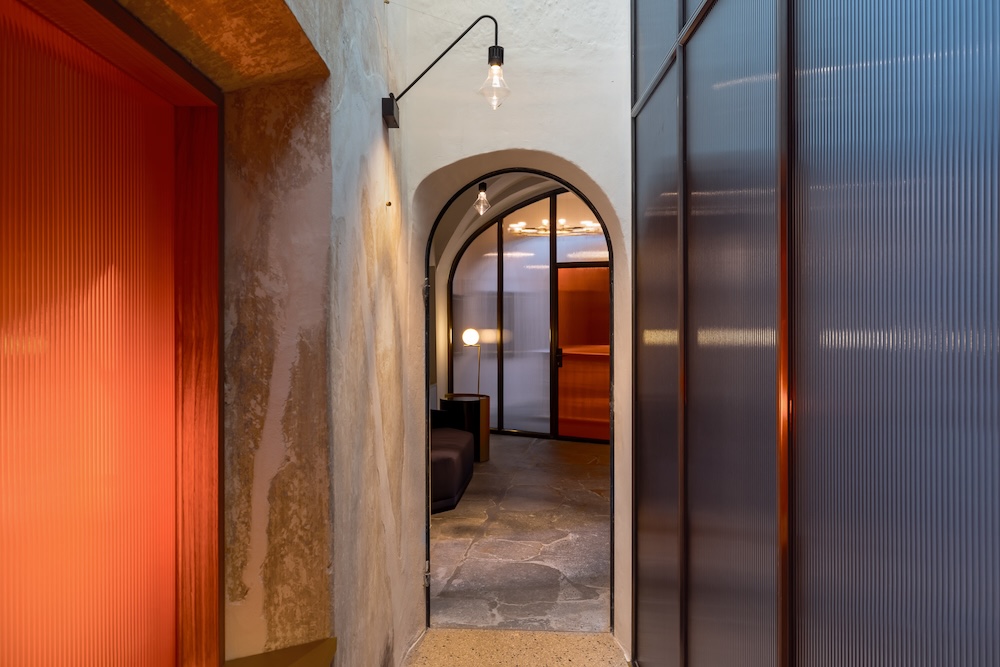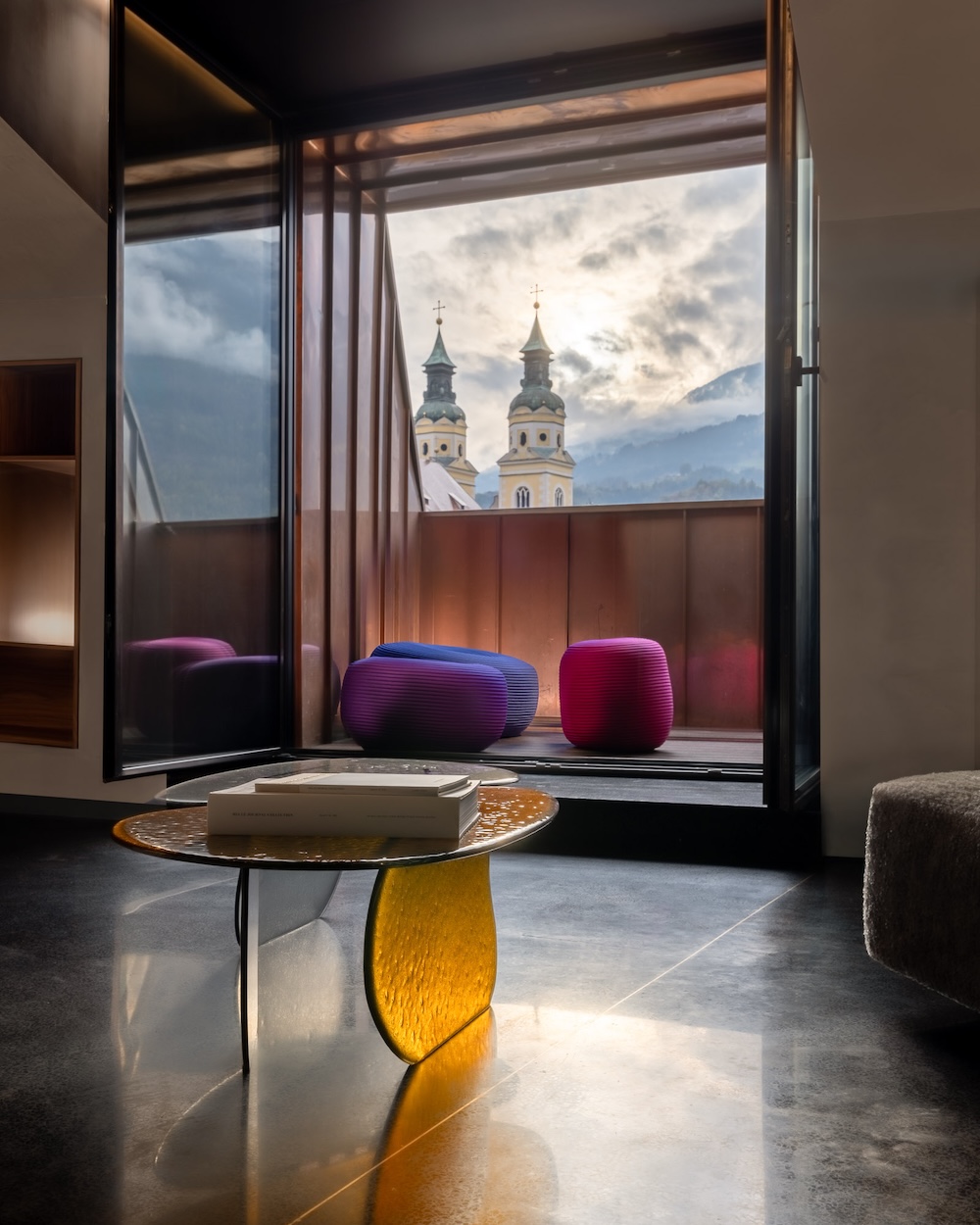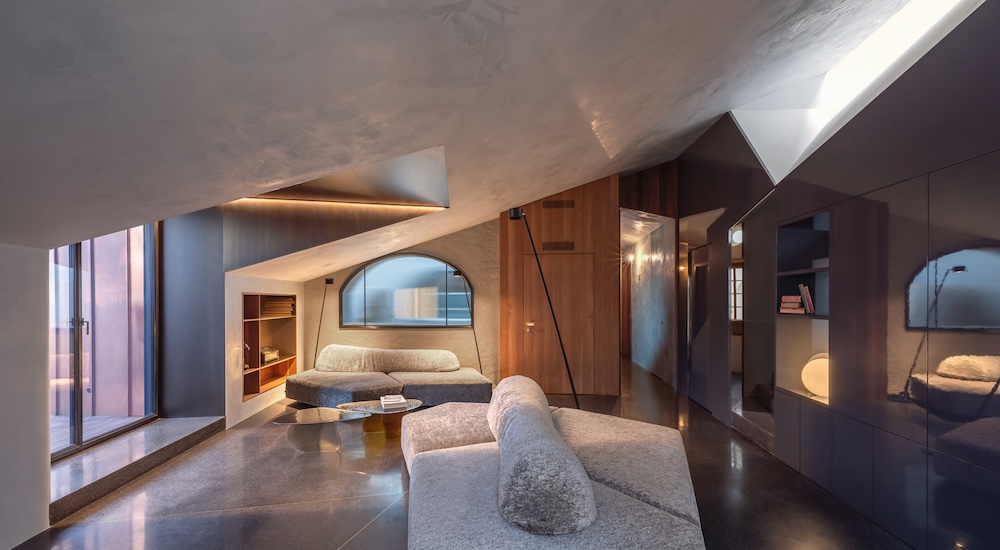
In the historic center of Brixen in Italy’s South Tyrol region, a 15th-century aristocratic palace has been entirely transformed. Milan- and Shanghai-based architecture studio Vudafieri-Saverino Partners were tasked with reimagining the heritage-protected Lasserhaus to align with contemporary demands.
The expansive 16,145-square-foot property now operates across two complementary dimensions. The first two floors host Arthotel Lasserhaus, while the upper levels accommodate a private family residence centered around a multi-generational art collection.
 Historic architecture in the modern day
The preservation of Lasserhaus sought to bridge the palace’s history with modern life. Vudafieri-Saverino Partners executed a tailored intervention inside and out, navigating strict heritage authority protections.
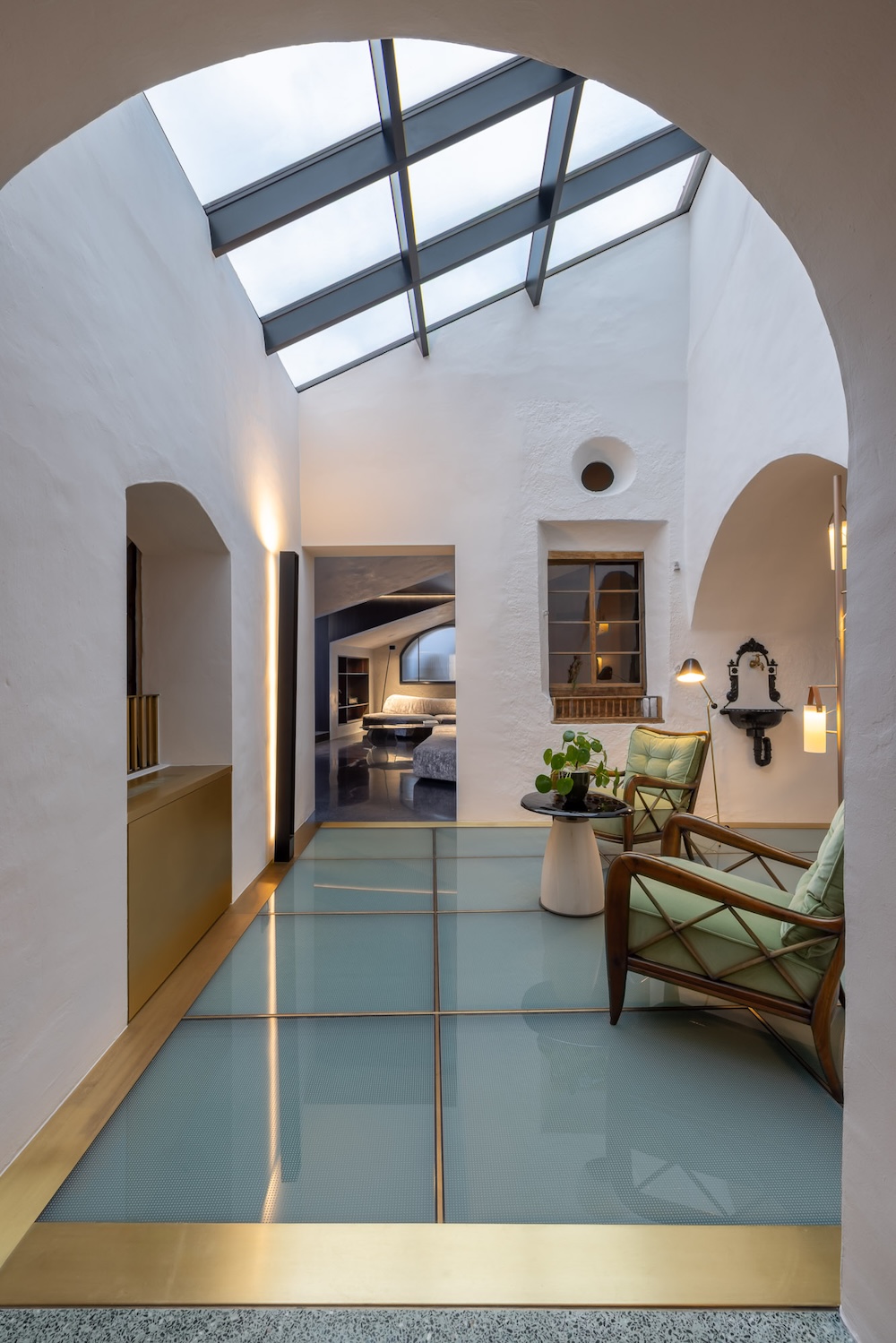
A key maneuver was the reinvention of the attic. Once a residual, opaque space, it now serves as the heart of the residence. The architects introduced large dormers, terraces, and skylights to draw natural light deep into the interior, giving the structure a new spatial clarity.

A central service staircase, merged between the 17th and 18th centuries to join two separate buildings, plays a pivotal role in the layout. Drawing from South Tyrolean traditions that treat staircases as light-filled, semi-public areas, the design team reinterpreted the feature with a contemporary look.
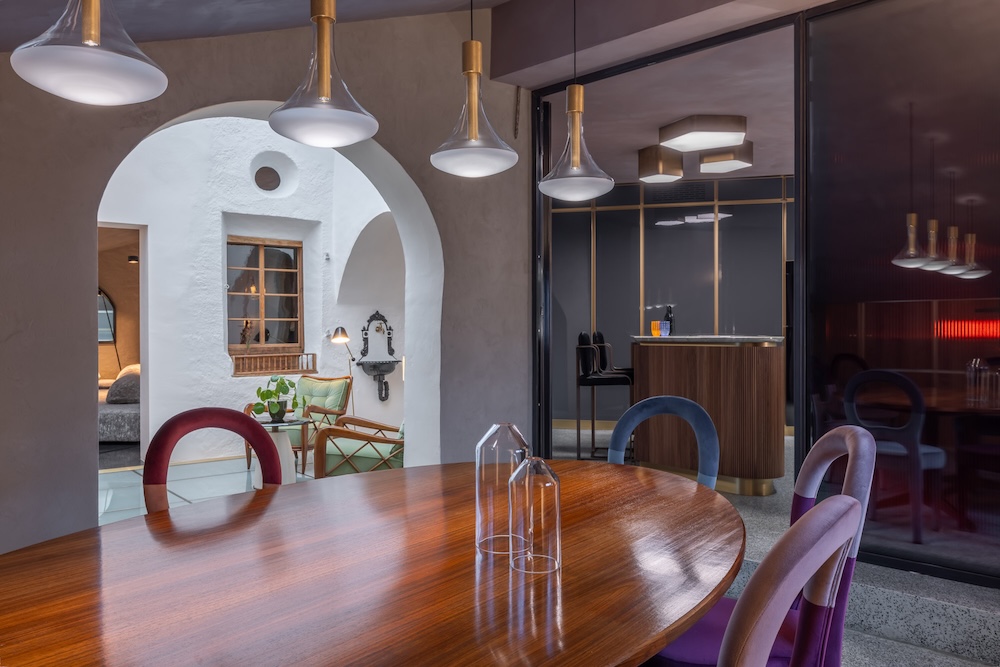
A glass floor installed at the top level marks the threshold between the hotel’s public zones and the private home, creating a suspended winter garden that bridges the kitchen and dining areas.
The private residence at Lasserhaus
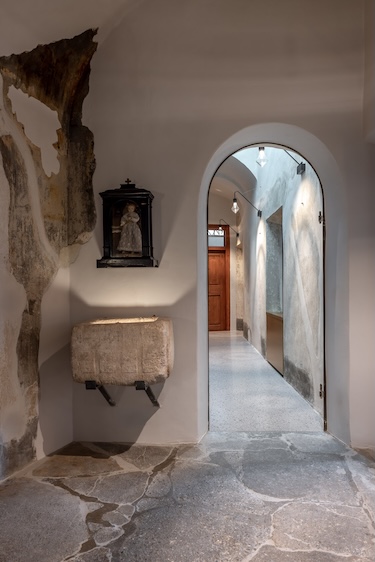
Spanning across the top two levels, the private residence begins dramatically within the building’s former chapel. Now a small gallery dedicated to sacred art, this entryway is a visual dialogue between religious portraits, antique paintings, and modern inserts.
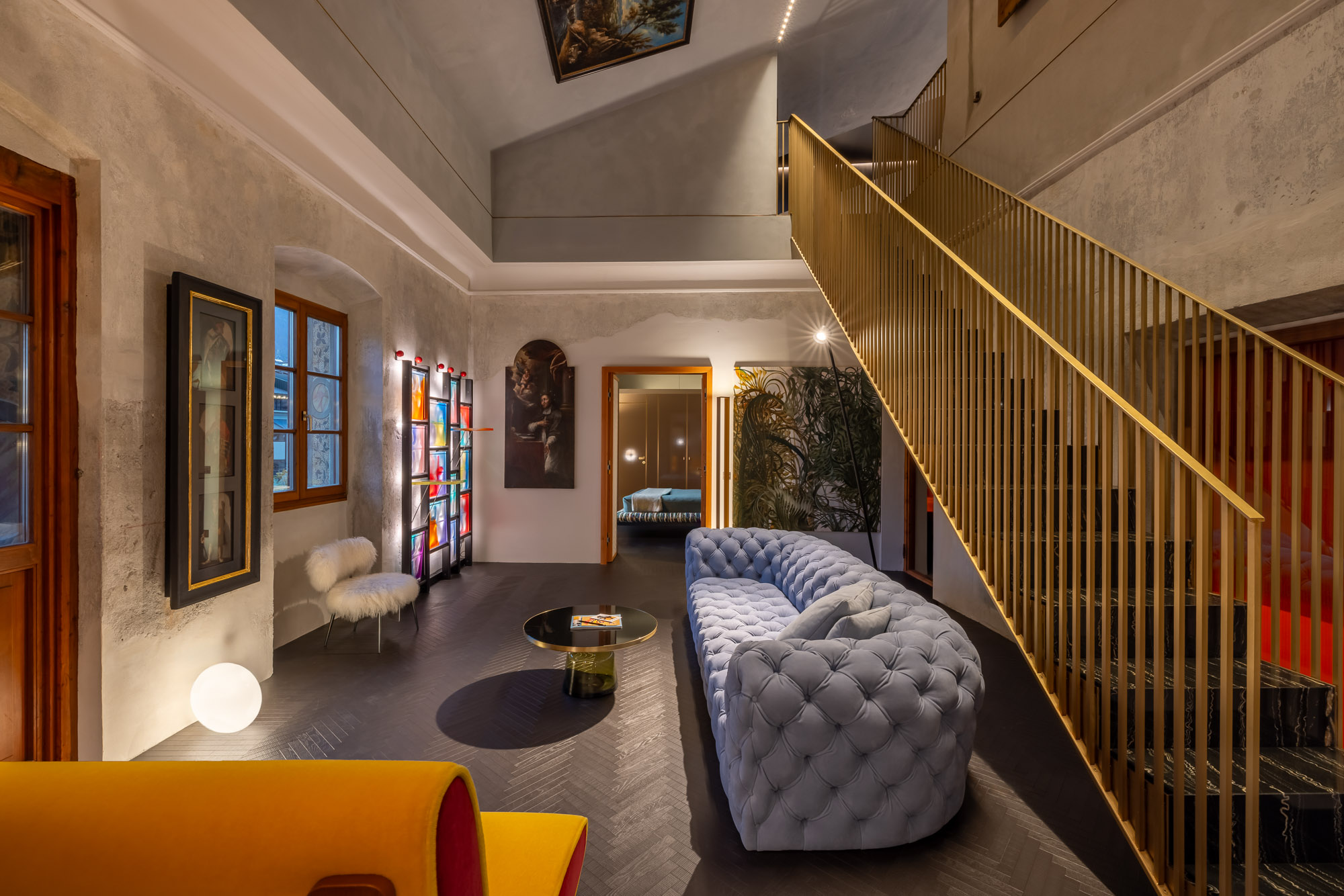
The interior sequence unfolds through a series of vaulted passages, shifting levels, and rooms conceived as autonomous volumes with distinct geometries. Historic surfaces are paired with modern elements crafted from glass and metal, anchored by a monumental metal staircase that amplifies the perception of space between the upper floors.
An urban take on the interior design
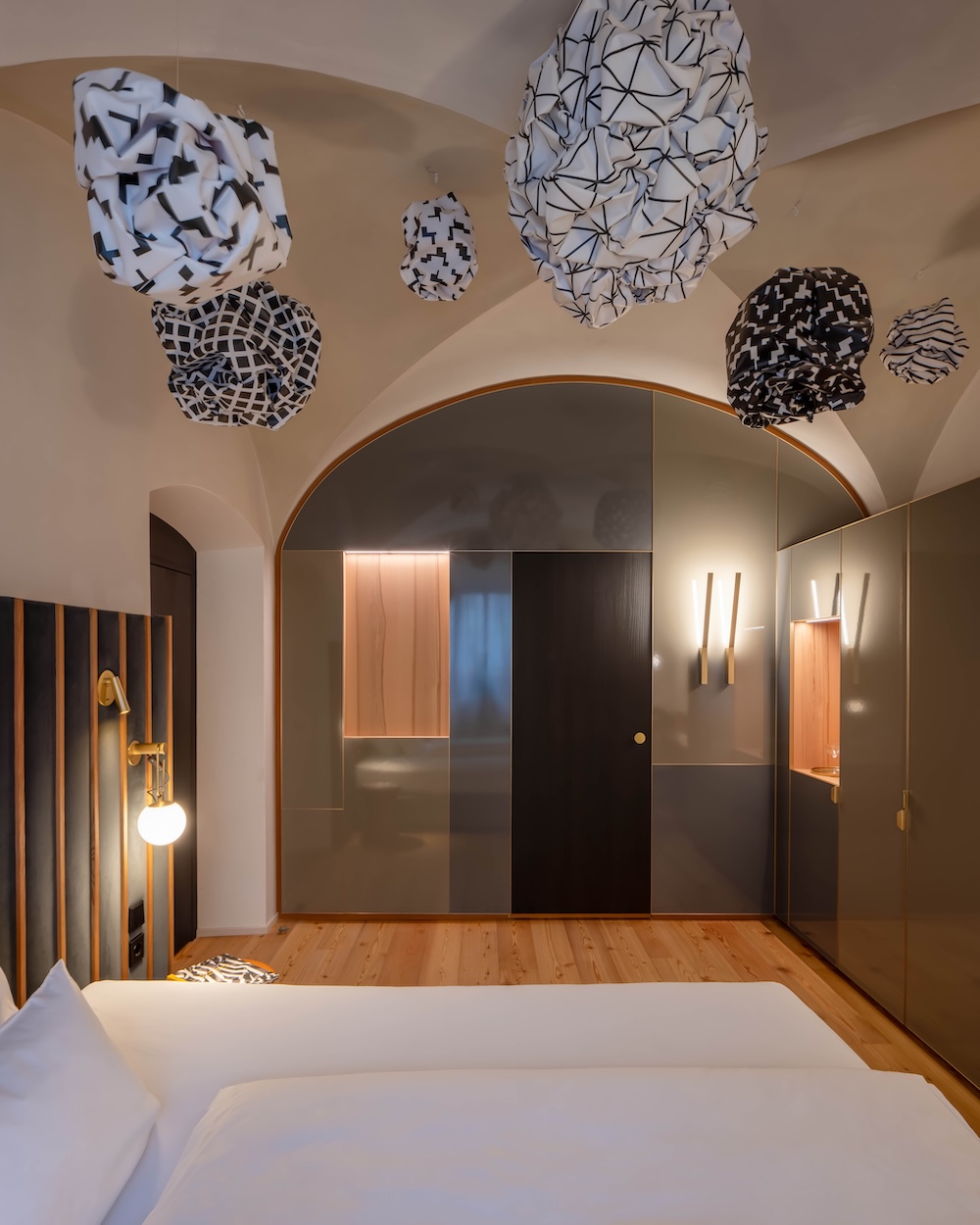
Intentionally distancing the aesthetic from traditional Tyrolean references, the interior design relies on a restrained, urban sensibility. Materials are reduced to their essentials, allowing unexpected color combinations to introduce a controlled tension.
Custom furnishings complement a collection of more than 100 works of Tyrolean Baroque art. Integrated into niches and living spaces, these classical and contemporary pieces act as living presences that enhance the architectural complexity of this reimagined alpine retreat.
“Working on Lasserhaus meant engaging with a building deeply rooted in history, yet marked by incoherent stratifications,” says architects Tiziano Vudafieri and Claudio Saverino. “The project goes beyond restoration, opening a broader reflection on what it means to inhabit a protected space: restoring continuity, opening it to the city, and transforming it into a living organism that engages with the present without betraying its past,”