
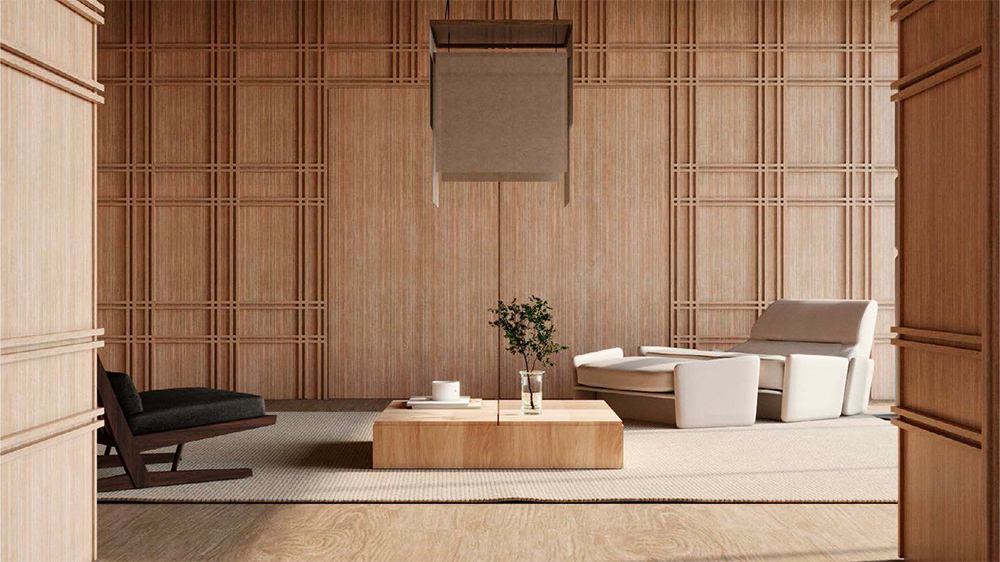
For Alexander Díaz Andersson, design has always been inseparable from context. Raised in Sweden, educated in Spain, and now working between New York, Mexico City, and Los Angeles, the founder and creative director of ATRA has spent years observing how different cultures shape the way people live, gather, and connect with their surroundings.
 “Each place possesses its own rhythm, history, and cultural patterns of living,” he says. “These experiences became foundational to ATRA. They strengthened the conviction that design extends far beyond the creation of objects.”
That philosophy has guided ATRA’s steady evolution since Andersson founded the studio in 2014. What began as a furniture practice has expanded into interiors, architecture, and large-scale masterplanning. Regardless of scale, however, the studio’s central inquiry remains unchanged: How can design create environments that endure? “We are intentionally cautious of trends, as they are inherently transient,” he says. “Our ambition is to create work that gains depth and value over time.”
That same mindset informed Morphus, a wellness-focused chair that blends design, technology, and restorative experiences. Developed as both a sculptural furniture piece and a neurophysiological wellness platform, Morphus reflects Andersson’s belief that wellbeing products should feel as desirable as they are functional.

Rather than concealing technology behind a utilitarian aesthetic, Andersson sought to integrate it into an object people would want in their homes, hotels, and shared spaces. The result is a sleek lounge chair with integrated transducers that deliver low-frequency vibrations throughout the body, calibrated to promote calm, focus, or deep rest.
“For many years, wellness products tended to occupy one of two extremes,” he explains. “They were either highly clinical and medical in appearance or they felt disconnected from the environments people aspire to inhabit.”
The science behind it is relatively straightforward: The chair uses vibroacoustic therapy—low frequency sound vibrations—to stimulate the vagus nerve, a key part of the body’s nervous system that regulates stress and relaxation. The goal is to shift the body out of its fight-or-flight response into a calmer, restorative state. The system also includes Morphus Goggles, which uses light to help alter brain states, and the Portal App, offering more than 100 sound journeys to support focus and meditation.
“By transforming a familiar act into an opportunity for restoration, reflection, and recovery,” he says of Morphus, “wellness becomes more accessible and seamlessly integrated into everyday life.”
This article originally appeared in HD’s July 2026 issue.